If you sell Indonesian outdoor furniture, you already know the weather is unforgiving. Sun dries wood out, rain drives moisture in, and temperature swings push joints to their limits. That’s why material choice and factory process matter more than the catalog photos.
In this guide, we’ll explain what kind of Indonesian woods work best for outdoor and semi-outdoor areas, and how MPP, as one of the leading Indonesian furniture manufacturers, selects and prepares Indonesian teak, mahogany, and sungkai wood.
Why Wood for Outdoor Furniture Selection Matters
Outdoor furniture lives outside the comfort zone of indoor humidity. The right wood has two things: natural resistance (oils, density, grain structure) and predictable movement after drying. When those two meet a sound build and protective finish, you get fewer claims and happier customers.
Sun, Rain, and Movement: The Real Enemies Outdoors
- UV light breaks down surface fibers and fades color.
- Liquid water and vapor can swell fibers and lift finishes if moisture becomes trapped.
- Thermal swings make wood expand and contract; weak joints and flat designs fail first.
Hardwood vs Softwood Outdoors (Quick Lens)
Both can work, but for export furniture we prefer hardwoods with stable grain and, ideally, natural oils. That’s why teak leads for full outdoor use, while mahogany and sungkai fit covered or semi-outdoor areas with the right protection.
The Indonesian Woods for Outdoor We Recommend
Selecting the right type of Indonesian woods is not only about looks; it determines how long your outdoor furniture will last and how well it performs in various climates. At MPP, we choose and prepare each wood based on its natural strength, oil content, and adaptability to humidity changes.
As Indonesian teak furniture becomes more expensive, we recommend mahogany and sungkai as more affordable alternatives for semi-outdoor areas. This recommendation is based on our collaboration results with several buyers.
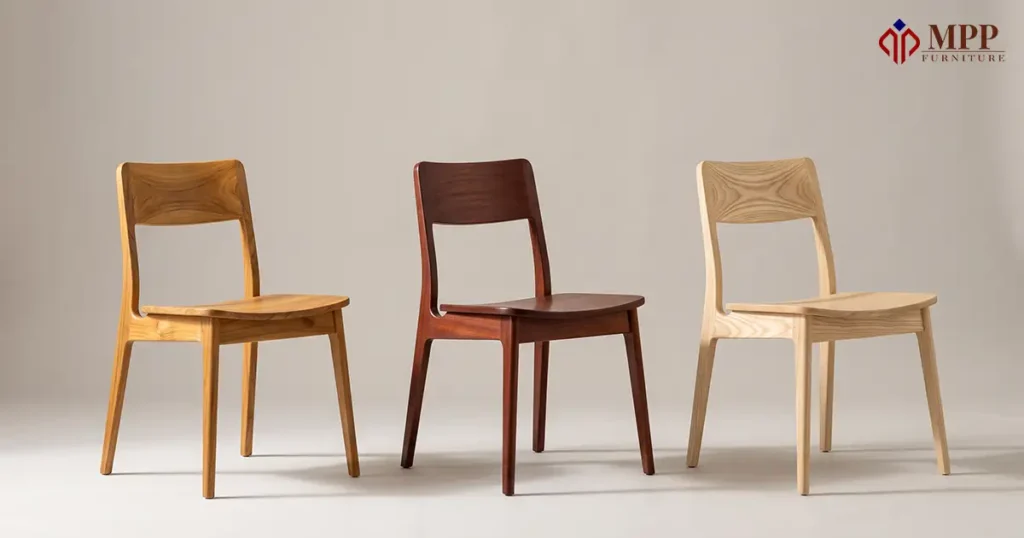
The following are the three main wood types we use for outdoor and semi-outdoor furniture, along with insights into how we treat and apply each for durability and beauty.
Indonesian Teak Furniture: Still the Benchmark for Full Outdoor
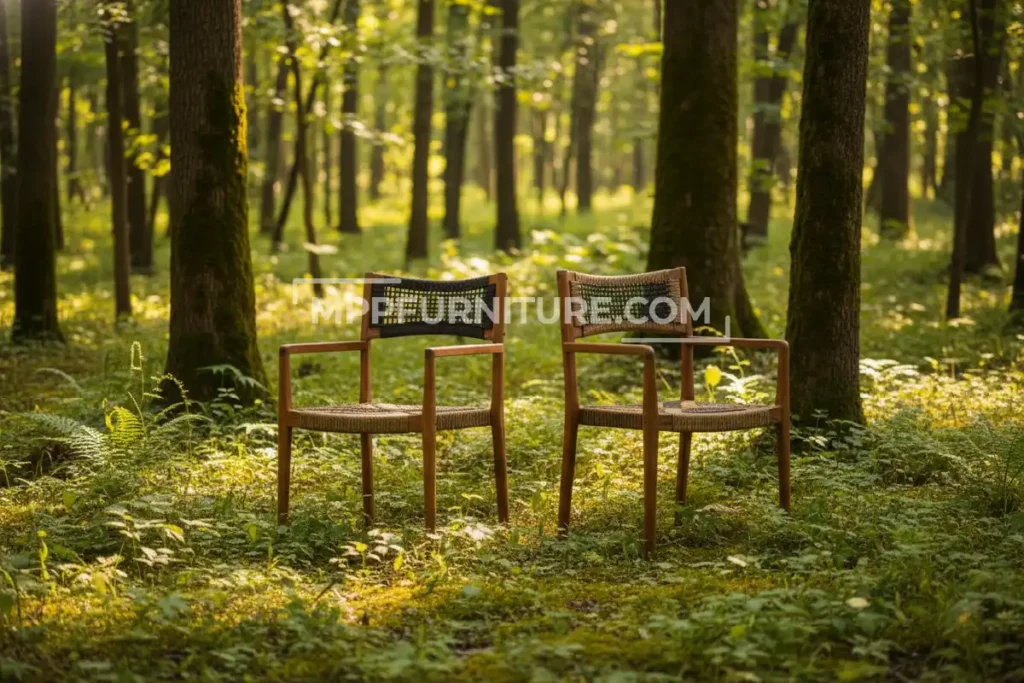
Why we use it: Teak’s natural oils repel water and help resist decay. Properly kiln-dried teak holds joinery well and weathers to a silvery patina if left unfinished.
Best use: Poolside loungers, garden benches, dining sets in full exposure.
MPP notes from production:
- We target 10–12% moisture content before machining.
- For slatted surfaces, we design drainage gaps so water doesn’t pool.
- End-grain at feet gets extra sealer to limit wicking.
When to choose it: Premium outdoor lines, hospitality projects, or any market that values long service life.
Read more: Teak & Other Options
Indonesian Mahogany Wood: Rich Look for Covered Areas or With Heavy Protection
Why we use it: Mahogany machines cleanly, finishes beautifully, and suits classic or modern lines. Outdoors, it needs a strong coating and regular care.
Best use: Covered terraces, pergola areas, or 4-season rooms; not for open exposure unless you commit to maintenance.
MPP notes from production:
- We kiln-dry to 10–12% MC and let parts rest to stabilize before assembly.
- We specify multi-coat systems (sealer + color + topcoats) and recommend routine wipe-downs.
- Hardware spec moves up to stainless or coated brass to avoid corrosion stains on the wood.
When to choose it: Clients wanting a deep, elegant tone at a friendlier price than teak, for shaded or protected spaces.
Read more: Mahogany Insight
Sungkai Wood: Bright, Lightweight, Ideal for Semi-Outdoor (Shaded)
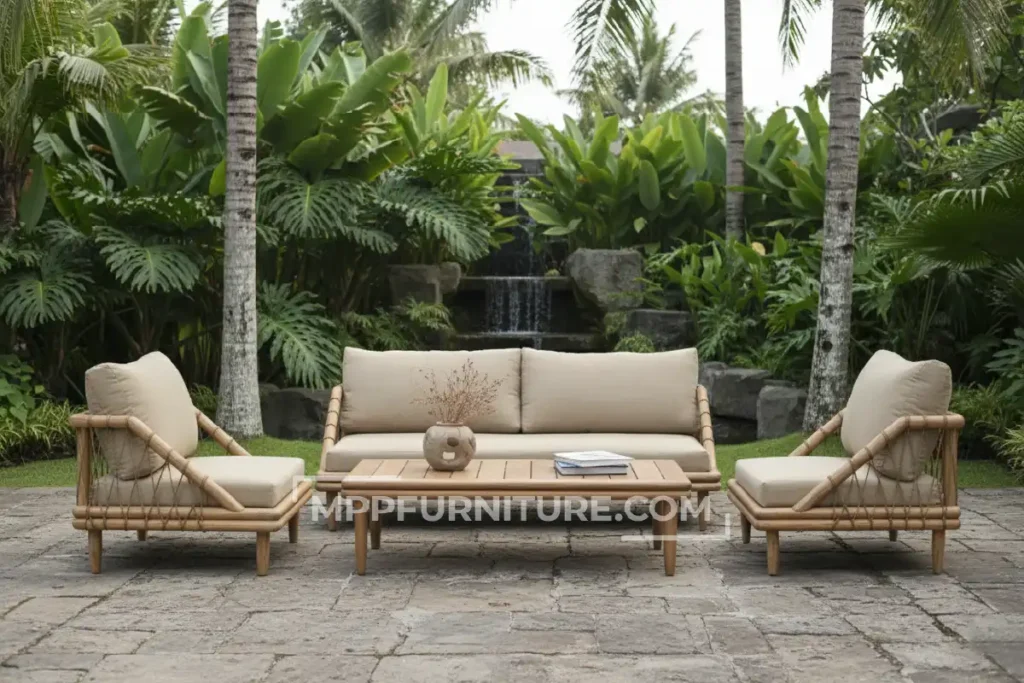
Why we use it: Sungkai has a clean, modern grain and takes finishes well. It’s lighter than teak, which helps with handling and freight.
Best use: Semi-outdoor under roof: patios, verandas, cafés with awnings. Not for direct rain or full sun.
MPP notes from production:
- We keep MC at 10–12%, then use water-based sealers and outdoor-rated topcoats.
- Designs avoid large flat tops without drainage; we prefer slats or chamfered edges to shed water.
- For mixed-media sets, we pair sungkai frames with synthetic rope/HDPE wicker and quick-dry cushions.
When to choose it: Value-driven collections with a light aesthetic where the use is covered.
*Read more: Sungkai Must-Read
From our experience, all outdoor furniture must use finishing specifically designed for outdoor applications, including teak. Based on our years of production and supported by laboratory tests (we use Propan), this type of finishing effectively prevents water from penetrating the wood and helps the color maintain its stability for up to one year without visible changes.
How MPP Makes Wood for Outdoor Furniture Last Longer
As an experienced Indonesian Furniture Supplier, we don’t rely on finish alone. Longevity comes from material + drying + construction + coating working together.
Stage 1: Kiln Drying & Moisture Targets
- We sort lumber by thickness, then kiln-dry to 10–12% MC for export climates.
- After drying, parts are conditioned for at least 48 hours before machining to reduce post-assembly movement.
- High-risk spots (wide tabletops, leg bottoms, mortises) get moisture checks again before finishing.
Why it matters: Stable moisture lowers the chance of checking and joint cracks once the product hits a dry or air-conditioned environment.
Stage 2: Construction & Joinery That Tolerate Movement
- Mortise-and-tenon or screwed + dowel joints with exterior-grade adhesive.
- Expansion gaps for slats and panels so water drains and wood can breathe.
- Mechanical fasteners in hidden areas allow service if parts ever need tightening.
- End-grain sealing at feet and tops to reduce moisture uptake.
Why it matters: Wood will move, and good joinery and design give it room to do so without failing.
Stage 3: Finishing System: Sealers, Coats, and Hardware
- System approach, not a single coat:
- Penetrating sealer (solvent or water-based, project-dependent)
- Color coat or natural look
- 2–3 protective topcoats with UV absorbers
- Stainless steel or corrosion-resistant hardware to prevent staining.
- Optional nano top-up kits for retail partners to sell as maintenance add-ons.
Why it matters: Coatings slow UV and moisture impact, but the build quality beneath is what keeps finishes from lifting.
Match Wood to Market & Climate (Quick Guide)
| Market / Climate | Recommended Wood & Use | Notes |
| Coastal, high UV & salt | Teak in full exposure | Patina is acceptable; offer cleaner + brightener kits. |
| Temperate, covered patios | Mahogany or Sungkai in shade | Use multi-coat systems; include care card. |
| Hospitality (high traffic) | Teak frames; slatted designs | Faster dry-out after rain; easier housekeeping. |
| Value retail lines (covered) | Sungkai semi-outdoor sets | Pair with synthetic rope/HDPE and quick-dry foam. |
Need mixed containers? We can combine teak for full outdoor and sungkai/mahogany for covered areas in one shipment.
Why Buyers Trust MPP
Choosing the right manufacturing partner is as important as choosing the right wood. Many of our long-term buyers stay with MPP because they’ve seen consistent quality, honest communication, and strong after-sales support.
Expertly Handcrafted
Skilled artisans handle shaping, sanding, and finishing, supported by CNC, where precision helps repeatability. Each piece goes through checkpoints from lumber selection to final wrap.
Attention to Detail
Tight joinery fits, sealed end-grain, stainless hardware, and clean finishing inside edges (not just visible faces). These small things add up to fewer returns.
Reliable Indonesian Furniture Manufacturer
One-stop service: free consultation, free product development, OEM/private label, full in-house production, and QC at each stage. Our B2B clients value smooth coordination from design to delivery.
So Which One is Right For You?
Every type of wood has its own advantages, and the right choice depends on your market, design, and budget preferences. Whether you want the premium endurance of teak, the classic look of mahogany, or the modern appeal of sungkai, MPP is ready to support your decision. Our role is to help you build the right collection for your customers, backed by technical expertise, reliable production, and ongoing support throughout your project.
Planning your next best-selling collection?
Request catalog, pricing info, MOQ, and custom options today — we’ll respond quickly.
FAQs
What is the best wood for outdoor furniture?
For full exposure, teak leads because of its natural oils and stability. For covered patios, mahogany (with a strong coating) and sungkai (with an outdoor-rated finish) perform well.
Can Indonesian mahogany wood be used outside?
Yes, but in covered areas or with heavy protection and routine care. For rain and direct sun, teak is safer.
Is Sungkai good for semi-outdoor?
Yes, when shaded and properly coated. We design to avoid water pooling and use outdoor-rated hardware and finishes.
What moisture content do you target?
We target 10–12% MC before assembly and finishing for export markets.
Can sungkai wood be used outside?
Yes, but in covered areas or under protection area. No direct sunlight or rain. Use outdoor finish for protection

Hi, I’m Salman, founder of MPP Furniture, an Indonesian furniture manufacturer serving global retailers and project-based clients.
I began my career in my family’s export-oriented furniture company, gaining hands-on experience in production, construction, finishing, material performance, and product development. With a clear understanding of how international buyers evaluate furniture quality and reliability, I founded MPP Furniture to deliver export-ready products with consistent standards.
Here, I share insights from the perspective of a furniture manufacturer working directly with production teams on the factory floor, focusing on manufacturing and supplier evaluation.
Connect on LinkedIn
0 Comments