Indonesian outdoor furniture lives in conditions that punish mistakes. Outdoor furniture finishing is the engineered protective layer that separates durable collections from high-risk products. It works as the first line of defense against UV exposure, moisture, and surface degradation, while also shaping how end customers judge quality over time.
Sun, rain, humidity shifts, salt air, and temperature swings test every joint and surface. In that reality, finishing is not cosmetic. It is the engineering layer that decides durability, appearance stability, customer satisfaction, and retail risk. Most outdoor furniture failures don’t happen at the factory, but months after the product reaches the customer.
In this article, we explain why finishing outdoor furniture matters more than many buyers expect from an Indonesian furniture manufacturer’s perspective, how poor finishing creates real business problems, and how a disciplined finishing system helps buyers reduce commercial risk and protect long-term brand value.
Why Outdoor Furniture Fails Months After Delivery
Most outdoor furniture does not fail immediately after shipping. In many cases, products look fine during inspection and at loading. The problems usually appear 6–12 months later, after the furniture has been used by the buyer’s customers and real exposure begins.
From our manufacturing experience, the most common failures reported at this stage are peeling and flaking. These issues rarely show up at the factory because the finishing has not yet faced continuous sun, humidity, and weather stress.
When complaints reach the buyer, the root cause is usually not the wood or handling. In most cases, the problem comes down to an unsuitable finishing system. A finishing system that looks acceptable at delivery but is not designed for sustained outdoor exposure will begin to break down once the product is in the market.
At that point, the impact extends beyond the product itself. End customers file complaints, returns become harder to manage, and dissatisfaction often turns into negative online reviews. These reviews remain visible long after the issue occurs, influencing future buying decisions and slowly damaging the buyer’s brand reputation
This is why outdoor furniture failures often feel unexpected to buyers. The product passes inspection, ships without visible defects, and only fails after the sale, when the buyer is already responsible for customer satisfaction.
Indonesian Outdoor Furniture Faces a Different Reality Than Indoor Furniture
Indoor furniture lives in a controlled space. Outdoor furniture does not.
Once a product leaves the factory and lands in the destination market, it faces conditions no supplier can fully predict:
- UV exposure that breaks down surface fibers and fades color
- Humidity cycles that force wood to expand and contract
- Rain and condensation that test moisture resistance
- Salt air and pollution in coastal markets
- Temperature changes between day and night
Wood is a natural material. Even boards from the same log can behave differently. For buyers evaluating material suitability, understanding wood behavior is as important as understanding finishing systems. That is why outdoor furniture performance depends on a system, not assumptions. Drying, construction, and finishing must work together. Among these, finishing is the layer that directly meets the environment every day.
You can explore a deeper breakdown of suitable woods in this guide: Indonesian Wood for Outdoor Furniture
What Finishing Actually Does for Indonesian Outdoor Furniture Performance and Your Business
Finishing outdoor furniture has two jobs that cannot be separated: technical protection and commercial protection.
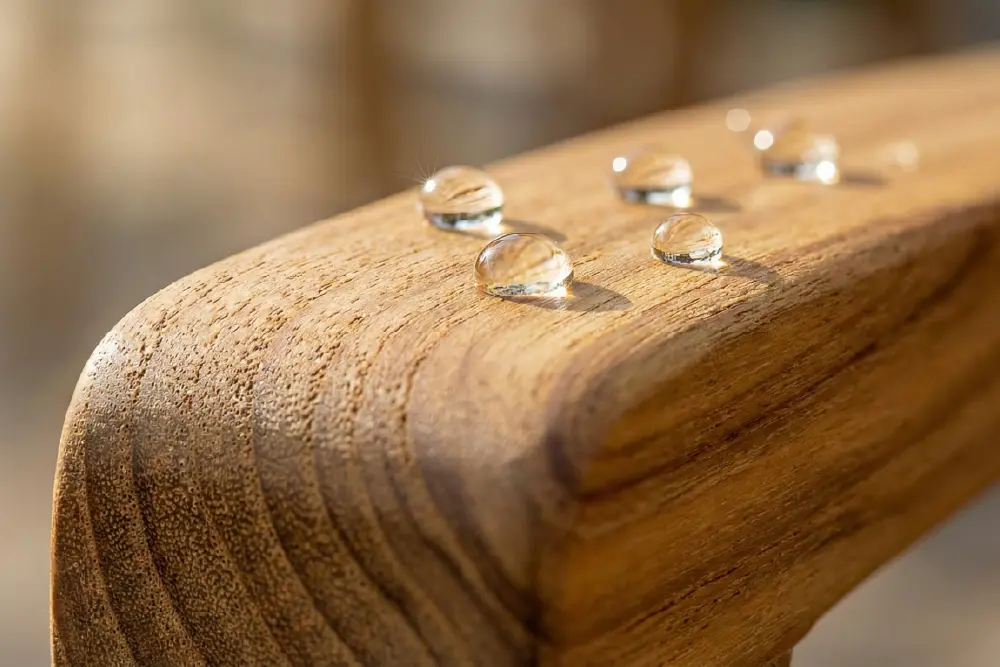
The Technical Role of Finishing
A proper outdoor finishing system:
- Slows UV damage and color breakdown
- Limits moisture penetration and surface swelling
- Protects exposed surfaces that face the sun and rain directly
- Helps wood move without cracking when humidity changes
This is why curing time matters. Finishing that is rushed may look fine at loading, but it often fails months later in the market.
At MPP, finishing is never accelerated beyond standard operating procedures. Curing follows the supplier's finishing standards, and lead time is calculated with this process in mind.
The Business Role of Finishing
Poor finishing not only damages furniture. It damages the buyer’s business.
From real sourcing experience, there have been cases where the wood species was premium, but the finishing system was not outdoor grade. Products faded, peeled, or aged unevenly. End customers lost trust and left negative reviews. Retailers faced higher return rates and slower repeat sales.
In one outdoor collection development project, a buyer compared finishing approaches across factories. MPP recommended outdoor-grade finishing from the beginning. Another factory used a non-outdoor-grade system. The buyer eventually applied MPP’s finishing recommendations even at the other factory for running products.
This shows one thing clearly: finishing quality defines outcome more than the wood itself.
When finishing is right:
- Products age more predictably
- Complaints drop
- Brand perception stays premium
- Retail margins are easier to defend
Why Wood Species Alone Is Not Enough
Teak, mahogany, and sungkai all have different strengths. None is immune to outdoor exposure.
Teak contains natural oils, but exposed surfaces still need protection if color stability matters. At MPP, teak is treated with a teak blocker to control oil migration and support finishing performance.
For a broader view of why teak remains popular in outdoor collections, see: https://mppfurniture.com/benefits-indonesian-teak-outdoor-furniture/.
Mahogany and sungkai machines are beautifully crafted, but outdoors, they require thicker protective coatings to withstand moisture and UV stress.
The common mistake is assuming material choice solves everything. In reality, the same wood with different finishing systems will perform very differently once exported.
Common Problems Caused by Poor Outdoor Furniture Finishing
Quick Buyer Check: Before committing to production, ask whether the finishing system is designed for outdoor exposure, applied in multiple controlled layers, cured according to standard timelines, and verified against an approved swatch. These checks alone prevent most finishing-related failures.
When finishing is not designed or controlled properly, problems appear quickly:
- Color fading and uneven aging
- Peeling or flaking due to poor adhesion or rushed curing
- Sticky surfaces from incomplete drying
- Mold or dark stains caused by trapped moisture
- Early joint stress when surface protection fails first
The most vulnerable areas are surfaces with direct exposure, such as tabletops, armrests, and seat tops. These failures rarely become apparent during factory inspections. They appear in the customer’s outdoor space.
How Buyers Can Evaluate Outdoor Furniture Finishing When Sourcing from Indonesian Suppliers
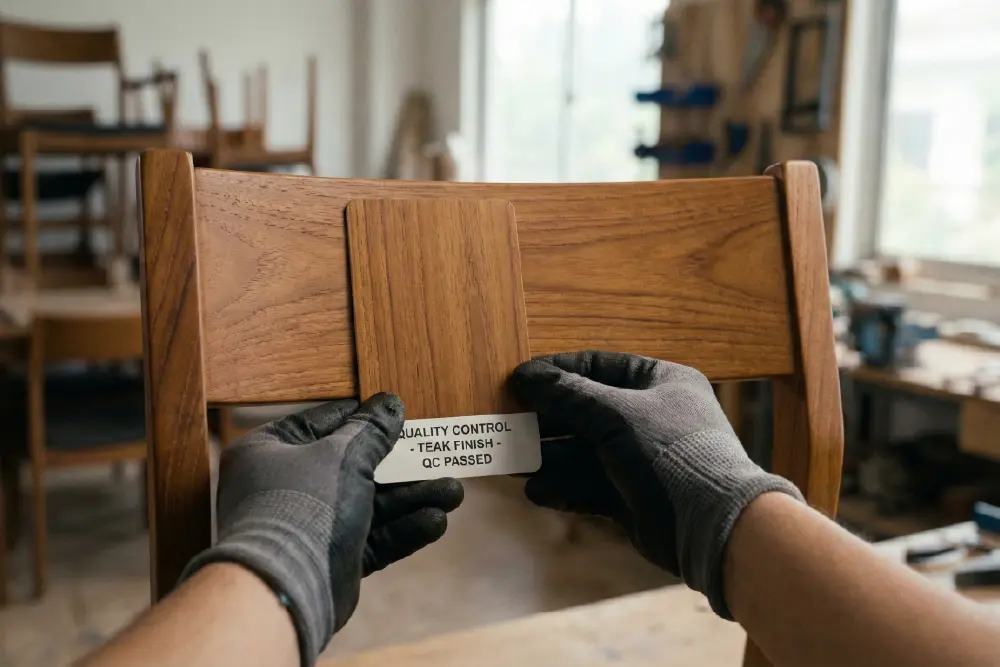
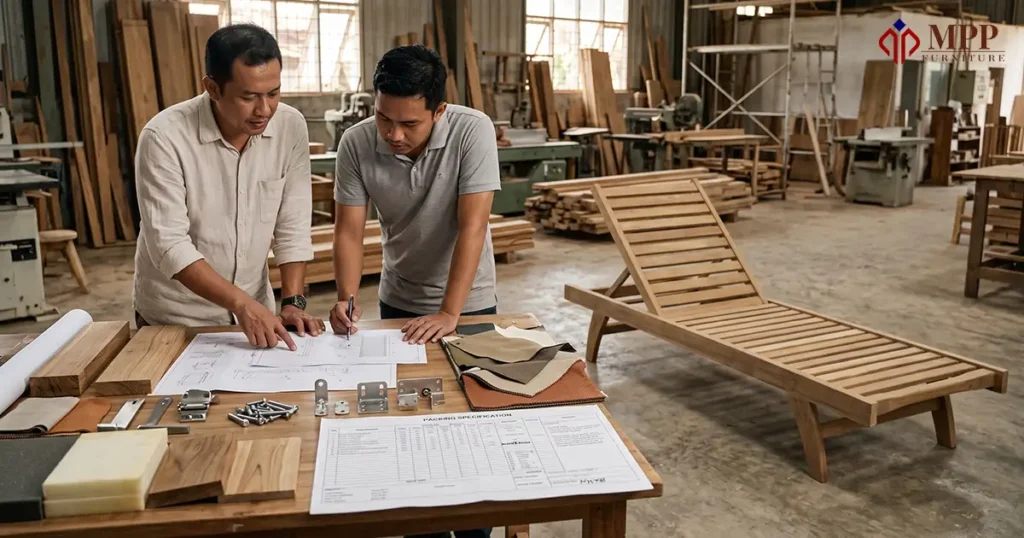
Buyers do not need to be finishing experts to reduce post-delivery risk. What matters is knowing what to check, what to ask, and what to request before production starts. Most finishing failures can be traced back to unclear specifications, rushed curing, or assumptions made too early in the sourcing process. The key is asking the right questions. A practical visual guide on identifying finishing quality is available here: https://mppfurniture.com/indonesian-furniture-wood-finishing-guide/.
Questions Buyers Should Ask Suppliers
Clear questions reduce hidden assumptions. Buyers should ask:
- Is the finishing system outdoor grade or indoor grade?
- How many finishing layers are applied, and what is the curing time for each stage?
- Are different wood species treated with different finishing systems, or is one system used for all materials?
- Are high-exposure areas such as tabletops, armrests, and seat tops treated differently from hidden surfaces?
Vague answers at this stage often signal higher risk later.
What Buyers Should Request Before Production
Beyond verbal confirmation, buyers should request tangible references:
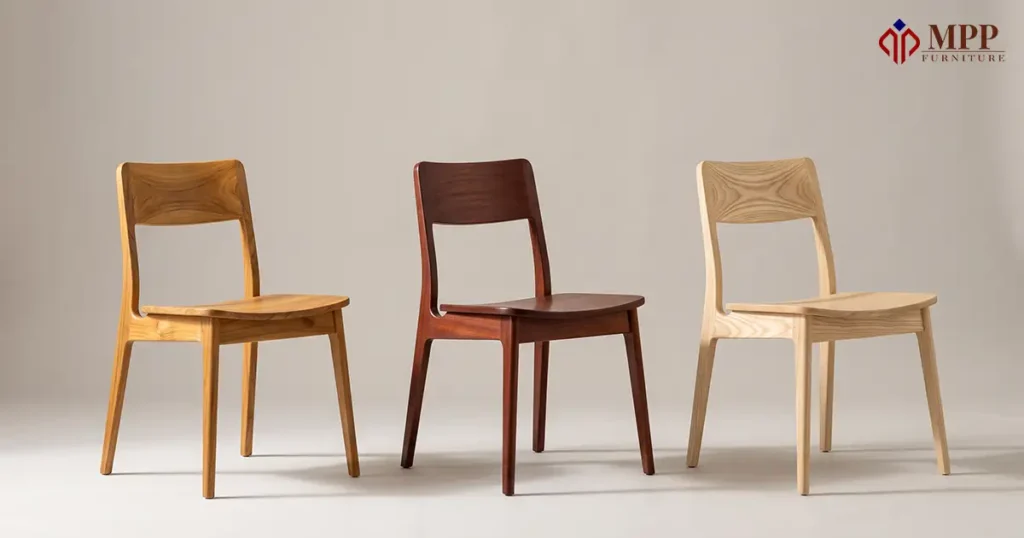
- Finishing swatches approved in writing before production starts
- Clear confirmation that production output must match the approved swatch, not just color tone, but surface feel and build
- Written alignment that curing time will not be shortened to meet shipping deadlines
When expectations are documented early, finishing performance becomes more predictable after delivery.
Why This Evaluation Matters
Finishing failures rarely appear during factory inspection. They show up months later, in the customer’s outdoor space, under real exposure conditions. At that point, buyers carry the commercial risk, not the factory.
Evaluating finishing properly before production is one of the simplest ways buyers can protect product performance, brand reputation, and long-term sell-through in their target markets.
Not all suppliers apply finishing with this level of structure and control. In practice, the difference lies in whether finishing is treated as a final touch or as a managed manufacturing process that affects long-term performance.
How MPP Approaches Outdoor Furniture Finishing Differently
Finishing at MPP, the Indonesian Outdoor Furniture Manufacturer is treated as a controlled manufacturing process, not a final touch.
System Before Production
- Finishing swatches are approved and kept by both the buyer and the factory
- Each color has its own application method and process control
- Finishing decisions consider the target market climate and exposure. This approach aligns with broader market direction discussed in Indonesian outdoor furniture trends: https://mppfurniture.com/2025-outdoor-furniture-trends-indonesia/
Controlled Execution
- A dedicated head of finishing supervises each finishing stage
- Curing time always follows established procedures
- Teak, sungkai, and mahogany receive different treatments based on material behavior
Quality Control That Can Stop Production
- After finishing, a final inspection is conducted by the head of QC
- Color consistency and surface quality are verified
- If results do not match the approved swatch, finishing is revised before packing
This system exists to prevent post-shipment defects, not to make products look good at loading. When required, laboratory testing can be provided by the finishing supplier to support technical decisions.
Why Better Finishing Protects Your Business, Not Just the Product
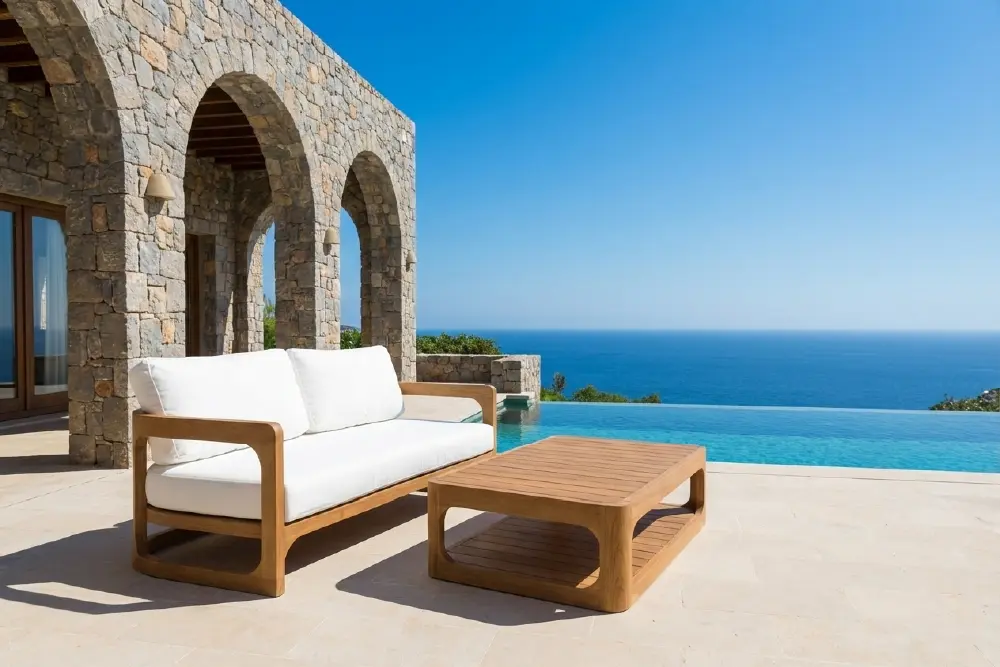
For furniture buyers, finishing decisions extend far beyond the product itself. The quality of finishing directly influences how the buyer’s brand is perceived, how customers respond after purchase, and how much commercial risk sits behind every shipment.
Finishing quality affects:
- Customer trust at the retail level
- Online reviews that influence future sales
- Return and complaint rates
- Brand positioning in premium and mid-market segments
When finishing fails, the end customer does not blame the climate or usage. They blame the brand on the label.
At MPP, an outdoor furniture manufacturer from Indonesia, finishing outdoor furniture is viewed as how the end customer sees and judges the buyer’s product over time, not simply how it looks on day one.
Finishing Is Where Outdoor Furniture Wins or Fails
Indonesian outdoor furniture performance is decided long before the container ships. Finishing is the layer that stands between natural wood and unpredictable environments.
Wood choice matters. Design matters. But without the right finishing system, both lose value quickly.
For buyers scaling collections across markets, finishing consistency becomes a safeguard for repeat orders, predictable sell-through, and brand credibility. Indonesian furniture manufacturers that treat finishing as a controlled system, rather than a final touch, help buyers operate with fewer surprises after delivery.
MPP works with buyers who want predictable outdoor performance, controlled finishing standards, and lower post-delivery risk. Finishing discussions and sample evaluations are typically done before production to align expectations and reduce uncertainty.
Planning your next best-selling collection?
Request catalog, pricing info, MOQ, and custom options today — we’ll respond quickly.

Hi, I’m Salman, founder of MPP Furniture, an Indonesian furniture manufacturer serving global retailers and project-based clients.
I began my career in my family’s export-oriented furniture company, gaining hands-on experience in production, construction, finishing, material performance, and product development. With a clear understanding of how international buyers evaluate furniture quality and reliability, I founded MPP Furniture to deliver export-ready products with consistent standards.
Here, I share insights from the perspective of a furniture manufacturer working directly with production teams on the factory floor, focusing on manufacturing and supplier evaluation.
Connect on LinkedIn
0 Comments