When it comes to furniture choices, custom pieces become a popular option due to their exclusivity, convenience, and perfect functionality. However, the great idea might not go as expected if you don’t plan and communicate how you want the items to be, leading to over-budget, or worse, a failed project.
As an experienced Indonesian furniture manufacturer handling custom projects worldwide, we are well aware of the issue. The best way to avoid the pitfalls is by learning what people usually overlook. Here are 8 common mistakes to avoid when ordering custom furniture.
Why Ordering Custom Furniture Requires Careful Planning
Before jumping into the main discussion, let’s talk about why planning your custom order is important.
Custom Furniture vs. Standard Furniture Risks
Ordering custom pieces actually offers unlimited creative freedom, but when there’s no specific briefing and creative definition, from what material to use, the joinery vision, to the finishing option, it can only bring you unwanted products.
Unlike custom furniture, these detailed instructions are not needed for general, export-ready items. Therefore, the risk of getting products that don’t match your expectations is minimal, thus not affecting the business operations and budget allocation.
Why Mistakes Can Lead to Costly Delays and Rework
Don’t get us wrong, for complex product delivery in the export industry, a single error from poor briefing & communication can cost you a lot, from unsellable items to budget waste. If that happens, the only possible solution without sacrificing the paid budget is rework.
However, this also comes with more risks as rework usually costs more than creating the items from scratch. Not to mention the delays that will also impact the expected timeline you promised to the client, affecting your bottom line and brand reputation.
Now you know why it’s vital to plan your custom orders in detail, learn to avoid these mistakes.
Mistake #1 — Unclear Project Objectives
Custom order means the items will be placed for specific spaces. This is why defining clear objectives is crucial.
Not Defining Functional and Business Requirements
Custom furniture must be designed with its specific function in mind. Is it going to be for high-traffic areas like hotel lobbies, or places with unique aesthetic appeal like cafes & restaurants, or simply for functional residential houses?
Define how it’s going to be used, how it helps customers with easy practicality, and other important functional requirements. Not having a clear service purpose will lead you to a mismatched product for the space function.
Ignoring End-Use and Environment Conditions
When buying furniture, many people fail to consider their hometown's climate conditions, ending up with them getting products that don’t last as expected due to an environmental difference from where they should be placed. The best way to prevent this is to determine the material and finish option that can best stand your client’s environment.
Mistake #2 — Choosing Materials Based on Appearance Alone
The proverb “don’t judge a book by its cover” also applies to furniture buying, since not knowing the long-term use of certain materials results in shortened product lifespan.
Overlooking Durability and Usage Conditions
Another thing that is commonly missed is that customers are often blinded by the material appearance without considering its lifespan. A particular wood might look breathtaking, but sometimes it’s not the perfect choice for a certain space.
For example, the Indonesian Sungkai wood is known for its astonishing light-toned visual appeal, and it’s a go-to choice for minimalism design styles. Despite being the market favorites, Sungkai doesn’t stand well in an outdoor setting. making it only best-used for interior spaces.
Selecting Materials Without Market Context
Another fatal decision made is when buyers don’t see a broader context in the market trend. Choosing a low-demand wood might confuse your customers, as it’s not a familiar timber choice in today’s furniture trend.
For example, due to the high demand for light-toned, neutral wood needed for minimalist styles, Sungkai also joins the market demand as one of the woods that people hunt for. At the same time, Mindi experiences the same demand as Sungkai since the dark-toned furniture also rises among vintage furniture lovers.
Mistake #3 — Underestimating Design Complexity
When you make a custom order, a distinct joinery is mostly requested. You need to take notes that this needs more time to accomplish.
Custom Details That Increase Cost and Lead Time
Intricate furnishings indeed add character to your brand, but it’s best to note that this specific request can exponentially increase production time. This is why you should also limit your creative vision to balance the project budget & deadline. The more complex the request is, the longer it takes to finish the product, impacting the cost you spend.
Failing to Balance Design Vision and Production Reality
Having a certain design vision might be a smart move to have a distinct brand image, but sometimes it only looks great in your mind. The final product can be a lot different due to material inflexibility, production, or even skill issues.
The best way to balance the two is to search for the right manufacturing partner that can help turn your vision into reality and help them with communicating your needs clearly.
Mistake #4 — Ignoring Production Capabilities
Paying attention to how well your partner works can affect the final product, which is also often overlooked by many buyers.
Risks of Working with Non-In-House Manufacturers
In the export furniture industry, it’s best to make sure whether your partner produces the items directly in their production house or simply acts as a “supplier”.
When you are partnering with a middleman, you’re actually taking a higher risk, since the communication chain automatically becomes longer, making the miscommunication higher. Not to mention the lack of production supervision that potentially alters the design vision.
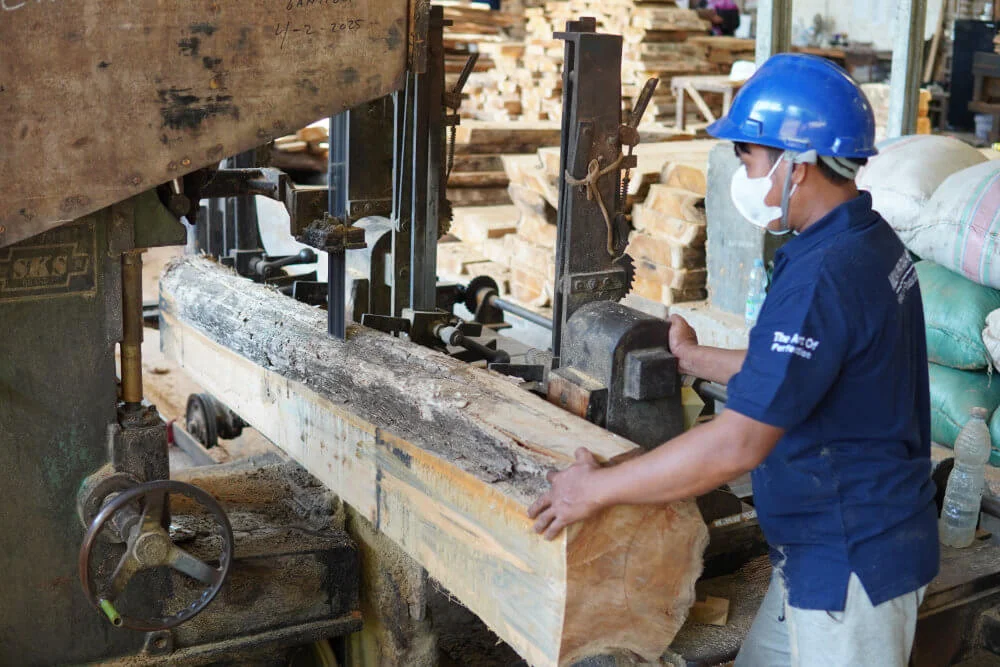
Looking into this matter, this is why all production stages are conducted at MPP Furniture’s 16,000 m² production factory for direct quality control, ensuring the exact product shape, finish, and design that our clients request.
Inconsistent Quality Across Batches
When the supplier actually produces the furnishings itself, this also guarantees direct quality control that helps with consistent quality, especially for large orders that require the same precision applied to each item.
By utilizing in-house production, MPP Furniture maintains 100% control over the kiln-drying, machining, and even finishing process, ensuring identical, equal treatment across items.
Mistake #5 — Skipping Prototyping and Sampling
Since custom products are exclusive, it will be difficult to find the perfect image to help you align your vision. This is where it’s important to request sampling from your partner.
Why Visual Mockups Are Not Enough
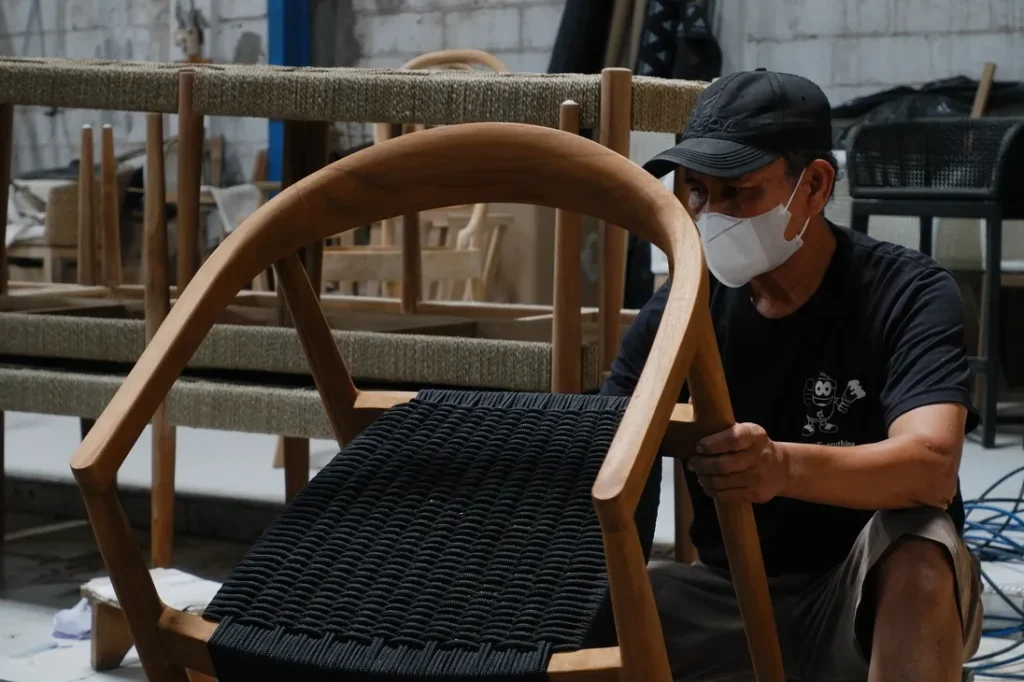
Still images, 3D renders, or even a 360° virtual tour won’t help you as much as a direct visit. As the sole objective is to meet your expectations, it’s best advised to touch and feel the product on your own through a sampling. For this reason, MPP Furniture provides a product sampling request and welcomes you warmly for a visit before finalizing your custom order.
The Cost of Errors Discovered Too Late
Asking for prototyping also helps reduce the cost you must spend when the products don’t come as expected. Otherwise, you must allocate another budget for product rework, resulting in a delayed deadline and budget overrun.
Mistake #6 — Failed Estimation of Lead Time and Logistics
Poor custom order planning also results in incorrect deadlines that you promise to your customers.
Production Timelines vs. Project Deadlines
One of the reasons why communication matters in custom orders is to help align the time you can receive the product from the supplier and the time you can deliver it to your customers. Custom manufacturing itself takes time, from the timber selection, product sampling, to manufacturing production.
Export, Shipping, and Delivery Considerations
If you’re buying furniture from another country, this means that there is more time to consider before the product arrives safely in your hands. For overseas transactions, it’s also important to allocate more time for delivery time estimation since global shipping is less predictable.
To prevent overhead cost from a failed lead time estimation, ask in detail about every production stage to your partner. MPP Furniture is also aware of the issue, which is why we always implement transparent communication about our process to our clients.
Mistake #7 — Focusing Only on Initial Cost
Since custom projects cost more than general orders, many buyers fail to consider more than the initial cost. Here is the explanation.
Short-Term Savings vs. Long-Term Value
Custom orders are expensive for a reason since you are paying for two. One to pay for the request complexity, and also one for the long-term purpose. This is why your business should be financially ready for the cost.
Remember, do not sacrifice the long-term value of the product for the sake of satisfying your customers with the “one-of-a-kind items” that actually last shorter than general furniture pieces.
Maintenance, Durability, and Replacement Costs
To determine the long-term value, you can estimate the cost based on the material selection. Premium, high-quality woods don’t need to be repaired or replaced often, providing better value over time. Take note that this definitely increases the price point; but it’s yours to choose whether to sell quality, unique pieces, or just solely the uniqueness of the product.
Mistake #8 — Poor Communication with the Manufacturer
Last but not least, not communicating clearly about what you want is commonly done by many buyers. Here’s why it’s vital for the final product.
Incomplete Specifications and Assumptions
People interpret things differently, even if they are looking into the same thing; the same goes for ordering custom pieces. If you are not giving clear instructions on how the furniture should be crafted, then the manufacturer only rely on their assumptions based on the limited information.
Why Clear Documentation Matters
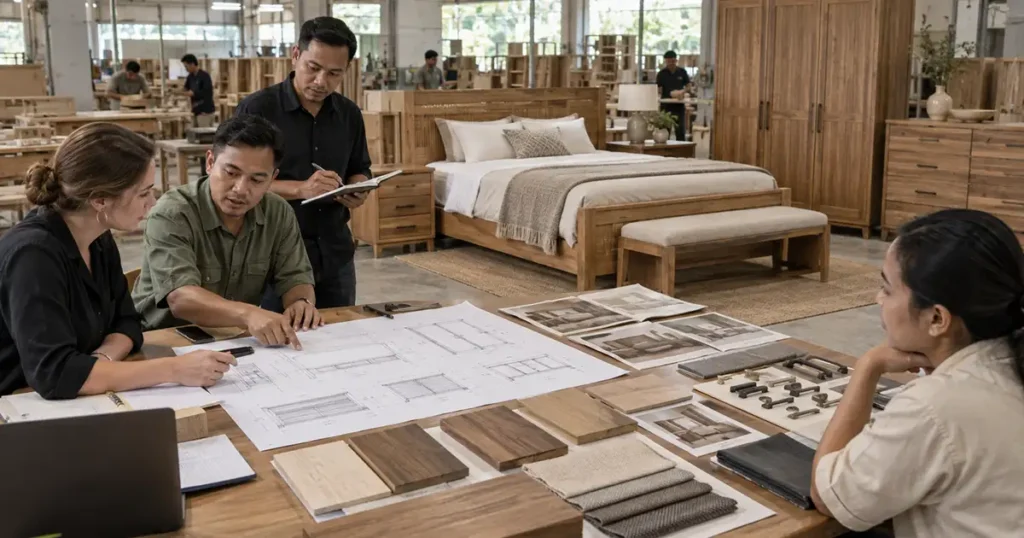
To avoid this, you can prepare a detailed guideline that contains specifications, design approach, distinct shape & joinery, finish option, and all the important information needed to transfer clear directions to the manufacturer.
How to Avoid These Mistakes When Ordering Custom Furniture
Now you know the mistakes buyers often overlook, but how to avoid these from happening? You can simply do these two things.
Providing Detailed Guidelines and Expectations
For overseas transactions, communication is key, especially in the case of custom orders. To communicate your expectations well, you can prepare a document that provides clear instructions on how you want the final product to be.
Good communication is also needed for better deadline estimation, so make sure that the lead time is accurate by actively asking the supplier about how long it takes to source the wood, craft the furnishings, and ship the products.
Choosing an Experienced Custom Furniture Manufacturer
How well you communicate your expectations won’t work if the manufacturer doesn’t value communication as much as you do. This is why partnering with an experienced manufacturer in handling custom orders is critical. The track record indicates that they are aware of and emphasize the importance of communication during the collaboration.
Like MPP Furniture, that is already in the export furniture industry for over 20 years, we always prioritize transparent communication for every project, especially for custom orders. We make sure your specific vision balances the capabilities of our production so that the final product can meet your expectations.
When Custom Furniture Becomes a Strategic Advantage
The rising trend of bespoke furniture is actually a great opportunity to increase sales with custom pieces. However, the opportunity won’t give you any advantage when done incorrectly. Take notes of these things before deciding on launching custom product lines.
Turning Design Intent into Production-Ready Solutions
Custom furniture is usually produced for specific needs. This is why you need to perfectly capture and define your customers' pain points. By understanding this, you can offer a product that is actually needed by them, instead of selling it as a “show-off” product.
Try answering these questions:
“Why do they need these specific pieces? Are there space issues that hinder their daily operations and need improvement?”
“How will the furniture ease their daily activities?”
“How do the custom pieces help with the brand identity?”
“What level of durability is needed based on the usage intensity?”
Aligning Custom Furniture with Business Goals
Last but not least, unique pieces won’t be valuable enough if it doesn’t support your business objectives. So, it’s best to determine why you need to sell custom products, whether it is to strengthen your brand positioning or to target specific customer segments.
Wrapping Up: Reducing Risk in Custom Furniture Projects
In conclusion, custom furniture is not a high-risk project if you can communicate your expectations clearly to the supplier. This can be done by providing a document as a pivotal, end-to-end guideline on how to execute the products.
Choosing the right partner also determines the final product. A trusted furniture supplier that knows how to handle custom projects understands the specific issues that often occur during the process, and their experience and project sensitivity will tackle the problems easily.
Start Your Custom Furniture Project with Confidence
Not only determining those two, but you must also align the need for ordering custom furniture with your business' future vision. By defining the business objectives, you can make a more informed decision and market the custom products more effectively.
What to Prepare Before Contacting a Manufacturer
Before starting the project, it’s best to prepare these beforehand. Make sure your part is well-prepared to avoid costly delays when the process has already begun.
- Design inspirations: image references or CAD drawings
- Detailed guideline: product specifications, dimensions, design brief, material selection, finish option & quality, clear instructions for specific treatment
- Quantity & target delivery date
How MPP Furniture Supports Risk-Free Custom Projects
MPP Furniture is the perfect furniture supplier & manufacturer that can help you launch your custom product lines with confidence. We’re open for ODM/OEM custom requests and offer free development product services for future alignment.
Our in-house production house helps us conduct direct control over the product quality, ensuring consistent quality across batches. We also offer premium handcrafted pieces, created by our 200+ highly-skilled craftsmen in-house who have also mastered artisanal joinery, making sure your design visions are translated accurately into the final product.
We’re also aware of the importance of communication in a collaboration. This is why we always prioritize transparent communication with our clients; proven with our almost-perfect reputation of 99% client satisfaction and only 0.56% complaint ratio from our clients in Dubai, Australia, Spain, and more.
If you’re still hesitating on whether to launch specific product lines, request a free consultation, and see how we can help you manifest the creative ideas into life!
Planning your next best-selling collection?
Request catalog, pricing info, MOQ, and custom options today — we’ll respond quickly.

A passionate writer with 3+ years of experience in SEO who turns complex ideas into informative & helpful content. I share the challenges & important considerations when preparing a global furniture project, hoping to help MPP Furniture’s readers make more informed business decisions.
0 Comments