When sourcing Indonesian furniture, many buyers focus first on unit price. On paper, the numbers look attractive. In real retail operations, however, price rarely determines success. Lead time does.
For furniture retailers, wholesalers, and boutique owners, lead time decides when products arrive, whether collections rotate on schedule, and if seasonal sales targets can be met. A lower-priced product that arrives late often costs more than a higher-priced product that arrives on time.
This article explains why lead time should be treated as a business decision rather than a logistics detail. It shows how lead time affects indoor and outdoor furniture differently, why seasonality raises the stakes, and how to assess whether the Indonesian furniture suppliers can truly deliver on schedule.
Why Lead Time Is More Important Than Price for Furniture Retailers
Price is easy to compare. Lead time is harder to judge, but it has a deeper impact on profit, cash flow, and inventory planning. For retailers, lead time defines whether furniture can actually be sold when demand exists.
Lead Time Determines Whether Indoor and Outdoor Furniture Can Actually Be Sold on Time
Indonesian furniture, both Indoor and outdoor behave differently in retail cycles.
Indonesian indoor furniture is more flexible. Dining tables, cabinets, and bedroom pieces can sell throughout the year. Even so, indoor collections still follow launch calendars, showroom refresh cycles, and marketing campaigns. When delivery slips, planned launches get delayed, and showroom space stays locked with old stock.
Indonesian outdoor furniture is far less forgiving. Outdoor collections depend heavily on weather-driven buying cycles. Spring and summer are short-selling windows. If outdoor furniture arrives one or two months late, the selling season may already be over. In that situation, even a very low unit price cannot recover lost revenue.
This is why lead time matters more than price for outdoor collections. A lower price only works when the product arrives before customers start buying. In practice, we see this most often when buyers switch suppliers purely based on price, only to face delayed shipments that miss retail launch windows.
Seasonality Turns Lead Time into a Make-or-Break Sourcing Decision
Seasonality increases the risk of late delivery. Retailers do not plan orders based on factory start dates. They plan backward from launch dates.
For example, a summer outdoor collection may need to be in-store by March. That means photography, marketing, and pre-orders must be ready earlier. If a manufacturer’s lead time is unstable, buyers cannot commit to pre-orders with confidence.
This is why lead time reliability, not just speed, matters. A consistent 60-day lead time is often safer than an unreliable promise of 40 days. Stable lead time allows buyers to align sourcing with buying calendars, promotional schedules, and cash flow planning.
Why a Lower Price Fails When Lead Time Disrupts Inventory Planning
When lead time fails, the cost shows up in unexpected places. Retailers face stockouts during peak demand or overstock when goods arrive too late. Emergency sourcing from alternative suppliers usually comes with higher costs and rushed decisions.
At the same time, cash flow suffers. Deposits are paid months in advance, but revenue cannot be realized if products miss their selling window. In short, price savings disappear when inventory planning breaks down.
What Happens When Lead Time Fails in Retail and Wholesale Operations
Lead time problems rarely appear during sampling. They surface during production and shipping, when it is already too late to adjust plans.
Common outcomes include missed seasonal launches, cancelled wholesale purchase orders, and delayed showroom rotations. Retailers may be forced to hold inventory longer than planned, tying up capital and storage space.
For wholesalers, late delivery can damage relationships with downstream retailers who depend on timely supply. Once trust is lost, repeat orders become harder to secure.
From real field experience, one quality control buyer we worked with in France shared a case involving bathroom cabinets sourced from other manufacturers. The order took nearly one year to ship after confirmation.
By the time the products arrived, the retailer had already missed the planned product launch, marketing campaigns were cancelled, and projected income dropped sharply. Worse, the design itself had lost market relevance because trends had already shifted.
Why Lead Time Is Often a Challenge with Indonesian Furniture Suppliers
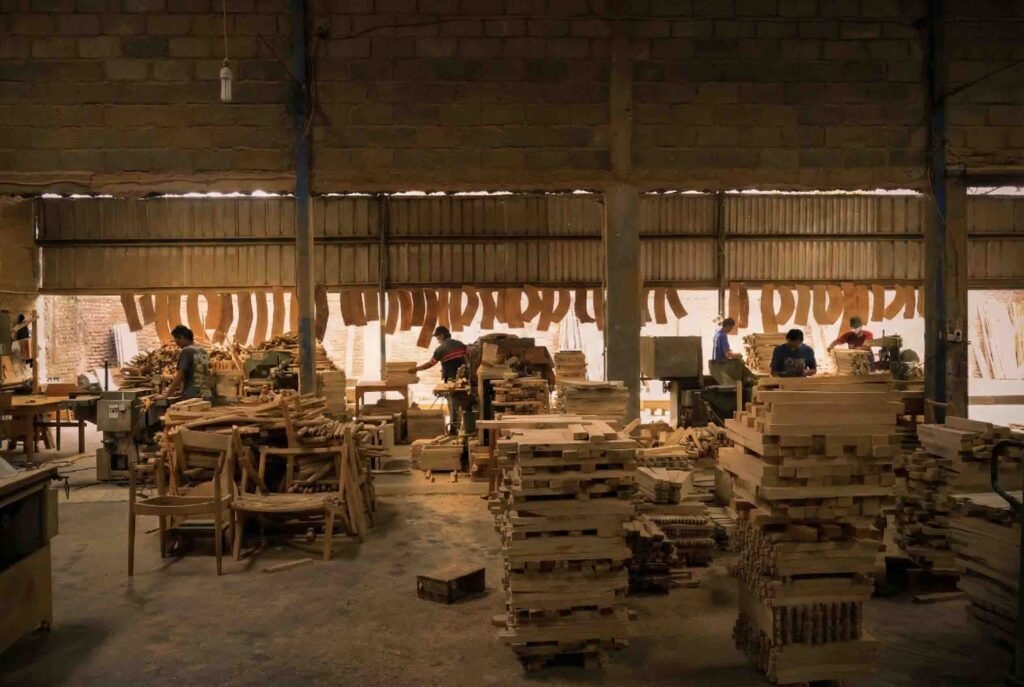
Indonesia offers strong craftsmanship and material availability, but lead time challenges are common. The issue is not the country itself, but how many suppliers operate.
From our production experience, unrealistic lead time promises usually fail not during woodworking, but during the finishing process, production sequencing, and when seasonal buffers are not planned together. This is where most small or underplanned factories start to fall behind schedule.
Many suppliers rely on outsourced workshops rather than fully in-house production. Samples may be produced quickly, but mass production depends on shared capacity across multiple workshops. When several orders overlap, timelines slip.
Manual-heavy processes also slow production, especially for complex designs. Beyond production structure, material handling plays a major role in lead time stability.
Indonesian Teak Furniture: Oil Control and Drying Discipline
Indonesian teak furniture requires strict oil control and controlled drying. If teak is rushed without proper blocking during finishing, oil bleed-through appears late in the process and forces rework. This is a common reason teak production exceeds the planned lead time.
For buyers who want to understand teak handling in more detail, you can learn more about teak wood from Indonesia here.
Sungkai Wood: Slow Kiln-Dry Cycles to Avoid Cracking
Sungkai wood is highly sensitive during kiln drying. Temperatures must be increased gradually. When drying is rushed, cracking occurs, and components are rejected, making lead time unstable even if assembly capacity is sufficient.
Buyers sourcing this material can explore in-depth technical information about Sungkai wood characteristics and risks here.
Mindi Wood: Similar Sensitivity, Different Failure Pattern
Mindi wood also requires patient kiln drying, but failures usually appear as deformation rather than cracks. These issues slow assembly and are difficult to correct later, which often pushes production beyond the planned timeline.
To explore this material further, you can learn more about Mindi wood from Indonesian suppliers here.
Indonesian Mahogany Wood: Insect and Fungi Treatment Takes Time
Indonesian mahogany wood needs thorough insect and fungi treatment that cannot be shortened safely. When this stage is compressed, problems surface after finishing and force rework, so the mahogany lead time must be planned from the beginning.
Buyers who want deeper insight can explore key facts about Indonesian mahogany wood here.
These material-specific requirements explain why claimed lead times often differ from actual delivery timelines.
Factors That Actually Determine Realistic Lead Time in Indonesian Furniture Production
For most export furniture orders, realistic production lead time generally ranges between 45 and 75 days, depending on material readiness, finishing requirements, and order complexity.
Realistic lead time is shaped by production reality, not sales promises. In practice, the most common failure point is production planning without proper risk management.
Lead time remains stable only when risks such as late material procurement, kiln-dry delays, production defects, and rework are anticipated before production begins.
Material readiness is the first factor. Wood must be properly dried and prepared before production starts. Machinery and workflow come next, which is why buyers should understand the machinery used by Indonesian furniture manufacturers.
Factories with adequate machinery can maintain consistent output and avoid bottlenecks.
Quality control also affects lead time. When QC only happens at the end, rework causes delays. Structured QC throughout production reduces last-minute corrections.
Finishing systems and SKU complexity further influence timelines. Outdoor furniture often requires longer finishing cycles than indoor furniture. Orders with too many variations increase planning complexity and slow production.
Understanding these factors helps buyers judge whether a lead time is realistic or optimistic, as outlined in the key factors when sourcing Indonesian furniture manufacturers.
What Furniture Buyers Should Check to Verify Lead Time Reliability
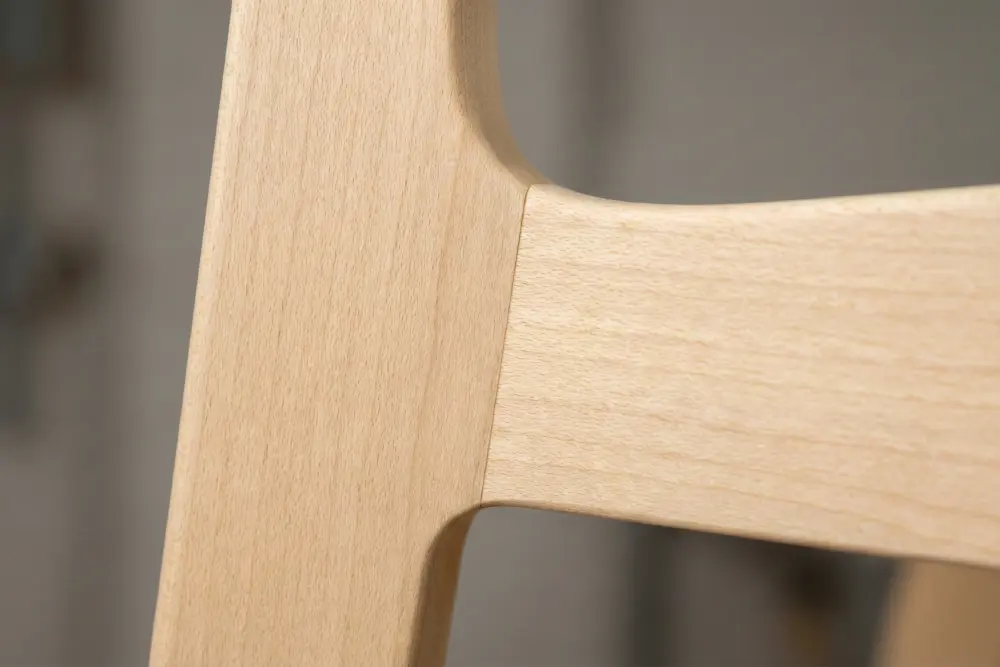
Before placing an order, buyers should verify how a supplier manages lead time. One of the most common buyer mistakes is accepting lead time claims at face value without auditing factory reality.
Wood drying alone can take weeks, and without proper kiln-dry facilities, production simply waits. Machinery availability, finishing facilities, and workflow capacity must be reviewed before trusting any marketing promise.
Key questions include who controls production planning, whether manufacturing is in-house, and how progress updates are shared. Buyers should ask how often QC checks are performed and how delays are communicated.
Red flags include vague timelines, overly short promises without explanation, and a lack of progress reporting.
In many cases, a lead time that sounds too fast becomes a warning sign when factory facilities do not support it. Green flags include transparent schedules, documented workflows, and clear communication when adjustments are needed.
A reliable supplier does not avoid discussing lead time risks. They explain them.
How MPP Ensures Stable and Transparent Lead Time for Global Buyers
MPP treats lead time as an output of production control, not as a sales claim. For running products, the average lead time is 45 to 60 days. New product orders require an additional 10 to 15 days for preparation before production starts.
Production is handled in-house, with machinery supporting a consistent workflow and quality checks applied throughout the process. This reduces rework, which is one of the main causes of delay in furniture manufacturing.
When issues outside direct control occur, such as late fabric supply, updates are communicated early. This allows buyers to adjust launch plans before problems escalate. Stable lead time comes from clear planning, clear limits, and clear communication.
Conclusion: Lead Time as a Long-Term Partnership Decision, Not a One-Time Quote
Lead time is not a line item on a quotation. It reflects how the Indonesian furniture manufacturers plan production, manage risk, and communicate limits. For buyers sourcing Indonesian furniture, this makes lead time a long-term partnership decision rather than a one-time negotiation.
When lead time is stable, retailers can plan seasonal launches, manage inventory with confidence, and protect cash flow. When it fails, even well-priced products lose value because timing no longer works.
In practice, choosing the right supplier means choosing predictable timelines, clear communication, and production systems that support delivery promises. Price matters, but only after lead time is proven reliable.
Frequently Asked Questions
What is a realistic lead time when sourcing furniture from Indonesia?
For most export orders, realistic lead time ranges from 45 to 75 days, depending on design, materials, and order complexity.
Why do Indonesian furniture suppliers miss deadlines?
Missed deadlines usually result from limited production control, shared workshop capacity, and poor material planning.
Does wood type affect furniture production lead time?
Yes. Different woods require different drying and finishing processes, which directly affect production timelines.
Is a shorter lead time always better?
No. A slightly longer but reliable lead time is safer than a short lead time that cannot be maintained.

Hi, I’m Salman, founder of MPP Furniture, an Indonesian furniture manufacturer serving global retailers and project-based clients.
I began my career in my family’s export-oriented furniture company, gaining hands-on experience in production, construction, finishing, material performance, and product development. With a clear understanding of how international buyers evaluate furniture quality and reliability, I founded MPP Furniture to deliver export-ready products with consistent standards.
Here, I share insights from the perspective of a furniture manufacturer working directly with production teams on the factory floor, focusing on manufacturing and supplier evaluation.
Connect on LinkedIn

0 Comments