A successful furniture project lies not only in the wood choices, but also in how you negotiate the price to your budget. While it’s a common thing where low price can also mean delayed lead times, poor wood treatment, or even hidden fees, it’s better to communicate clearly about the whole process.
If you’re a retailer or wholesaler wishing to avoid the risks of failed negotiations that might result in cost overruns and damage to your brand reputation (due to delayed product arrival), learn about the key negotiation aspects with furniture suppliers that will be discussed in this article, point by point.
Key Negotiation Aspects
When negotiating your furniture project, consider not only the price, but also these five other matters.
1. Pricing & Bulk Discounts
Pricing is indeed the most important thing before a deal. However, instead of going for the one unit price, try asking for the bundling price for a certain volume, especially if you want to order for a large-scale project.
For insight, buyers nowadays prefer to lock the price for a 6-12 month deal to avoid market fluctuations. To avoid being charged with any hidden fees and secure the deal from market changes, demand that the supplier be as transparent as possible about what you spend on the project before paying off the invoice.
It’s best to note that you also communicate your needs clearly to the partner, so that they get back to you with the accurate calculations based on the information provided. Especially when a custom request is on your list, the cost of a custom furniture order is completely different from normal production.
2. Payment Terms
Not only about how much you should pay, but defining the payment terms clearly at the deal stage is important to avoid sacrificing your cash flow. If the supplier offers beyond 30% deposit, try negotiating the terms that align with your project milestones.
For established partners, you can also try the Letter of Credit (L/C) option to build trust for both parties. For more insight on how to manage the cost, read our previous article suggesting strategic steps on cost control in furniture sourcing.
3. Logistics & Services
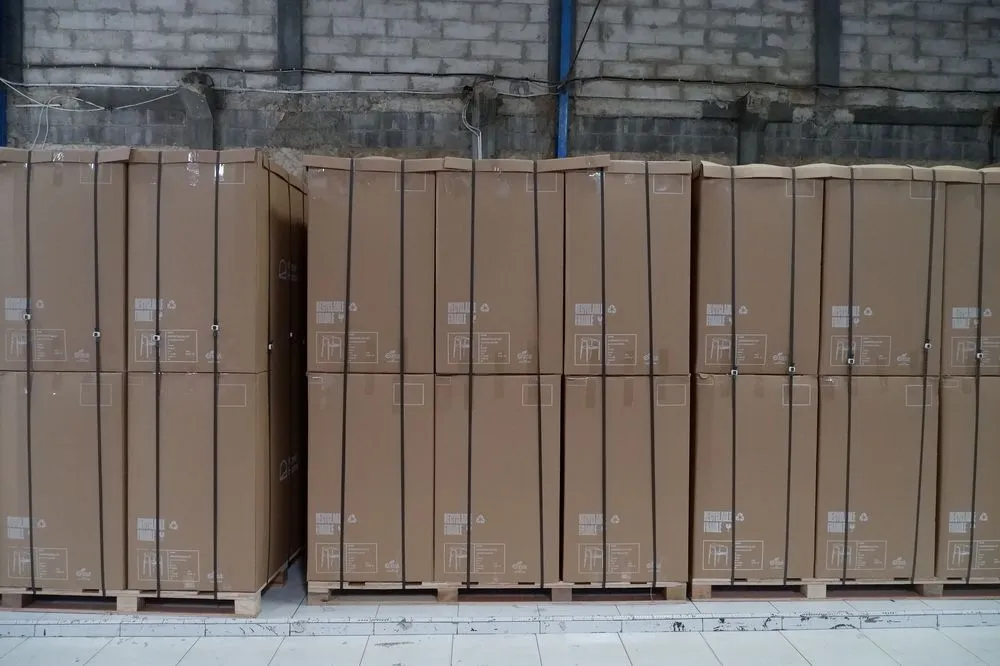
The Incoterms shipment (FOB, CIF, & DDP) is also one of the most common missed considerations when purchasing furniture overseas. Try asking about the Incoterms offered by the supplier, then negotiate if it doesn’t align with your operational budget. Beyond discussing the method, also try to ask clearly how your partner proceeds with the packaging, from the choice of material to the cost of shipment to the port.
4. Quality & Customization
A failed product that doesn’t match your expectations might be caused by the lack of communication on how you want the final product to be. So, it’s advised for buyers to explain clearly about the shape, design, and even the type of finish.
To ensure all of the quality requests are truly applied, you can request samples or assign a third party for quality control. And if you’re buying for a custom order, try negotiating for a product sample for approval before proceeding into the production stage.
5. Lead Times
A guaranteed lead time is crucial to protect your brand reputation with the customer or client who is waiting for the product for their important business projects. However, a faster lead time compared to usual can also indicate a red flag partner, where they sacrifice production time to meet the delivery day.
So, for a safe arrival time, try asking for a realistic lead time. And if the supplier fails to send according to the time they promise (outside of external delay factors like disasters or shipping issues), try proposing a consequence agreement for compensating the delay to your customer.
6. Warranty & After-Sales
Since the global furniture project is a complex transaction, it’s also important to communicate the warranty upfront for a product defect, delay, or other issues that don’t align with the initial agreement. A confidence in giving a clear guarantee is a sign of a reliable furniture supplier that stands by its craftsmanship.
Strategies for Success
Understanding what should be negotiated is essential, but knowing your bargaining power is also crucial. Here is how to do it.
1. Research
Knowing what you’re after is very crucial; that’s why doing your research is the first step to take before anything else. Browse the market value of the targeted timber, its availability, what makes it appealing to customers, and the overall business values. For example, if you want to import teak furniture from Indonesia, search for its common local harvesting practice to assess the raw quality.
2. Leverage
Working with another party should give a win-win solution for both parties. To maximize the operational budget efficiency and increase the business leverage, remember to always negotiate the price for a larger order, the benefit of long-term collaborations, or a guaranteed order for a certain period of time.
3. Flexibility
A reliable furniture supplier should be open to negotiations. If they don’t budge on the price, try exchanging for finish flexibility or a free branding service. These add-ons typically give more value to your business rather than just solely focus on a discounted price that might only save your 2-month operational budget.
4. Relationship Building
Many vendors prefer and welcome long-term commitments over a one-time bargain, especially furniture suppliers in Indonesia. Building a good relationship with them will benefit you in so many ways, from prioritizing your order to giving extra attention to your product creation.
5. Walk Away
If those efforts are done, but they insist on the initial proposal with no room for adjustment based on your needs, then it’s time to walk out of the room. Another early sign of an unreliable partner is when they offer unrealistic lead time and an irrational, low price compared to the market average price, which leads to a questionable production method.
Ready to Make a Deal with MPP Furniture?
Summing up, choosing the right partner not only relies on the price negotiations, but also on who understands your needs the most, and also offers the best margin profit for your business. If you’re looking for a trusted furniture supplier from Indonesia, MPP Furniture is ready on call.
With over 20 years of experience in furniture making and the export industry, MPP Furniture is well aware of global buyers’ expectations. We prioritize transparent communication regarding the client's needs, from the price and clear lead times to the detailed product output.
Our 16,000 m² factory allows us to implement strict quality control at every production stage, from raw wood handling & assembling to export-ready packaging, ensuring defect-free products that meet the client’s expectations. Our 99% of satisfaction rate and only 0.56% of complaint ratio said so.
If you’re planning to launch an exclusive product line, we can also support you with our custom/ODM/OEM service. Supported by more than 200 craftsmen in-house who have mastered sophisticated joinery & artisanal touch, we’re ready to create the distinct design only made for your brand.
Ready to collaborate? Tell us about your needs, and we’ll send you a quotation with room for negotiation. Or book a free consultation session, let’s talk and see if our proposed recommendations interest you!
Planning your next best-selling collection?
Request catalog, pricing info, MOQ, and custom options today — we’ll respond quickly.

A passionate writer with 3+ years of experience in SEO who turns complex ideas into informative & helpful content. I share the challenges & important considerations when preparing a global furniture project, hoping to help MPP Furniture’s readers make more informed business decisions.
0 Comments