Every piece of furniture in your retail space is taking a beating you might not see.
Customers sit hard on display chairs. Kids climb on benches. Staff drag pieces across floors during reorganization. All this happens daily, often hourly.
The wood you choose determines whether your furniture survives this punishment or falls apart within months.
The average lifetime of office furniture used in commercial settings is approximately 10 years. Some materials make that timeline. Others don't come close.
Indonesian woods offer different performance profiles for commercial environments. Understanding these differences before sourcing furniture saves you from expensive replacement cycles and customer complaints.
Why Material Choice Matters More Than You Think
High-traffic usage creates stress patterns that furniture never experiences in homes.
For example, a residential dining chair might support someone three times daily. A retail display chair handles dozens of people, many sitting heavily without care.
Daily stress compounds fast. A small weakness in wood selection becomes visible wear within weeks.
A poor material match for your environment leads to premature failure, regardless of how well the furniture was built.
Common mistakes in material selection for retail spaces include choosing wood based purely on appearance without considering durability, selecting outdoor-grade wood for indoor use where its premium cost provides no benefit, and picking indoor wood for outdoor or semi-outdoor spaces where it will fail quickly.
The material must match the actual use environment, not just look good in photos.
Understanding Furniture Lifespan in Commercial Use
Lifespan in a retail context is the period furniture maintains acceptable appearance and function under actual usage conditions. This differs dramatically from residential expectations.
According to IMARC, commercial office furniture can last between 7 to 10 years on average, but this lifespan varies depending on the type of furniture, quality of materials, frequency of use, and maintenance provided.
Retail furniture faces similar demands with added visual requirements since appearance matters more in customer-facing environments.
Wear, Load, and Environmental Factors
Physical wear comes from repeated sitting, opening/closing of drawers and doors, surface impacts, and movement across floors. Each action stresses the wood structure. Weak materials show damage quickly.
Load factors include weight capacity requirements, joint stress from repeated use, and structural demands from how furniture gets handled. Commercial environments often exceed what furniture experiences in testing.
Environmental factors affect wood stability. Climate-controlled retail spaces with consistent temperature and humidity extend furniture life.
Spaces with variable conditions or near entrances where outdoor air enters create expansion and contraction cycles that stress joints and finishes.
How Lifespan Impacts Replacement and Maintenance Costs
Shorter lifespan multiplies your costs geometrically. Furniture lasting 5 years instead of 10 means buying twice as many pieces over the same period. Add shipping, installation, and disposal costs each time, and the expense compounds.
Maintenance costs also scale with material quality. Better wood holds finishes longer, resists scratches better, and maintains structural integrity with minimal intervention.
Poor wood requires constant touch-ups, repairs, and eventual replacement despite maintenance efforts.
Overview of Common Indonesian Woods Used in Furniture Manufacturing
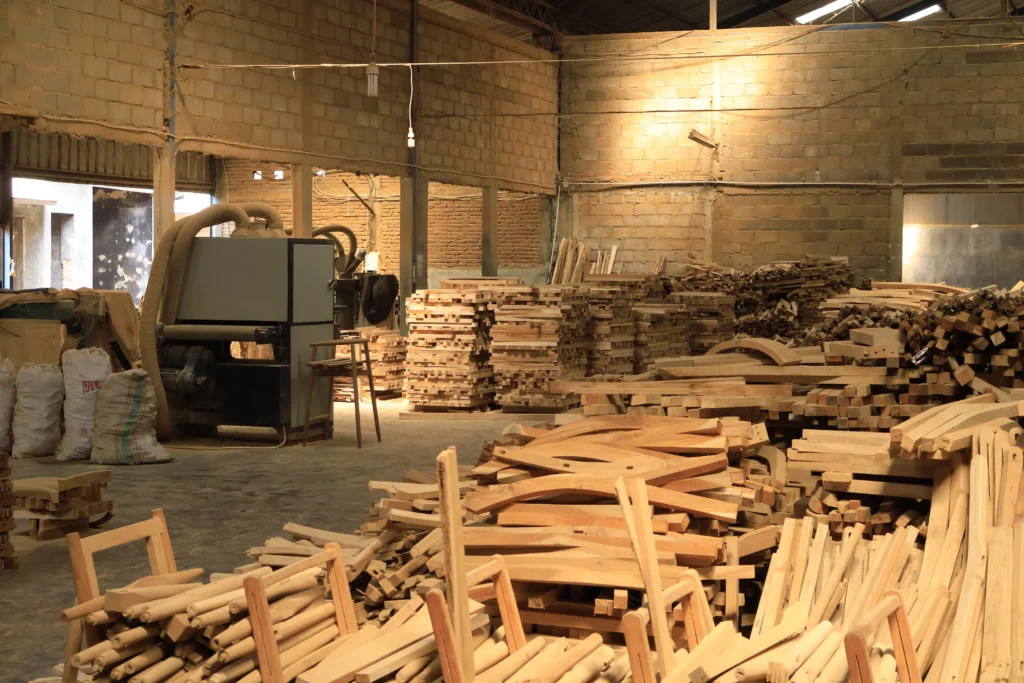
Indonesia produces furniture from several hardwood species, each with distinct characteristics affecting commercial performance.
Indonesia as a Source of Hardwood Furniture
Indonesian woods have long been the backbone of the global furniture supply chain. The country's tropical climate supports hardwood growth, while generations of woodworking tradition have created skilled manufacturing capabilities.
Indonesian manufacturers serve international markets with strict quality requirements. This export focus drives quality standards higher than purely domestic production would require.
Differences Between Hardwood and Softwood
Hardwoods come from deciduous trees and offer denser, more durable wood suitable for furniture bearing weight and stress. Softwoods from coniferous trees work for construction but lack the density needed for commercial furniture.
All Indonesian furniture woods discussed here are hardwoods. The question isn't hardwood versus softwood. It's which hardwood matches your specific retail environment and budget.
Why Indonesian Woods Are Widely Used for Export Furniture?
Direct access to raw materials eliminates import costs that manufacturers in other countries face.
Skilled labor at competitive rates allows detailed work that automated factories cannot match. Established export infrastructure handles documentation and logistics smoothly.
These factors combine to make Indonesian wood furniture cost-effective without sacrificing quality when sourced from reputable manufacturers.
How Specific Indonesian Woods Perform in Commercial Settings
Teak Wood
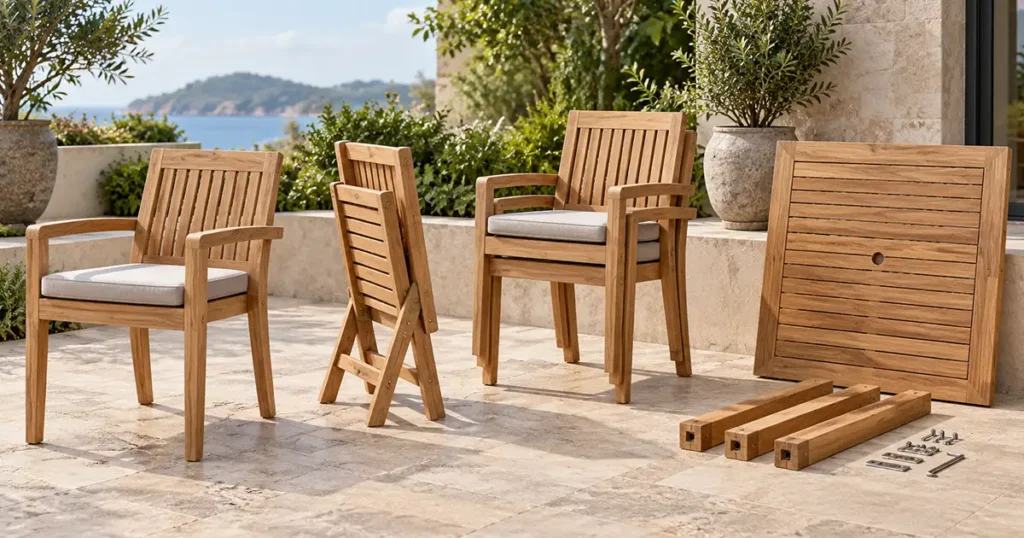
- Durability and natural resistance: Teak contains natural oils that resist moisture, insects, and decay. This protection works without chemical treatment. Teak is naturally resistant, fights off termites and mold naturally.
- Best applications: Outdoor furniture, high-traffic indoor areas, humid environments, furniture near entrances where climate control is inconsistent. Teak survives conditions that destroy other woods.
- Commercial performance: In retail environments, teak furniture maintains appearance and structure for 15-20+ years with minimal maintenance. The higher initial cost spreads across exceptional lifespan, often making total cost of ownership competitive with cheaper alternatives that need frequent replacement.
- Considerations: Teak's weight makes it less suitable for furniture moved frequently. The natural oils can transfer to light fabrics, potentially causing discoloration. Premium pricing requires target customers willing to pay for quality.
Mahogany Wood
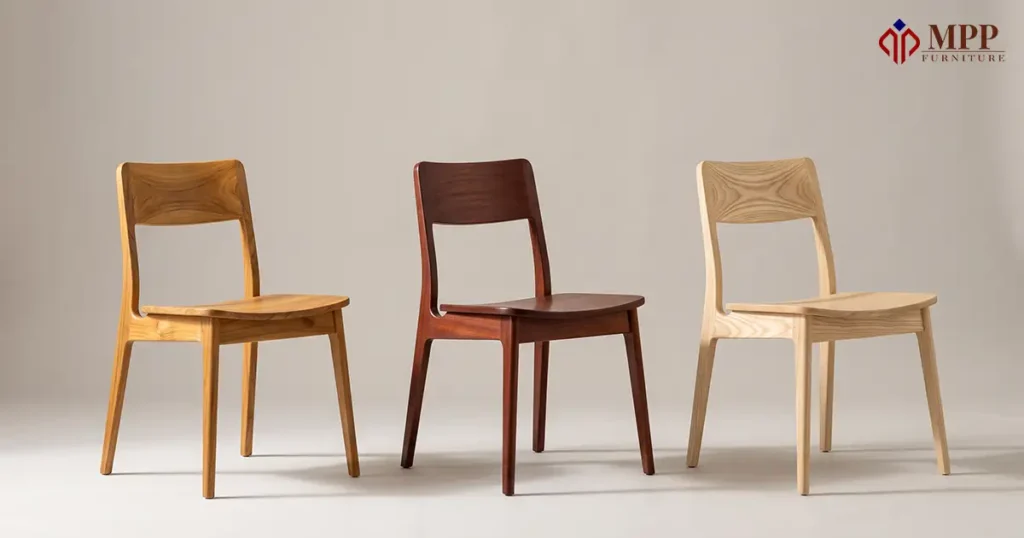
- Characteristics: Fine, straight grain that finishes beautifully. Rich reddish-brown color that appeals to traditional and contemporary aesthetics. The quality from mahogany wood is known to be good and durable.
- Best applications: Indoor retail furniture, dining sets, display cabinets, reception desks. Mahogany excels where appearance matters and environmental conditions stay controlled.
- Commercial performance: Properly dried mahogany (10-12% moisture content) provides 10-15 years of service in indoor retail environments. The smooth finishing capability means furniture maintains professional appearance longer than rougher-grained alternatives.
- Considerations: Mahogany absorbs moisture more readily than teak, making it unsuitable for outdoor or high-humidity locations. Regular cleaning and occasional refinishing extend lifespan. Pest prevention treatments during manufacturing protect against insects attracted to this wood.
Mindi Wood
- Characteristics: Light color similar to oak, workable grain, lower density than teak or mahogany. Cost-effective raw material pricing.
- Best applications: Indoor furniture with moderate use, back-of-house retail areas, residential-style retail environments where traffic is controlled.
- Commercial performance: Mindi furniture performs adequately in low to moderate traffic settings for 7-10 years. Higher traffic or variable environmental conditions reduce this lifespan significantly.
- Considerations: Mindi requires careful moisture control during manufacturing. Improper drying leads to cracking and joint failure within months. Not suitable for outdoor use or areas with humidity variation. Works best when budget constraints prevent using premium woods but the indoor environment is stable.
Sungkai Wood
- Characteristics: Good stability, lower cracking risk compared to mindi, fine grain that finishes well. More affordable than teak or mahogany while offering better performance than mindi.
- Best applications: Indoor retail furniture, volume orders where margins matter, furniture for controlled environments requiring good appearance and reasonable durability.
- Commercial performance: Sungkai furniture delivers 10-12 years of service in appropriate indoor retail settings. Properly manufactured pieces maintain structural integrity well, though surface wear appears faster than premium hardwoods.
- Considerations: Sungkai provides cost-effective durability when manufactured with proper moisture control and finishing. Requires climate-controlled environments. Not recommended for outdoor or high-humidity applications.
Construction, Joinery, and Finishing
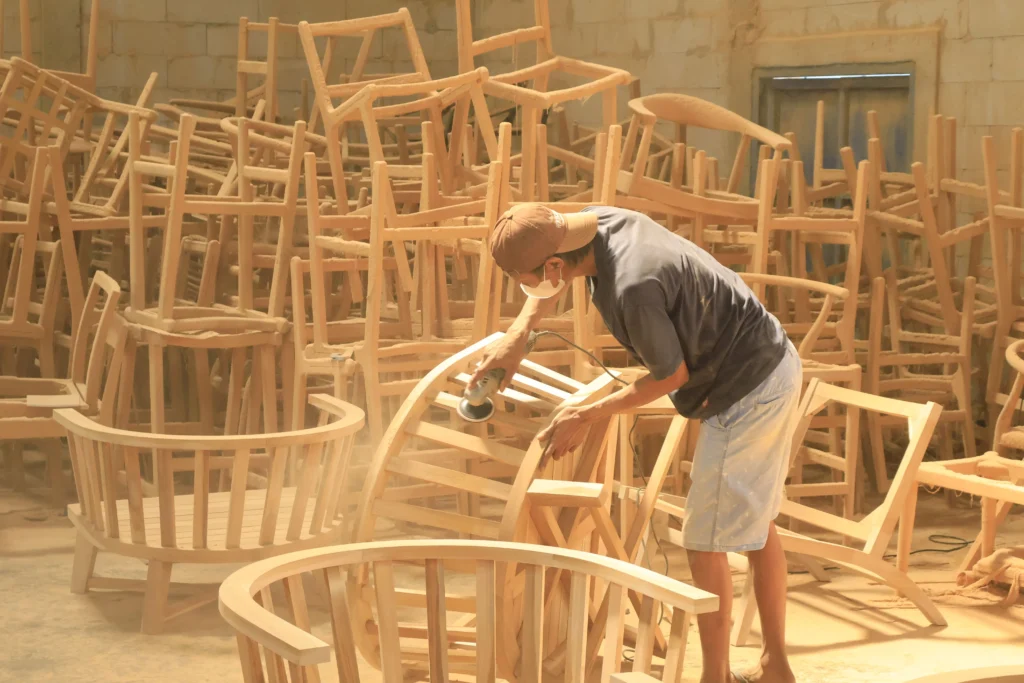
Wood selection establishes baseline durability. Construction quality determines whether furniture achieves that potential or fails prematurely.
Manufacturer Expertise
Experienced Indonesian manufacturers understand how different woods behave during production and use. They adjust joinery techniques, drying protocols, and finishing systems based on wood species characteristics.
At MPP Furniture, our 20+ years manufacturing for international commercial clients taught us which construction methods work for each wood type in different environments. We've seen what fails and engineered solutions.
Joinery Techniques and Structural Strength
Mortise and tenon joints provide maximum strength for hardwood furniture. The interlocking structure distributes stress across larger surface areas than dowels or screws alone.
Reinforced corner blocks add stability to case goods. Proper glue application in appropriate environments ensures bonds that outlast the wood itself.
Different woods accept joinery differently. For example, teak's density requires pre-drilling for all fasteners. Mahogany's workability allows tighter tolerances. Understanding these characteristics prevents structural failures.
Protective Finishes for Commercial Use
Multi-coat polyurethane finishes protect wood surfaces from moisture, scratches, and daily handling. The number of coats matters. Three to five coats provide commercial-grade protection. Single coats fail quickly under retail conditions.
Finish preparation matters as much as application. Proper sanding between coats ensures adhesion.
Inadequate surface prep leads to peeling and flaking regardless of how many coats you apply.
Wood species affects finish performance. For example, teak's natural oils require specific finishing systems. Mahogany and sungkai accept standard finishes readily when properly prepared.
Quality Control in Manufacturing
Systematic quality control includes moisture content testing after kiln drying, joint fit inspection before assembly, finish adhesion testing before shipping, and dimensional checks across production batches.
Manufacturers without documented QC systems produce inconsistent results. One batch performs well. The next develops problems. You can't build reliable furniture sourcing relationships without systematic quality.
Matching Wood Selection with Retail Business Needs
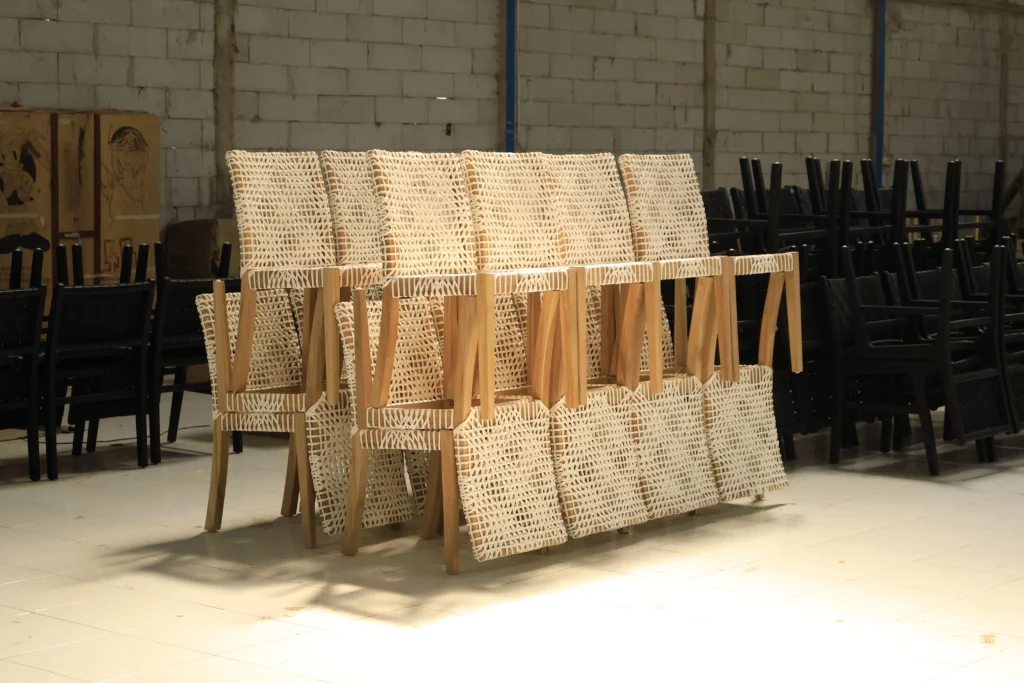
The right wood choice aligns with your specific retail environment, customer base, and business model.
1. Store Concept and Customer Traffic
High-traffic retail requires premium woods like teak or carefully manufactured mahogany. The furniture withstands constant use without showing wear that damages brand perception.
Moderate traffic environments can use sungkai or quality mahogany, balancing cost and durability appropriately for actual usage patterns.
Lower-traffic specialty retail might use mindi successfully if environmental control is excellent and customer handling is gentle.
2. Budget vs Durability Trade-offs
Calculate cost per year of use rather than unit price. Teak costing $500 and lasting 20 years costs $25 per year. Mindi costs $200 and lasting 7 years costs $28.57 per year.
Add replacement logistics costs, disposal fees, and operational disruption from furniture downtime. The premium wood often delivers better total economics despite higher initial pricing.
3. Planning Furniture Lifecycle from the Start
Source furniture expecting to replace it on schedule rather than running pieces until catastrophic failure. This allows budgeting replacement costs predictably and coordinating refreshes with other store improvements.
Different furniture types have different replacement cycles even within the same retail space. High-contact pieces like seating need replacement faster than display tables or cabinets.
How Retailers Can Work with Indonesian Furniture Manufacturers to Choose the Right Materials
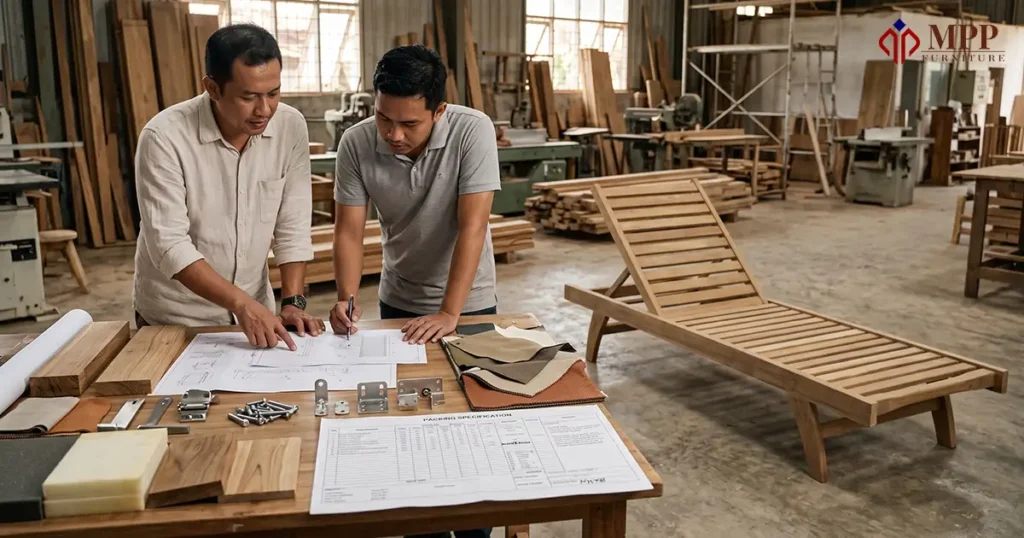
Effective collaboration starts with clear communication about actual use conditions.
Share your retail environment details. Traffic patterns, climate control, customer demographics, and typical furniture handling all affect which wood performs best.
Discuss budget constraints honestly. Manufacturers can often suggest alternatives that meet durability needs at accessible price points when they understand your total budget picture.
Request samples of different wood options. Physical comparison reveals differences that descriptions don't convey. Test samples under realistic conditions before committing to production quantities.
Ask about manufacturer experience with your wood choice in similar applications. Manufacturers who've supplied retailers like yours can predict performance more accurately than those working mainly with different customer types.
For deeper guidance on commercial furniture trends and material selection, check out commercial furniture trends for 2026. To understand the long-term value of premium woods, see the investment value of teak furniture.
At MPP Furniture, we help retailers match wood selection to business requirements based on real manufacturing experience. Our 16,000 m² facility processes teak, mahogany, sungkai, and mindi, giving us direct knowledge of how each performs under different conditions.
Contact us to discuss your specific retail environment and furniture requirements. We'll provide an honest assessment of which Indonesian woods deliver the best performance and value for your situation.
Email Us: sales@mppfurniture.com
WhatsApp: +62 821-4630-5858
Planning your next best-selling collection?
Request catalog, pricing info, MOQ, and custom options today — we’ll respond quickly.
FAQ: Wood Material & Furniture Longevity
1. Which Indonesian woods are best suited for high-traffic commercial furniture?
Teak remains the gold standard for durability due to its natural oils and resistance to rot and pests. However, for interior commercial use, hardwoods like Mahogany and Mindi offer excellent performance-to-cost ratios when treated with professional kiln-drying and high-grade finishes.
2. How does kiln-drying affect the lifespan of commercial furniture?
Kiln-drying is critical; it reduces moisture content to below 12%, preventing the wood from warping, cracking, or shrinking. Proper kiln-drying ensures that structural joinery—such as mortise-and-tenon—remains tight and stable over years of heavy use.
3. Why do commercial environments require different furniture specifications?
Commercial furniture experiences higher frequency of use and physical impact. It requires superior joinery methods, reinforced structural components, and resilient finishing systems (like high-solid lacquers) to maintain both appearance and safety standards over a longer period.
4. Can Mindi or Mahogany provide the same longevity as Teak?
While Teak outperforms others in outdoor conditions, Mindi and Mahogany can achieve a long lifespan (10–15+ years) in commercial interiors. The key is to match the wood species to the environment and ensure it receives high-quality protective coatings.
5. How can retailers ensure their furniture lasts longer in commercial projects?
Retailers should prioritize manufacturers that control the entire production process. Clear specifications on wood density, moisture content, and the use of heavy-duty hardware are essential to ensuring the furniture meets the rigorous demands of commercial clients.

A passionate writer with 2+ years of experience in SEO who turns complex ideas into informative & helpful content. I share the challenges & important considerations when preparing a global furniture project, hoping to help MPP Furniture’s readers make more informed business decisions.
0 Comments