
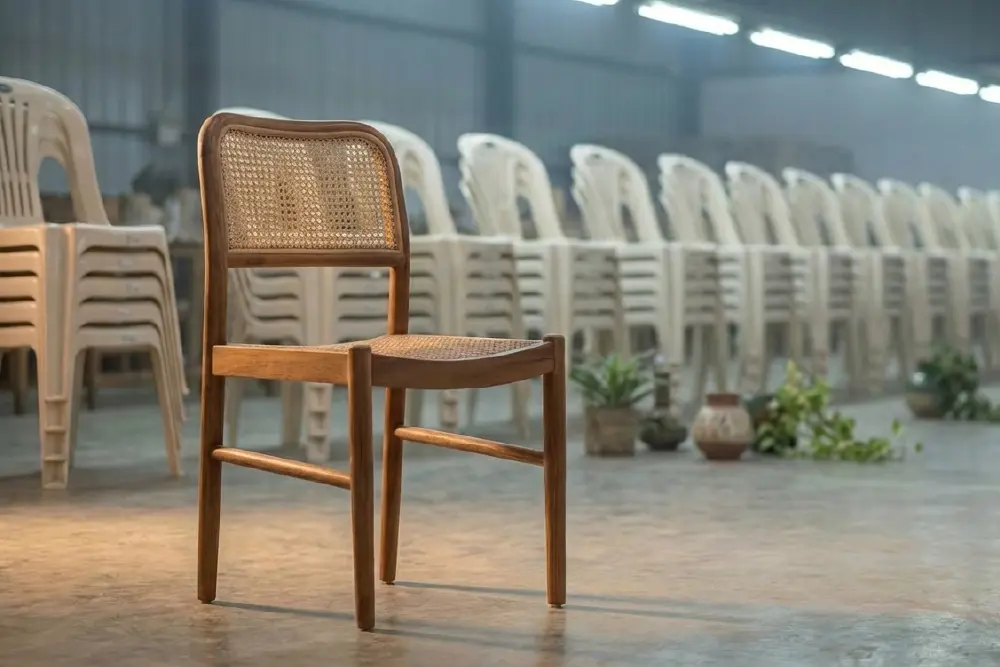
Global furniture sourcing is changing. Many buyers today feel stuck between rising costs, design sameness, and rigid manufacturing systems. China and Vietnam still dominate volume production, but their model increasingly pushes buyers into price wars and margin pressure.
Far from being just an alternative, furniture from Indonesia has evolved into a strategic upgrade for buyers who want stronger differentiation, better cash flow control, and a more flexible supply chain.
This article explains why sourcing from Indonesia in 2026 is not about chasing trends, but about making a smarter long-term business decision.
The Current State of Global Furniture Manufacturing
For decades, China and Vietnam shaped how global furniture sourcing works. Large factories, standardized designs, and aggressive pricing allowed many buyers to scale quickly.
But this system now comes with clear limits.
The “Sameness” Trap in Mass Production Countries
In practice, buyers sourcing from China or Vietnam often face:
- Repeated designs across multiple brands
- Heavy reliance on machines over craftsmanship
- Large minimum order quantities (MOQs)
- Tight production schedules with little room for change
As a result, retailers and importers struggle to stand out. Products look similar across markets, so competition shifts almost entirely to price. This leads to shrinking margins and unstable demand.
At the same time, geopolitical risk, tariff uncertainty, and rising labor costs make long-term planning harder.
This is where Indonesia enters the conversation differently. This shift is supported by analysis from Business Indonesia, which notes that growth potential remains strong for Indonesian furniture as the industry pivots toward higher-value manufacturing despite global economic headwinds.
Indonesia’s Geological Advantage: Why the Wood Is Different

Indonesia sits on the Ring of Fire, a volcanic belt that has shaped its soil for thousands of years. This geological condition creates dense, mineral-rich ground that produces hardwood with a tighter grain structure.
For furniture buyers, this matters because:
- Teak from Indonesia grows more slowly and is denser
- Higher oil content improves outdoor durability
- Wood is naturally resistant to moisture, pests, and decay
Machines cannot replicate this natural advantage built into the material itself.
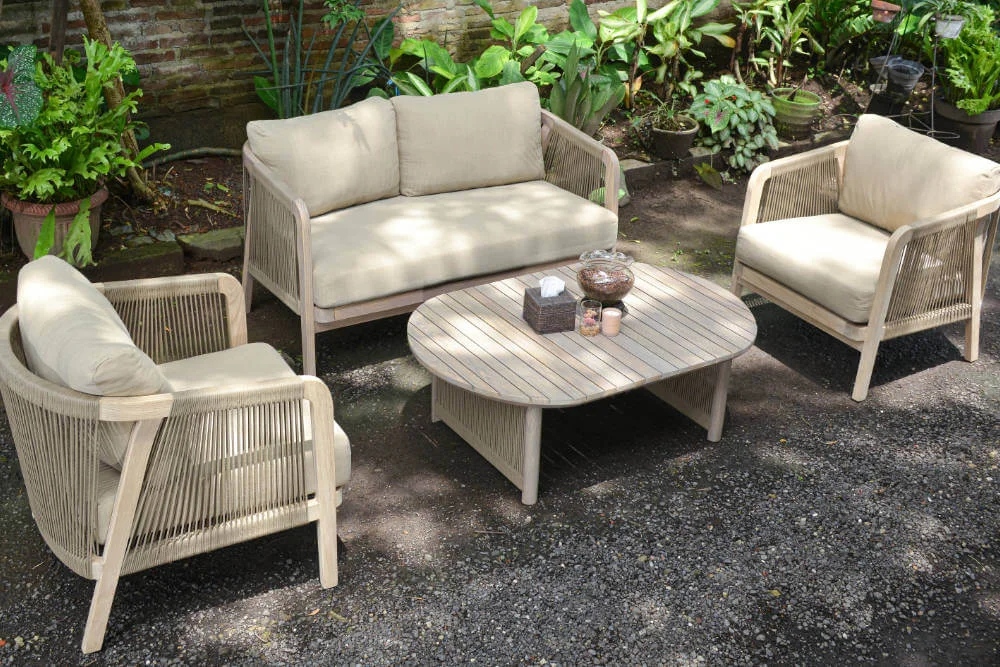
When buyers source teak furniture from Indonesia, they are securing performance that holds up in real-world use, especially for outdoor and garden furniture, rather than just buying a design.
Indonesian Craftsmanship Embedded in History
Indonesia’s advantage extends beyond geology; it is deeply historical.
Indonesians have been producing furniture for centuries. Woodworking skills are passed down through generations, not learned through short-term factory training. Because artisans here have spent their history handling materials native to the archipelago, they possess an intuitive understanding of the wood's character—knowing exactly how to treat its specific grain and density—that goes far beyond standard manufacturing protocols.
This legacy creates real differences in output:
- Better hand-finishing and joint accuracy
- More control over curves, proportions, and detailing
- Easier customization without redesigning entire production lines
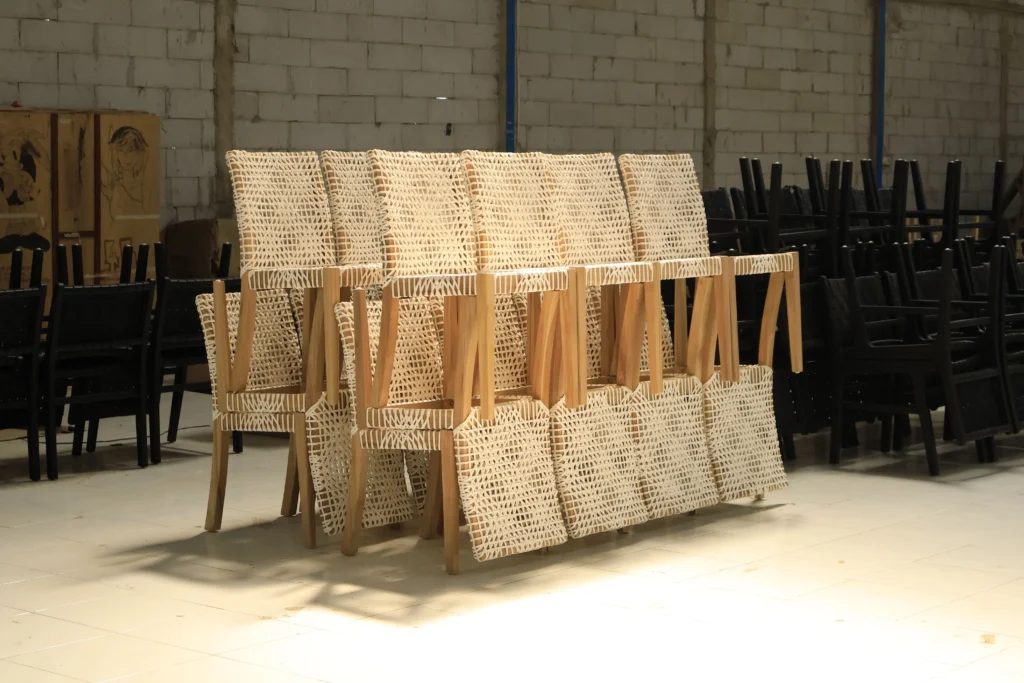
While mass producers rely on machines for speed, Indonesian manufacturers balance machinery with skilled hands. This allows unique designs at scale without losing consistency.
For buyers, this means products that feel distinct in the market but still meet commercial standards.
Safety and Trust: SVLK and Legal Wood Sourcing

One concern buyers often raise is legality and compliance. Indonesia addresses this directly through SVLK.
SVLK is the national timber legality assurance system. It tracks wood from forest to finished product, confirming that materials are legally harvested and responsibly managed.
Furthermore, the system is actively evolving to meet the strictest global standards. SVLK is currently expanding to integrate geolocation features, ensuring direct alignment with the European Union Deforestation Regulation (EUDR). This crucial update means the system can trace timber back to its specific plot of origin, allowing buyers targeting the European market to meet new deforestation-free requirements with confidence.
As reported by Forest Insights Indonesia, the system has been upgraded so that SVLK has a geolocation verifier that complies with EU Deforestation Regulations, ensuring traceability down to the specific plot of land.
For a practical example of how these regulations work for specific wood types, read our guide on EUDR and SVLK for sourcing compliant mahogany.
For international buyers, SVLK provides:
- Regulatory clarity for EU, US, and global markets
- Compliance support for EUDR through geolocation tracking
- Reduced risk during customs clearance
- Stronger brand credibility tied to ethical sourcing
This system removes the outdated perception that Indonesian furniture carries regulatory risk. In reality, Indonesia is one of the most structured countries in timber traceability. For complete transparency, international buyers can verify document authenticity directly through the Ministry of Environment and Forestry’s official SILK timber legality information system.
The Business Case: Low MOQ and Mixed Containers
Beyond material and design, the strongest reason buyers choose Indonesian furniture manufacturers is financial flexibility. Unlike the rigid capital requirements of mass production hubs, sourcing from Indonesia allows buyers to align procurement closer to actual demand, significantly reducing the risks associated with unsold inventory and tied-up capital.

For a step-by-step look at how to leverage this flexibility for your specific brand, explore our guide to working with a custom furniture manufacturer.
How Low MOQ Improves Cash Flow
Unlike mass production hubs, many Indonesian factories allow:
- Lower minimum order quantities
- Multiple designs in one production run
- Mixed container loading across categories
For buyers, this changes how capital is deployed.
Instead of tying cash into one high-volume SKU, buyers can:
- Test new designs without large risk
- Balance indoor and outdoor collections in one shipment
- Reduce overstock pressure
This flexibility supports healthier cash flow and faster product rotation.
In uncertain markets, this approach is often safer than chasing scale alone.
Why Furniture from Indonesia Creates Real Market Differentiation
When buyers combine the unique density of volcanic teak, the intuitive skill of generational craftsmanship, the security of SVLK compliance, and the financial agility of low MOQs, the result transcends mere furniture; it becomes market positioning.
Sourcing from Indonesia allows buyers to:
- Avoid direct price competition with mass-market products
- Offer collections with stronger storytelling
- Serve niche or design-focused customers more effectively
Data from Mordor Intelligence confirms this upward trend, forecasting significant expansion in the Indonesian Furniture Market as demand shifts toward solid wood and residential furniture.
This is why many Indonesian furniture suppliers are now long-term partners rather than transactional vendors.
How MPP Bridges Craftsmanship and Modern Manufacturing
As an Indonesian furniture manufacturer, MPP operates at the intersection of tradition and modern business needs. To understand why this direct partnership is the most secure path for your business, read our article on why a direct manufacturer is a safe option in a supply chain.
In practice, this means:
- Handcrafted wooden and rattan furniture supported by advanced machinery
- Strict quality control at every production stage
- Free consultation and product development support
- Custom, private label, and OEM capability
- Low MOQ and mixed container solutions
- A proven 99 percent client satisfaction rate with a minimal complaint ratio
This approach allows buyers to access Indonesia’s natural and cultural advantages without sacrificing professionalism, lead time discipline, or consistency.
MPP acts as a bridge between artisan heritage and global B2B expectations.
Why 2026 Is the Right Time to Diversify Furniture Sourcing
Global furniture buyers are rethinking risk. Dependence on one sourcing country no longer feels safe.
Indonesia offers a clear path forward:
- Natural material advantages that cannot be copied
- A design ecosystem built on craftsmanship, not sameness
- Legal and ethical sourcing backed by SVLK and EUDR readiness
- Flexible production that supports better cash flow
For buyers who want to step away from mass-market price wars, furniture from Indonesia represents a calculated strategic pivot rather than a mere compromise.
Conclusion
No longer just a backup sourcing option, Indonesia stands as a strategic upgrade for buyers who value differentiation, flexibility, and long-term stability.
By combining natural material strength, historical craftsmanship, legal furniture sourcing, and modern manufacturing practices, Indonesia offers something that mass production hubs cannot.
For global buyers planning beyond 2026, sourcing furniture from Indonesia goes beyond aesthetics; it is fundamentally about building a stronger, more resilient supply chain.
Your next best-seller might be here
Request a quotation and custom options tailored to your needs today via WhatsApp or email.
Frequently Asked Questions
Is Indonesian furniture only suitable for premium markets?
No. Indonesia supports both mid-range and premium positioning. Success depends on design choices, finishing quality, and material selection.
Is teak furniture from Indonesia better for outdoor use?
Yes. Indonesian teak possesses high oil content and dense grain. These natural properties make it ideal for outdoor and garden furniture.
Are Indonesian furniture manufacturers reliable for large projects?
Yes. Many factories handle large project-based orders. They utilize clear QC systems and structured production planning to meet deadlines.
Does SVLK really help with international compliance?
Yes. SVLK simplifies documentation for export. This certification reduces regulatory risk in major markets and addresses upcoming EUDR requirements.
Can buyers mix multiple product types in one container?
Yes. Mixed container loading represents a strong advantage for Indonesian sourcing. This flexibility helps buyers maintain better cash flow control.

I am a self-taught graphic designer with a deep passion for exploring the creative world through various tools and techniques. I have honed my skills in Adobe Illustrator, Photoshop, and Lightroom, while continuously expanding my knowledge by diving into After Effects and Premiere. Photography has become an integral part of my life, and I actively engage with it to capture moments and experiment with visual storytelling.
My fascination with color theory, histograms, and innovative design approaches drives my work, as I am always seeking new ways to push the boundaries of my creativity. From photography models and motion graphics to textures, collage, and surrealism, I am captivated by the endless possibilities in design and constantly strive to challenge myself with fresh and exciting ideas.
0 Comments