
Executive Summary: Key Takeaways for Hospitality Leaders
- The Trend: A pivot from "light Japandi" to deep, shadowed interiors like Dark Wabi Sabi, driven by the need for digital detox.
- The Benefit: Darker rooms ("Visual Quiet Zones") lower cortisol and improve guest sleep/recovery.
- The Material: A resurgence of dark woods (Mahogany, Walnut, Charred Timber) requiring EUDR-compliant sourcing.
- The Opportunity: Developers can market "Recovery Suites" at a premium; Designers can focus on "sculpting with shadow."
The era of "California sterile" is widely considered over. For the better part of a decade, luxury hospitality has been dominated by light oak, beige linen, and the airy, sun-drenched aesthetic of Japandi or Mediterranean styles. Yet, as we approach the 2026 horizon, developers are noticing a critical shift in guest psychology.
The problem? Brightness has become exhausting.
Modern travelers are suffering from "digital glare." Over-stimulated and neurologically fatigued, they are increasingly alienated by the artificial perfection of standard luxury. The hotel room can no longer just be a passive container for sleep; it must be an antidote to the outside world.
This necessity is driving the pivot toward the Dark Wabi Sabi interior trend, a sophisticated movement that values shadow, depth, and imperfection over polished perfection. It is a reaction to the noise of the modern world, re-anchoring luxury in emotional resonance and psychological grounding.
As manufacturers who have spent over 20 years on the factory floor, we at MPP Furniture have seen trends come and go. But this shift feels different. It demands a level of material honesty and attention to detail that goes beyond the standard "cut and polish." It’s about crafting an atmosphere.
What is the Dark Wabi Sabi Interior Trend?
The Dark Wabi Sabi interior trend is a design aesthetic that combines the traditional Japanese philosophy of accepting imperfection (Wabi Sabi) with a moody, shadow-rich color palette. Unlike early "light" interpretations, this 2026 evolution utilizes deep charcoal tones, charred woods (Shou Sugi Ban), and low-light environments to create "visual quiet zones" that reduce optical stimulation and promote deep mental recovery for guests.
It represents a move away from the "Instagram-ready" brightness of the early 2020s toward something more private and "monastic." It is the architectural equivalent of a deep exhale.
The Psychology of Shadow: Darkness as a Luxury Amenity
In the hyper-connected world of 2026, "darkness" has become a scarce luxury amenity. The psychological driver behind luxury hospitality design 2026 is the concept of "monastic luxury", where the scarcity of distraction is valued over the abundance of decoration.
Drawing influence from Jun'ichirō Tanizaki’s seminal text, In Praise of Shadows, this aesthetic understands that beauty lies not in the object itself, but in the depth of shadow it creates. A "Shadowed Sanctuary" functions as medical infrastructure. By reducing the ambient light reflected off surfaces, these interiors lower the guest's cortisol levels, signaling the brain that it is time to rest.
This is a stark departure from the flat grey tones of the 2010s. The new wave of dark interiors utilizes materials with deep red and amber undertones—specifically sustainable dark wood furniture—to add "visual heat." This makes expansive, high-ceilinged luxury suites feel intimate and womb-like, rather than cavernous and cold.
See how this psychology applies to other key hotel areas in our guide on Living & Bathroom B2B Opportunities in Luxury Design.
The Material Palette: Texture Over Shine
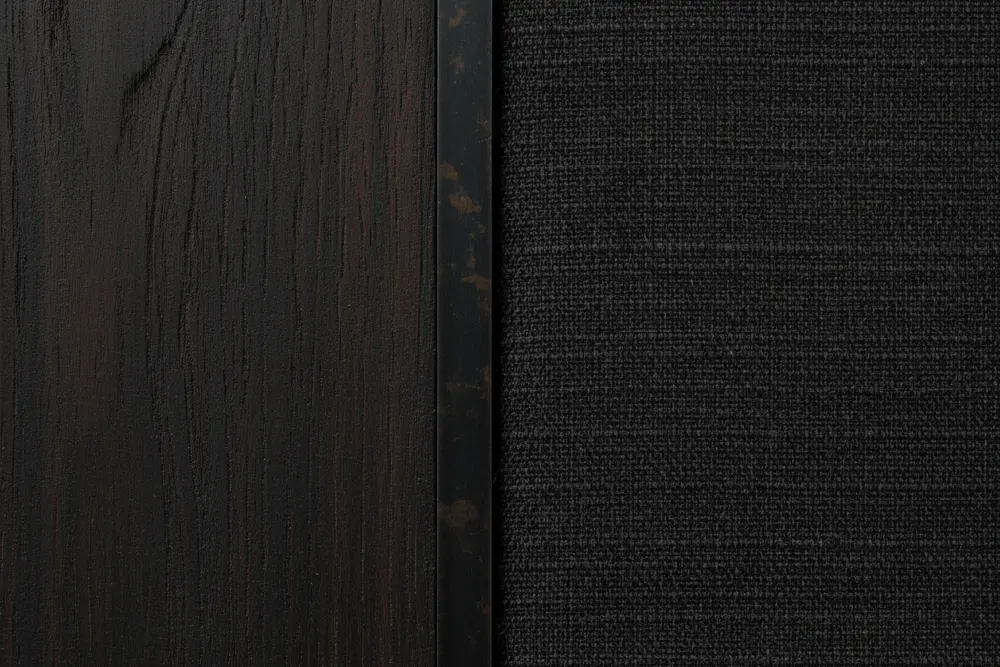
To execute the Dark Wabi Sabi interior trend successfully, the focus must shift from "shine" to "substance." The goal is to use materials that absorb light rather than reflect it. For procurement managers and designers, this requires sourcing specific finishes that reveal "the hand of the maker."
We often tell our partners that in an age of AI perfection, the "flaw" is the new luxury. This is why we control our entire production process in-house, because achieving these nuanced textures requires a meticulously handcrafted approach that outsourced mass production simply cannot replicate.
Here are the key elements defining the 2026 palette:
- Charred & Thermally Modified Woods: Techniques like Shou Sugi Ban (charred cedar) or thermally modified ash provide deep, permanent dark tones without the need for heavy chemical stains. This offers a robust solution for sustainable dark wood furniture that looks ancient but performs like modern engineering.
- Oxidized Metals: Instead of polished chrome or gold, the trend demands living finishes like oil-rubbed bronze, aged brass, and blackened steel that develop a patina over time.
- Tactile Textiles: Deeply textured fabrics like dark bouclé, mohair, and raw linen that invite touch and absorb sound, enhancing the "quiet zone" effect.
- Biophilic Forms: Furniture silhouettes are softening, moving away from rigid rectilinear forms toward organic, curvaceous shapes that mimic natural erosion.
The Strategic Value: Why the Industry is Buying “Darkness”
Why are major stakeholders investing in this darker aesthetic? It’s not just about looking cool; it’s about the business of recovery and the art of atmosphere.
For the Hotel Developer (The Business Case):
- The "Recovery" Premium: Darker rooms support better sleep. Hotels can market these spaces as "Recovery Suites" or "Performance Rooms," commanding a higher price point from business travelers and bio-hackers looking for deep rest.
- Differentiation: As the mass market floods with beige minimalism, the Dark Wabi Sabi interior trend offers a "Hyper-Authentic" branding opportunity. It signals exclusivity, privacy, and "old money" stability, traits that are increasingly valuable in a volatile world.
For the Interior Designer (The Creative Opportunity):
- Sculpting with Shadow: The focus shifts from simply selecting furniture to designing the voids and shadows. Designers are tasked with using materials that absorb light to create a "restorative" atmosphere, requiring a mastery of lighting and matte textures.
- Structural Biophilia: It moves beyond just adding plants (visual biophilia). The trend embraces furniture structures that mimic cellular or bone structures, complex, organic forms that reduce guest stress levels on a subconscious level.
Designers looking to adapt to these demands can find more strategy in our article: Bespoke Furniture Trend Shift for Designers.
Case Study: Capella Kyoto
To understand the full maturity of this trend, we look to Capella Kyoto, set to define the global benchmark when it opens in mid-2026. A collaboration between Kengo Kuma & Associates and Brewin Design Office, the property is not merely a hotel but a "procession of layered spaces" designed to mirror the historic machiya townhouses of the Miyagawa-cho district.
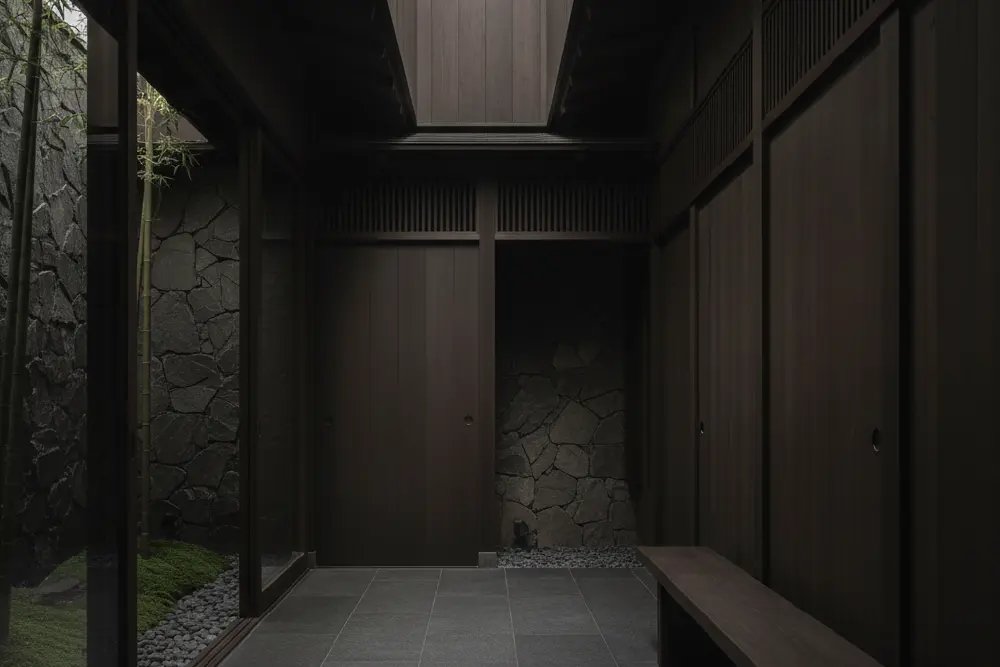
The interiors are a masterclass in "Shadowed Sanctuary." Rather than open-plan brightness, the design leans into the ichigo-ichie ("one life, one moment") concept, creating intimate, enclosed courtyards where dark wood meets bamboo and stone.
Crucially, the furniture plays a structural role in this psychology. The pieces are deliberately low-slung, a subtle ergonomic cue that physically grounds the guest, forcing a slower, more meditative pace of movement. The joinery is intricate and dark, echoing the "refined minimalism" of Christian Liaigre, where the luxury comes from the graphic contrast of dark timber against textured, natural walls. It is a space suspended between functionality and poetry, proving that darkness, when handled with expertise, is the warmest color of all.
Sourcing Sustainable Dark Wood Furniture: An Insider’s View
Achieving this look requires more than just picking a dark stain. As an Indonesian furniture manufacturer with full in-house production, we know that "Dark Wabi Sabi" is unforgiving. You cannot hide poor grain quality under a dark finish; the texture is the design.
Sourcing sustainable dark wood furniture for this trend involves navigating a rapidly tightening global market. The complexity starts with the EU Deforestation Regulation (EUDR). While Indonesian timber, accompanied by the mandatory SVLK (Sistem Verifikasi Legalitas Kayu) certificate, has long been the only national system formally recognized by the EU under the EUTR, the rules are changing.
To maintain this compliance edge, Indonesia is upgrading SVLK to include sustainability (not just legality) criteria, such as mandatory geolocation of harvest areas. Our job as a reliable Indonesian furniture supplier is to manage this complex process for you, ensuring every piece meets the highest standards of traceability.
Tiered Sourcing Strategy for Dark Woods:
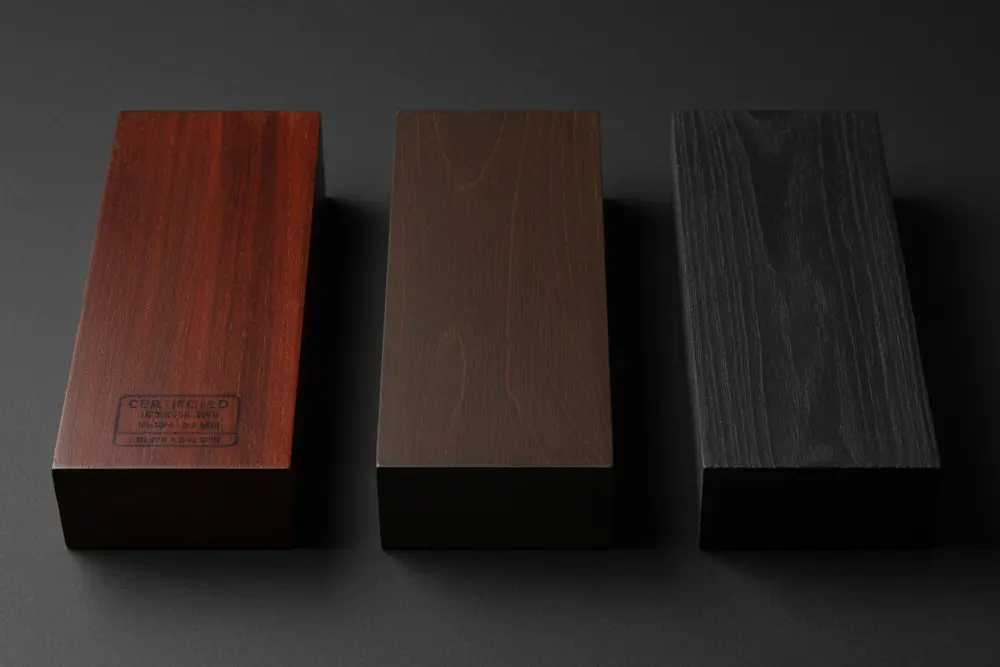
- Gold Standard: Certified Mahogany: Genuine Mahogany is still available for bespoke, ultra-luxury applications where the highest pedigree is required. However, due to CITES and EUDR pressure, Mahogany sourcing must be 100% certified and traceable, a service we manage through our dedicated SVLK compliance protocols and in-house production.
- Performance Alternative: Deep-Stained Teak: For high-volume projects where extreme durability is paramount, we use legal, SVLK-certified Indonesian Teak treated with deep, matte stains. This mimics the warmth of mahogany while retaining teak’s legendary resistance to moisture and wear.
- Aesthetic Innovation: Thermally Modified Woods: Woods like European Ash or Poplar can be thermally modified (baked) to turn them a rich, uniform chocolate-brown color all the way through. This TMT option provides a naturally dark, dimensionally stable, and deforestation-free solution that is ideal for dark finishes in high-humidity environments.
This is where our "Grow Together" value comes into play. We don't just supply wood; we consult on the engineering of the finish to ensure it survives the rigors of hospitality use while maintaining that delicate, raw aesthetic. Achieving this requires a meticulously handcrafted approach and intense attention to detail that can only be controlled through in-house production.
Unsure about the material specifics? Learn more about Is Mahogany Wood Good Quality? and how Weathered Wood Finishes Add Value for Retailers.
Conclusion: Designing for the 2026 Traveler
As we look toward the 2026 horizon, it is clear that the luxury traveler is evolving. They are no longer impressed by the superficial shine of the past decade. In a world saturated with digital glare and artificial perfection, the ultimate luxury has become authenticity and rest.
The "Shadowed Sanctuary" represents a fundamental shift in hospitality design. It is a move away from the "Instagrammable" moments of the early 2020s toward spaces that prioritize psychological grounding. For the guest, the value lies not in the gold leaf on the ceiling, but in the integrity of the substance, the tactile grit of charred wood, the cool touch of oxidized bronze, and the deep, absorbing silence of a room designed to hold shadow.
For developers and designers, this presents a unique challenge and a profound opportunity. The task is no longer just to decorate a room, but to curate an atmosphere of recovery. Mastering this new vocabulary of darkness requires a partner who understands the nuance of material. It requires looking beyond the catalog to find finishes that feel human, ancient, and undeniably real.
For more context on the broader market shifts, read our analysis on Commercial Furniture Trends for 2026 and the evolution of the Mediterranean Style Furniture Trend.
At MPP Furniture, we believe that the future of luxury is dark, textured, and deeply restorative.
Navigating the complexities of EUDR compliance and intricate dark finishes can be daunting. If you are exploring this aesthetic for an upcoming project and need a technical partner to validate your material choices, we are here to support you. Connect with our team at MPP Furniture to share your vision, and let's explore what is possible together.
Planning your next best-selling collection?
Request catalog, pricing info, MOQ, and custom options today — we’ll respond quickly.
Frequently Asked Questions (FAQ)
1. What is the Dark Wabi Sabi interior trend?
The Dark Wabi Sabi interior trend represents a design aesthetic predicted to dominate luxury hospitality in 2026. This style combines the Japanese philosophy of accepting imperfection (Wabi Sabi) with a deep, shadow-rich color palette. Unlike earlier light-colored interpretations, this evolution favors charcoal tones, charred woods, and low light to create "visual quiet zones" that effectively reduce optical stimulation for guests.
2. Why are luxury hotels shifting to dark interiors in 2026?
Luxury hotels adopt dark interiors to combat digital glare and traveler fatigue. Darkness functions as a luxury amenity in a hyper-connected world. These "Shadowed Sanctuaries" act as medical infrastructure by lowering guest cortisol levels. This approach positions the hotel room as an instrument for recovery rather than a place for sleep alone.
3. Is Japandi going out of style in 2026?
Japandi matures rather than disappears. The "Light Japandi" phase—marked by beige and light oak—is evolving into "Dark Japandi" or "Dark Wabi Sabi." Minimalism and natural materials remain central to the aesthetic, though the palette deepens to include scorched timbers and oxidized metals to offer more emotional resonance.
4. Do dark interiors really improve sleep and recovery?
Scientifically, dark interiors reduce the blue light reflection that normally suppresses melatonin. Creating a womb-like environment with materials that absorb light, such as matte woods and textured fabrics, supports the body's natural circadian rhythm. This promotes deeper REM sleep and leads to faster cognitive recovery.
5. What are the psychological benefits of dark wood furniture in hotels?
Dark wood furniture—particularly in tones like Walnut or Charred Teak—provides visual heat and grounding. These materials signal stability, permanence, and protection. This sense of security contrasts with the disposable feel of modern synthetics, helping guests feel subconsciously more settled in a new environment.

I am a self-taught graphic designer with a deep passion for exploring the creative world through various tools and techniques. I have honed my skills in Adobe Illustrator, Photoshop, and Lightroom, while continuously expanding my knowledge by diving into After Effects and Premiere. Photography has become an integral part of my life, and I actively engage with it to capture moments and experiment with visual storytelling.
My fascination with color theory, histograms, and innovative design approaches drives my work, as I am always seeking new ways to push the boundaries of my creativity. From photography models and motion graphics to textures, collage, and surrealism, I am captivated by the endless possibilities in design and constantly strive to challenge myself with fresh and exciting ideas.
0 Comments