
Every furniture retailer has experienced a display chair that starts wobbling after just six months. The dining table's finish begins to peel. Joints loosen before the selling season even ends.
This cycle of repurchasing, disruption, and complaints increases your costs far beyond the cost of buying new pieces.
The true cost includes replacements, operational downtime, and damage to your reputation from constant breakdowns.
According to Mordor Intelligence, a solid beech table that lasts 10 years can cost up to 20% less per year than a particleboard equivalent.
Yet most retailers still choose suppliers solely based on the lowest unit price. They watch their margins slowly disappear as cheap furniture breaks down, piece by piece.
Durable furniture from Indonesia changes this equation. Instead of focusing only on upfront cost, you're looking at how long the furniture actually lasts and what that means for your bottom line.
Why Retail Furniture Takes More Punishment Than You Think
Retail environments are tough on furniture. For example, customers sit heavily on your display chairs without a second thought. They open and close cabinet doors over and over.
They lean on tables, drag chairs across your floors, and handle everything without the gentle care they'd use at home.
This constant use exposes quality problems fast. A piece that looked great in the factory can start falling apart within months of hitting your showroom floor.
When furniture breaks down too quickly, the costs pile up in ways you might not immediately notice. You're buying replacements more often.
Your staff wastes time on repairs and reordering. Parts of your floor sit empty while you wait for new pieces. And worst of all, customers see worn-out displays and form opinions about your entire brand.
Retailers often replace booths and barstools every 3 to 5 years to keep things fresh. But this cycle is just the result of picking the wrong furniture to begin with.
Durability is a business decision that affects your costs for years to come. The furniture you buy today determines how much you'll spend on replacements, repairs, and lost sales down the road.
Understanding Long-Term Retailer Costs Beyond Initial Purchase Price
Unit price is the visible cost. Total cost of ownership is the real one.
When furniture fails prematurely, replacement costs are the first to hit. You pay for the new piece, shipping, and any rush fees if you need it quickly. But the secondary costs hurt more.
1. Repair and Maintenance Costs
Tightening loose joints, refinishing scratched surfaces, and replacing broken components. Each repair pulls staff away from customer-facing activities. Each touch-up reveals that the furniture wasn't built for this level of use.
2. Operational Disruptions
Repairing display chairs leaves sets incomplete. Moving a peeling table to the back loses a key position. Every disruption affects the customer experience.
According to Indonesia Furniture - Market Share Analysis, Industry Trends & Statistics, Growth Forecasts (2025 - 2030), an estimated $23.5 billion has been spent by 82 million Americans replacing and repairing damaged furniture, with the average cost of furniture repairs at $287. For retailers managing showrooms, these numbers multiply across inventory.
3. Total Cost of Ownership
Retail furniture includes purchase price, shipping, maintenance, repairs, replacement frequency, and the opportunity cost of empty floor space. When you calculate cost per year of use rather than upfront cost, the equation changes dramatically.
Cheap furniture stops being cheap when you replace it three times, while durable furniture is still performing.
What Makes Furniture from Indonesia Durable
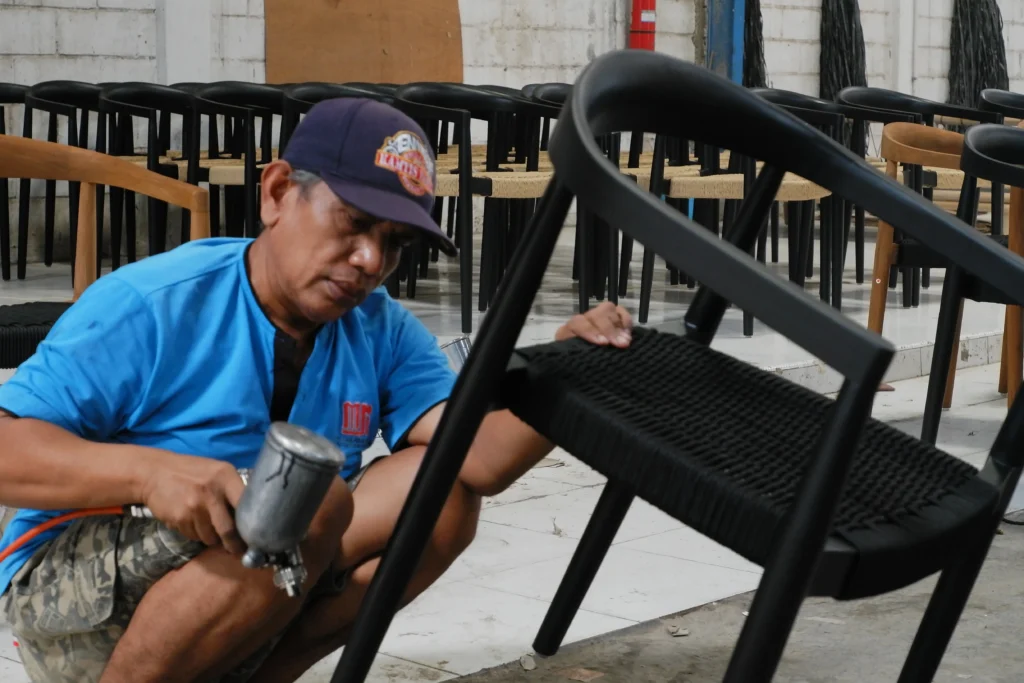
Indonesian furniture manufacturers who supply international retailers know that durability isn't just a buzzword. It's about combining smart engineering with skilled craftsmanship at every step.
1. Skilled Craftsmanship and Construction Techniques
Indonesia has a long tradition of woodworking that goes back generations. Today's manufacturers blend that traditional skill with modern production methods.
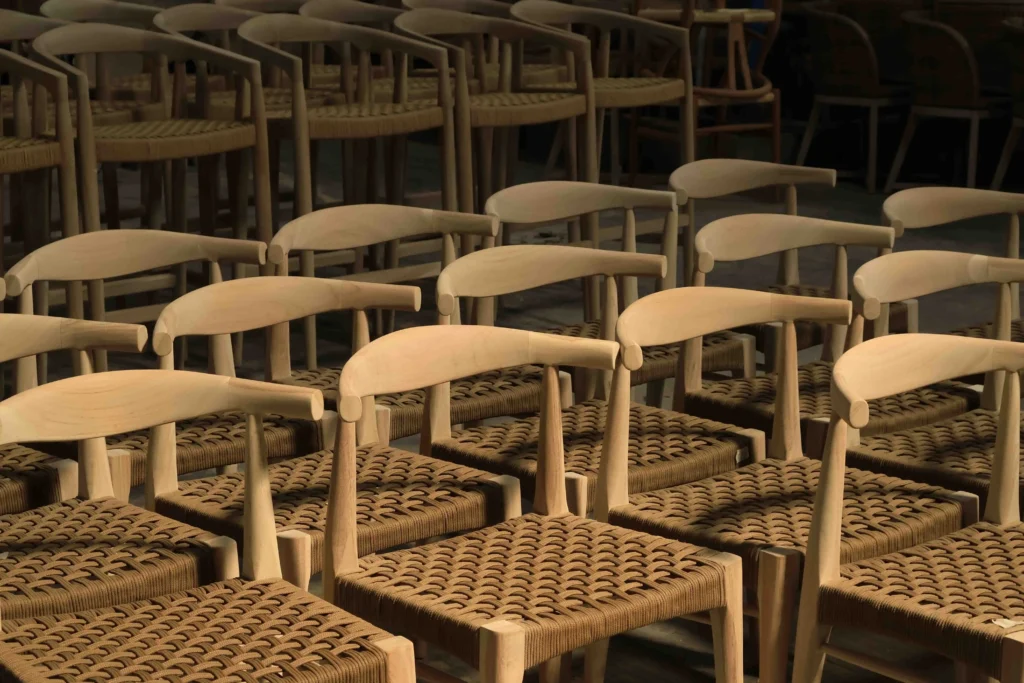
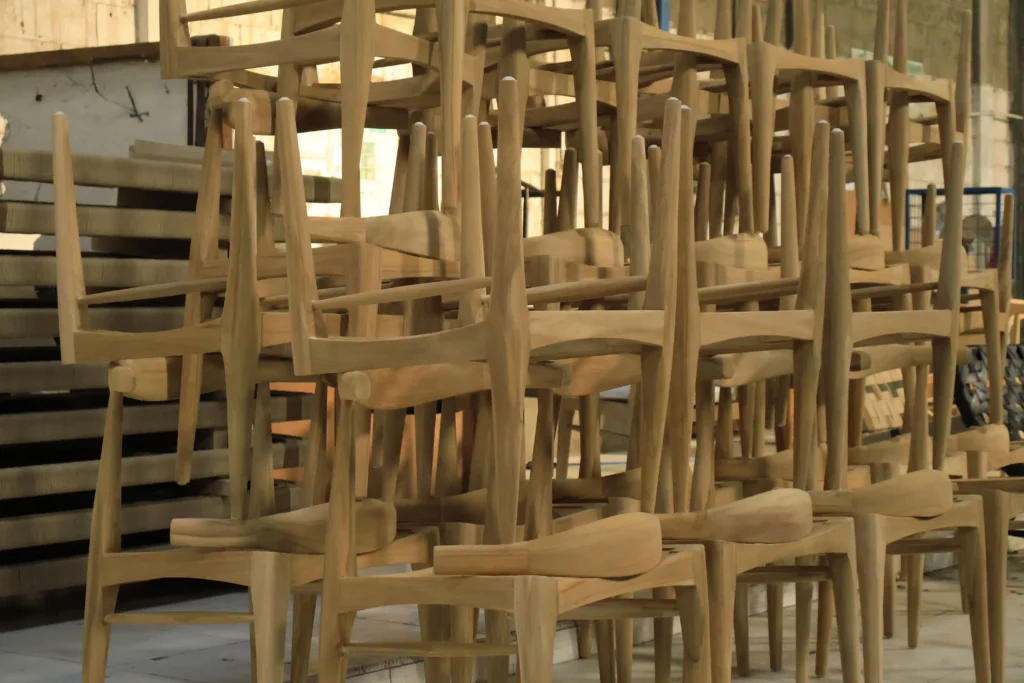
They use proven techniques such as mortise-and-tenon joints, reinforced corner blocks, and carefully aligned wood grain in load-bearing parts.
Yes, these methods take more time and labor. But they create furniture that stays solid even when customers use it roughly day after day.
Indonesian manufacturers have been shipping furniture worldwide for decades. They've learned what breaks and what lasts. That experience shows in how they build.
2. Quality Control Throughout the Manufacturing Process
Quality doesn't happen by accident. It requires checking at every stage: drying wood to the right moisture level, inspecting joints before pieces get assembled, testing how well finishes stick and hold up, and verifying that dimensions stay consistent across every batch.
At MPP Furniture, our 16,000 m² facility provides this control. We kiln-dry wood ourselves to prevent later cracking or warping. Joinery issues get caught early, not after finishing, when they're harder to fix.
3. Materials Commonly Used by Indonesian Furniture Manufacturers
Indonesia's direct access to high-quality hardwoods gives manufacturers a real advantage. When you start with better raw materials, you end up with furniture that lasts longer.
Material Selection and Its Role in Furniture Longevity
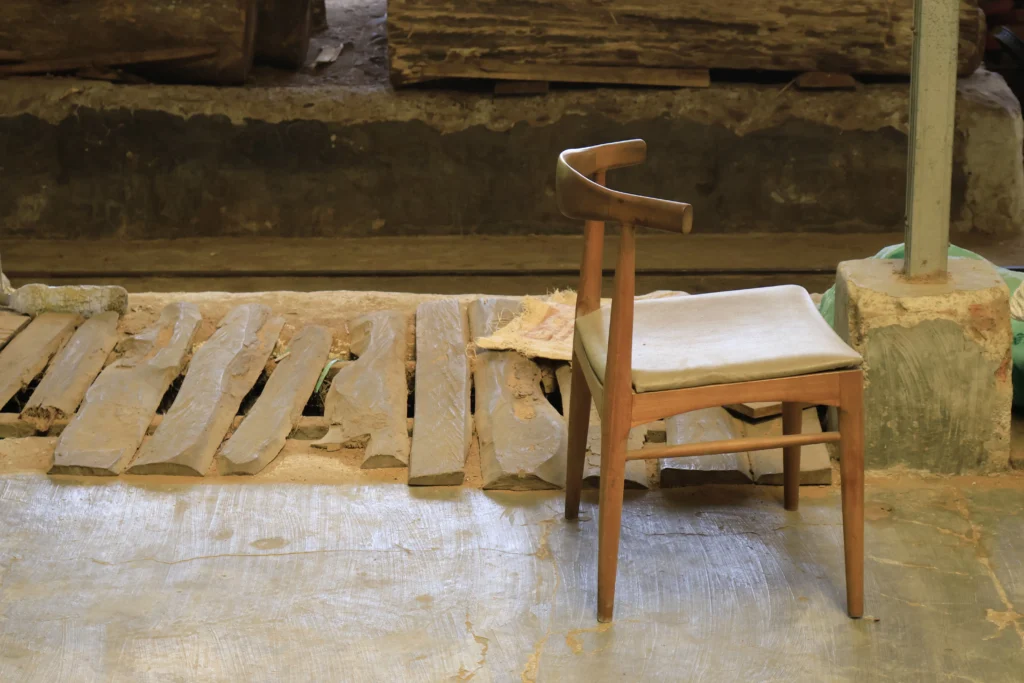
The materials you choose determine how well your furniture holds up in a busy retail environment.
Solid Wood vs Composite Materials
There's a huge difference in how long these materials last. According to Mordor Intelligence, solid wood furniture can serve you for 20 to 50+ years, while particleboard or veneer pieces typically last only 5 to 10 years.
For retailers, this means you'll replace solid wood furniture once, while cheaper composite alternatives need replacing multiple times over the same period.
Solid wood also handles repairs much better. Got a scratch? Sand it down and refinish it. Joint coming loose? Add some glue and clamp it.
With composite materials, these kinds of repairs often don't work, so you're forced to buy a completely new piece.
Teak, Mahogany, and Other Durable Hardwoods
Indonesian hardwoods have proven themselves in demanding retail environments. Indonesian teak is among the hardest woods on earth, with natural oils that repel termites and other pests even without treatment.
Teak's density and natural oils make it incredibly wear-resistant. Mahogany offers similar durability with a smoother finish, making it ideal for indoor retail furniture. Both woods age beautifully, developing character over time instead of just looking old and worn.
If you're watching costs but still need durability, Indonesian manufacturers also work with Sungkai wood. It's more affordable than teak or mahogany but still offers good stability and resists cracking better than many alternatives.
Finishing and Protective Treatments
The finish on your furniture matters as much as the wood itself. Multiple coats of polyurethane protect against scratches and moisture far better than a single coat.
Proper surface prep before finishing means protection will last years, not just months.
Pay attention to the finish quality when evaluating manufacturers. Companies that cut corners on finishing usually cut corners elsewhere, too.
Those who invest in proper finishing systems tend to maintain high standards across their entire production process.
How Durable Furniture Supports Retail Efficiency and Brand Image
Durable furniture does more than just last longer. It affects how smoothly your store runs and how customers see your brand.
1. Consistent Store Appearance Over Time
When all your display furniture ages at the same pace and maintains its look for months or years, your store feels intentional and well-managed.
But when some pieces look fresh while others show obvious wear, your space starts to look neglected, no matter how much effort you put into merchandising.
Customers pick up on this inconsistency. They might not consciously think "that chair looks worn out," but they feel it. The overall impression of your space suffers when furniture ages unevenly.
2. Reduced Maintenance and Downtime
When your staff isn't constantly fixing wobbly chairs or touching up scratched tables, they can focus on what actually drives sales: helping customers and keeping displays attractive.
Furniture repairs also mess up your floor layout. You have to move pieces around, work around empty spots, and reorganize displays based on what's working rather than what looks best. Durable furniture eliminates these constant interruptions.
3. Customer Perception of Quality and Trust
Your furniture directly shapes how customers view your brand. According to Verified Market Research, durability is a key factor for 51% of consumers when making furniture decisions.
When your display furniture looks solid and well-maintained, customers unconsciously connect that quality to everything else you sell.
On the flip side, if your furniture looks cheap or worn out, customers assume your entire store operates at that level. Your furniture sends a message about your standards, whether you mean it to or not.
Sustainability and Cost Efficiency Go Hand in Hand
Durable furniture isn't just good for your budget. It's better for the environment, too, and that combination strengthens your brand.
1. Longer Product Lifespan Reduces Waste
When furniture lasts 15 years instead of 5, you're sending two-thirds less material to landfills. If you manage multiple store locations, that waste reduction adds up fast.
For example, according to GI Research, in the UK, about 42% of bulky waste is furniture, and much of it could be reused with small repairs.
Durable furniture that's built to be repaired lasts even longer, keeping materials in circulation rather than sending them to landfills.
2. Sustainable Sourcing as a Business Advantage
More customers care about where products come from, and this helps justify higher prices. Indonesian manufacturers who work with certified timber show they're serious about responsible forestry, which appeals to environmentally conscious buyers.
At MPP Furniture, we use SVLK-certified legal wood sources. This means our timber comes from sustainably managed forests, and we have the documentation to prove it when your customers ask questions.
3. Aligning Durability with Eco-Conscious Branding
If your brand emphasizes quality and sustainability, your furniture choices become proof that you mean it. It's a real business decision that customers can see and touch.
Durable furniture from responsibly sourced materials tells an authentic story. Budget furniture from questionable origins can't compete with that narrative.
How Retailers Can Evaluate Furniture Durability When Sourcing from Indonesia
Don't just take a manufacturer's word for it. Here's how to actually verify that furniture will last.
1. Questions to Ask Manufacturers
Start by asking these specific questions, such as:
- Do you control kiln drying internally or buy pre-dried lumber? Manufacturers who handle drying themselves have better control over moisture levels, which directly affects how stable the furniture stays over time.
- What joinery methods do you use for structural connections? Mortise-and-tenon joints hold up much better long-term than dowels or screws.
- Which finishing systems do you apply, and how many coats do you apply? Multiple coats last longer than single applications. This is a simple indicator of commitment to quality.
- Can you provide documentation of wood moisture content? Furniture with a moisture content below 12% performs better in climate-controlled retail spaces. If they can't document this, that's a red flag.
- Do you have quality control checkpoints throughout production or only at the end? Catching problems during production is much better than finding them after everything's assembled.
2. Testing, Samples, and Quality Benchmarks
Don't rely on photos or promises. Get actual samples you can test yourself. Sit hard on the chairs. Open and close cabinet doors repeatedly. Try to scratch table surfaces with normal objects.
Order samples from multiple manufacturers and compare them side by side. Quality differences become obvious when you can physically examine and test pieces together.
3. Understanding Warranties and After-Sales Support
A manufacturer's warranty shows how confident they are in their product. Companies offering real warranties and replacement parts usually build furniture that rarely needs them.
Watch out for manufacturers who avoid warranty commitments or use vague language. Often, they know their furniture won't last.
Their business model depends on you coming back to buy replacements frequently rather than maintaining what you already own.
For deeper guidance on choosing the right manufacturer, check out our article on 3 key factors to consider when choosing an Indonesian furniture manufacturer.
Why Furniture from Indonesia Is a Smart Long-Term Investment for Retailers
Indonesian manufacturers serving international retail clients offer proven durability at price points that make economic sense.
Direct access to premium materials, skilled labor at competitive costs, and manufacturing infrastructure refined over decades create value that domestic or other overseas sources struggle to match.
At MPP Furniture, we've spent over 20 years proving this value proposition to retailers worldwide. Our 99% client satisfaction rate and 0.56% complaint ratio reflect operational maturity tailored to retail requirements.
Our 200+ in-house craftsmen work from documented processes that prioritize long-term performance over production speed.
Whether you need ready-made collections that offer proven durability or custom development that meets specific performance requirements, we approach every project through the lens of total cost of ownership rather than just unit price.
For insights into cost factors beyond initial pricing, check out our guide on the cost of custom furniture. And for retailers concerned about overlooked expenses, our article on the hidden costs of buying furniture from Indonesia breaks down the full picture.
At MPP Furniture, we help retailers source durable Indonesian furniture that protects margins through extended lifespans and minimal maintenance requirements.
Want to evaluate quality firsthand? Schedule a free consultation to discuss samples and quality benchmarks for your specific needs.
Email Us: sales@mppfurniture.com
WhatsApp: +62 821-4630-5858

A passionate writer with 2+ years of experience in SEO who turns complex ideas into informative & helpful content. I share the challenges & important considerations when preparing a global furniture project, hoping to help MPP Furniture’s readers make more informed business decisions.
0 Comments