
Outdoor patio furniture looks premium in a retail catalog, but it is one of the highest-risk categories once it reaches the market. Many problems do not appear at the supplier’s factory stage, but surface months later under real outdoor conditions, then turn into complaints, returns, and brand damage.
Based on manufacturing practice, most outdoor issues start from choosing the wrong material system, not from how the product is designed. This is why material choice for outdoor collections is a business decision that directly affects long-term risk, not just a design consideration.
This article explains why outdoor patio furniture is a high-risk category, which material systems are required for real outdoor use, and what happens when retailers choose the wrong quality level. It also shows how sourcing the right supplier for Indonesian teak patio furniture supports safer brand perception and more consistent retail collections.
Why Outdoor Patio Furniture Is a High-Risk Category If the Material Is Wrong
Outdoor patio furniture is at high risk because it must withstand continuous outdoor stress that indoor furniture never faces. These conditions accelerate material movement, surface stress, and joint fatigue, even when the product looks solid during sampling.
Many retailers assume outdoor furniture only needs teak and stronger finishing or thicker coatings. In reality, long-term outdoor use works from the inside out. When the core material cannot control moisture and movement, problems such as cracking, joint loosening, and peeling finishes begin to appear after months of outdoor use.
This is why most outdoor furniture failures are not caused by design or styling, but by material mismatch. Using indoor-grade materials or incomplete outdoor systems creates delayed risk that surfaces in the market, where retailers must handle complaints, replacements, and damage to brand trust.
What Materials and Systems Are Required for Outdoor Patio Furniture
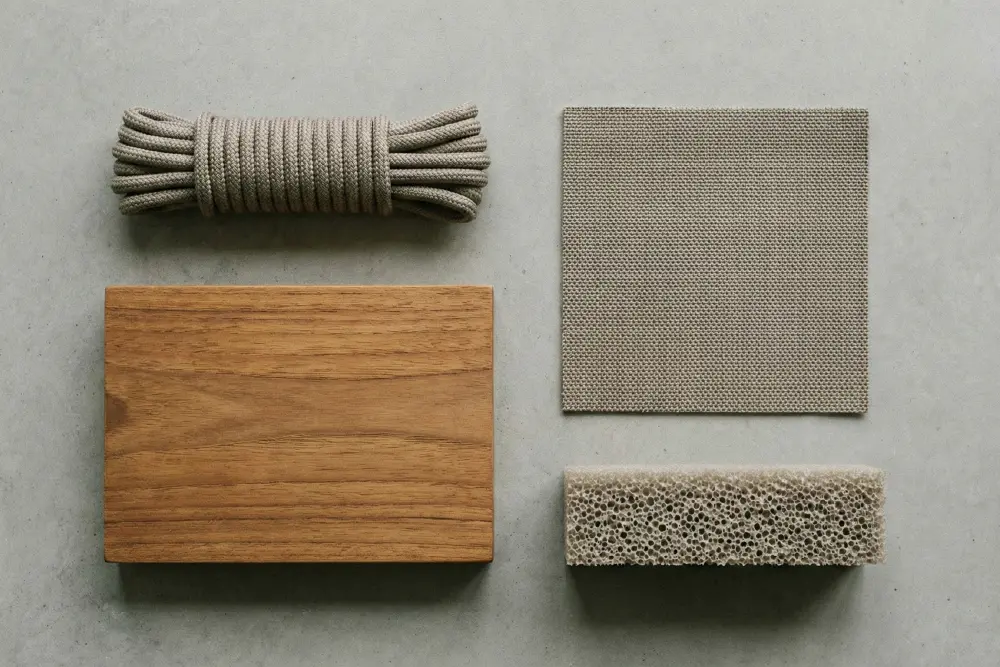
Outdoor patio furniture that performs well over time is built as a complete system, not from a single strong material. Wood, rope, fabric, cushioning, and finishing must work together to handle moisture, heat, and long-term outdoor stress without creating weak points.
This is why understanding the full construction system matters before sourcing Indonesian teak patio furniture.
1. Indonesian Teak as the Core Outdoor Material
Indonesian teak works as the core outdoor material because it manages moisture and movement from inside the wood, not only through surface protection. Its natural oil content and dense grain structure slow down water absorption and help control expansion and shrinkage under changing outdoor conditions.
A deeper explanation of teak material properties is covered in Why Indonesian Teak Wood is used for full exposure outdoor furniture
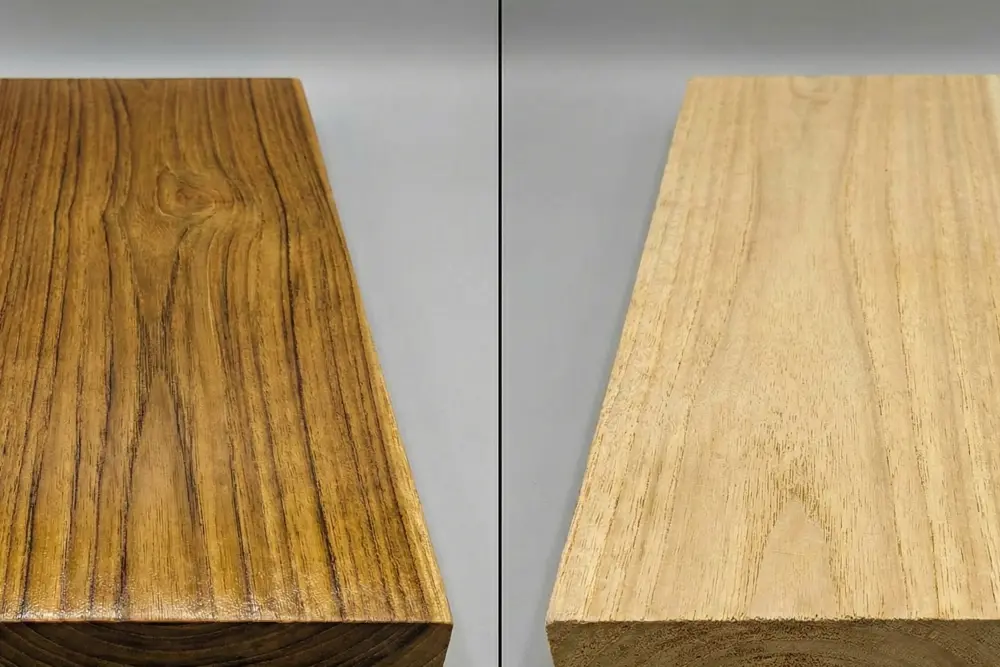
However, in practice, not all teak is suitable for Indonesian teak outdoor patio furniture. Teak boards with a high proportion of white sapwood lack dense fiber structure and natural oil concentration, which makes the wood weaker against moisture and weather exposure.
In outdoor conditions, this type of teak is more prone to early cracking, faster decay, and structural failure over time.
2. Outdoor Rope as a Supporting Visual Element
Rope construction can function differently depending on the furniture type. In outdoor dining chairs, woven rope can act as a seating surface because it directly supports body weight without cushions and is designed to release moisture quickly. However, this logic does not apply to patio furniture, where seating relies on cushions and long sitting durations.
In Indonesian teak patio furniture, rope should function mainly as a decorative element, not as a main seating structure.
The real issue appears when indoor-grade rope is used for outdoor applications. Visually, indoor and outdoor rope can look similar, but their technical specifications are very different in terms of UV resistance, moisture tolerance, and tensile stability.
At the production level, many outdoor complaints come from this mismatch. Indoor rope used outdoors absorbs moisture, weakens under sunlight, and stretches unevenly over time. Even when the teak frame is strong, the wrong rope specification can lead to sagging, loose seating areas, and early product failure in real outdoor conditions.
3. Outdoor Fabric and Cushion Performance
Outdoor cushions play a crucial role in patio furniture performance because they must handle constant exposure to moisture, humidity, and sunlight. In outdoor use, cushions are expected to repel water or dry quickly after rain; trapped moisture will accelerate deterioration and create hygiene issues.
The main risk appears when indoor-grade fabric or foam is specified for outdoor patio furniture. Visually, these materials may look identical during sampling, but technically they differ in water repellency, drying speed, UV resistance, and mold control.
4. Outdoor Finishing for Long-Term Exposure
Outdoor finishing is not meant to seal patio furniture completely. In outdoor use, finishing must allow controlled moisture exchange while protecting the surface from UV degradation and rapid color breakdown.
In practice, finishing problems often surface in buyer conversations long after products are delivered.
We have had buyers ask why their other supplier’s patio furniture experienced peeling and fast color fading within a short time. Our answer is simple: we use finishing systems specified for outdoor exposure, not indoor applications.
Outdoor-grade finishing is designed to withstand UV exposure and weather cycles, so color changes happen gradually, not abruptly. With the right outdoor finishing system, patio furniture can maintain its appearance for at least one year before any significant color change becomes visible, even under real outdoor conditions.
Further reading: Why teak patio furniture sets deliver strong margins for retailers
What Happens When Retailers Choose the Wrong Outdoor Furniture Quality
Choosing the wrong quality level for outdoor patio furniture has a direct impact on brand trust and long-term business performance. Outdoor issues rarely stay at the product level; they quickly turn into customer dissatisfaction that reflects on the retailer’s brand, not the supplier.
Recurring complaints, claims, and after-sales handling slowly reduce margin through replacements, service costs, and forced discounting. Over time, customers associate the brand with unreliable outdoor products, which weakens perceived value and limits the retailer’s ability to position future collections at a premium level.
The most damaging impact is long-term brand perception. Once customers lose confidence in an outdoor collection, they become hesitant to repurchase or recommend the brand, even if future products improve. This makes outdoor furniture mistakes difficult to recover from and turns quality decisions into strategic brand decisions, not just sourcing issues.
How to Source the Right Indonesian Teak Patio Furniture
Sourcing Indonesian teak patio furniture should be treated as a qualification process, not just a supplier comparison. Retail risk is reduced when buyers evaluate material quality, production control, and outdoor specifications before confirming designs and pricing.
By sourcing the right Indonesian teak patio furniture from the beginning, outdoor collections become more predictable, scalable, and safer to repeat over multiple seasons.
1. Evaluate Teak Quality Beyond Visual Appearance
When sourcing Indonesian teak patio furniture, buyers should move beyond surface color and grain appearance and focus on qualification questions.
Ask suppliers how teak is selected, how sapwood is controlled, and whether grading standards are applied consistently across production, not only for samples.
A reliable Indonesian furniture supplier should be able to explain material selection clearly, demonstrate batch consistency, and align teak quality with outdoor performance expectations before production begins.
2. Confirm Outdoor-Grade Specifications for All Components
To confirm whether patio furniture components are truly outdoor-grade, buyers should go beyond visual checks and ask for clear specification details.
Request information on UV resistance ratings, water repellency standards, drying performance, and material composition for rope, fabric, cushion foam, and finishing systems.
A reliable supplier should be able to explain why each component is specified for outdoor use and how it performs under long-term outdoor conditions.
3. Assess Production Control and Consistency Across Batches
Beyond material selection, buyers must evaluate how consistently a supplier can reproduce the same quality across multiple orders.
This consistency also makes it easier to plan merchandising and outdoor layouts over multiple seasons, which is further explained in how Indonesian teak patio furniture is styled for outdoor spaces.
Controlled moisture levels, standardized construction methods, and repeatable finishing processes determine whether a successful patio collection can be safely reordered.
Even when the first shipment performs well, weak batch control leads to variations in structure, finishing, and performance, which undermines retailer trust and limits long-term collection scalability.
How MPP Furniture Produces Consistent Quality of Indonesian Teak Patio Furniture
Producing reliable Indonesian teak patio furniture requires more than access to good materials. Consistent quality is achieved when material selection, construction methods, and finishing standards are controlled as one integrated process across all production batches.
This is why MPP Furniture can produce a consistent quality of Indonesian teak patio furniture.
In-House Controlled Production
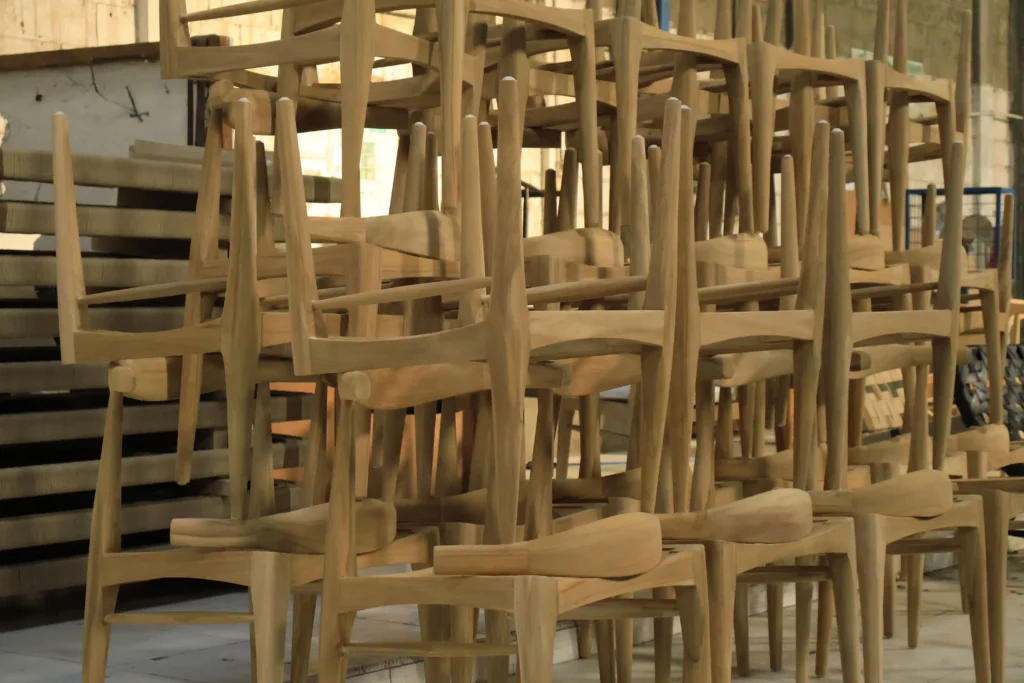
MPP Furniture manages production in-house to maintain control over moisture levels, joinery accuracy, and finishing standards. This allows each component to be monitored and adjusted before problems reach the market, rather than corrected after complaints appear.
Understanding Technical Properties of Teak
Consistent output also depends on understanding how teak behaves under outdoor exposure. By working directly with teak on the production floor, issues related to movement, oil content, and interactions with finishing can be anticipated and controlled during manufacturing.
Attention to Detail That Affects Outdoor Performance
Small details such as joint tolerance, finishing thickness, and component interaction often determine whether outdoor furniture lasts or fails. By applying the same attention to detail across every unit, MPP Furniture delivers Indonesian teak patio furniture that performs consistently and supports long-term retail programs.
Conclusion
Indonesian teak patio furniture is not chosen because it looks premium, but because it reduces long-term retail risk.
Outdoor furniture failures rarely stem from design; they stem from poor material systems, weak specifications, and inconsistent production that reveal problems only after products reach the market.
By understanding why outdoor patio furniture is a high-risk category, how complete material systems work, and how to source the right supplier, retailers can protect brand reputation, pricing stability, and repeat-order potential.
Preventing problems at the sourcing stage by choosing the right Indonesian furniture suppliers is far more effective than solving complaints after they appear.
Planning to Build Your Patio Outdoor Collections without Hassle?
Get expert input on teak quality, outdoor specifications, and production consistency before finalizing your patio collection.
FAQ: Indonesian Teak Patio Furniture
1. Why is outdoor patio furniture considered a high-risk category for retailers?
Outdoor patio furniture faces long-term outdoor stress that indoor furniture does not. Problems often appear months after products reach the market, leading to complaints, returns, margin loss, and damage to brand trust.
2. Is all Indonesian teak suitable for outdoor patio furniture?
No. Not all Indonesian teak is suitable for outdoor use. Teak with a high proportion of white sapwood lacks dense fiber and natural oil, making it more vulnerable to cracking, decay, and structural failure over time.
3. How can retailers confirm if patio furniture components are truly outdoor-grade?
Retailers should ask for clear specifications, not rely on appearance. Outdoor-grade components must have defined UV resistance, water repellency, drying performance, and material standards for rope, fabric, cushion foam, and finishing systems.
4. Why do outdoor furniture complaints often affect brand trust, not just product performance?
Customers associate outdoor furniture failures with the retailer’s brand, not the supplier. Repeated issues reduce confidence, weaken perceived value, and make it difficult to position future collections at a premium level.
5. What makes a supplier capable of producing consistent Indonesian teak patio furniture?
Consistency comes from production experience and in-house control. Suppliers that manage material selection, construction, and finishing as one integrated process can deliver stable quality across batches and support repeat orders.

Hi, I’m Salman, founder of MPP Furniture, an Indonesian furniture manufacturer serving global retailers and project-based clients.
I began my career in my family’s export-oriented furniture company, gaining hands-on experience in production, construction, finishing, material performance, and product development. With a clear understanding of how international buyers evaluate furniture quality and reliability, I founded MPP Furniture to deliver export-ready products with consistent standards.
Here, I share insights from the perspective of a furniture manufacturer working directly with production teams on the factory floor, focusing on manufacturing and supplier evaluation.
Connect on LinkedIn

0 Comments