
Retailers often ask which wood is safer for semi-outdoor collections, especially when balancing cost and durability. Choosing wood for semi-outdoor furniture can feel tricky, especially when Mahogany wood and Sungkai wood look similar on the surface.
Many buyers may ask: “Which one is actually safer for patios or covered terraces?” The truth is, both can work well, but they behave differently. The key message of this article is straightforward: each wood performs differently, and understanding these differences helps you determine which one best suits your collection, target market, and pricing strategy.
In this guide, you will get a clear, practical comparison based on real experience of one of the leading Indonesian furniture suppliers, MPP Furniture, so you can choose the right material with confidence.
Why Semi-Outdoor Spaces Need the Right Wood Material
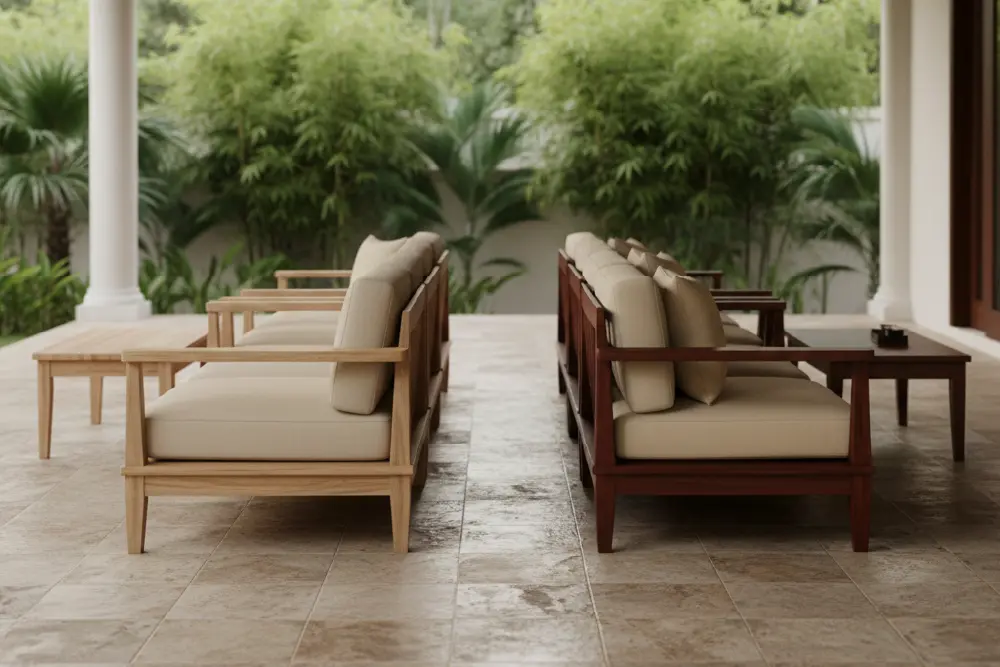
Semi-outdoor areas are unique spaces. They appear protected, but in reality, the environment is constantly fluctuating. A covered patio still receives indirect sunlight, humidity swings, morning dew, and temperature shifts. These small changes affect wood movement, finishing durability, and long-term stability.
For retailers and importers, this means one thing: choosing the wrong wood increases complaints, warranty claims, and return logistics. On the other hand, choosing the right wood creates a more profitable assortment, especially when combined with proper engineering at the factory level.
Most complaints we see from retailers come from coating lift and panel cracking due to humidity swings, not the species itself
Semi-outdoor settings usually include roofed patios, pergolas with partial shade, verandas, and commercial cafes with awnings. These locations need wood that can handle moderate exposure while staying visually stable.
Two popular choices from Indonesia are Sungkai Wood and Mahogany wood for a cheaper option. Both are attractive and workable, and both can function well in semi-outdoor zones when built correctly. However, each material behaves differently, and these differences affect pricing, design direction, and overall product performance.
Quick Overview: Sungkai vs Mahogany in Semi-Outdoor Use
Sungkai Wood at a Glance
Sungkai offers a light, modern aesthetic that fits Scandinavian collections. This species accepts stain evenly and works well in covered areas. Manufacturers must apply correct drying, joinery, and finishing to control movement and prevent coating issues.
Mahogany Wood at a Glance
Mahogany wood delivers a warm, rich look with smooth finishing. This material maintains higher stability during humidity changes while remaining dependent on coating quality. Mahogany suits premium semi-outdoor collections with controlled exposure.
Note: Both woods are suitable for semi-outdoor spaces. Direct rain or full sun exposure will cause damage. For open sky environments, teak remains the primary recommendation.
Sungkai vs Mahogany: Technical Comparison Table
This simplified comparison helps buyers evaluate how each wood species performs in semi-outdoor environments when supported by proper engineering.
| Criteria | Sungkai Wood | Mahogany Wood |
|---|---|---|
| Density | Medium density with lighter handling. | Medium high density for a solid feel. |
| Moisture Movement | Higher fluctuation requires strict control. | Increased stability during humidity shifts. |
| Finishing Absorption | Absorbs stain well but lightens faster. | Consistent with rich color retention. |
| Grain and Aesthetics | Light, modern Scandinavian look. | Warm, premium classic contemporary aesthetic. |
| Cost Category | Provides a more affordable investment. | Commands a moderately higher price point. |
| Semi-Outdoor Lifespan | Perform well with correct finishing. | Lasts longer with yearly maintenance. |
| Maintenance Frequency | Requires routine top-ups. | Requires an annual topcoat. |
| Freight Impact | Lighter weight enables efficient shipping. | Heavier weight remains manageable. |
| Market Perception | Seen as clean and stylish. | Seen as premium and long-lasting. |
Semi-Outdoor Performance for Both Woods
Performance in semi-outdoor settings depends on engineering and environmental conditions.
Factors that Affect Wood Performance
- Ventilation surrounding the furniture.
- Roof depth and protection from splash exposure.
- Humidity changes between day and night.
- Design geometry optimized for drainage and airflow.
- Quality of the professional finishing system applied.
Real Field Test Results
Our in-house testing involved placing Sungkai and Mahogany top table samples in fully exposed outdoor environments for repeated 24-hour cycles over eight months. These samples faced direct sunlight, heavy rain, and natural temperature swings.
Both materials maintained structural integrity without cracking on the surface or joints. Rainy cycles led to a slight softening of the sheen, though no cracks developed on the edges or joinery. This result demonstrates that Sungkai and Mahogany withstand extreme conditions when engineered correctly.
Overall performance relies on treatment, construction design, and the outdoor grade finishing system protecting the wood fibers. These factors influence the outcome more than the wood species alone.
We conducted this test to address frequent buyer inquiries regarding Sungkai's outdoor strength. After eight months of sun, rain, and temperature swings, the lack of cracking surprised even our internal production team.
When to Choose Sungkai or Mahogany: Decision Rules
Choose Sungkai for:
- Modern, Scandinavian, or casual furniture designs.
- Mid-range price segments and high-volume collections.
- Projects requiring light tone finishes.
- High volume SKUs.
- Fully covered patios with consistent protection.
- Environments providing good natural airflow.
Semi-Outdoor Performance
Sungkai performs best when placed under full coverage with adequate ventilation. Its lighter aesthetic suits modern residential and hospitality projects. Manufacturers utilize engineered joinery and outdoor-grade finishes to manage wood movement.
Choose Mahogany for:
- Premium or mid-premium luxury product lines.
- Items requiring a solid and heavier wood feel.
- Rich, deep color palettes.
- Longer semi-outdoor lifespan.
- Establishing higher perceived market value.
Semi-Outdoor Performance
Mahogany manages humidity changes evenly across the material. This wood remains denser and more stable, which makes it an ideal fit for premium patio collections. The smooth surface ensures consistent coloring and the development of richer tones.
Which Wood Is More Profitable for Retailers
Material selection impacts your profit margins alongside product durability. The wood species you choose affects freight costs, perceived value, and pricing confidence. Sungkai and Mahogany offer distinct financial opportunities for retail businesses.
Cost and Price Potential
Sungkai occupies an accessible price category. This position makes it ideal for competitive retail programs where price sensitivity remains high. The lighter weight significantly reduces freight costs to boost the bottom line.
Mahogany commands a higher potential retail margin. Its premium appearance and greater stability allow retailers to apply higher pricing confidence for high-end markets.
Assortment Strategy
Retailers often position Sungkai in the mid-tier for volume sales. This species serves as the main engine for consistent turnover. Mahogany functions as the premium anchor. Including it in a collection boosts the Average Order Value (AOV) across the store.
Consumer Perception
The market perceives Sungkai as clean, modern, and stylish. This species appeals directly to the Scandinavian and minimalist segments focused on contemporary aesthetics.
Consumers view Mahogany as a premium and enduring material. This reputation attracts customers focused on investment pieces and traditional furniture quality.
How MPP Helps You Choose the Right Material
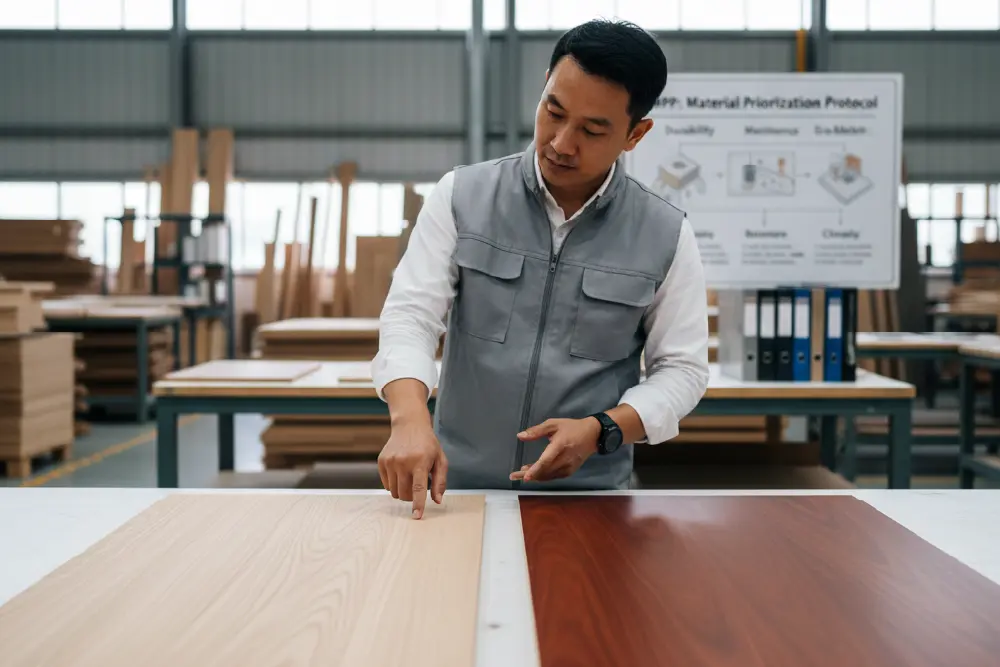
As one of the Indonesian furniture manufacturers trusted by global retailers and importers, MPP supports buyers not only with production capability but with clear material guidance. Our goal is to help you choose the wood that fits your design direction, pricing strategy, and long-term performance requirements.
Expertly Handcrafted
Our team uses traditional joinery supported by CNC precision, so each batch stays consistent from frame to frame.
Attention to Detail
Moisture is measured at multiple stages. End grain is sealed properly. Finishing layers are applied with consistency. These details reduce claim rates.
Reliable Manufacturer
MPP offers free consultation, product development, and private label programs. Production and QC are fully in-house, providing stable quality and dependable delivery.
Two decades of manufacturing expertise in wood and natural materials for global B2B projects.
Long-term relationships with retailers and importers who rely on consistent quality and service.
Extremely low complaint and defect rate, supported by strict in-house quality control at every stage.
Predictable lead times, stable production, and consistent specifications across repeat orders.
So Which Wood Is Best for Semi-Outdoor Furniture?
Both Sungkai and Mahogany perform well in semi-outdoor spaces with correct engineering. The best choice depends on your specific collection direction.
Choose Sungkai for modern design and competitive pricing. Select Mahogany for a premium appearance and longer durability. Teak remains the best choice for open exposure.
MPP is ready to help you choose material specifications and develop semi-outdoor programs tailored to your market.
Your next best-seller might be here
Request a quotation and custom options tailored to your needs today via WhatsApp or email.
FAQs
1. Can Mahogany and Sungkai survive in semi-outdoor areas
Yes, both perform well in roofed and shaded patios when constructed and finished correctly.
2. Which wood is easier to maintain
Mahogany maintains color longer, but both need annual maintenance.
3. Which wood is more budget-friendly
Sungkai typically offers lower material costs.
4. Which wood lasts longer in semi-outdoor use
Mahogany generally lasts longer due to better stability.
5. Which wood is better for modern designs
Sungkai fits Scandinavian and modern styles.

Hi, I’m Salman, founder of MPP Furniture, an Indonesian furniture manufacturer serving global retailers and project-based clients.
I began my career in my family’s export-oriented furniture company, gaining hands-on experience in production, construction, finishing, material performance, and product development. With a clear understanding of how international buyers evaluate furniture quality and reliability, I founded MPP Furniture to deliver export-ready products with consistent standards.
Here, I share insights from the perspective of a furniture manufacturer working directly with production teams on the factory floor, focusing on manufacturing and supplier evaluation.
Connect on LinkedIn
0 Comments