
The era of cool, sterile interiors is over. After a decade dominated by the "ubiquitous white oak" and stark minimalism, the design world is experiencing a fundamental shift, the Warm Wood Renaissance. Today's clients are seeking spaces that feel grounded, restorative, and deeply personal.
Mahogany Wood, with its unparalleled depth, stability, and historical gravitas, is now serving as the definitive anchor of this new movement. However, successfully integrating this classic material into a contemporary home requires moving past outdated, high-gloss traditions. The key to the new richness in Mahogany Interior Design lies in strategic species specification, mastering low-sheen finishes, and utilizing high-contrast palettes.
This article serves as your definitive guide to modern Mahogany Wood specifications. We will dissect the three crucial pillars of specification: The new aesthetic standard of matte finishes, the essential technical comparison between Genuine Mahogany, Sapele, and Khaya, and a practical guide to integrating this dark wood into contemporary color palettes like Warm Minimalism and Dark Academia.
The Aesthetic Foundation: Color, Depth, and Light
Defining Mahogany’s Look
Mahogany's enduring appeal starts with its classic aesthetic: a rich, reddish-brown hue that naturally deepens and ripens with age, lending the Mahogany Wood a powerful sense of history and permanence. This inherent warmth is precisely what satisfies the contemporary desire for "comfortable, grounded, and restorative" interiors, moving decisively away from cool neutrals.
Want to learn more about the Mahogany Wood's enduring quality and why it remains a premium timber choice?

The X-Factor: Chatoyance
The Mahogany Wood’s true visual signature is chatoyance, the shimmering optical phenomenon where the grain appears to change in sheen and depth depending on the viewing angle. This inherent dynamism ensures that even large, clean surfaces retain significant visual richness, making it a critical asset for modern architectural millwork. This depth is what makes Mahogany Furniture so irreplaceable.
The Modern Imperative: Low Sheen
To maximize this rich, dimensional effect, the modern standard for luxury Mahogany Furniture is a matte or satin finish. Designers must abandon the heavy, reflective lacquer finishes of the past. This low-sheen approach is crucial because it:
- Highlights the Grain: Low sheen ensures the Mahogany Wood's natural texture and grain are the focus, rather than surface reflection.
- Enhances Chatoyance: By diffusing light, a satin finish allows the wood's inherent shimmer to be appreciated subtly, giving the surface a sophisticated, tactile quality.
- Reflects Authenticity: Contemporary design values the natural texture of materials over visible, polished opulence, making a low-sheen topcoat the clear choice for luxury Mahogany Furniture.
Manufacturer Insight: Achieving a perfect, consistent satin finish across large volumes of product is impossible without total control. Look for partners with in-house production—from raw wood to finished goods—to guarantee this modern aesthetic standard on every piece of Mahogany Furniture.
For detailed mahogany insight from a reliable Indonesian Furniture Supplier's perspective, explore our in-depth analysis.
Mahogany vs. Sapele vs. Khaya: Choosing the Right Species for Architectural Use
The term "mahogany" is often used generically, but precise species specification for Mahogany Wood is critical for meeting performance, durability, and budget requirements. A strategic specification ensures that you select the right wood from the Meliaceae family based on its technical profile.
| Wood Type | Janka Hardness (lbf) | Density (Avg. kg/m3) | Key Workability/Aesthetic Trait | Primary Architectural Application |
| Genuine Mahogany (Swietenia) | 900 (The Wood Database) | 560 | Superior workability, easy carving, fine joinery. | Fine Mahogany Furniture, detailed trim, custom carving. |
| Sapele (Entandrophragma) | 1,360 (The Wood Database) | 665 | Highest durability, Distinctive Ribbon Stripe Grain. | High-traffic flooring, luxury doors, structural millwork. |
| African Mahogany (Khaya) | Lower than Sapele | 600 – 850 | Good stability, reliable supply, excellent acoustic properties. | Cabinetry, commercial millwork, acoustic panels. |
Why Choose Sapele for High-Wear Flooring and Doors?
For any application requiring enhanced resistance to denting and heavy foot traffic, Sapele is the strategic champion. While visually similar to Mahogany Wood, Sapele is significantly harder, registering a Janka hardness of 1,360 lbf (versus 900 lbf for Genuine Mahogany). Its high density and stability make it the ideal, cost-effective substitute for luxury doors and high-traffic flooring, where durability is paramount for Mahogany Interior Design.
When to Specify Genuine Mahogany (Swietenia)?
The original American species remains the gold standard for projects that demand the most intricate detail. Its superior workability and ease of machining make it the ideal choice for custom Mahogany Furniture, meticulous joinery, and detailed trim where complex carving is required.
The Acoustic Advantage: Why Architects Love African Mahogany (Khaya)
African Mahogany (Khaya) offers a reliable supply and excellent stability, making it popular for large-scale architectural runs and standard cabinetry. More uniquely, it possesses functional properties that produce a characteristic "warm, deep tone," making it the preferred choice for high-end acoustic applications like musical instruments and sound panels in home theaters or offices.
Reliability Check: Modern luxury design recognizes that sustainability is rooted in durability. Mahogany Wood is inherently eco-conscious because its durability allows it to resist the replacement cycle and last for decades. The complexity of sourcing, especially ensuring SVLK (Timber Legality) certification across different species. Demands a partner focused on consistent quality and ethical sourcing. Choose a reliable Indonesian Furniture Manufacturer who demonstrates a track record of low defect rates and long-term client relationships.
Understand the crucial differences between SVLK certification and Legal Wood (FLEGT) for seamless international procurement.
Integrating Mahogany: How to Use Dark Wood in Warm Minimalism and MCM
Mahogany's resurgence defines contemporary Mahogany Interior Design, allowing it to provide depth without sacrificing the required aesthetic clarity of modern design.
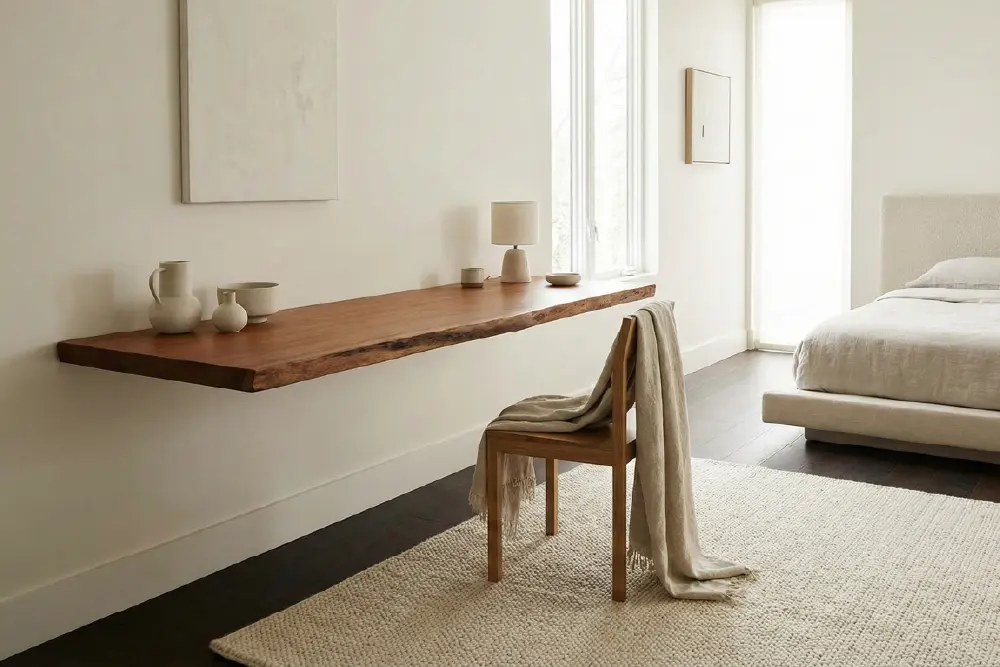
Warm Minimalism: The Anchoring Technique
The contemporary minimalist home is moving away from the stark to the soulful. In this style, Mahogany Furniture performs a critical function by acting as a visual anchor.
Technique: Use the dark wood sparingly in pieces with clean, modern lines, such as floating vanities, contemporary kitchen islands, or minimalist custom storage.
Palette: Deliberately contrast the mahogany with crisp, creamy whites (avoiding cool grays) and soft, organic materials like linen, jute, or rattan. This juxtaposition provides the warmth clients crave while maintaining an uncluttered aesthetic.
The Role of Mahogany in the Dark Academia Aesthetic
At the opposite end of the spectrum, Mahogany Wood is indispensable for the intellectual and romantic Dark Academia aesthetic. The wood acts as the primary foundational material, providing the necessary gravitas and formal atmosphere expected of a library or study. This involves:
- Extensive, ornate millwork and wall paneling.
- Built-in bookshelves serve as the central architectural feature.
- Layering the dark Mahogany Furniture with deep jewel tones, patterned textiles, and leather upholstery.
Mid-Century Modern (MCM) Revival
The revival of MCM relies on material authenticity. Designers are prioritizing the restoration of original mahogany or luan paneling to preserve architectural integrity. For new components, high-density woods like Sapele are frequently specified to deliver the clean lines and functionality expected of modern cabinetry while closely matching the vintage feel of original Mahogany Furniture elements.
Architectural Textural Paneling (Fluting and Tambour)
The current design focus is shifting from flat wood panels to architectural expression through texture. Modern applications leverage the deep color of Mahogany Wood in 3D forms, such as fluted or tambour panels. This technique creates an essential interplay of light and shadow, aligning the wood with the broader trend favoring sculptural and rounded shapes. Utilizing these dimensional panels in built-in cabinetry or feature walls instantly elevates the space, proving that Mahogany Interior Design is perfectly suited for complex contemporary detailing.
Design Partnership: Bringing these intricate, specific styles to life requires a manufacturer specializing in Custom and Exclusive Design. Prioritize partners who offer fast feedback and excellent service to ensure your vision is realized efficiently and exactly.
Mahogany Color Palette: Pairing Guide for High-Contrast Interiors
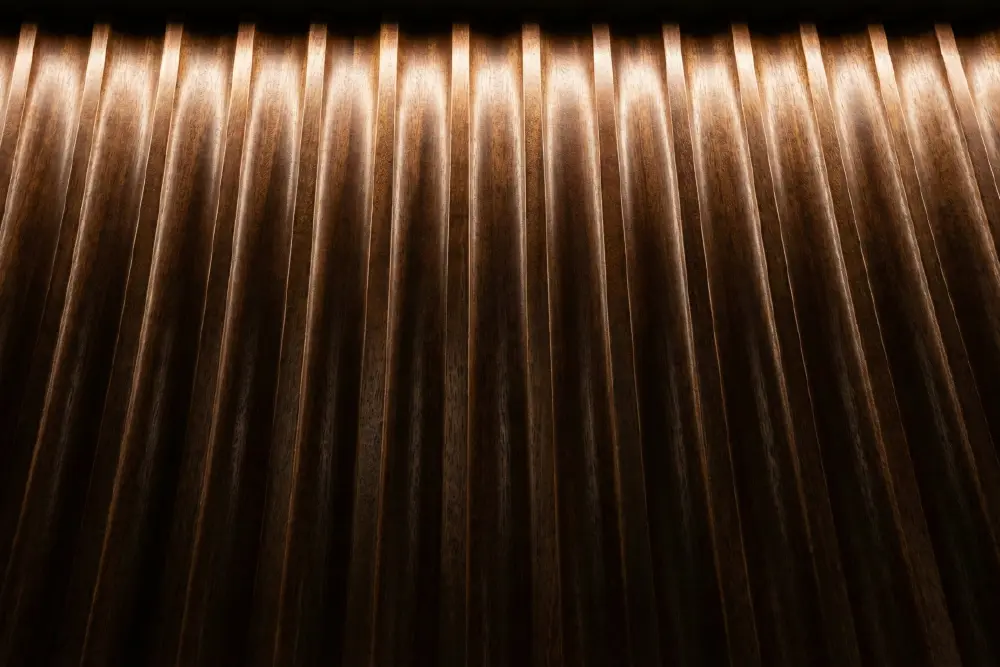
A successful mahogany palette relies on two core strategies: high-contrast highlighting and harmonious blending in Mahogany Interior Design.
The Core Rule: Contrast
The most timeless and effective strategy for modernizing dark Mahogany Wood is utilizing stark contrast. Juxtaposing the rich, deep millwork against a light backdrop prevents the color from visually absorbing too much light and makes the wood pop.
What are the Best Wall Colors to Pair with Mahogany Wood?
- Blending (Warm Neutrals): To create a subtle, soothing environment, choose warm-toned colors that contain red, brown, or peach undertones. Think creamy whites, greige, tan, or taupe. Crucially, avoid cool grays, as they clash with mahogany’s natural warmth.
- Accenting (Bold Colors): For drama and visual interest, use bold, complementary shades. Teal, Navy Blue, and soft Emerald Green are highly effective, as they cause the wood's richness to intensify.
The Metallic Dictator and Lighting Integration
The choice of hardware and lighting can instantly dictate the room’s style for your Mahogany Furniture:
- Aged Brass or Bronze: Signals classic, opulent luxury, ideal for Dark Academia or a formal living space.
- Matte Black: Signals contemporary contrast, perfectly aligning mahogany with a modern, clean-lined aesthetic.
Finally, remember that layered, warm lighting (including integrated LED systems beneath cabinetry or in millwork) is fundamental. It not only provides functional light but ensures the unique texture and chatoyance of the Mahogany Wood are visible, preventing the deep color from falling visually flat.
Conclusion: The Future of Richness
The return of mahogany isn't a simple throwback; it's a sophisticated market correction driven by a demand for quality, permanence, and warmth in Mahogany Interior Design.
We've covered the three pillars of modern Mahogany Wood design: the shift to low-sheen to showcase chatoyance, the essential technical knowledge needed to select Sapele for structure and Khaya for tone, and the actionable color strategies for high-contrast interiors.
These pillars ensure that your mahogany projects are not only beautiful but also technically superior and perfectly aligned with the demanding standard of the Warm Wood Renaissance.
Ready to Master the Mahogany Renaissance? Start Your Journey with a Reliable Partner.
Translating this deep design knowledge—from precise wood specification and finish control to custom architectural integration—requires an Indonesian Furniture Manufacturer who can execute with absolute quality and reliability.
If you are a global buyer seeking Mahogany Furniture, start your journey with our essential Indonesian Mahogany Furniture Buyer's Guide.
As a Reliable Wooden and Rattan Furniture Manufacturer in Indonesia with a 20+ year history and end-to-end in-house production, we specialize in delivering the consistency and Custom and Exclusive Design capabilities you need to succeed in the high-end market. Our commitment is to "Grow Together" with you, delivering consistent quality and fast service.
Start your next custom Mahogany Furniture project with confidence. Contact the leading Indonesian Furniture Supplier today to discuss your next luxury specification.
Planning your next best-selling collection?
Request catalog, pricing info, MOQ, and custom options today — we’ll respond quickly.
Frequently Asked Questions
1. Is Mahogany Wood actually back in style for interior design?
Yes, Mahogany currently anchors the "Warm Wood Renaissance." Designers are shifting away from cool minimalism toward materials that feel grounded and restorative. This wood's rich depth and sense of permanence satisfy the current demand for sophisticated luxury.
2. What is the difference between Mahogany and Sapele for furniture and flooring?
Janka hardness and specific application define the primary differences. Genuine Mahogany (900 lbf) provides easier carving and serves as an ideal choice for detailed furniture. Sapele (1,360 lbf) offers significantly more hardness, making it a superior, more durable choice for high-traffic applications like flooring, luxury doors, and structural millwork.
3. How do I choose the best wall color to pair with dark Mahogany Furniture?
Focus on high contrast and warm neutrals. Pair dark Mahogany Furniture with crisp, creamy whites or warm neutrals like tan and greige that contain peach or red undertones. Bold complementary colors such as teal or navy blue prove highly effective for accents, although you must strictly avoid cool grays.
4. What is the modern alternative to a high-gloss finish for Mahogany Wood?
The modern standard involves a low-sheen finish (matte or satin). This approach avoids the traditional lacquered look and enhances natural chatoyance—the shimmering, dimensional grain effect. This style aligns with contemporary values regarding authenticity and texture.
5. Does Mahogany Furniture require special lighting?
Yes, strategic, layered lighting remains essential. Due to its deep color, Mahogany Wood requires warm illumination. Integrated LEDs in millwork prevent the wood from visually absorbing light and properly highlight the dimensional effect of the grain.

I am a self-taught graphic designer with a deep passion for exploring the creative world through various tools and techniques. I have honed my skills in Adobe Illustrator, Photoshop, and Lightroom, while continuously expanding my knowledge by diving into After Effects and Premiere. Photography has become an integral part of my life, and I actively engage with it to capture moments and experiment with visual storytelling.
My fascination with color theory, histograms, and innovative design approaches drives my work, as I am always seeking new ways to push the boundaries of my creativity. From photography models and motion graphics to textures, collage, and surrealism, I am captivated by the endless possibilities in design and constantly strive to challenge myself with fresh and exciting ideas.
0 Comments