
You’ve likely heard both answers: “yes, mahogany is fine outside” and “no, use teak only.” The truth sits in the middle. Mahogany can live outdoors if it’s placed in covered areas and built with the right factory process. If your assortment will sit under open sky (full sun + rain), choose teak.
Teak prices keep rising, and the market is more competitive: that is why many buyers ask whether Indonesian mahogany can be used outdoors and look for guidance from Indonesian furniture suppliers. With Outdoor Mahogany Furniture, you can get a competitive price and a wider color variant.
This guide is for retail and project buyers who need clear specs, not theory. You will get a quick decision rule, the factory steps that make mahogany work in semi‑outdoor spaces, and a copy‑paste PO checklist to cut down claims.
Short answer: when mahogany can go outside (and when it shouldn’t)
| Setting | Typical location | Can mahogany work? | Notes |
| Indoor | living, dining, bedroom, hotel rooms | Yes (ideal) | Stable humidity, long service life |
| Semi‑outdoor / covered | roofed patios, cafés with awnings, pergolas that block rain | Yes (with care) | Needs a proper coating system + periodic top‑up |
| Full exposure | open gardens, poolside decks, beachfront terraces | No (pick teak) | UV + standing water accelerates movement & finish failure |
Why does each setting differ?
- Indoor: Pricing can be very competitive versus competitors; finishing accepts colors and stains easily, so you can launch many product variants.
- Semi‑outdoor / covered: The wood has adequate density; however, it must use an outdoor‑grade finishing system to control movement, moisture, and UV.
- Full exposure: Not recommended because mahogany's natural oils are not as abundant as teak; in direct sun and rain, coatings will degrade faster.
If your brief says “covered”, mahogany offers a warm look, smooth finishing, and a friendly price. If your brief says “open to the sky,” shift to teak.
How Indonesian furniture manufacturers make mahogany work in semi‑outdoor spaces
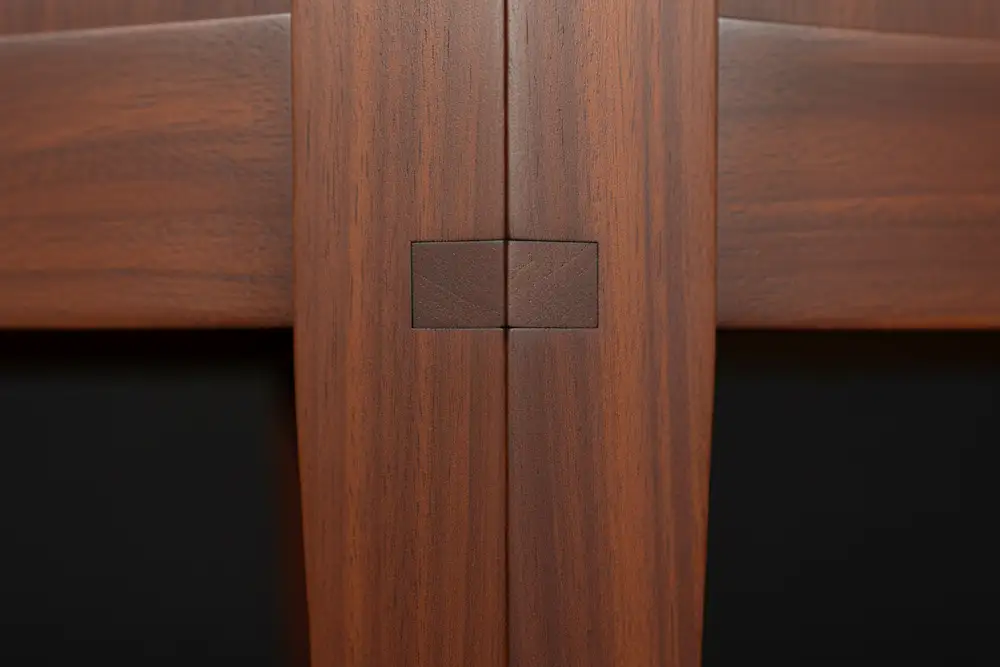
Outdoor mahogany furniture performance is not just about the species of Indonesian mahogany wood: it is about engineering + process. Drawing on real production runs worldwide and a rolling complaint ratio near 0.56%, our product engineers and QC teams standardize drying targets, joinery, and coating tests before a model is released. Here is what we do at our Indonesian furniture factory to keep your line performing in real weather.
1) Drying & stabilization
This is a critical first stage; it influences every downstream step. Excellent construction and coating will not help if the wood is still wet; trapped moisture leads to joint cracks and coating failure.
- Kiln‑dry target: 10–12% MC at assembly (±1.5% tolerance).
- Part resting: Components rest 24–48 hours after machining before glue‑up. That pause lets internal stress relax, so chairs and tables don’t twist later.
2) Construction & hardware
Good outdoor quality starts with rigid construction; joinery quality is the foundation. If the connections are weak, no finish or hardware choice will keep the frame stable under heat, humidity, and load.
- Joinery that tolerates movement: Mortise‑and‑tenon or dowel with exterior‑grade adhesive.
- Corrosion‑safe metal: Stainless or coated brass screws and fittings prevent rust streaks in humid air.
- End‑grain attention: Feet, tops, and edges get extra sealer; that’s where water sneaks in first.
3) Coating system (the make‑or‑break)
Without a proper coating or finishing system, every other step is wasted; this layer protects outdoor mahogany furniture from UV and rain, helps control moisture exchange, and keeps the surface looking consistent in the field.
Think system, not “one thick coat.”
- Penetrating sealer to slow moisture exchange.
- Color coat or stain if the collection needs a tone.
- Two to three UV‑resistant topcoats using flexible resin so the film moves with the wood.
- Sealed end‑grain and satin sheen that hides small scratches better than high gloss.
We also discuss specifications with Propan Team, our finishing supplier: the conclusion is clear: outdoor-grade finishing is essential for semi-outdoor use. The reasons are:
- It protects against UV and direct rain exposure.
- It helps maintain color aesthetics for about 1 year without significant change.
- It slows water ingress into the wood fibers, extending the practical service life of outdoor mahogany furniture.
Further reading: process mindset and moisture control in Indonesian mahogany wood insight, and a broader teak/mahogany/sungkai comparison in wood for outdoor furniture from Indonesia.
Common misconceptions about “Outdoor Mahogany Furniture”
“Indonesian Mahogany Wood is used for decks, so furniture is fine.”
Deck boards are thick and often left oiled. Furniture has thinner parts, more joints, and a film finish that must flex. Treat them the same, and the film cracks.
“A single heavy topcoat will protect it.”
Thick, brittle films look great on day one and fail fast. A layered, flexible system wins.
“Sun only fades color.”
UV doesn’t just lighten tone. It breaks surface fibers, heats the wood, and speeds movement:so shade and roof cover matter as much as rain protection.
“Any mahogany will do.”
Species and supply vary. For export programs, we use legal, plantation‑grown material with consistent density and grain. Ask for documentation: SVLK in Indonesia is the baseline.
For general traits: density, workability, and look, is mahogany wood good quality?. This article stays focused on outdoor use only.
When to choose teak instead
Pick teak when products will sit in full sun and rain or near the coast. Teak’s natural oils and cell structure shed water and weather predictably. It also accepts a low‑touch care routine if your customers like silver‑gray patina. If the brief has any doubt about coverage, play it safe and go teak. See wood for outdoor furniture from Indonesia for the side‑by‑side.
Buyer PO checklist (copy‑paste into your order)
This checklist is common for Indonesian woods for semi-outdoor purposes. Use this to align your supplier, QC, and customer service team when sourcing Indonesian outdoor mahogany furniture. Edit to match your market.
- Material: Plantation‑grown mahogany (Swietenia macrophylla). Legal wood with SVLK documentation.
- Moisture content: 10–12% MC at assembly. Components rested after machining.
- Construction: Mortise‑and‑tenon or dowel; exterior‑grade PVA (D3/D4) or polyurethane where needed.
- Hardware: Stainless or coated brass; concealed areas sealed before hardware install.
- Finish system (semi‑outdoor/covered):
- Penetrating sealer on all parts, including end‑grain
- Optional color coat or stain
- 2–3 UV‑resistant topcoats, flexible resin, satin 30–50 GU
- Extra sealing on feet, top edges, and joints
- Care card: Include re‑coat guidance and cleaning do’s/don’ts.
- QC gates: Incoming MC check → sanding/assembly inspection → finish thickness check → pre‑shipment sampling with hi‑res photos.
- Packaging: Breathable wrap; corner/leg protection; desiccant for long ocean routes.
- Use condition label: “Semi‑outdoor / Covered Only.” Not for full sun or direct rain.
Market fit context: deeper commercial considerations are in our mahogany buyer’s guide.
Maintenance calendar for semi‑outdoor sets (share with customers)
- Month 0 (delivery): Place on level, ventilated surfaces. Add glides. Wipe spills quickly; avoid plastic sheeting.
- Month 3–4: Wash with mild soap and water; soft cloth only. Inspect film on arms and edges.
- Month 6: Repeat light clean. Touch up scratches with the provided kit.
- Month 12: Maintenance topcoat if color loss or dulling appears. Light scuff, wipe clean, apply compatible topcoat.
- High‑UV/coastal: Move the 12‑month step forward to 6–9 months and repeat annually.
This routine does more for longevity than any single “miracle” finish
Why retailers and project buyers run semi‑outdoor programs with MPP: your partner among Indonesian furniture manufacturers
As an Indonesian furniture manufacturer and supplier, MPP works side by side with retailers and project buyers to translate briefs into reliable semi‑outdoor lines: from design and prototyping to finishing tests, QC documentation, and on‑time delivery. This partnership model keeps specs consistent across seasons and reduces claim rates in competitive markets.
- Expertly handcrafted. Skilled teams combine handwork with CNC accuracy so chairs sit flat and doors align: batch after batch.
- Attention to detail. Sealed end‑grain, clean inside edges, stainless screws where they matter, and careful sanding on hidden faces. These details keep your return rate low.
- Reliable manufacturer. One‑stop service from design to delivery: free consultation, free new product development, and private label/OEM support. We aim for 99% client satisfaction; our current complaint ratio runs ~0.56%.
Summary
Mahogany delivers a deep look and smooth finishing at a friendly price: great for covered outdoor spaces when supported by the right drying, joinery, coatings, and maintenance. For full exposure, go teak. If you want help locking specs or building a semi‑outdoor line that fits your margin and warranty goals, we’re happy to review drawings, propose finishes, and build samples for your market.
Planning your next best-selling collection?
Request catalog, pricing info, MOQ, and custom options today — we’ll respond quickly.
FAQs
Is mahogany truly suitable for outdoor furniture?
Yes, for semi‑outdoor or covered areas. The product should avoid direct rain and heavy UV, and it needs a proper coating stack plus routine top‑up. For open exposure, use teak.
What finish should I request for mahogany outside?
Ask for a system: penetrating sealer, optional color, and two to three UV‑resistant topcoats. Don’t accept “one heavy coat.”
Is mahogany a good wood for outdoor furniture?
Yes, it is a good choice for semi‑outdoor or covered areas when built with kiln‑dried stock, rigid joinery, stainless hardware, and an outdoor‑grade coating system.
How long will mahogany last outside?
In covered patios with routine care, the frame can serve for many years while the finish needs a light refresh every 12–24 months; in high‑UV or coastal sites, plan a check at 6–12 months.
What is the best weatherproof outdoor furniture?
For wooden furniture in full exposure, teak is the benchmark due to its natural oils and weathering behavior. Mahogany is best reserved for covered settings.
When is teak the better choice?
Any project in full sun and rain, high‑traffic hospitality terraces, or near salt spray. See wood for outdoor furniture from Indonesia for context.

Hi, I’m Salman, founder of MPP Furniture, an Indonesian furniture manufacturer serving global retailers and project-based clients.
I began my career in my family’s export-oriented furniture company, gaining hands-on experience in production, construction, finishing, material performance, and product development. With a clear understanding of how international buyers evaluate furniture quality and reliability, I founded MPP Furniture to deliver export-ready products with consistent standards.
Here, I share insights from the perspective of a furniture manufacturer working directly with production teams on the factory floor, focusing on manufacturing and supplier evaluation.
Connect on LinkedIn
0 Comments