
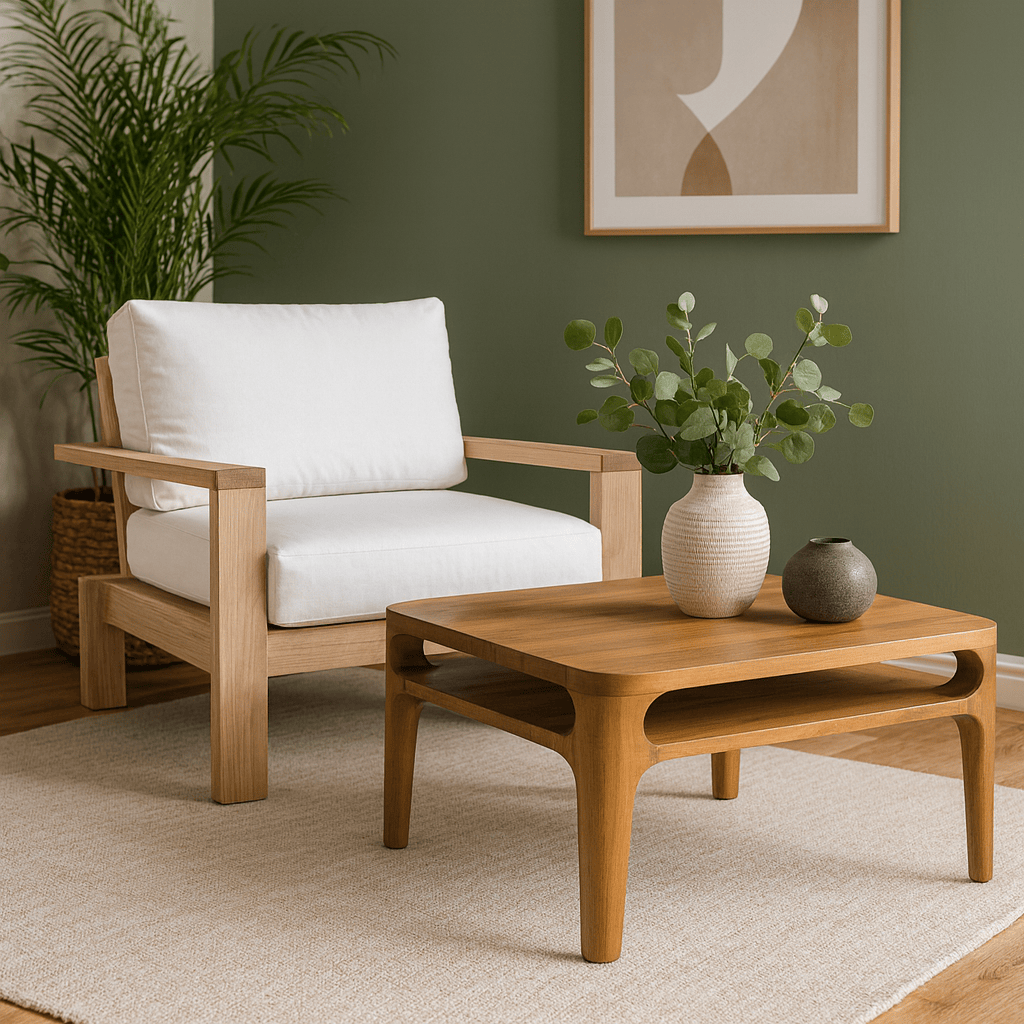
When selling furniture, the goal is always to balance the price and the quality the timber offers; this is why mid-tier woods like Sungkai are rising continuously, since it offers a premium look at an affordable price.
However, sometimes the overhead cost lies in how Sungkai is being processed; thus, understanding the end-to-end cost is important to prevent hidden expenses. In this article, we, as an expert Indonesian Sungkai furniture supplier, will explain the factors affecting how much Sungkai wood furniture costs for B2B buyers who need to secure their bottom line.
Introduction
Sungkai, the Indonesian native wood, is a fast-growing timber with an abundant source for the global supply chain. That is one of the advantages of Sungkai wood and one of the reasons it’s considered mid-tier wood, unlike teak, which grows relatively longer.
Sungkai also has medium natural qualities, like the oil content and sensitivity to moisture, the durability, and also weighs in between hardwoods like teak or mahogany and lighter woods like ash or oak. The lighter weight ironically helps Sungkai to be easier to work withand to transport (reducing delivery cost).
Even if Sungkai is more popular at mid-market segments, the straight grain and smooth texture have helped the wood to be more suitable for today’s design trends, which tend towards minimalism. This makes Sungkai lovable among premium wood hunters who don’t want to pay the teak price.
However, can buyers only rely on the “medium price” of Sungkai through its natural qualities only? Unless you have a spare in your budgeting plan, the answer is no. You also need to consider the production needs and complexity to plan the Sungkai furniture purchase thoroughly.
Key Cost Components in Sungkai Wood Furniture
Now, we’re discussing the main concern: what are the factors that might result in a hidden cost when purchasing Sungkai furniture? Here’s the answer.
Material Cost vs Processing Cost
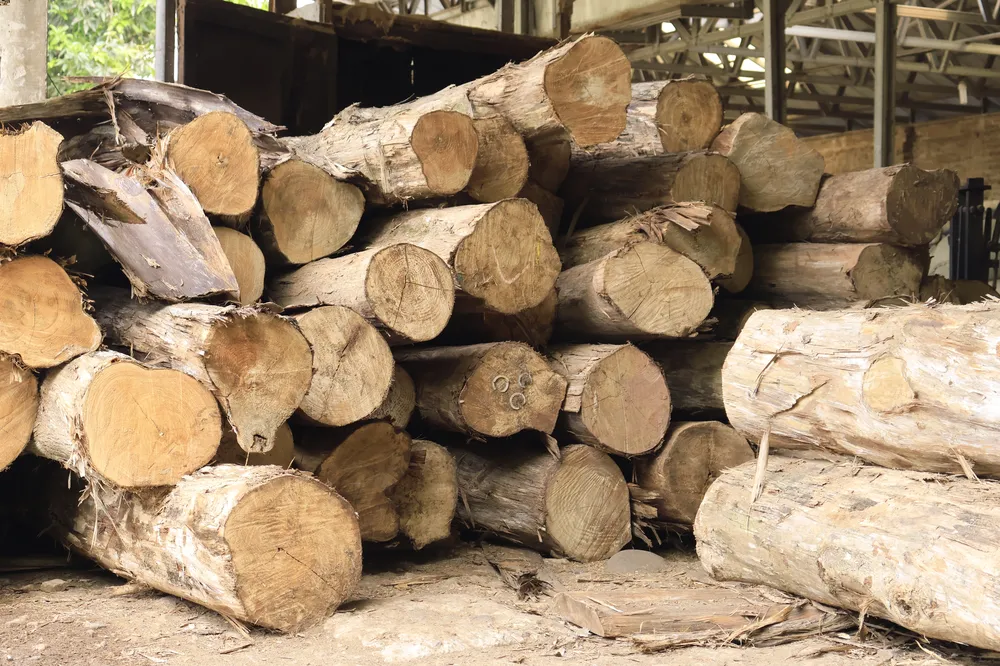
When talking about the material cost, Sungkai’s mid-tier wood is considered more affordable than other popular hardwoods like teak. However, the production process sometimes also comes with a hidden cost. Since Sungkai is a light-colored wood, any imperfections resulting from drying or sanding will show up easily.
This is why choosing the right manufacturing partner who understands the right treatment for Sungkai, from drying to finishing, is important. Investing in the cost of expert furniture handling prevents the business value loss that might result in faster cracking or warping the minute the furniture arrives in your country.
Design Complexity and Customization Impact
The excellent workability is also one of the biggest reasons why Sungkai is sought after; it gives more creative freedom for buyers to request a custom design. However, this freedom also comes with the consequence: more money to spend. The more complex the joinery, the more you need to prepare for the overhead cost.
Scale, Quantity, and Cost Efficiency
In furniture manufacturing, volume is the most significant driver of price. Ordering large-scale Sungkai projects is certainly more economical since it can optimize the production lines, reducing waste and labor costs per piece, and also the cost of delivery.
However, it’s never wrong to order a small number of custom Sungkai furnishings, but you need to be prepared for the custom design special charges from some manufacturers. At MPP Furniture, we have a free product development service you can try for your custom design request. Just bring any ideas, and we can help develop the Sungkai product based on the creative brief you suggest.
Long-Term Cost Considerations
Budgeting isn’t only about how much you should pay upfront, but also about the total cost of ownership. Choosing a low-priced factory that gives poor treatment will only lead you to higher replacement costs, while Sungkai can actually last for 10-15 years if it’s treated properly. This is why working with the right manufacturing partner is crucial, as the expertise impacts the long-term cost you spend.
Building a Realistic Budget for Business
To prevent unexpected overhead costs, you must plan your Sungkai furniture purchase thoroughly by planning a realistic budget before going into the buying process. You need to consider these 4 factors.
The Unit Price & Bulk Price
First off, you need to know the base price of one Sungkai unit from the manufacturer of your choice. Take this as a benchmark price if you’re ordering a small amount of Sungkai furnishing. However, if you’re planning on ordering for retail or wholesale projects, it’s better to ask for the bulk price as it’s mostly different from one unit price.
The Finishing Choice & Application
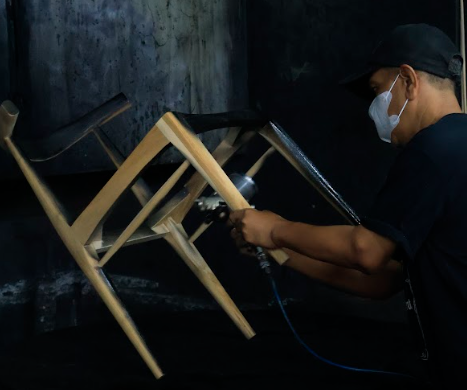
Other factors you need to consider are what kind of stain or finish you want to apply. Some popular, in-demand coatings, like matte finish, might add a few dollars to the unit price. Some strong coatings, like conversion varnish, offer an excellent protective finish, and the application complexity also impacts the final processing cost.
The Cost of Logistics & Shipping
The shipment process also affects your Sungkai purchase, especially when the number of units you order is a large-scale project. The local duties must also be considered as part of the logistics & shipping cost so that you can avoid the border confinement when it arrives in your country.
The Cost of Design Customization
Last but not least, the Sungkai purchase cost also includes the design complexity, especially when you request a custom joinery. The more complex the design, the more expensive you have to pay for the design customization.
Pro tip: if you want to reduce the customization cost, you can take advantage of the minimalist design trends and their suitability with Sungkai wood, and apply it as the joinery design for your order. Not only minimizing the production costs, but it can also help your product lines become more trend-forward in the market.
Working with a Sungkai Wood Furniture Partner Who Understands Budget Control
At MPP Furniture, we don't just provide a price list; we work as your financial partner. We understand that your project or retail store has a strict budget to meet. We always prioritize transparent communication with our clients to meet their expectations, especially for the purchase budgeting.
With over 20 years of experience in the furniture export industry, we’ve successfully delivered Sungkai product lines that meet our clients’ expectations throughout the US, Dubai, Australia, Spain, South Africa, and more; our 99% client satisfaction and only a 0.56% complaint ratio said so.
We’re also open for custom/ODM/OEM requests, producing furniture only made for your brand. You can try this service combined with our free product development that can help expand your brand’s signature appeal into a wider range of furnishings. With more than 200 craftsmen in-house who have mastered sophisticated joinery, you can expect an artisanal touch for your Sungkai product line.
Request a quotation or schedule a free consultation if you’re still hesitant about your next project, and see how we can help with a solutive recommendations for your business!
Planning your next best-selling collection?
Request catalog, pricing info, MOQ, and custom options today — we’ll respond quickly.

A passionate writer with 3+ years of experience in SEO who turns complex ideas into informative & helpful content. I share the challenges & important considerations when preparing a global furniture project, hoping to help MPP Furniture’s readers make more informed business decisions.
0 Comments