
Choosing furniture material is not only a design decision. For price-sensitive retail markets, it directly shapes pricing strategy, margin room, inventory speed, and long-term brand positioning.
Sungkai wood furniture is often positioned as a lower-cost alternative to teak. But the real question for retailers is not whether Sungkai is affordable; it is whether Sungkai fits the business decision of a price-sensitive market without introducing hidden risks.
From our experience, Sungkai can be a profitable choice for retailers, but only when product category, cost structure, and supplier capability are aligned.
This article explains the business impact of choosing Sungkai wood furniture, using a practical, margin-driven perspective rather than an aesthetic one.
Why Price-Sensitive Retail Markets Require the Right Material Choice
Price-sensitive markets do not respond linearly to price changes. While overall price sensitivity in home goods has declined, certain categories remain highly exposed to margin pressure, especially when value perception is unclear or inconsistent.
Retail studies show that consumers increasingly respond to perceived value and availability, not only to absolute price. At the same time, retailers still experience margin compression when cost structures are misaligned with target segments.
This creates a difficult balance for retailers:
- Prices cannot increase freely
- Quality failure is less tolerated
- Slow-moving stock quickly erodes cash flow
In our discussion with retailers, material often becomes the silent driver of pricing failure.
As a result, material choice becomes a core commercial decision. The wrong material either inflates retail price beyond market tolerance or introduces hidden risks through returns and complaints.
Why Sungkai Wood Is Used for Medium-to-Low Price Furniture
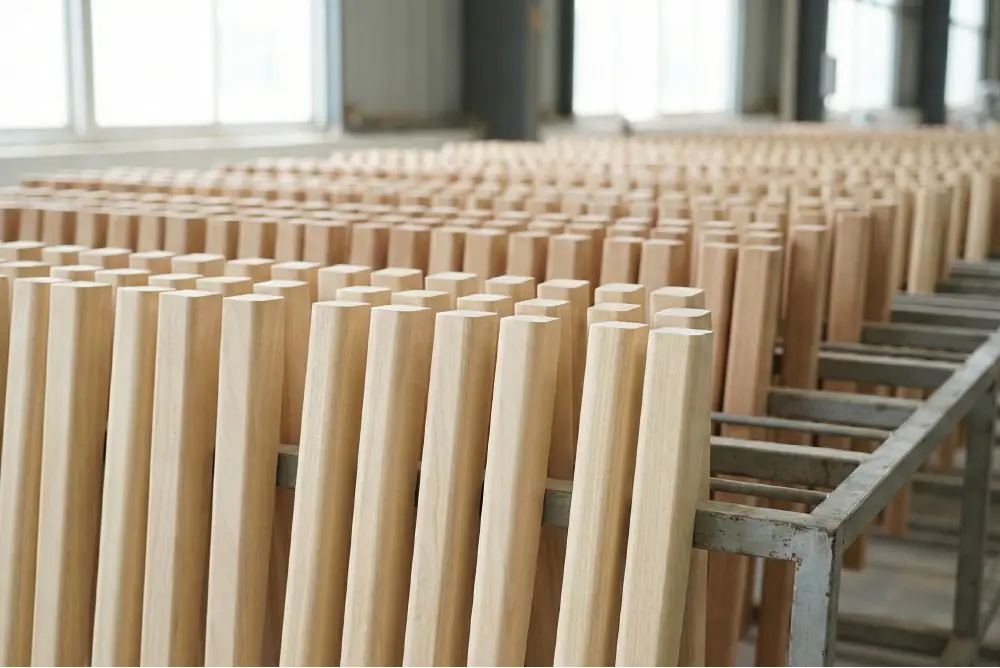
Sungkai wood is widely used by Indonesian furniture suppliers because its cost structure supports controlled pricing strategies without stripping perceived value.
From a production standpoint, Sungkai offers:
- Lower raw material cost compared to teak
- More predictable supply availability
- Faster machining compared to teak, while teak generally requires longer finishing time due to its density and oil content
Although the waste percentage between Sungkai and teak is generally similar in controlled production, the machining phase for Sungkai is typically more time-efficient. Teak, on the other hand, often requires more preparation and attention during final finishing because of its density and natural oil characteristics.
In a practical FOB structure, even a 5–10% difference compared to teak can significantly influence pricing strategy. A deeper breakdown of Sungkai wood furniture cost structure shows how material selection shifts export pricing dynamics.
When material cost affects machining time and finishing process duration, it directly shapes the factory’s total production cost and therefore the final FOB price offered to retailers.
This difference does not necessarily make Sungkai dramatically cheaper, but it provides measurable pricing flexibility for indoor retail and e-commerce segments where price thresholds are sensitive.
Modern pricing frameworks emphasize that pricing power is created upstream, not only at the sales level. Cost structure determines how much flexibility a business has to adjust pricing, promotions, and channel margins without harming profitability.
In furniture production, Sungkai enables suppliers and retailers to:
- Maintain competitive retail price points
- Absorb logistics or channel cost fluctuations
- Adjust pricing tactically without damaging brand trust
This explains why Sungkai is commonly selected for indoor furniture lines, entry-level collections, and retail or ecommerce-focused SKUs where value consistency matters more than premium material signaling.
Retailers can explore the broader benefits of Indonesian Sungkai furniture to understand its commercial positioning.
However, the cost advantage only works when structural engineering and drying standards are controlled. Without proper moisture control and joint reinforcement, the small FOB advantage can be quickly offset by complaint costs, returns, or long-term brand damage.
How Sungkai Wood Furniture Affects Business Performance
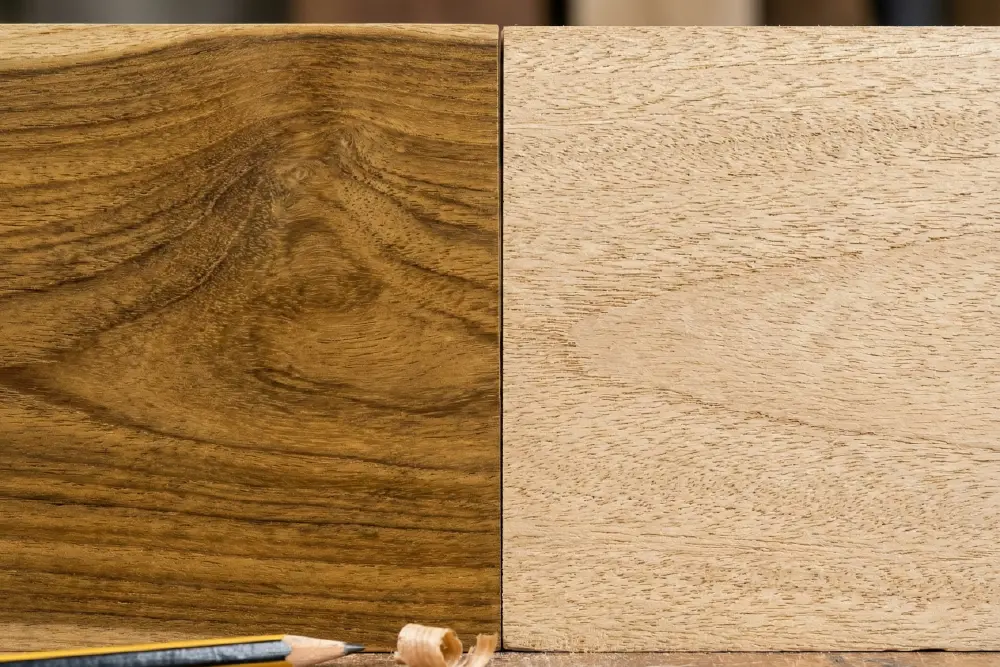
Material selection affects retail performance through margin structure, inventory velocity, and assortment flexibility.
Margin Structure Compared to Teak Furniture
Teak furniture carries strong perceived value but limits pricing flexibility in price-sensitive segments. Higher landed cost narrows promotional room and increases margin exposure.
Furniture pricing analysis shows that materials enabling wider price adjustment ranges allow retailers to manage promotions, bundles, and channel fees without eroding core margins.
Sungkai furniture supports this by:
- Lowering base cost
- Reducing price floor pressure
- Allowing controlled discounting
From a manufacturer’s perspective, this creates healthier retailer–manufacturer alignment because pricing stress does not immediately translate into cost-cutting on quality.
Stock Turnover and Fast-Moving SKU Potential
Fast inventory turnover is essential in price-sensitive markets. Products that linger in stock quickly become financial liabilities.
Sungkai furniture supports faster SKU movement because:
- Lower retail prices increase purchase frequency
- Design refresh cycles are shorter and less costly
- Retailers can test new designs with lower risk
Wholesale pricing practices show that faster stock rotation often produces higher long-term profitability than a higher per-unit margin with slow movement.
For businesses exploring tailored production strategies, understanding how custom Sungkai wood furniture for business works at the factory level is equally important.
Design Flexibility for Retail Assortment
Sungkai wood adapts well to painted, stained, and contemporary finishing systems. This gives retailers flexibility to:
- Build private label collections
- Refresh assortments seasonally
- Differentiate without redesigning core structures
For price-sensitive segments, this flexibility is a commercial advantage rather than a design feature.
Business Risks When Sourcing Sungkai Furniture from Indonesian Furniture Suppliers
Sungkai wood is not risk-free. The main risks are production discipline and supplier capability, not the material itself.
Supplier Understanding of the Sungkai Wood Properties
Understanding Sungkai wood means understanding how its physical characteristics affect structural performance. Because Sungkai is lighter and less dense than teak, it requires structural calibration in joint design, component thickness, and load-bearing planning.
Suppliers who treat Sungkai as a direct substitute for denser hardwoods without adjusting engineering standards increase long-term structural risk. Impact resistance, screw holding capacity, and joint stability must be engineered according to Sungkai’s density profile.
For buyers comparing alternatives in climate-sensitive applications, a practical mahogany vs Sungkai wood semi-outdoor comparison provides additional context.
Wood naturally expands and shrinks depending on humidity and seasonal climate changes. For indoor Sungkai furniture, a moisture content level around 12% is considered stable. The purpose is to prevent risk for retailers, months after the product is sold.
Supplier Consistency and Quality Control
Consistency determines whether cost savings remain savings or turn into hidden liabilities. Even if Sungkai offers FOB flexibility, inconsistent grading, drying, or finishing standards between production batches can create variation in color tone, density response, and surface absorption.
Retailers sourcing Sungkai furniture should evaluate whether suppliers apply structured quality control checkpoints, including material selection inspection, moisture verification before machining, pre-assembly checks, finishing control, and final inspection before loading.
Supplier Experience in Producing Sungkai Wood Furniture
Experience in producing Sungkai furniture is not only about woodworking skills. It is about aligning engineering decisions with target retail positioning.
Even with advanced machinery and complete factory facilities, a lack of real experience in handling Sungkai wood can increase production risk. Sungkai requires specific drying control, joint calibration, and structural adjustment based on its density and movement behavior.
Without hands-on experience managing these variables, sophisticated equipment alone does not guarantee consistent structural reliability across batches.
How MPP Supports Retailers Producing Sungkai Furniture with Consistent Output
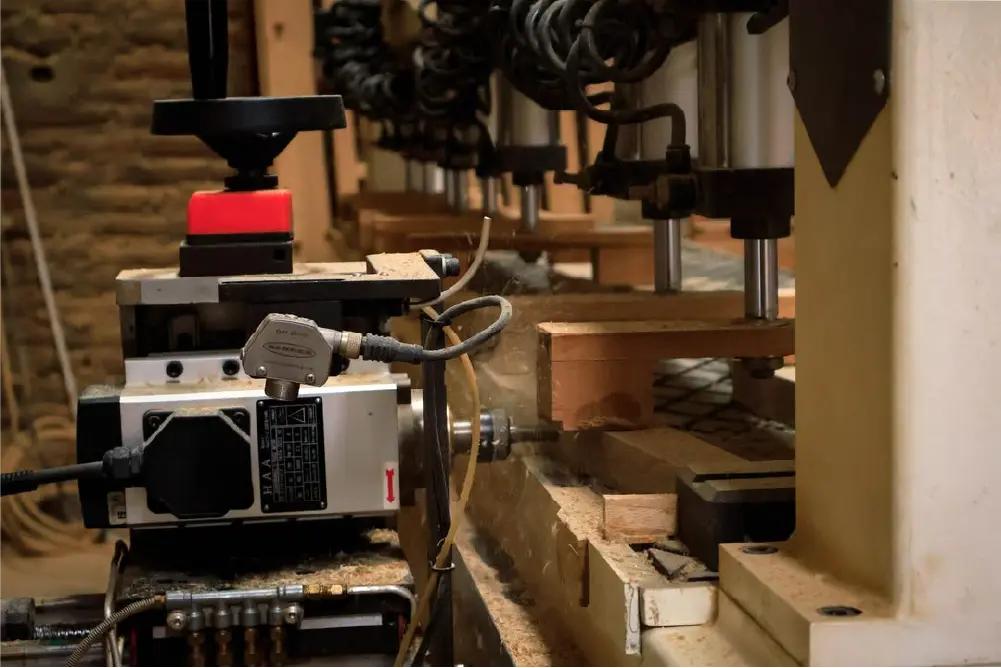
As an Indonesian furniture manufacturer, MPP applies strict material control, engineering calibration, and in-house process discipline to ensure Sungkai furniture is produced with consistent structural performance, not just cost efficiency.
Attention to Detail in the Production System
MPP Furniture produces Sungkai wood furniture by applying attention to detail from material preparation, moisture content verification, component calibration, and joint reinforcement.
This process discipline is designed to prevent structural risks that may appear later in the retail lifecycle, not only during factory inspection.
Reliable Manufacturer with Full In-House Production
Full in-house production allows tighter control over material grading, machining tolerance, finishing application, and final inspection. This reduces dependency gaps that often occur when processes are split across subcontractors.
For Sungkai furniture, production continuity is directly linked to consistency. Stable process control lowers structural variation risk and supports predictable output for retail and e-commerce distribution.
Experience in Sungkai Wood Production
With more than 20 years of exporting furniture to the US, Europe, Australia, and South Africa, we understand how different climates and retail standards affect material performance. Over the last 10 years, Sungkai has been one of the materials we consistently produce for indoor collections.
One of our retail buyers from Europe moved to us after facing structural movement issues with their previous supplier.
After transitioning to properly dried Sungkai with controlled 12% moisture content and reinforced joint construction under our production control, structural stability improved, and complaint risk decreased.
Conclusion: Is Sungkai Wood Furniture the Right Choice?
Material selection in price-sensitive retail is not about choosing the cheapest option, but about aligning cost structure with margin tolerance and market positioning.
Sungkai can support pricing flexibility and faster stock rotation, but only when moisture control, structural engineering, and supplier discipline are properly managed.
The 5–10% FOB difference compared to teak creates room for retail strategy, yet that advantage disappears if production standards are weak.
For retailers targeting indoor, price-sensitive segments, Sungkai becomes a strategic choice when execution, not just material, is aligned with long-term business performance.
Planning to Develop Sungkai Wood Furniture for Your Brand?
Share your target FOB structure and retail positioning with us, and we will help you evaluate the structural and cost feasibility of Sungkai production.
FAQ: Indonesian Sungkai Wood Furniture
1. Is Sungkai wood furniture suitable for price-sensitive retail markets?
Yes. Sungkai wood furniture can be the right choice for price-sensitive retail markets because it offers 5–10% FOB flexibility compared to teak, faster machining efficiency, and adaptable indoor design application.
2. How does Sungkai wood compare to teak in terms of business impact?
Sungkai typically offers around 5–10% FOB flexibility compared to teak, which allows retailers more room in pricing strategy. However, teak carries stronger premium perception, so the decision depends on target segment positioning and margin tolerance.
3. What is the recommended moisture content for Sungkai wood furniture?
For indoor furniture, a moisture content around 12% is considered stable. This level minimizes wood movement caused by humidity changes and reduces the risk of warping or joint loosening after export.
4. What risks should retailers consider when sourcing Sungkai furniture from Indonesia?
The main risks are not the material itself, but supplier discipline and engineering control. Retailers should evaluate moisture verification, structural reinforcement standards, and batch consistency to avoid hidden operational costs.
5. How do I evaluate an Indonesian Sungkai wood furniture supplier?
Start by verifying moisture content control (ideally around 12%) and ask how it is measured before shipment. Then review structural engineering standards, batch consistency processes, and whether production is handled fully in-house to reduce variability.

Hi, I’m Salman, founder of MPP Furniture, an Indonesian furniture manufacturer serving global retailers and project-based clients.
I began my career in my family’s export-oriented furniture company, gaining hands-on experience in production, construction, finishing, material performance, and product development. With a clear understanding of how international buyers evaluate furniture quality and reliability, I founded MPP Furniture to deliver export-ready products with consistent standards.
Here, I share insights from the perspective of a furniture manufacturer working directly with production teams on the factory floor, focusing on manufacturing and supplier evaluation.
Connect on LinkedIn

0 Comments