
Introduction: When the Best Wood Shows Its Character
Teak has earned its place as the “King of Woods” for outdoor furniture. It survives sun, rain, and humidity better than almost any hardwood. But for first-time owners of premium teak, one issue often causes concern: brownish-yellow stains appearing on new outdoor cushions.
This surprises many buyers, especially importers and brands who expect flawless performance from day one. The truth is simple: this is not a defect. It is a natural biological process that only happens in oil-rich, high-grade teak.
This article explains why teak oil bleeding happens, why it signals quality, and how professional teak furniture maintenance prevents problems with upholstery. The goal is not to hide nature, but to manage it correctly.
Understanding Teak’s High-Resin Nature
Teak furniture is made from Tectona grandis, a hardwood known for its internal protection system. Unlike many outdoor woods that rely on heavy chemical coatings, teak protects itself from the inside.
Why Grade A Teak Contains More Oil
Grade A teak comes from mature heartwood. This section of the tree contains:
- High levels of natural oils and resins
- Dense rubber compounds
- Silica that resists insects and fungi
Younger or lower-grade teak contains less oil. That means less bleeding, but also less durability. This internal oil system acts as biological protection from within. It is one reason why genuine teak can last decades outdoors with minimal structural damage.
Explore our comprehensive guide on Indonesian wood for outdoor furniture to understand the unique properties of regional timber.
Why Teak Produces Oil and Why That Is a Strength
Many buyers view teak oil stains as a weakness. In practice, they are proof of what makes teak exceptional.
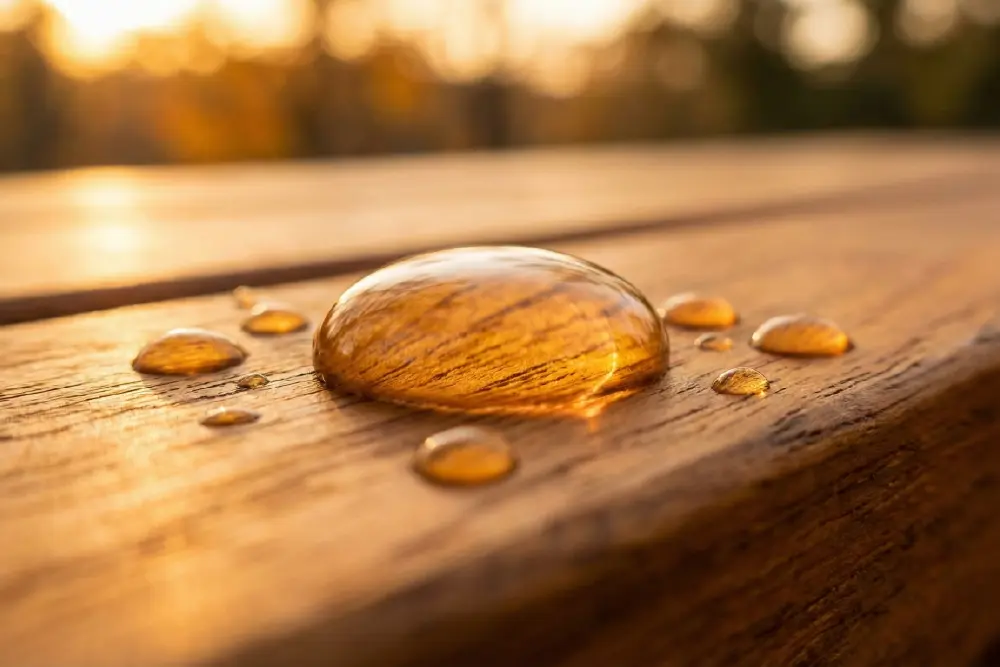
Natural Water Resistance
Teak oil repels moisture. Rain does not easily penetrate the wood fibers, which slows cracking and rot.
Resistance to Pests and Fungi
The resins in teak are unappealing to termites and mold. This is especially important in humid climates.
Long-Term Outdoor Durability
This oil content allows teak furniture to last 30 to 50 years outdoors when properly maintained. Only teak with sufficient oil content can release oil. In short, bleeding happens because the wood is doing its job.
Learn more about our technical guide to mitigating wood movement risk to ensure structural longevity.
Why Teak Oil Bleeds Onto Cushions
Teak oil bleeding usually appears during the early life of outdoor furniture. Several factors work together.
- The New Wood Phase: After kiln drying and assembly, some surface oils remain active inside the wood. They have not yet stabilized.
- Moisture as the Trigger: Rain, dew, or even high humidity draws oil to the surface. Water acts as a carrier for natural tannins and resins.
- Capillary Action and Fabric Contact: When cushions sit directly on teak frames, fabric fibers pull oil out of the wood. This wicking effect transfers oil into the cushion material.
This explains why stains often appear only where fabric touches the wood.
How Teak Oil Affects Outdoor Cushions
- Visible Staining: The most common issue is yellow-brown discoloration, often called tea stains or tannin stains. These are organic, not chemical.
- Fabric Quality Impact: Natural teak oil is milder than synthetic oils, but it can attract dust. Over time, this creates grime that is harder to remove.
- The Hidden Moisture Risk: Oil trapped between cushion bottoms and wood frames can retain moisture. This creates conditions where surface mold may grow on fabric, not the wood.
The issue is not structural damage, but appearance and hygiene.
Professional Prevention Methods for Teak Furniture Maintenance
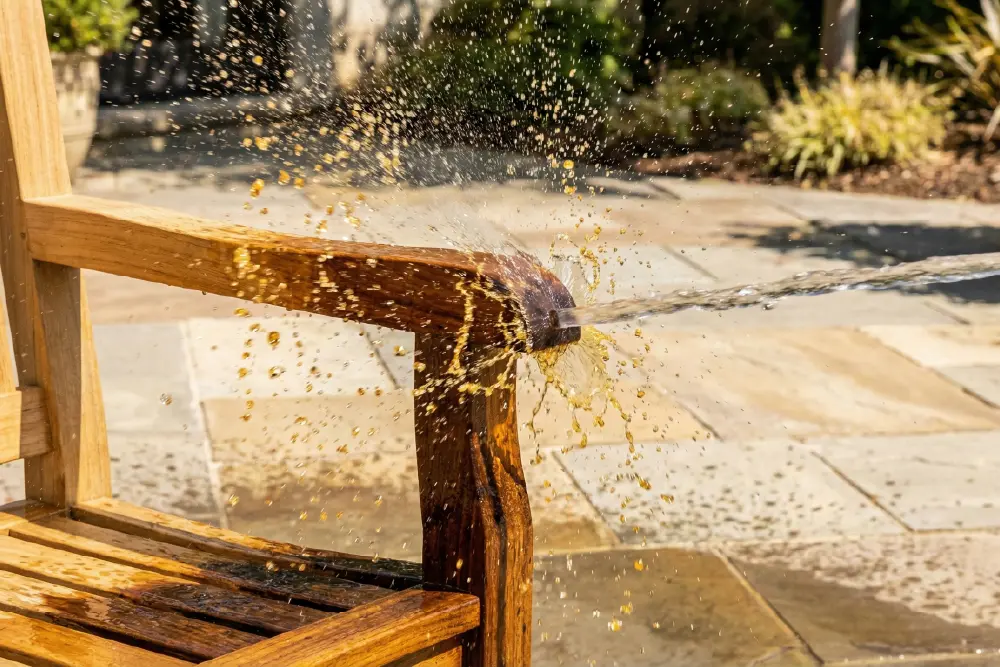
The Pre-Weathering Ritual
Before placing cushions, professionals allow teak to “break in” using the Hose and Dry Method:
- Rinse the furniture with clean water
- Let it dry fully in sunlight
- Repeat 2 to 3 times. This process helps flush surface oils naturally.
Barrier Solutions
Use breathable mesh underlays or spacer fabrics between teak frames and cushions. These allow airflow while preventing direct contact.
Strategic Cushion Storage
During the first weeks, store cushions indoors during heavy rain or overnight dew. This reduces oil transfer during the most active phase.
Modern Water-Based Sealants
Modern water-based teak shields can lock surface oils inside the wood without changing color. These products reduce bleeding while keeping teak’s natural look.
Discover why the natural patina is an undervalued asset for retailers looking to sell high-end weathered aesthetics.
What to Do If Cushions Are Already Stained
- Act Quickly: Do not let stained cushions bake in the sun. Heat sets oil deeper into fabric fibers.
- Gentle Cleaning First: Mix mild dish soap with warm water. Blot the stain; do not scrub aggressively.
- Oxygen-Based Cleaners: Oxygen bleaches break down tannins effectively. They are safer for fabrics than chlorine bleach.
- Fabric-Specific Cleaners: Many outdoor fabric brands recommend specific Sunbrella-approved cleaners designed for organic stains. Always follow fabric care guidelines.
With prompt action, most teak oil stains can be reduced or removed.
Conclusion: Managing Nature, Not Fighting It
Teak oil is a blessing for the wood and a temporary challenge for upholstery. Bleeding happens because the material is rich, mature, and naturally protected.
For buyers sourcing teak outdoor furniture from Indonesia, understanding this process helps set realistic expectations and supports long-term product performance. Premium materials require informed handling, not avoidance.
For a full breakdown of general maintenance, visit our guide on how to care for teak furniture.
Your next best-seller might be here
Request a quotation and custom options tailored to your needs today via WhatsApp or email.
Frequently Asked Questions
Is teak oil bleeding a defect?
No. It is a natural result of high oil content in premium teak wood.
How long does teak oil bleeding last?
Usually, a few weeks to a few months, depending on the climate and exposure.
Does sealing teak stop bleeding completely?
Water-based sealants reduce bleeding but do not eliminate teak’s natural oils.
Can teak oil damage outdoor fabric permanently?
If treated quickly, most stains are removable. Delayed cleaning makes removal harder.
Should I avoid cushions on new teak furniture?
Not avoid, but manage carefully during the initial break-in phase.

I am a self-taught graphic designer with a deep passion for exploring the creative world through various tools and techniques. I have honed my skills in Adobe Illustrator, Photoshop, and Lightroom, while continuously expanding my knowledge by diving into After Effects and Premiere. Photography has become an integral part of my life, and I actively engage with it to capture moments and experiment with visual storytelling.
My fascination with color theory, histograms, and innovative design approaches drives my work, as I am always seeking new ways to push the boundaries of my creativity. From photography models and motion graphics to textures, collage, and surrealism, I am captivated by the endless possibilities in design and constantly strive to challenge myself with fresh and exciting ideas.

0 Comments