
Indonesian outdoor furniture is exposed to the toughest conditions. Direct sun, heavy rain, humidity shifts, and temperature changes test every part of the product. Many outdoor collections look good at launch, but fail months later once they face real weather.
Among all materials used by Indonesian furniture manufacturers, Indonesian teak remains the safest and most reliable choice for full outdoor furniture. This is not because teak is trendy, but because it solves the most common outdoor failure risks while supporting stable retail margins.
For retailers and importers, outdoor furniture failure often leads to customer complaints, product returns, and long-term damage to brand trust. This article explains, from a manufacturer’s point of view, why teak wood consistently outperforms other materials for Indonesian outdoor furniture, both technically and commercially.
Why Outdoor Furniture Often Fails in Real Market Conditions
Most outdoor furniture problems do not come from design. They come from a material mismatch. This problem is most common among importers and retailers, where failures start appearing after the first rainy season
Outdoor furniture fails when wood absorbs moisture unevenly, heat dries the surface faster than the core, joints are stressed by expansion and shrinkage, and finishes crack or peel after repeated wet-dry cycles.
For retailers and wholesalers, these failures lead to complaints, replacements, and damaged trust. That is why the material of outdoor furniture matters more than its catalog appearance. The wrong wood creates long-term risk.
Repeated wet–dry cycles cause the surface of the wood to expand and shrink faster than the core. Over time, this uneven movement builds internal stress at joints and tabletops, which is why cracks and peeling often appear after the first rainy season.
Based on our production experience as an Indonesian outdoor furniture manufacturer, the most common complaints about Indonesian outdoor furniture stem from cracking caused by wood movement, followed by finishing that starts to chip or peel.
In many cases, the failure begins at the tabletop and joint areas, where movement stress is highest. Sections exposed to direct sunlight and rain tend to exhibit finishing failure first, even when the design appears solid on paper.
Why Teak Became the Benchmark for Full Outdoor Exposure
Teak did not become the global standard for outdoor use by chance. Long before modern furniture manufacturing, teak was used in ships, docks, and exterior structures because it survived constant exposure without chemical protection.
Many buyers assume all hardwood behaves similarly outdoors, but this assumption is the main reason alternative materials fail under real exposure.
In furniture production, the same logic applies. Indonesian teak wood works outdoors because its protection comes from the wood itself. While other woods rely on surface coatings, teak resists damage from the inside out.
Once surface coatings break, fast-growing hardwoods absorb moisture quickly. This rapid absorption triggers uneven expansion, leading to early cracking and joint failure under real outdoor exposure.
This makes teak the reference point for outdoor performance, not only in Indonesia, but across global markets.
If you want a transparent manufacturer's perspective, you can also explore the truth about teak wood from an Indonesian furniture supplier.
The Natural Properties of Teak That Protect Outdoor Furniture

Natural Oils That Repel Water, Pests, and Decay
Teak contains natural oils distributed throughout its fibers. These oils slow down water absorption, discourage insects, and limit decay without additional treatment.
For Indonesian outdoor furniture, this means less swelling after rain, lower risk of rot and mold, and minimal dependence on heavy chemical sealing. As a result, teak furniture remains stable even when finishes wear down over time.
From our production experience, outdoor-grade teak performs most reliably when the moisture content is controlled below 12%. When moisture content exceeds safe levels, even teak becomes unstable.
Dense Grain Structure That Controls Wood Movement
Teak grows slowly, producing a tight and straight grain. This structure helps control expansion and contraction caused by changes in humidity.
All wood moves, but teak moves more evenly and predictably. This protects joints, reduces surface cracking, and keeps furniture structurally sound over long periods outdoors.
From a manufacturer’s perspective, most outdoor failures are not caused by design, but by uneven wood movement at joints under humidity stress
Predictable Aging That Preserves Appearance Over Time
Teak ages in a controlled way. When left unfinished, it turns into a silver-grey patina. When finished, it maintains its tone longer than most woods.
For retailers, predictable aging matters because customers know what to expect. The furniture looks intentional as it ages, not neglected.
To explore this material perspective in more depth, you can learn more about what makes teak wood special in our dedicated guide.
How Indonesian Teak Is Prepared for Export-Grade Outdoor Furniture
Good teak alone is not enough. Process discipline defines whether outdoor furniture performs as promised.
Kiln Drying for Climate Stability (10–12% Moisture Content)
For export-grade outdoor furniture, teak must be kiln-dried properly. Indonesian teak furniture intended for global markets is typically dried to 10–12 percent moisture content.
This step matters because furniture often travels from a humid climate to dry, air-conditioned environments. Correct moisture levels reduce cracking, joint gaps, and surface stress after delivery.
Keeping moisture content below 12% is not just a specification; it directly affects performance. Wood that is still wet moves more aggressively and prevents proper glue bonding, because the chemical reaction of the adhesive cannot work optimally on damp timber.
From our experience, uncontrolled moisture content is one of the main reasons joints fail in outdoor furniture, even before weather exposure becomes the issue.
Construction Engineering That Accepts Natural Movement
Outdoor teak furniture must be built to tolerate movement, not fight it.
Common construction principles include mortise-and-tenon or reinforced dowel joints, drainage gaps in slatted surfaces, end-grain sealing on legs and tabletops, and mechanical fasteners placed to allow adjustment.
This construction approach helps furniture survive repeated exposure without structural failure.
Outdoor Finishing Systems: Protection Without Over-Sealing
Teak does not need finishing to survive outdoors, but finishing helps control appearance.
Outdoor finishing systems usually combine penetrating sealers, optional color layers, and UV-resistant topcoats. The goal is to slow color change, not to trap moisture. Over-sealing teak often causes more problems than benefits.
Teak vs Other Woods Used in Indonesian Outdoor Furniture
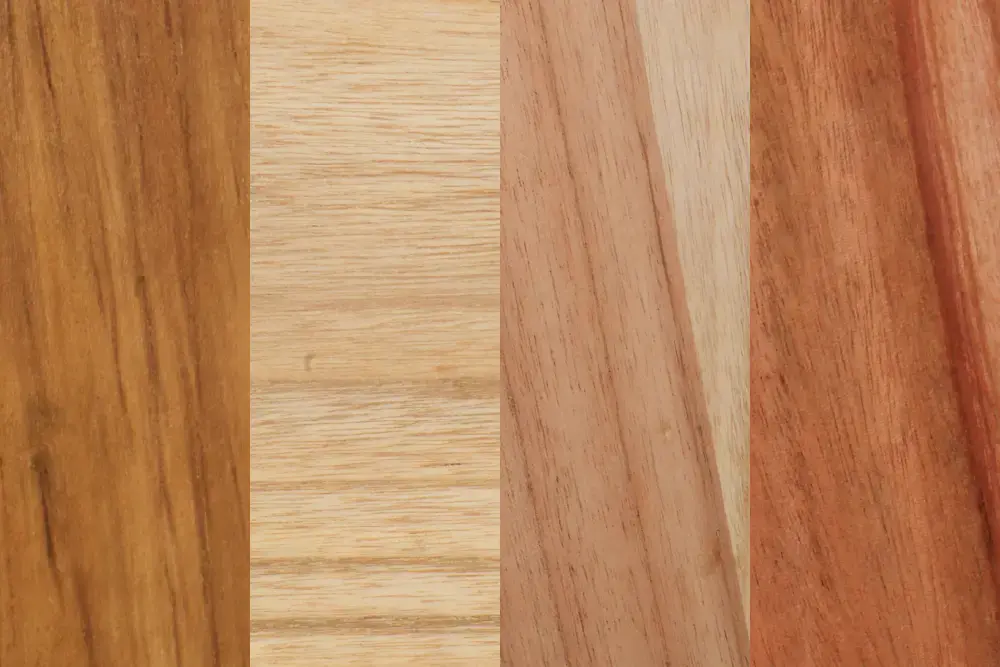
Other Indonesian woods have their place, but they are not equal substitutes for teak in full outdoor use.
Mahogany offers a rich appearance but needs strong coatings and routine care outdoors. Sungkai and mindi work better in shaded or semi-outdoor spaces, but lack natural oil protection.
Metal and synthetic materials perform structurally, but they do not offer the warmth and premium perception that teak delivers. This is why many outdoor collections still rely on teak frames as their foundation.
For full outdoor exposure, teak remains the lowest-risk option. Buyers who want a broader comparison can explore other Indonesian wood options for outdoor furniture to understand where teak fits best.
Why Teak Lowers Complaint Rates and Protects Retail Margin
Structural Stability That Reduces Outdoor Failure Claims
Outdoor furniture complaints usually involve cracking, warping, or joint failure after repeated exposure. Teak reduces these issues because its density and natural oil content slow down moisture penetration and control wood movement. When the structure stays stable, joints hold longer, and surfaces remain intact.
From a production perspective, tabletop areas and major joints are the most vulnerable points. Teak performs better in these areas because its movement is more predictable, which directly lowers the number of structural-related complaints in the field.
Predictable Performance Across Climates and Markets
Teak behaves consistently when moved between climates. Whether furniture is shipped to dry, air-conditioned regions or humid coastal markets, teak adjusts more gradually than most woods.
This predictability reduces surprise issues after delivery, such as sudden cracking or joint stress, and makes product performance easier to anticipate for retailers selling across multiple countries.
Lower After-Sales Burden with Clear Trade-Offs
Because teak furniture experiences fewer failures, retailers face fewer replacements, repairs, and service follow-ups. This lowers operational costs tied to logistics, spare parts, and customer handling, while helping protect retail margins.
Teak is not without trade-offs. It is heavier and more expensive, and its natural oil can cause yellow staining on white cushions or light-colored rope and plastic components. To reduce this risk, stain-blocking systems can be applied more heavily, although this may result in a slightly darker finish.
This compromise is often necessary to maintain safety and reduce after-sales complaints, while still supporting a premium product position.
For a complete breakdown, you can also see the long-term benefits of Indonesian teak outdoor furniture.
Outdoor Teak Products That Consistently Sell Well
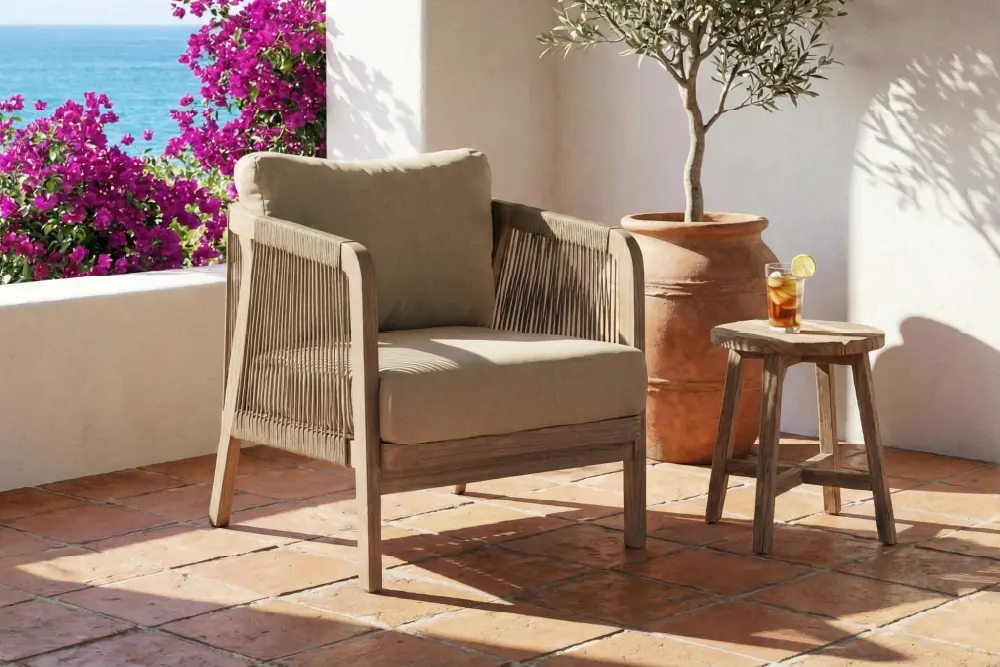
Outdoor Dining Furniture
Outdoor dining furniture remains one of the strongest-selling categories of teak furniture. Tables and chairs are fully exposed to sun and rain, which makes teak a safer material choice for long-term use and fewer structural complaints. This category often becomes the hero product that anchors an outdoor collection.
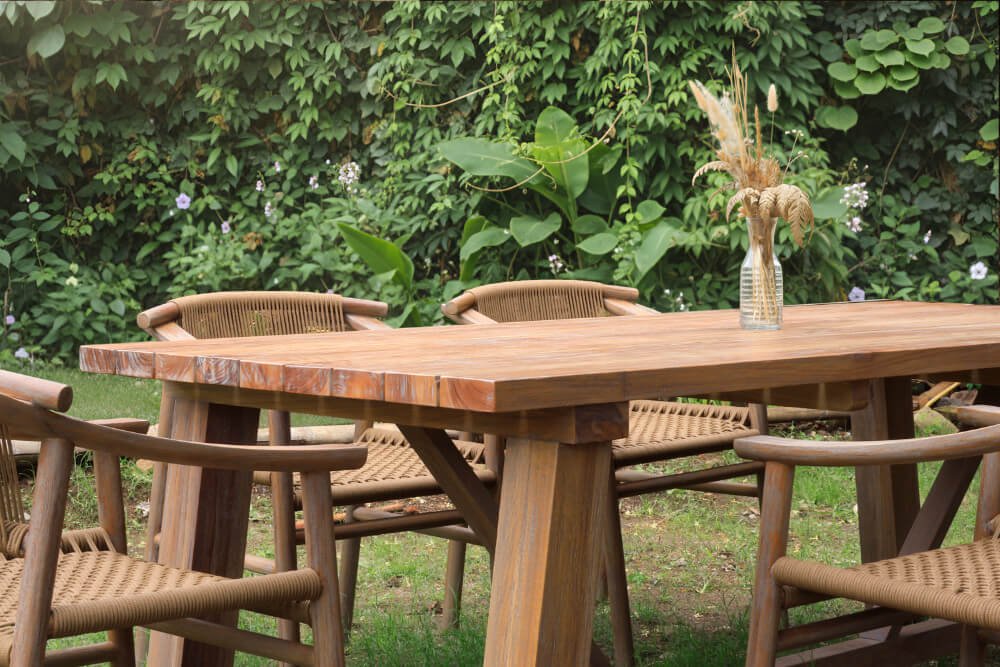
Indonesian Teak Patio Furniture
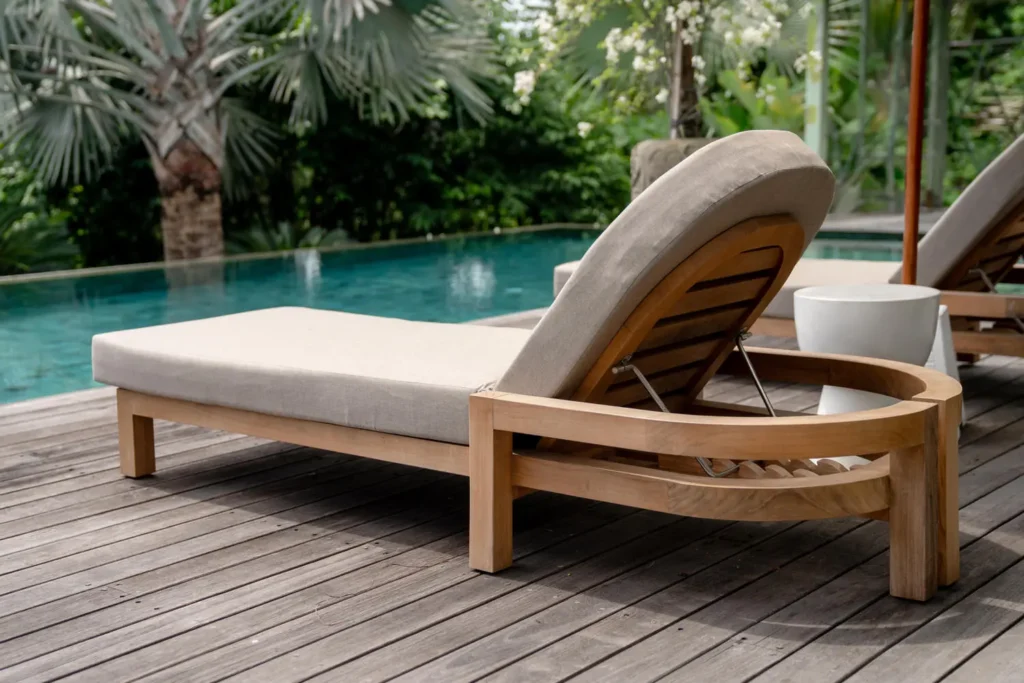
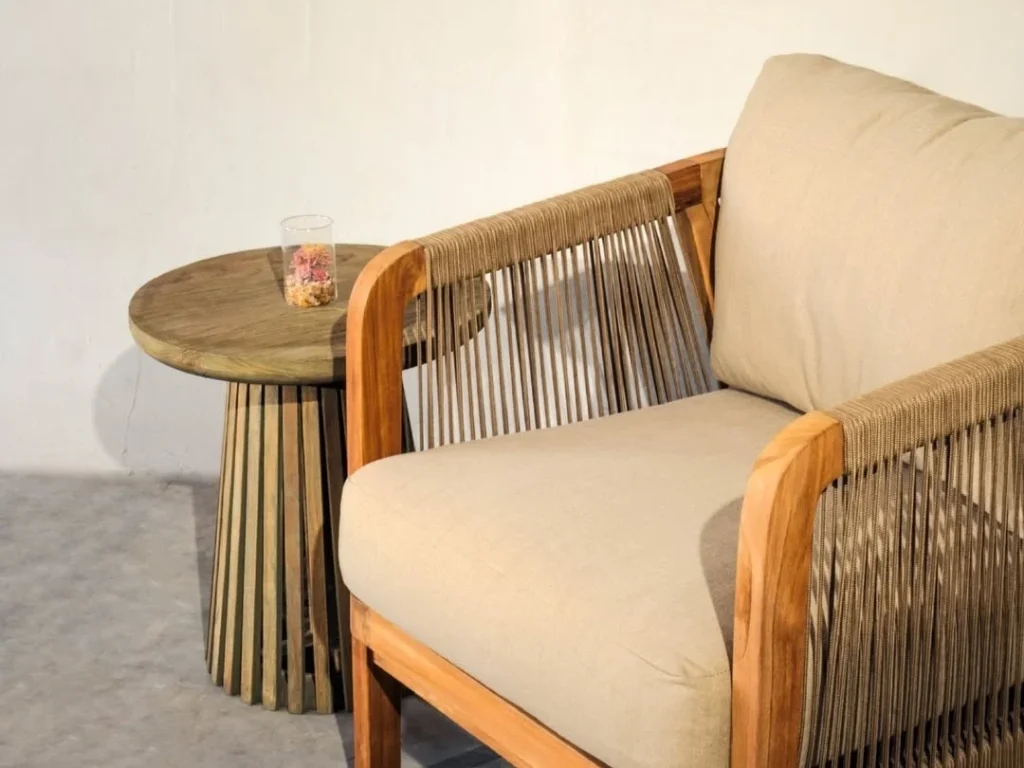
Indonesian teak patio furniture, including lounge and seating collections, performs well in both semi-open and full outdoor areas. Its durability supports repeated daily use in residential and hospitality settings without intensive maintenance, making it a balanced choice for volume and margin.
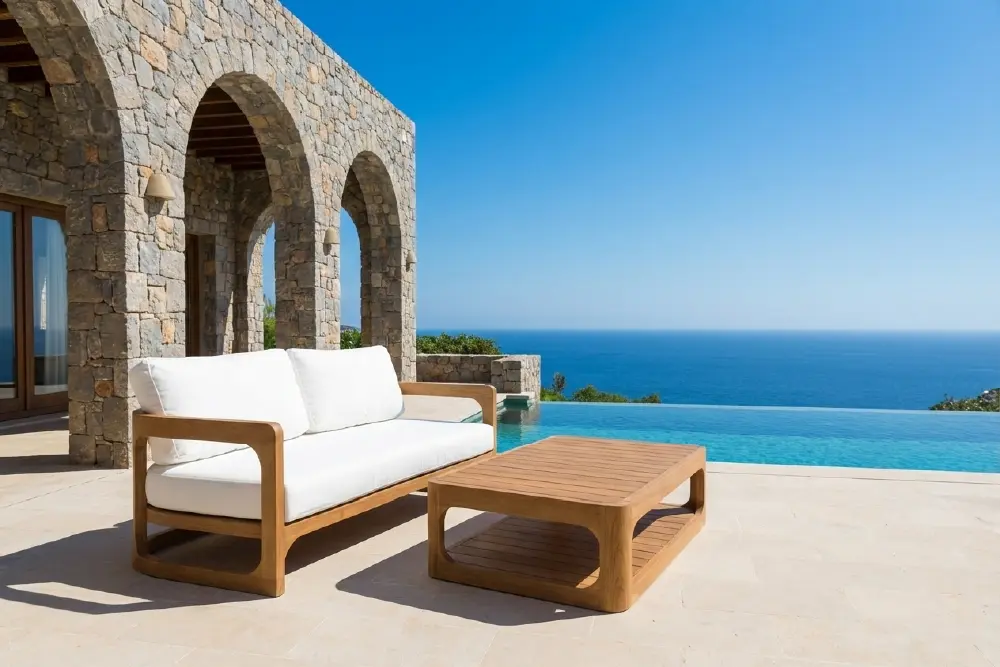
Indonesian Garden Furniture
Indonesian garden furniture, such as benches and accent seating, benefits from teak’s low-maintenance nature. These products typically serve as supporting SKUs that complement the main outdoor ranges, maintaining steady demand throughout the seasons.
Why Choosing the Right Indonesian Furniture Manufacturer Matters
Even the best teak can fail if handled poorly. Incorrect drying, rushed assembly, or indoor-grade finishing can compromise performance. This is why the Indonesian furniture suppliers partner behind the product matters as much as the material itself.
Full In-House Production for Consistent Quality
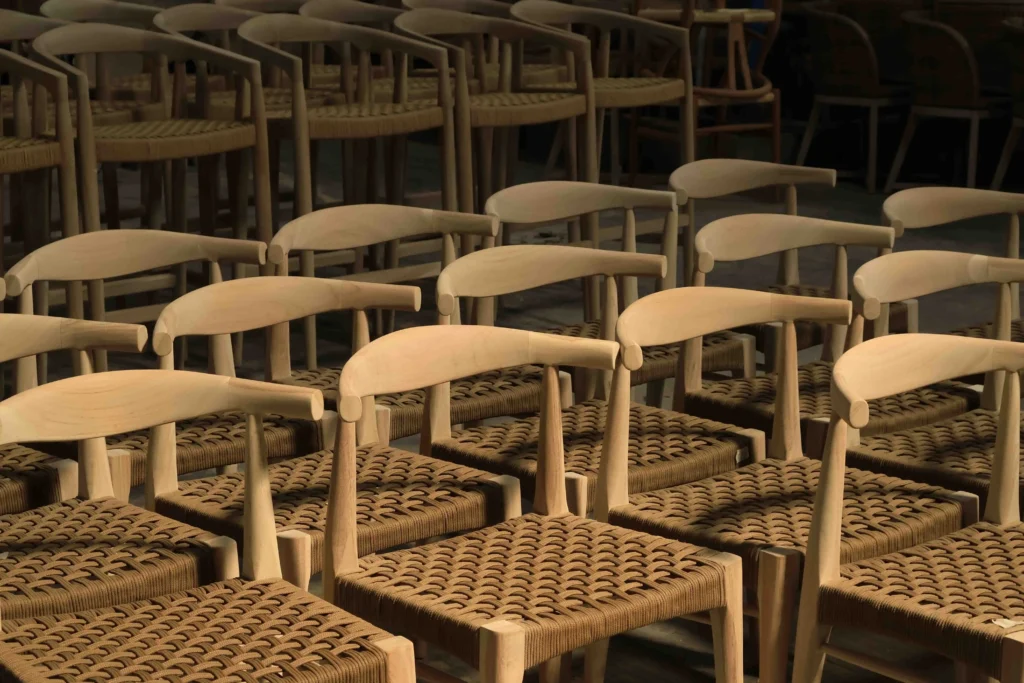
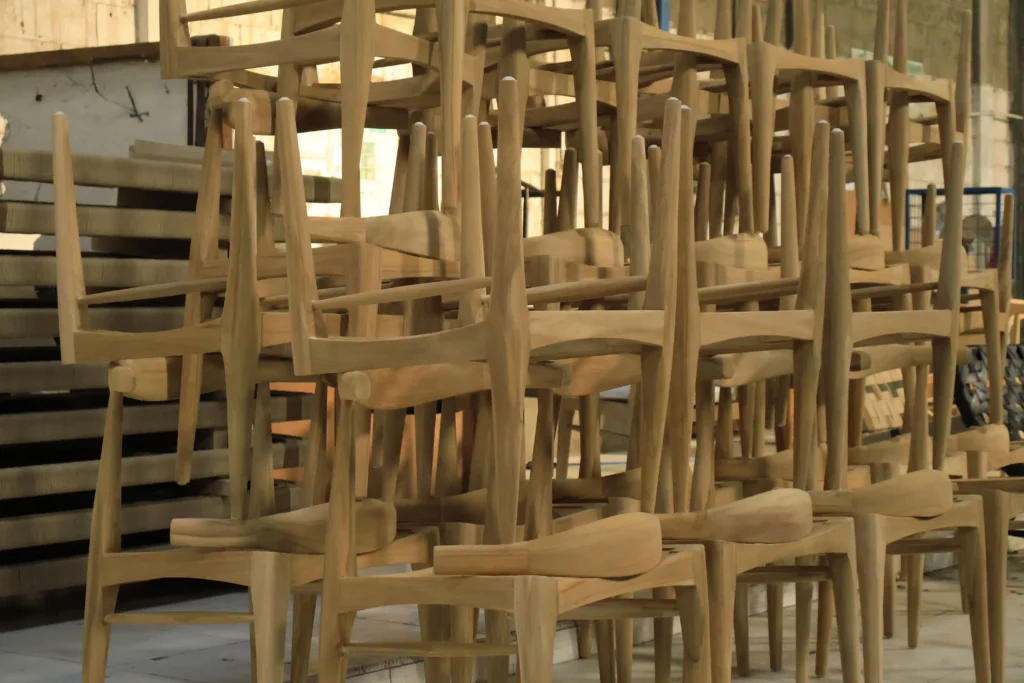
MPP Furniture controls the entire production process, from raw teak selection to final packing. This full in-house system allows moisture content, construction accuracy, and finishing quality to be controlled consistently across every order.
Teak Craftsmanship with Engineering Discipline
Teak requires experienced craftsmen supported by proper machinery and strict quality control. At MPP, handcrafted details are reinforced by engineering standards that protect joints, surfaces, and finishing performance for outdoor use.
Custom Development with a Reliable Export Process
MPP supports retailers with free product development, custom and private-label services, and outdoor-grade finishing systems designed for export markets. This structured process helps buyers build teak collections with fewer risks, smoother execution, and long-term consistency.
Two decades of manufacturing expertise in wood and natural materials for global B2B projects.
Long-term relationships with retailers and importers who rely on consistent quality and service.
Extremely low complaint and defect rate, supported by strict in-house quality control at every stage.
Predictable lead times, stable production, and consistent specifications across repeat orders.
Conclusion
In outdoor furniture, material choice determines whether a collection becomes a long-term asset or a recurring source of complaints. Teak wood remains the best choice for Indonesian outdoor furniture because it solves real outdoor problems. Its natural oils, dense grain, and predictable behavior reduce complaints, protect margins, and support premium positioning.
Teak performs well outdoors because its density and natural oil content prevent water from penetrating the wood; oil and water simply do not bond. For retailers and wholesalers, teak is not just a material choice. It is a safer business decision for full outdoor collections.
When prepared correctly and produced by a reliable manufacturer, teak delivers outdoor furniture that performs as expected, season after season.
Explore our Indonesian outdoor teak furniture collection or request a free consultation to develop your next outdoor range with confidence.
Your next best-seller might be here
Request a quotation and custom options tailored to your needs today via WhatsApp or email.
Frequently Asked Questions About Teak Outdoor Furniture
1. Is teak wood really suitable for full outdoor exposure?
Yes. Teak’s density and natural oil content limit water absorption and control wood movement, making it one of the safest woods for full outdoor exposure.
2. Does teak outdoor furniture still need finishing?
Finishing is not required for durability, but it helps control color and surface protection. Outdoor-grade finishing systems are recommended if appearance consistency is important.
3. Why does teak reduce cracking and joint failure outdoors?
Teak moves more predictably than most woods and contains natural oils that slow moisture penetration. This combination reduces stress on joints and tabletops.
4. Is teak furniture completely maintenance-free?
No. Teak requires minimal maintenance compared to other woods, but regular cleaning and optional refinishing help maintain appearance over time.
5. When is teak not the best choice for outdoor furniture?
Teak may not suit highly price-sensitive markets or lightweight indoor-only furniture. In those cases, woods like sungkai or mindi may be more appropriate.

Hi, I’m Salman, founder of MPP Furniture, an Indonesian furniture manufacturer serving global retailers and project-based clients.
I began my career in my family’s export-oriented furniture company, gaining hands-on experience in production, construction, finishing, material performance, and product development. With a clear understanding of how international buyers evaluate furniture quality and reliability, I founded MPP Furniture to deliver export-ready products with consistent standards.
Here, I share insights from the perspective of a furniture manufacturer working directly with production teams on the factory floor, focusing on manufacturing and supplier evaluation.
Connect on LinkedIn
0 Comments