
The furniture industry is always hunting for the next great material. It needs to be beautiful, sustainable, workable, and, crucially, cost-effective. While Teak wood has long reigned supreme, a lesser-known tropical hardwood has quietly become the modern designer's favorite material: Sungkai wood (scientifically Peronema canescens).
Marketed globally under the strategic nickname "White Teak," Sungkai wood is not just a trend; it's a critical value proposition. It offers the natural stability of a quality tropical hardwood but delivers an aesthetic that perfectly aligns with today’s Scandinavian, Minimalist, and contemporary design trends.
This guide cuts through the marketing noise to provide a technical and commercial due diligence, covering Sungkai’s modern aesthetic advantage, its trade-offs between workability and surface hardness, the practical truth of its durability compared to Teak, and the single most critical step buyers must take to prevent product failure: Moisture Content (MC) Control.
The Aesthetic Advantage: Why Sungkai Wins the Modern Palette
Sungkai’s primary appeal lies in its distinct look, which is a stark departure from the traditional tropical aesthetic.
A Bright, Neutral Canvas
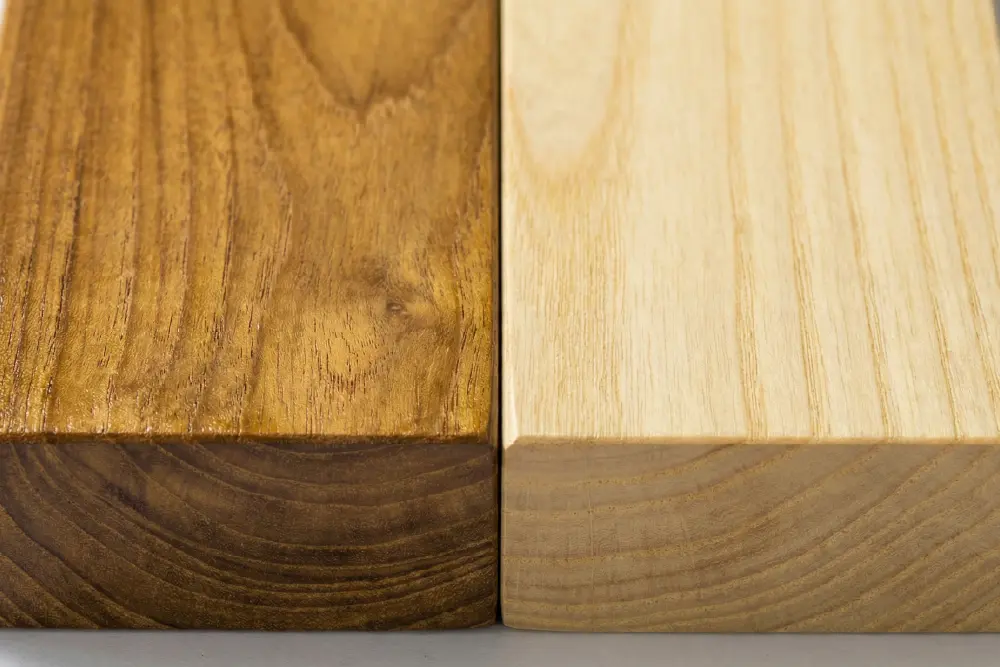
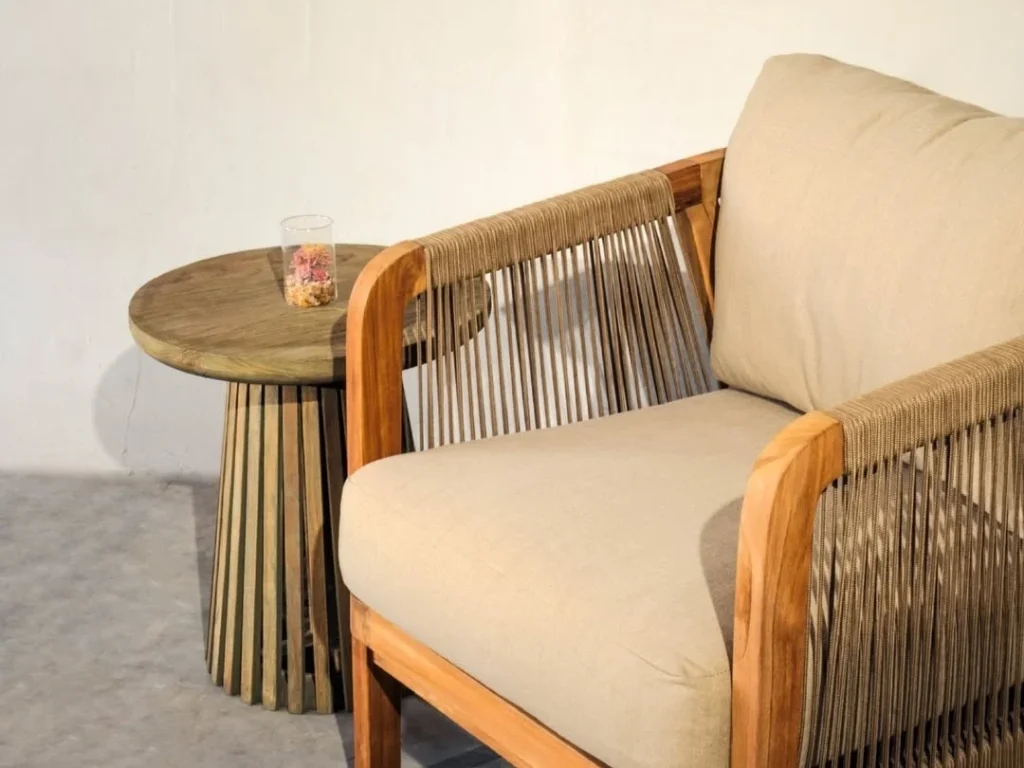
Unlike the deep, oily golden-brown of true Teak wood, Sungkai wood displays a light yellowish-brown to cream-colored hue. This bright, inherent lightness is its superpower. It acts as a neutral, adaptable canvas that works effortlessly in a modern home, allowing the furniture to complement, rather than dominate, a design scheme.
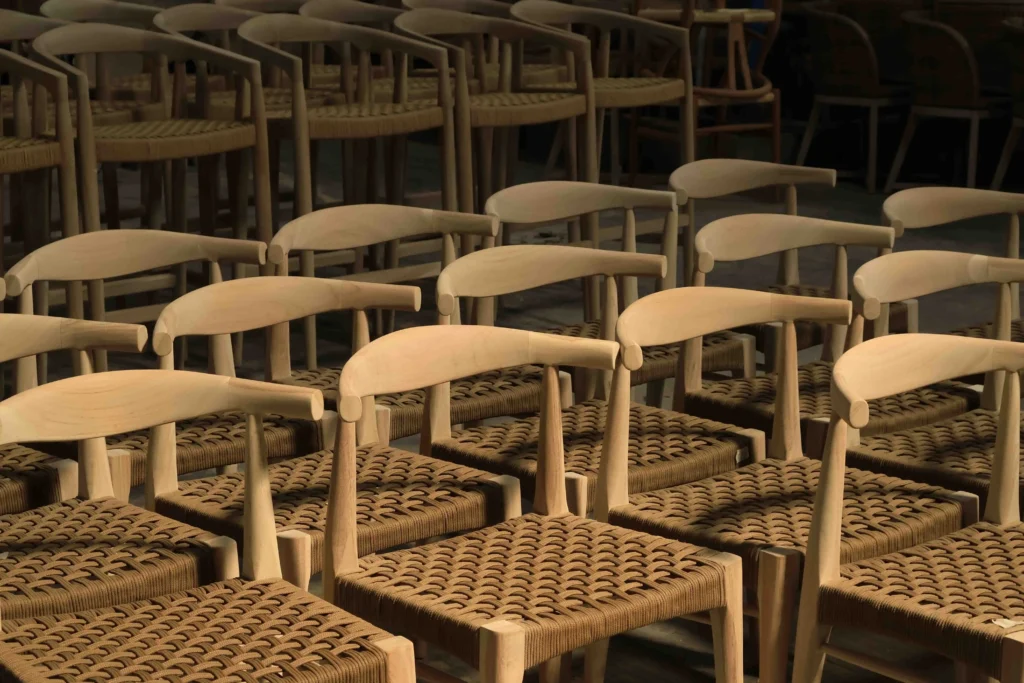
Its bold, predominantly straight grain adds a crisp, natural texture. This combination of a light base color and prominent grain is exactly what designers seek for clean lines and organic appeal. This is why you see Sungkai increasingly used for:
- Dining Chairs and Bar Stools: Where it's manageable, medium weight is a benefit.
- Cabinetry and Sideboards: Where its light tone complements white or dark walls.
- Accent Tables and Benches: Where its aesthetic is the focal point.
Interested in seeing how Sungkai fits into a specific style? Explore how Sungkai elevates Mid-Century Modern furniture designs.
Design Insight: The versatility of Sungkai's light tone is ideal for custom and exclusive designs. With the right partner, this wood can be the base for truly unique furniture pieces that meet your exact aesthetic requirements.
Technical Deep Dive: The Balance of Workability and Hardness
For manufacturers and procurement teams, Sungkai’s appeal goes beyond aesthetics. It's a wood engineered for efficiency, but it comes with a trade-off that dictates its best application.
Unmatched Workability: The Manufacturer’s Dream
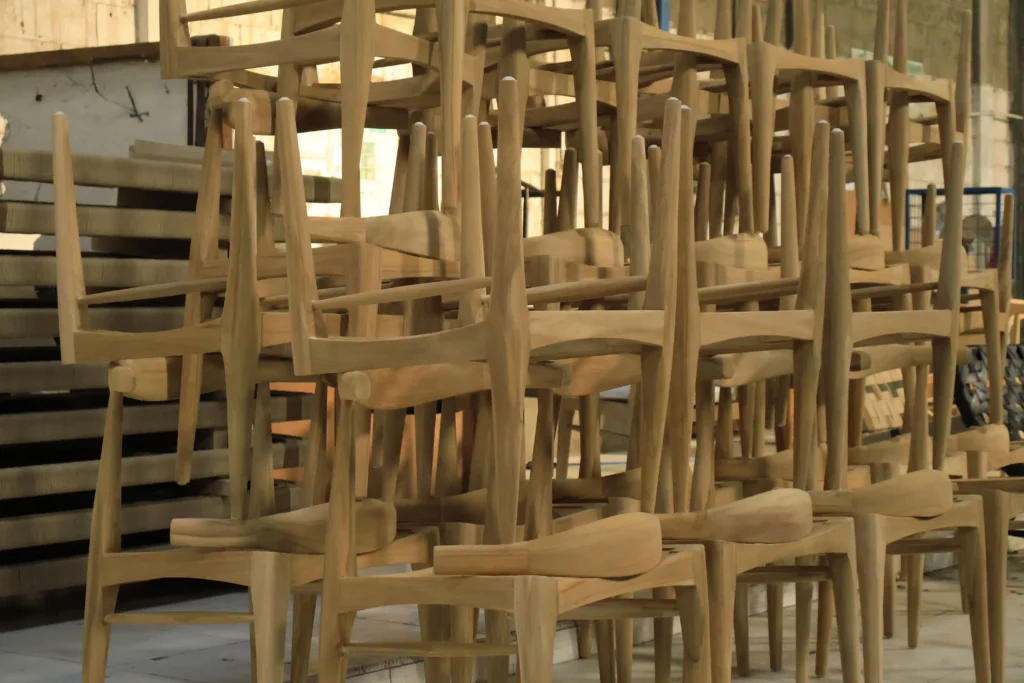
Sungkai wood is classified as a medium-density hardwood (550 to 650 kg/m^3). This medium density makes it exceptionally easy to work with compared to high-density alternatives like Oak or true Teak. It machines, bores, and sands exceptionally well, leading to:
- Lower Labor Costs: Faster processing times in the factory.
- Higher Finish Quality: Achieves a beautifully smooth, paint-ready surface.
- Reduced Freight Costs: Its lighter weight lowers shipping expenses for large orders.
Ready to learn more about efficiency? Discover the full commercial advantages of Sungkai wood in manufacturing.
The Critical Hardness Caveat
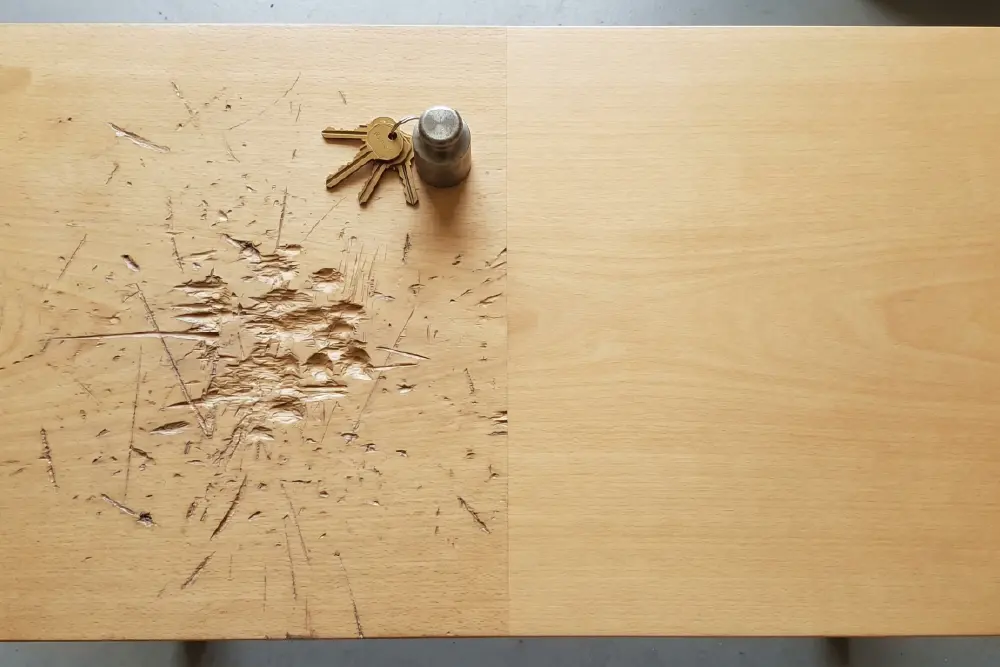
While easy to work with, Sungkai wood is comparatively soft on the surface. Its Janka side hardness rating is approximately 568 lbf (pounds-force). For critical context, this gives it less than half the resistance of White Oak (1,350 lbf) and about half that of Teak wood (1,070 lbf).
What does this mean for interior design?
- AVOID: High-impact, heavy-wear surfaces like commercial flooring or main kitchen countertops.
- PREFER: Low-impact applications such as cabinet doors, veneer core material, decorative shelving, and the frames for chairs and sofas. When used for tabletops, consider a protective, high-quality finish to guard against minor dents.
For a comprehensive, deep dive into all technical specifications, read the full furniture buyer's guide to Sungkai wood.
Production Insight: Manufacturers utilizing in-house production—controlling the process from raw lumber to final product—can best leverage Sungkai's workability to deliver both high-speed efficiency and superior finish quality.
Critical Designer Due Diligence (The Practical Truth)
When evaluating Sungkai wood, designers and buyers should filter out the marketing and focus on three practical differences from its premium counterpart, Teak wood. This comparison isn't about superiority; it's about strategic application and risk management.
1. Durability: Treatment is Non-Negotiable Outdoors
Teak is the gold standard for all-weather outdoor use because its natural oils provide Class I (Excellent) durability against moisture and pests. Sungkai wood, by contrast, is rated Class III (Moderately Durable).
- The Reality: Sungkai's durability is highly condition-dependent. It is not naturally suited for unprotected exterior use and is specifically susceptible to pinhole beetles.
- The Due Diligence: If Sungkai is used in any semi-outdoor, high-humidity, or potentially damp environment (like a sunroom or covered patio), you must mandate that the manufacturer apply an intensive commercial preservative treatment. Without this fortification, its service life is drastically reduced.
2. Processing Efficiency: Cost Savings in the Factory
This is where Sungkai wood shines strategically. Teak's high density and oily nature make it difficult to process, leading to longer production times and greater wear on tools. Sungkai's lighter density and smoother texture allow for:
- Faster Cutting and Shaping: High design flexibility with shorter lead times.
- Superior Finishing: It takes various stains and coatings exceptionally well, giving designers flexibility in achieving custom colors (like a whitewash or a dark stain that mimics Wenge).
3. Price Point: The Strategic Trade-off
Sungkai wood is strategically positioned as a cost-effective alternative. It successfully balances quality aesthetic appeal and satisfactory indoor durability at a price point significantly below that of premium hardwoods like Teak or Mahogany. Choosing Sungkai allows a project to maintain a high-end, tropical aesthetic while managing overall material costs, making it a reliable option for large-volume orders and competitive price points.
For a detailed breakdown of our commitment, review our official Sungkai wood quality standards page.
Quality Assurance Check: To ensure confidence in every order, partner with Indonesian furniture supplier who maintain a track record of consistent quality and uphold SVLK Certification (Sistem Verifikasi Legalitas Kayu) for guaranteed legal and sustainable exports.
The Single Most Critical Risk Mitigation Strategy
If you are an international buyer sourcing Sungkai wood, this point is non-negotiable. It is the factor that separates a successful product from one that fails within months of delivery: Moisture Content (MC) Control.
Wood naturally seeks an Equilibrium Moisture Content (EMC) with its surrounding environment.
- SE Asia Production MC: In high-humidity environments where Sungkai is processed, the local, acceptable MC is often around 10.8%.
- Temperate Export EMC: In dry, air-conditioned, or centrally heated indoor environments (North America, Europe), the EMC is dramatically lower, typically 6% to 8%.
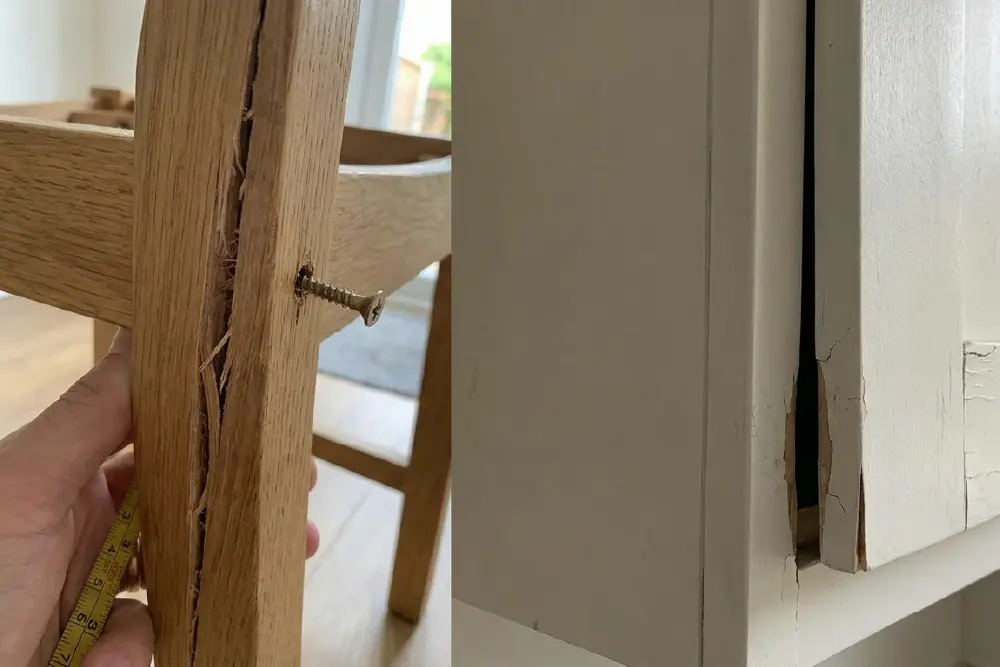
If wood is shipped at 10.8% MC to a 7% EMC climate, the wood must shrink as it releases moisture. This unavoidable process leads to:
The Consequences of Poor MC Control
- Joint Failures: Glue lines crack and separate.
- Shrinkage Cracks: Panels split and warp.
- Finish Peeling: Coatings fail due to wood movement.
Actionable Mandate: Buyers must mandate kiln drying to 8% MC or below for all Sungkai wood components destined for temperate indoor environments. Partnering with a manufacturer that manages this drying process rigorously is the only way to safeguard your investment.
Service Guarantee: Requesting documentation on this critical step should be easy. A reliable partner should provide fast feedback and project quotations (including kiln-drying specs) within 7 days to prove their commitment to service.
Conclusion: Securing Your Supply Chain with Sungkai Wood
Sungkai wood (White Teak) is undeniably a powerful, mid-tier commercial hardwood. It excels in delivering a light, modern aesthetic and boasts exceptional workability for efficient manufacturing. However, maximizing its potential requires a strategic approach built on technical understanding.
By recognizing its lower surface hardness and restricting its use to low-impact applications, by clearly defining the need for preservative treatment in any non-interior setting, and most critically, by mandating strict 8% MC control for export, buyers can confidently integrate Sungkai wood into their supply chain.
Ready to Build with Confidence? Your Journey to Quality Starts Here.
We've shown you how to master the technical specifications and risk mitigation for Sungkai. Now, the next crucial step is choosing the right manufacturing partner.
Stop managing quality risk with subcontractors. Start partnering with a reliable Indonesian furniture manufacturer that can offer in-house production from raw material to the final piece, ensuring that critical steps like 8% MC kiln-drying and SVLK compliance are always met.
Take the final step in your Sungkai journey: Get a quote and discuss your exclusive design today.
We are a reliable Wooden and Rattan Furniture Manufacturer in Indonesia, committed to continuous improvement and delivering consistent quality. Send us your project details, we guarantee a comprehensive quotation and specifications within 7 days.
Planning your next best-selling collection?
Request catalog, pricing info, MOQ, and custom options today — we’ll respond quickly.
Frequently Asked Questions
1. Is Sungkai wood (White Teak) a good material for furniture?
Yes, Sungkai is an excellent, cost-effective material primarily used for indoor and low-impact furniture, such as chairs, cabinets, and decorative tables. It is highly valued for its exceptional workability and bright, light aesthetic that aligns perfectly with modern and Scandinavian designs.
2. What is the Janka hardness of Sungkai wood?
Sungkai wood has a low Janka side hardness rating of approximately 568 lbf. This low hardness means it is softer than Teak and White Oak, making it ideal for visual components but unsuitable for high-wear surfaces like commercial flooring where dent resistance is critical.
3. Is Sungkai wood suitable for outdoor use?
Sungkai has a natural durability rating of Class III (Moderately Durable). It is not suitable for unprotected outdoor use. To ensure longevity in semi-outdoor or high-humidity applications, it must be chemically treated with a commercial preservative to guard against pests and moisture damage.
4. How do I prevent Sungkai wood furniture from cracking after import?
The single most critical step is Moisture Content (MC) Control. For furniture destined for dry, temperate climates, the wood must be kiln-dried to 8% MC or below to match the target environment's equilibrium. Failure to do so will result in inevitable shrinkage, joint failure, and cracking.
5. Why is Sungkai wood often called "White Teak"?
The term "White Teak" is a commercial nickname used to leverage Teak's global reputation for stability while highlighting Sungkai's distinct light yellowish-brown to cream-colored hue. It strategically positions Sungkai as the affordable, bright, modern counterpart to the classic, oily golden-brown of true Teak.

I am a self-taught graphic designer with a deep passion for exploring the creative world through various tools and techniques. I have honed my skills in Adobe Illustrator, Photoshop, and Lightroom, while continuously expanding my knowledge by diving into After Effects and Premiere. Photography has become an integral part of my life, and I actively engage with it to capture moments and experiment with visual storytelling.
My fascination with color theory, histograms, and innovative design approaches drives my work, as I am always seeking new ways to push the boundaries of my creativity. From photography models and motion graphics to textures, collage, and surrealism, I am captivated by the endless possibilities in design and constantly strive to challenge myself with fresh and exciting ideas.
0 Comments