Weathered teak is standing out in 2026 because it reflects a clear shift in outdoor living: buyers now prefer furniture that feels natural, relaxed, and quietly premium rather than polished or overly finished.
For retailers, importers, and hospitality buyers, this shift directly affects how collections are positioned and how quickly products connect with end customers. A finish that feels current and easy to style can move faster across showrooms, catalogs, and project presentations.
This direction is also reflected in broader design trends by Houzz, where natural materials, warmer tones, and softer, organic finishes continue to shape both indoor and outdoor spaces.
This article explains what weathered teak means today, why it is gaining traction, how it can be created intentionally, and why more outdoor furniture buyers are adding it to their collections.
What Is Weathered Teak?
Weathered teak refers to teak wood that has developed a soft, grey, aged appearance, either naturally over time or through a controlled finishing process.
In natural outdoor conditions, teak gradually changes from its original golden-brown color to a silver-grey tone due to exposure to sunlight, air, and moisture. This process creates what is commonly known as weathered teak.
However, in commercial furniture production, this look is often recreated intentionally. Based on our experience in production, relying on natural weathering is not practical for large orders because the results vary depending on exposure, humidity, and wood condition.
Instead, manufacturers apply controlled treatments to the raw wood and develop layered finishing processes to achieve an aged appearance that closely resembles natural weathering, while maintaining consistent color, texture, and repeatable results across multiple pieces.
Read the full guide for a deeper explanation of how weathered finishes work and why they add value to furniture collections
Why Weathered Teak Is Becoming a Major Outdoor Furniture Trend in 2026
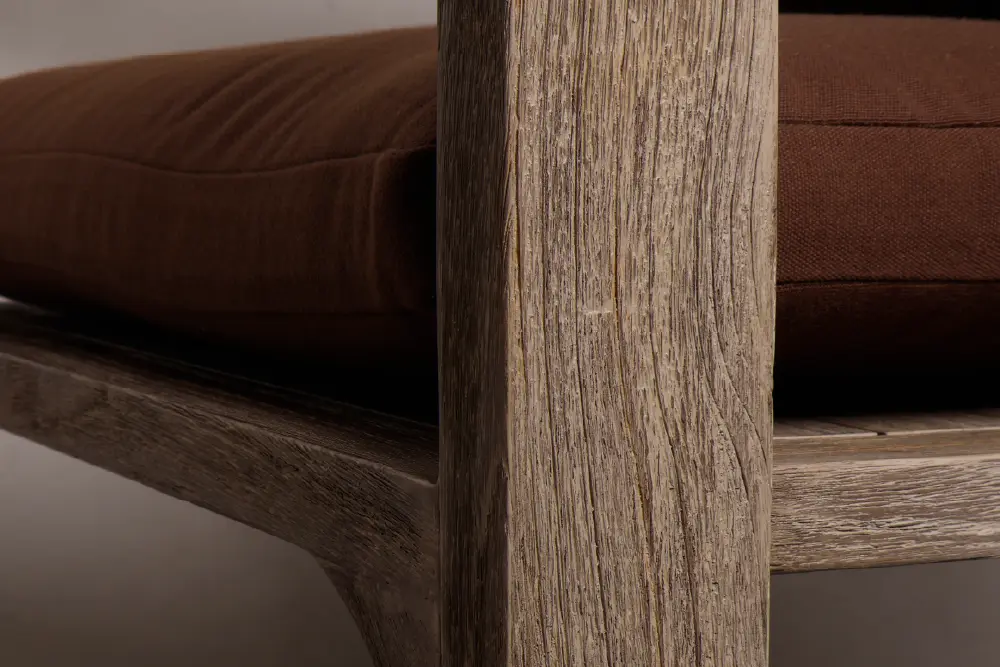
Based on our discussions with buyers who have developed weathered teak collections, the appeal goes beyond appearance; it shapes how products are perceived and positioned in the market. The following points explain why this finish continues to gain traction.
1. Natural Aesthetic That Fits Modern Outdoor Living
Buyers are shifting away from polished, mass-market finishes because end customers now look for something that feels different and less common. Weathered teak answers this by offering a more natural, aged look that feels calm, relaxed, and visually connected to outdoor environments.
2. A Timeless Look That Works Across Design Styles
One advantage of weathered teak is its flexibility across design styles. For retailers, this means one finish can work across coastal, modern, or rustic collections without needing to redesign the product, making it easier to build and sell cohesive collections.
3. Ideal for Coastal, Resort, and Hospitality Projects
Hospitality and resort projects prefer weathered teak because it creates a more relaxed, homy, and cozy atmosphere. Compared to new-looking finishes, weathered surfaces feel softer and more integrated into outdoor environments from the start.
4. A Premium Look That Appeals to End Customers
Weathered teak is often perceived as more premium because it is not yet mass-market and reflects visible aging, texture, and craftsmanship. In practice, achieving this finish requires experience in outdoor furniture production, which adds to its perceived value and exclusivity.
5. A Lifestyle Trend Driven by Natural, Relaxed Outdoor Spaces
The demand for weathered teak is also driven by a broader lifestyle shift, where outdoor spaces are designed to feel as comfortable and natural as indoor areas. Design platforms like Houzz highlight the growing preference for natural materials, warmer tones, and softer finishes, which align with the rise of weathered teak.
How Indonesian Outdoor Furniture Manufacturers Create Weathered Teak Finishes
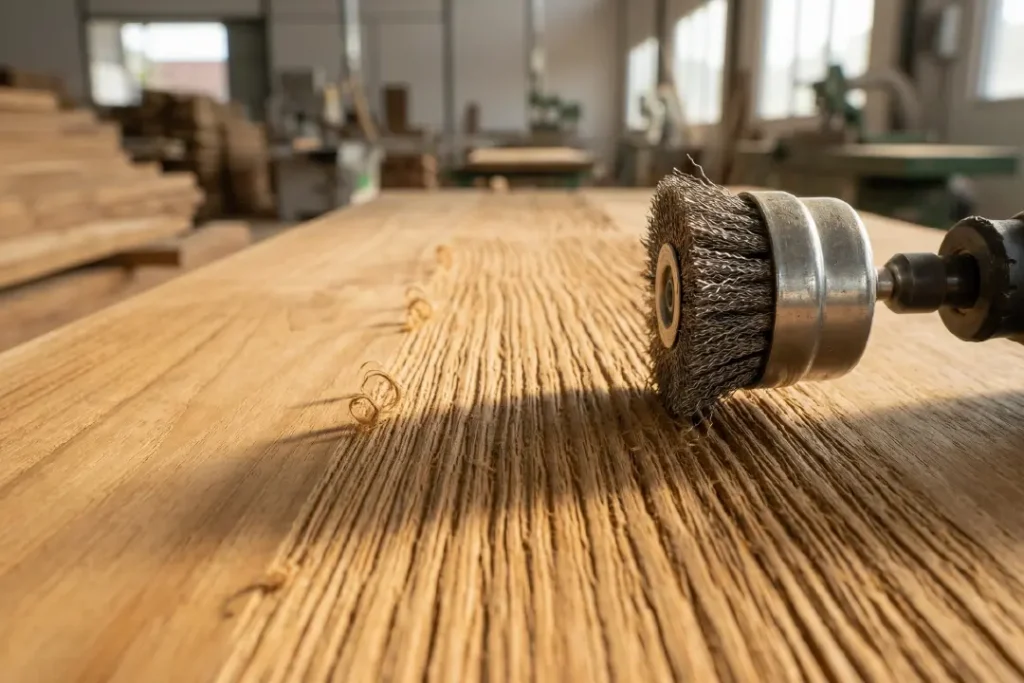
Based on our experience producing Indonesian outdoor furniture, creating a weathered teak finish is not a single step but a controlled process that combines material preparation, surface treatment, and finishing techniques.
Each stage plays a role in achieving a natural aged look while maintaining consistency across large orders.
This is why working with an experienced Indonesian teak furniture manufacturer becomes important, especially when consistent material selection and finishing control are required.
Controlled Aging Effect
The process starts from the material stage, where the wood is treated to remove excess oil and stabilize moisture content, typically around 12% to prevent cracking and uneven absorption.
From our experience, this step is critical because it allows the finishing process to penetrate evenly and creates a base that mimics the character of naturally aged teak down to the grain. If the initial stage is not done correctly, it will affect all the following steps and lead to inconsistent finishing results.
In some cases, one of the buyer’s QC team reported uneven color results across batches, which, after analysis, were traced back to non-uniform wood selection and the absence of proper kiln drying.
Without controlled drying, moisture content becomes unstable, making it difficult to achieve consistent finishing results in large-scale production.
Surface Brushing and Grain Opening
After assembly, the surface is sanded and brushed to open the wood grain. This step enhances texture and allows the finish to follow the natural fiber structure, making the final result look more authentic rather than flat or artificial.
In practice, the brushing pattern can be adjusted based on buyer preferences, but the goal remains the same: to create a surface that looks natural and not artificial.
Layered Weathered Finishing Techniques
The final stage involves layered finishing to achieve consistent color and protection for outdoor use. This includes sealing, tone adjustment, and controlled color application to match the desired weathered look while maintaining durability against outdoor exposure.
Production Control for Consistent Results in Large Orders
In large-scale production, consistency depends heavily on how well the entire process is controlled from material preparation to final finishing. Without proper production control, even small variations in wood condition or finishing can lead to visible differences across batches.
This is where a reliable Indonesian furniture manufacturer with full in-house production and strict quality control becomes critical.
In practice, this is why experienced manufacturer MPP Furniture relies on full in-house production systems, supported by kiln-drying, calibrated machinery, and controlled finishing environments.
With more than 20 years of experience and continuous development in markets such as the US and Australia, consistent, weathered teak results are achieved through attention to detail at every stage, not just at the finishing stage.
Why Retailers and Importers Should Add Weathered Teak Furniture to Their Collection
For retailers and importers, weathered teak offers a clear commercial advantage. It helps collections feel more premium and current, while remaining flexible across different design styles, making it easier to merchandise without constant product changes.
In practice, weathered finishes also support better visual presentation, from showroom displays to product catalogs, while allowing brands to position products at a higher perceived value. It also works across multiple categories, helping build more cohesive outdoor collections.
This aligns with broader insights on why Indonesian weathered furniture is valuable for buyers, especially in terms of perceived value and product positioning.
Conclusion
Weathered teak stands out in 2026 because it aligns with both design direction and business needs. It offers a natural, relaxed look that buyers prefer, while giving retailers and importers a finish that is easier to position, style, and scale.
For brands developing outdoor collections today, weathered teak is not just a trend, but a practical direction that combines visual appeal with consistent production when supported by an experienced Indonesian teak furniture manufacturer.
Planning Your Next Weathered Teak Collection?
Our team can support you with finish development, product customization, and production planning to match your market requirements and ensure consistent results across orders.
FAQs About Weathered Teak Outdoor Furniture
1. What is weathered teak in outdoor furniture?
Weathered teak is teak wood with a soft grey or aged appearance. It can happen naturally outdoors over time, or it can be created through a controlled finishing process.
2. Is weathered teak natural or intentionally finished?
It can be both. In commercial production, it is often intentionally finished because natural weathering is too slow and inconsistent for bulk orders.
3. Is weathered teak a good choice for hospitality and resort projects?
Yes. It works well for hospitality because it feels relaxed, refined, and visually suited to outdoor spaces such as villas, resorts, and coastal dining areas.
4. Why do retailers choose weathered teak furniture for premium collections?
Retailers choose it because the finish gives products a more curated and premium look, while also making collections easier to style and position in the market.
5. Is weathered teak durable enough for outdoor use?
Yes. Weathered teak is suitable for outdoor use because teak is naturally durable, and when supported by proper wood preparation and outdoor-grade finishing, it can perform well in exterior environments.

Hi, I’m Salman, founder of MPP Furniture, an Indonesian furniture manufacturer serving global retailers and project-based clients.
I began my career in my family’s export-oriented furniture company, gaining hands-on experience in production, construction, finishing, material performance, and product development. With a clear understanding of how international buyers evaluate furniture quality and reliability, I founded MPP Furniture to deliver export-ready products with consistent standards.
Here, I share insights from the perspective of a furniture manufacturer working directly with production teams on the factory floor, focusing on manufacturing and supplier evaluation.
Connect on LinkedIn
0 Comments