
In the global furniture trade, the phrase handcrafted furniture is often treated as a synonym for quality. For many buyers, it signals care, tradition, and human skill. However, without technical engineering, manual skill alone cannot prevent the physics of wood from destroying a piece of furniture.
Real durability requires more than a talented carver. It demands a manufacturing system that respects material science: precise kiln drying to 8–12% EMC, structural joinery designed for seasonal expansion, and chemical finishing adapted to tropical oils.
When artistry lacks this support—when production relies on intuition rather than material science—failure shifts from a risk to an inevitable timeline. For B2B buyers who have dealt with cracked panels or open joints, the distinction between "handmade" and "engineered" matters more than style.
Moisture Physics: The Root of Instability
Wood remains a living material long after the tree is cut. It absorbs and releases moisture from the air, constantly adjusting to its surroundings. This property, defined as hygroscopic behavior by industry authorities like Swedish Wood, stands as the primary reason handcrafted furniture fails when engineering is ignored.
A chair or table can look perfect at shipment and still deform months later. The cause is often simple: the wood was not dry enough.
The Hidden Risk: Equilibrium Moisture Content (EMC)
Every climate has an Equilibrium Moisture Content (EMC), a critical standard tracked by measurement experts at Wagner Meters. For most export markets, stable furniture requires wood to be conditioned between 8–12% moisture content before machining and assembly.
If wood is processed above this range:
- Panels shrink after delivery
- Joints loosen as fibers contract
- Finishes develop spiderweb fractures as the surface moves under a rigid coating
The naked eye cannot see 16% moisture content. Only calibrated moisture meters reveal the hidden tension waiting to split a panel.
Indonesian furniture manufacturers treat moisture control as a production gate, not a suggestion. A rigorous kiln drying process, conditioning rooms, and digital monitoring are not optional tools; they serve as the foundation of furniture that survives transit and use.
For a deeper technical explanation, read our guide on how moisture content prevents cracks during international transit.
Structural Engineering: Managing Wood Movement
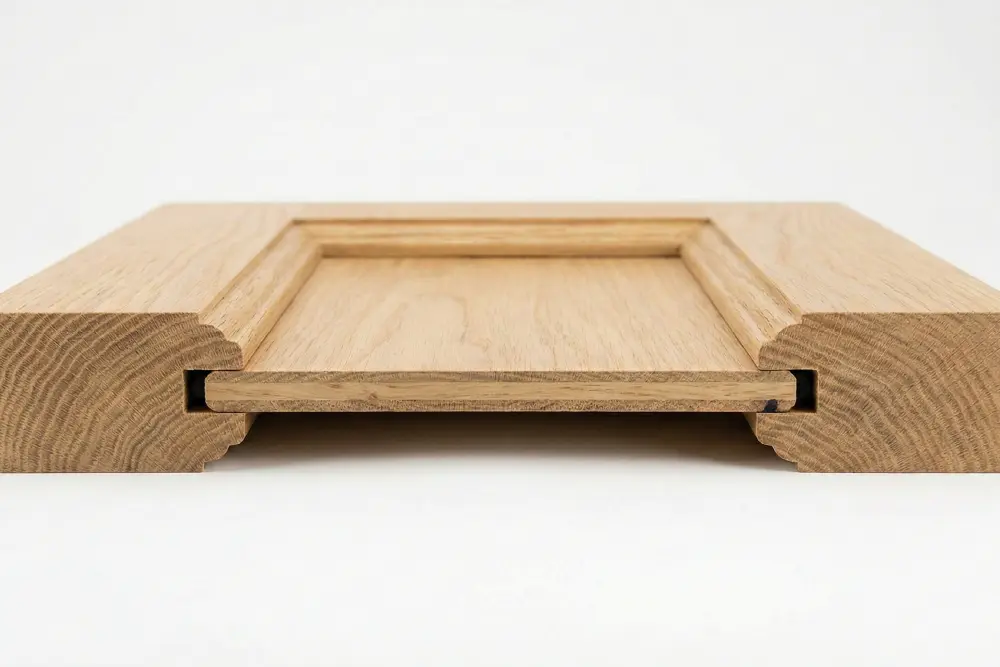
Even perfectly dried wood continues to move. Expansion and contraction happen across the grain, a directional force detailed in technical references by The Joinery Effort. This movement does not destroy furniture on its own. Poor structure does.
When Craft Alone Causes Damage
Rigid, traditional construction often traps wood, forcing it to split when it attempts to move. Screws driven without slots, glued panels without relief, or fixed rails across wide boards all resist natural movement.
The result is predictable:
- Split tabletops
- Cracked frames
- Distorted cabinet doors
These structural failures stem from design oversights, not natural defects in the wood.
Solutions That Allow Movement
Well-engineered furniture allows wood to move safely:
- Floating panels replace glued solids to prevent cracking during contraction.
- Slotted screw holes allow the top to expand without tearing the frame apart.
- Frame-and-panel construction isolates stress away from critical joints.
These solutions are invisible to end users, but they define long-term performance. Without them, even the most skilled handwork becomes a liability.
Explore the specific construction methods we use to ensure stability in our technical guide to mitigating wood movement risk.
Machine Precision: The Structural Canvas
Hand tools excel at nuance, but they struggle with mathematical consistency at scale. When production relies only on manual shaping, small variations accumulate. This leads to what manufacturers call component imbalance.
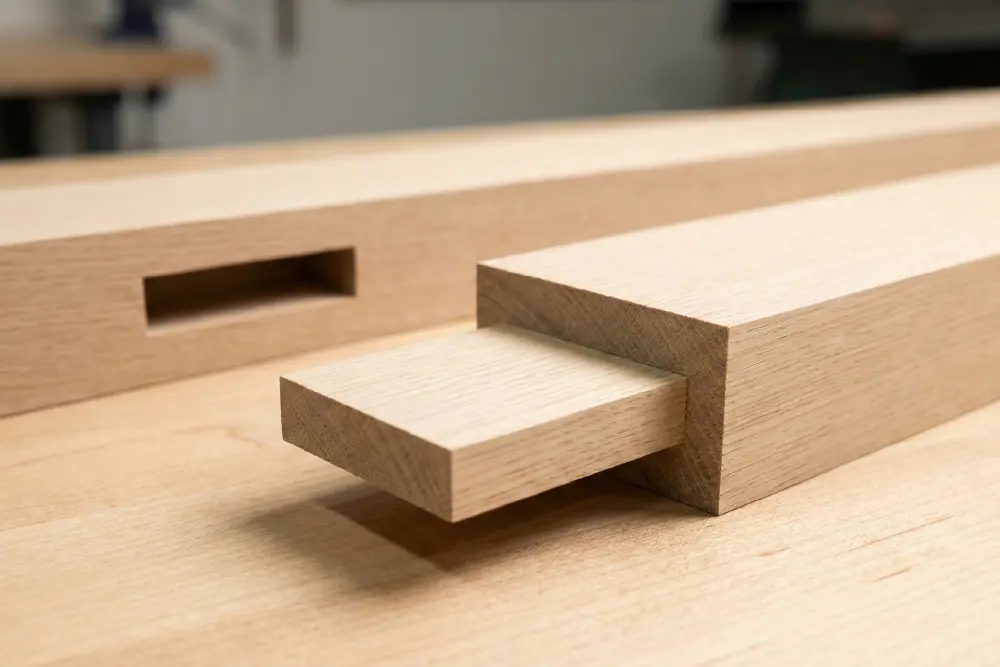
A millimeter difference in tenons, rails, or leg lengths may not show during assembly. Over time, it shows as rocking tables, uneven load distribution, and joint fatigue.
Machines as Structural Insurance
Machinery acts as the stabilizer, not the enemy, of craftsmanship.
Precision cutting, thickness calibration, and controlled drilling give every component the same geometry. This consistency:
- Reduces internal stress
- Improves joint strength
- Allows predictable load behavior
Machines create a stable canvas. Skilled hands then refine, assemble, and finish without fighting structural errors.
Manufacturers that reject machines in the name of being “fully handmade” often trade romance for risk.
We apply this precision specifically to critical connections; learn more about our approach to mortise and tenon joinery.
Manual Craftsmanship: The Tactile Advantage
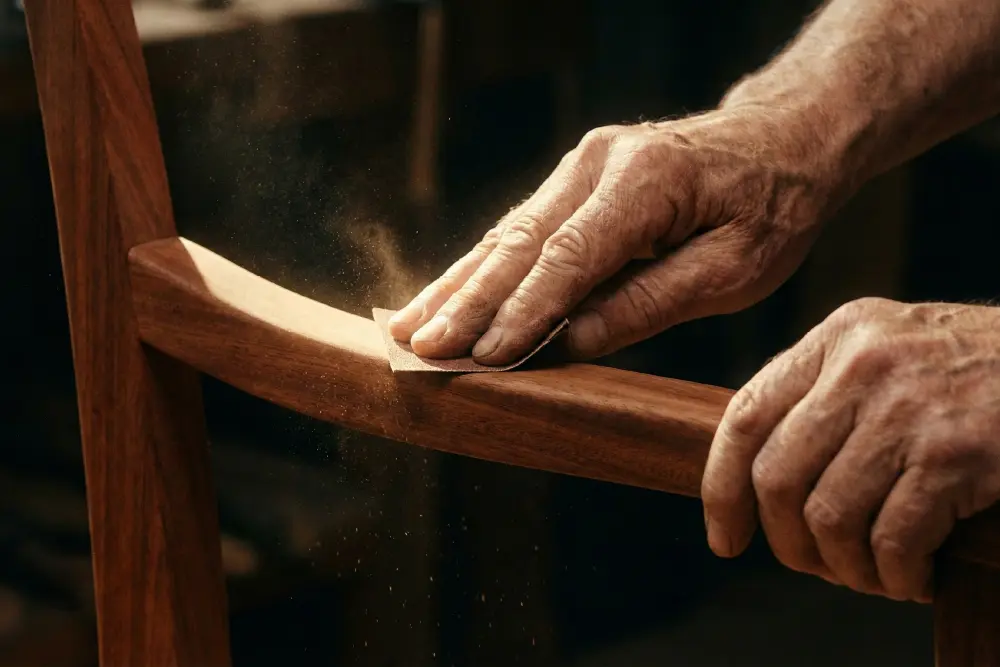
Engineering defines limits. Craftsmanship gives furniture its soul.
Once dimensions, moisture, and structure are controlled, human skill becomes visible in the places machines cannot replace. In these instances, manual work acts as a form of tactile quality control.
Where Hands Make the Difference
- Weaving tension in rattan and natural fibers
- Sanding transitions on curves and edges to remove micro-imperfections
- Alignment of patterns and grain flow for visual continuity
- Assessing surface feel that machines cannot sense
These elements define comfort and visual harmony. They also determine whether furniture feels premium or merely assembled.
Matching Design to Material Constraints
Not all designs suit all woods. Carved details require stable, fine-grain species like mahogany. Open-grain woods demand different tooling and finishing methods. Ignoring these constraints leads to torn fibers, weak edges, and surface failure.
True craftsmanship respects material limits instead of forcing designs onto unsuitable wood.
Finishing Chemistry: Beyond Decoration
Finishing is often treated as a cosmetic step. In reality, it functions as a chemical interaction between the coating and the wood.
Oil, Tannins, and Surface Failure
Species like teak contain high oil content. Specialists at Target Coatings note that if not managed correctly, this oil migrates, breaks adhesion, and causes peeling or staining. This represents a fundamental material failure, not merely a finishing error.
Engineering-based finishing involves:
- Controlled curing times
- Sealers designed for oily woods
- Finish systems matched to porosity levels
Open-grain woods such as sungkai require different viscosity and penetration control than dense, closed-grain species. Universal finishing formulas invariably fail on complex tropical hardwoods.
When finishing fails, the root cause is usually upstream; moisture, preparation, or chemistry was misunderstood.
The Performance Gap: ROI of Engineering
Buying furniture based on romance often costs more in claims than it saves in purchase price. Here is how the two approaches compare in the field.
| Feature | Traditional Handcrafted (The Risk) | Engineered Handcrafted (The Standard) |
|---|---|---|
| Moisture Control | Solar drying or guesswork; reliant on weather. | Kiln-dried to 8–12% & verified with digital meters. |
| Joinery | Fixed/glued joints that crack under pressure. | Floating panels & expansion slots for seasonal movement. |
| Consistency | Dimensions vary by millimeter; components don't interchange. | Calibrated machining ensures identical geometry every time. |
| Finishing | Standard varnish applied to all species. | Chemical systems matched specifically to wood oil/porosity. |
| Long-Term Result | High risk of warping, cracking, and returns. | Structural stability and lasting brand reputation. |
Engineering High-Performance Handcrafted Furniture
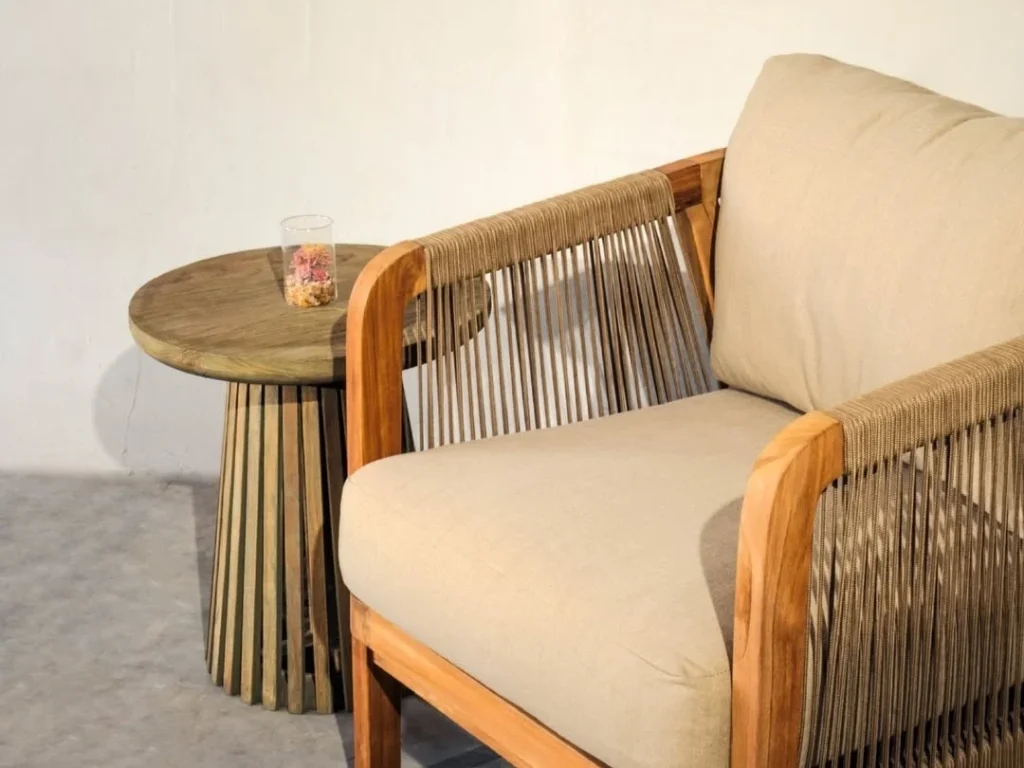
At MPP Furniture, handcrafted work is treated as one stage in a controlled system, not the system itself. Traditional skill is combined with engineered processes so that artistry operates within physical laws.
Every wooden and rattan product is built through:
- Full in-house production with calibrated machinery
- Strict moisture and quality control at each stage
- Joinery designed for long-term movement
- Finishing systems adjusted per wood species
This approach allows consistent output for global B2B clients while preserving the tactile value that handmade work provides. The result is furniture that performs, not just furniture that photographs well.
Implementing these strict engineering controls influences production schedules; understand the trade-offs in our article on why lead time matters in Indonesian furniture.
The 3-Point Inspection Checklist
Use this checklist when evaluating potential suppliers to separate marketing claims from manufacturing reality.
- Demand the Data: Do not accept "we dry our wood" as an answer. Ask for their target EMC (Equilibrium Moisture Content) range and request to see their kiln schedules.
- Inspect the Underside: Flip a table over. Look for slotted screw holes or Z-clips attaching the top to the base. If the top is screwed directly into the apron without room to move, it will crack.
- Test the Finish: Ask about the specific coating system used for oily woods like Teak. If the answer is a generic "outdoor oil" without a specific sealer protocol, expect adhesion failure.
Conclusion: Quality Obeys Physics
Handcrafted furniture is a process, not a promise.
Quality requires more than manual skill. It demands respect for how wood behaves, how structures carry stress, and how finishes interact with material chemistry. Craft without engineering relies on luck. Engineering without craft lacks character.
True reliability demands the convergence of both disciplines.
For buyers sourcing from an Indonesian furniture supplier, the real question is not whether a product is handmade, but whether it is built with discipline. When physics is respected, craftsmanship lasts.
Do not gamble on "handmade." Partner with engineering. Contact our technical team today to audit your current specifications and secure your supply chain against failure.
Your next best-seller might be here
Request a quotation and custom options tailored to your needs today via WhatsApp or email.
Frequently Asked Questions
Is handcrafted furniture always better than machine-made furniture?
No. Handcrafted describes how furniture is made, not how well it performs. Without engineering, handmade furniture can fail faster than engineered production pieces.
Why does wood furniture crack after delivery?
Most cracking comes from improper moisture content or rigid construction that does not allow natural wood movement.
Can machines replace craftsmanship in furniture?
No. Machines control dimensions and consistency. Craftsmanship controls feel, detail, and final quality.
Why is finishing failure common in teak furniture?
Teak contains natural oils. Without proper surface preparation and compatible finishes, adhesion problems occur.
What should B2B buyers look for beyond “handmade” claims?
Buyers should ask about moisture control, joinery methods, finishing systems, and quality control processes.

I am a self-taught graphic designer with a deep passion for exploring the creative world through various tools and techniques. I have honed my skills in Adobe Illustrator, Photoshop, and Lightroom, while continuously expanding my knowledge by diving into After Effects and Premiere. Photography has become an integral part of my life, and I actively engage with it to capture moments and experiment with visual storytelling.
My fascination with color theory, histograms, and innovative design approaches drives my work, as I am always seeking new ways to push the boundaries of my creativity. From photography models and motion graphics to textures, collage, and surrealism, I am captivated by the endless possibilities in design and constantly strive to challenge myself with fresh and exciting ideas.

0 Comments