
Urban populations are expanding rapidly, especially in the Asia Pacific. Urbanization rates there are projected to reach 53% by 2050.
This surge is driving demand for compact, multifunctional furniture for smaller living spaces. This trend is reshaping global furniture retail.
Urban living space constraints are intensifying, especially in high-density rental housing and small units. This is driving a shift toward compact, stackable, and wall-mounted furniture.
For retailers serving this market, Mindi wood offers a premium hardwood at scale that other premium hardwoods can't match. It's not just about affordability.
Strategic flexibility lets you test designs, adjust pricing, and move inventory fast. This matches how apartment dwellers actually buy furniture.
Why Apartment Furniture Demands Different Material Thinking
Over 46% of new apartments constructed in urban centers globally now include built-in furniture. When built-ins take dining and storage space, furniture retailers need pieces that work in what's left.
That means smaller footprints and lighter visual weight. Pricing must also reflect that apartment residents aren't furnishing homes forever. They're furnishing for now.
Durability expectations in residential environments differ from those in commercial environments. The growing population of cities demands furniture that is both portable and customizable to fit the compact homes and apartments common in urban areas.
Apartment furniture faces moderate daily use but must withstand moves, such as disassembly, transport, and reassembly. Furniture that can't handle this cycle fails, no matter how beautiful it looks initially.
Price sensitivity in the apartment furniture segment is higher than in traditional residential categories.
Demand for storage furniture is projected to grow at a CAGR of 7.3% from 2025 to 2033. Consumers are investing more in home upgrades that offer cost-effective storage solutions.
Apartment buyers want solid-wood aesthetics but don't want to spend $2,000 on a dining set they might replace in 2 years. Mindi Wood solves this exact tension.
What Makes Mindi Wood Work for Apartment Furniture
Mindi wood comes from Melia azedarach, a fast-growing hardwood native to Southeast Asia. The tree matures quickly, making it more sustainable than slower-growing hardwoods like teak.
What matters for apartment furniture is how Mindi behaves at smaller scales. The wood machines easily and allows for slender designs that don't overpower compact rooms.
Lightweight and easy to work with, making it ideal for mass-producing bedside tables, dressers, and wardrobes.
Weight matters more than retailers realize. Mindi furniture weighs 20-30% less than teak. For apartment residents who move their own furniture or pay movers by weight, this saves money and adds convenience.
Mindi accepts stains and finishes exceptionally well. Easy to work with, Mindi has gained an important place in cabinetmaking, producing furniture that is both authentic and robust.
This versatility lets retailers offer multiple colorways from a single production run. You can test walnut finish and natural oak at the same time, without redesigning the base furniture.
Common Apartment Furniture Types Made from Mindi Wood
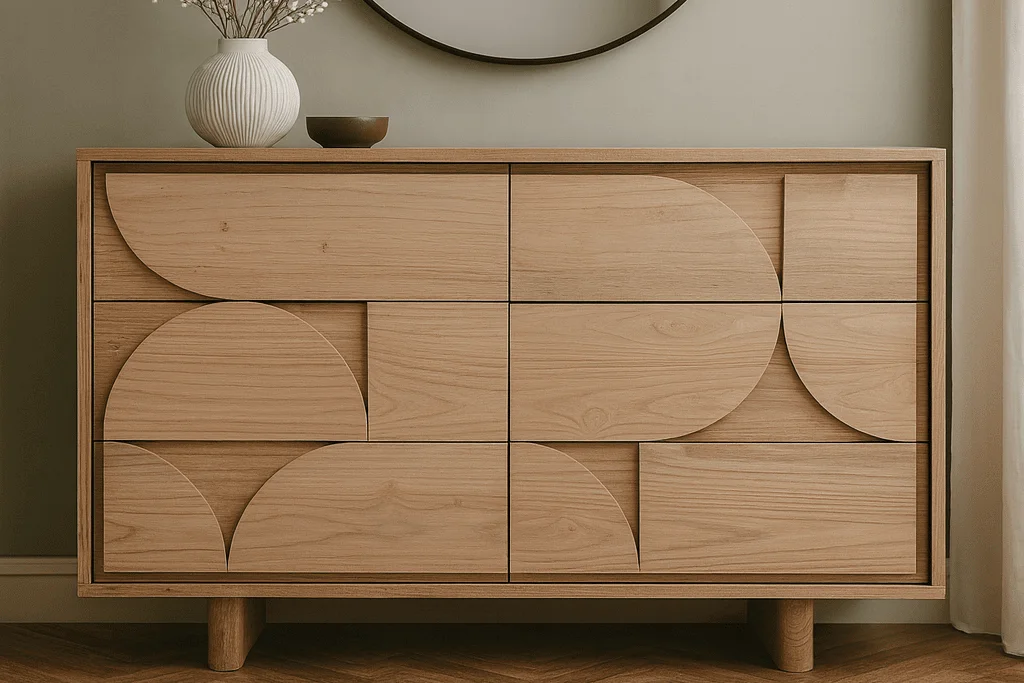
1. Bedroom Furniture
Retailers in export markets favor Mindi for its versatility in finishing. Its consistent grain pattern also fits Scandinavian and Japandi themes.
Apartment bedrooms demand space efficiency. Mindi's lighter weight is ideal for beds with storage, compact dressers, and wall-mounted nightstands. These don't require hardware rated for heavy loads.
2. Dining Sets
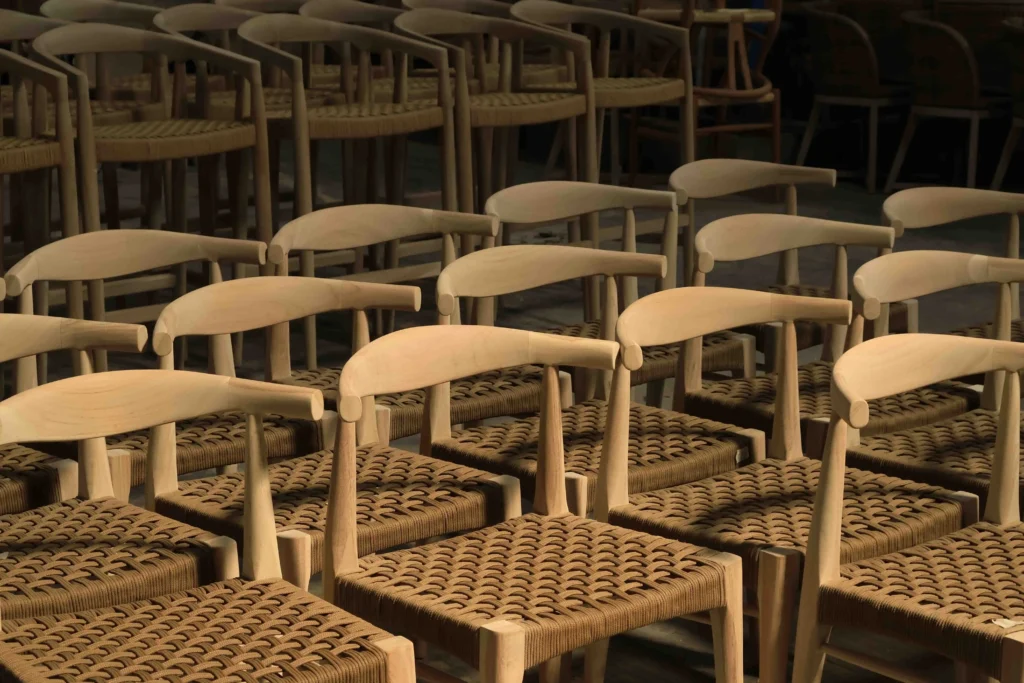
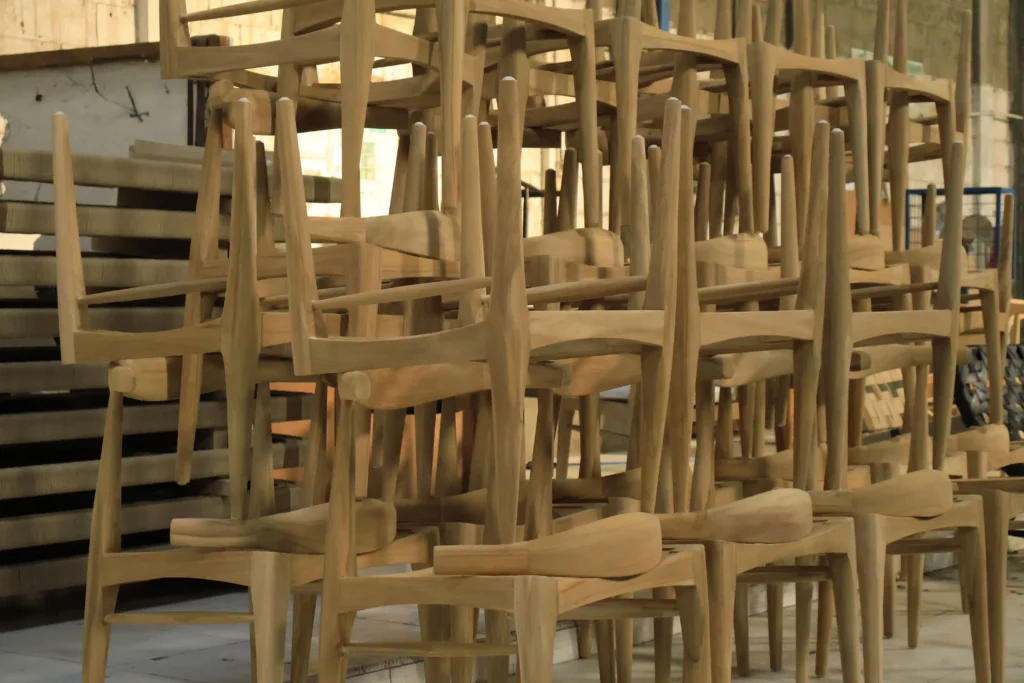
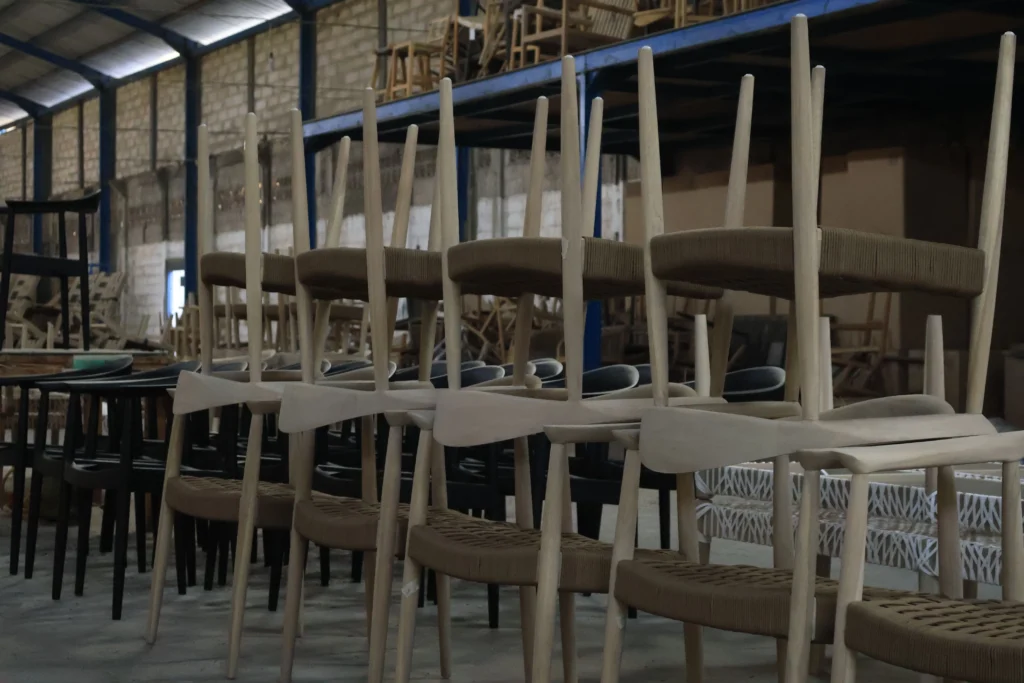
Mindi is easy to shape and machine. This is essential for creating stylish, cost-efficient dining tables and chairs. The lighter weight also reduces shipping costs.
Apartment dining areas rarely have room for tables seating more than four. Mindi's workability enables compact designs with the refinement apartment buyers expect, without the bulk or weight of premium hardwoods.
3. Storage Solutions
Apartment living amplifies storage needs while limiting available floor space.
Mindi sideboards, consoles with drawers, and modular shelving provide storage capacity without the weight that makes small spaces feel cramped.
4. Media Units and Entertainment Centers
Mindi wood has been used to create the carcass or frame. The wood dries quickly and shrinks or warps less than comparable materials, making it an ideal base for veneers.
Apartment living rooms often double as entertainment centers, home offices, and guest areas. Mindi's stability supports larger spans without excessive thickness, creating furniture that feels substantial without dominating the room.
Cost and Pricing Considerations for Mindi Wood Apartment Furniture
Material costs for mindi are 40-50% below those for teak. They are also 25-35% below mahogany for equivalent pieces.
This gap creates the strategic pricing flexibility retailers need when targeting apartment markets where budgets are tighter than in traditional home furnishings.
Production efficiency compounds these savings. Mindi wood resists shrinking and expanding due to humidity when properly treated.
Lower rejection rates during manufacturing mean more predictable costs and faster turnaround from order to delivery.
For retailers, this means retail pricing that matches apartment buyer budgets. A mindi dining set at $600-800 competes with engineered wood. It offers solid hardwood construction and justifies the premium over particleboard.
Volume economics work differently with Mindi. Lower per-unit costs let retailers stock more SKUs with the same capital investment.
Test three dining chair styles instead of one. Offer bedroom furniture in four finishes instead of two. This variety matters for apartment dwellers who want personalization within budget.
Manufacturing lead times for mindi furniture are typically 8-10 weeks. This is faster than the 12-16 weeks needed for premium hardwoods. Faster turnover helps you respond to trends before they pass.
When Scandinavian minimalism or Japandi aesthetics surge in popularity, you can deliver products while demand is hot.
Durability and Maintenance in Apartment Use
Apartment furniture faces specific durability requirements that differ from those of both residential homes and commercial settings.
Mindi performs well under moderate daily use, typical in apartments. Its Janka hardness rating of 1.8-2.2 exceeds that of oak and teak. This means it resists dents and surface damage from household use.
Properly manufactured mindi furniture for apartments lasts 8-12 years. This lifespan aligns with common behavior patterns among apartment residents.
Urbanization drives the growth of rental markets, where frequent relocation encourages the purchase of new furniture. Furniture designed for a decade of service matches how apartment residents actually use and replace furnishings.
Tolerating movement matters uniquely for apartment furniture. Residents often rearrange to make the most of limited space. Mindi's lighter weight allows this without stressing the structure as heavier woods do during repeated handling.
Maintenance requirements stay manageable. Naturally rich in oil, mindi requires less maintenance than some woods.
For apartment residents without dedicated storage for furniture care products or deep-cleaning routines, low-maintenance finishes on mindi furniture perform better long-term than options that require regular oil treatment or specialized cleaners.
Climate sensitivity requires attention. Mindi may be prone to termite damage without proper QC and treatment. This makes manufacturer selection critical.
Indonesian producers with in-house kiln drying and anti-termite treatment deliver reliable mindi furniture. Those without good processing create issues that emerge months after delivery.
Customization Options from Indonesian Furniture Manufacturers
Apartment furniture benefits particularly from the customization flexibility Mindi offers.
1. Dimension Adaptation
Standard furniture dimensions often don't optimize apartment layouts.
Manufacturers can easily adjust table heights, dresser depths, and shelving widths. These changes fit spatial constraints without redesigning entire pieces.
Mindi's workability makes these modifications economically viable even at moderate volumes.
2. Finish Variety
Mindi takes coatings, stains, or textured finishes well. Retailers can provide natural, whitewash, walnut, and ebony finishes on identical base furniture.
This variety lets apartment retailers serve diverse aesthetic preferences without multiplying inventory complexity.
3. Modular Design Systems
Mindi's consistent grain and machining support modular furniture systems. Components can be interchanged across product lines.
A single-leg design might work for dining tables, desks, and consoles. This modularity reduces tooling costs, inventory complexity, and expands the apparent product range.
4. Hardware Integration
Modern apartment furniture increasingly incorporates charging ports, cable management, and soft-close mechanisms.
Mindi's workability accommodates these functional additions without the routing challenges denser hardwoods present.
At MPP Furniture, we've built apartment furniture programs for retailers across the US, Australia, and Spain who need collections that balance aesthetic consistency with finish flexibility.
Our 100% in-house production—from raw material processing to final finishing—gives you full quality control without the coordination headaches of multi-vendor sourcing.
Our free product development service helps retailers test concepts before committing to full production, perfect for validating apartment-specific designs like compact dining sets or modular storage units.
For retailers specifically exploring Mindi, our articles on whether mindi wood is good for furniture and how long mindi furniture lasts provide a deeper technical context.
How Retailers Can Partner with Indonesian Manufacturers for Apartment Furniture Solutions
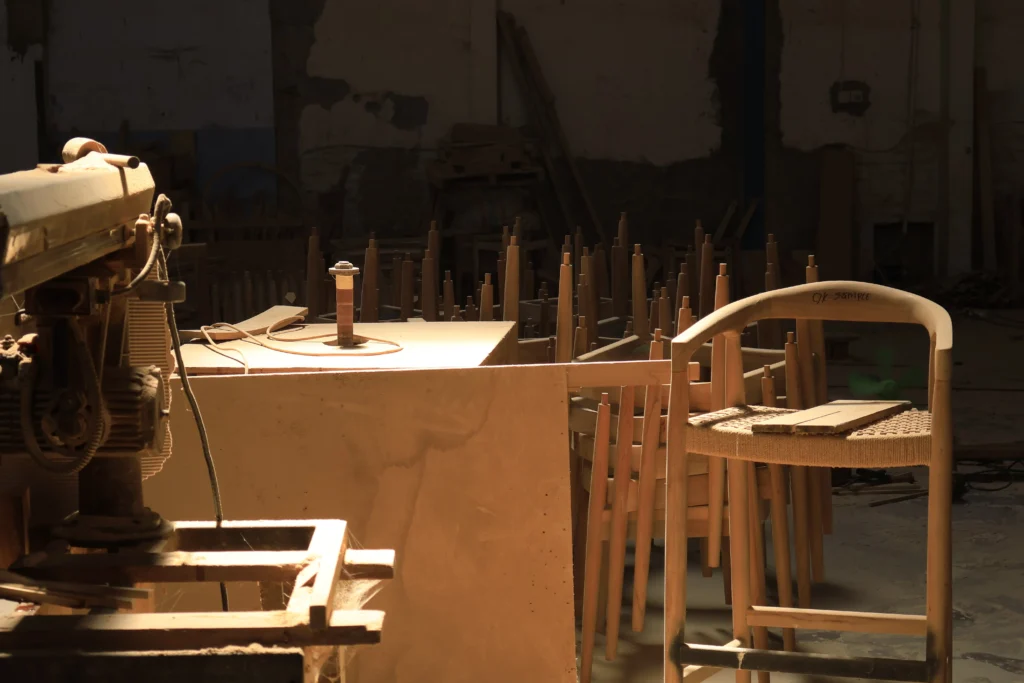
Successful apartment furniture programs require manufacturing partners who understand the category's unique requirements.
1. Volume Flexibility Matters
Apartment furniture programs often require testing multiple SKUs at lower volumes before scaling.
MPP's MOQ structure for mindi furniture starts at 50-100 pieces per SKU—substantially lower than the 300-500 unit minimums typical for premium hardwoods.
This lets apartment retailers validate new dining sets or bedroom collections in their market without tying up working capital in excess inventory that might not move.
2. Finishing Capability Determines Variety
When manufacturers outsource finishing work, you typically face separate minimum orders per color, forcing you to commit 200 pieces to walnut AND 200 to whitewash to test both options.
MPP handles kiln-drying, anti-termite treatment, sanding, and finishing in our facility.
You can mix finishes within a single container order, testing multiple colorways without multiplying your MOQ commitments or coordinating with different subcontractors.
3. Lead Time Predictability
Apartment furniture buying patterns spike around moving seasons and holiday periods.
Manufacturers with documented production planning systems consistently hit delivery windows. Those operating reactively miss seasonal opportunities that drive annual revenue.
4. Quality Control for Apartment-Specific Requirements
Mindi wood requires proper kiln-drying and anti-termite treatment to perform reliably in apartment environments.
Manufacturers who skip these steps or outsource treatment create quality failures that surface months after delivery.
MPP's in-house kiln facilities and treatment protocols ensure mindi furniture maintains structural integrity through the assembly-disassembly-reassembly cycles apartment furniture faces.
This process discipline has helped our Australian retail partners significantly reduce product returns.
5. Design Development Support
Many Indonesian furniture manufacturers, including MPP Furniture, offer custom design services for retailers, allowing you to create private-label or OEM products with mindi as the base material.
Apartment furniture benefits from understanding spatial constraints and usage patterns. Manufacturers willing to collaborate on design rather than execute orders create better-performing products.
We offer OEM and Private Label Services to match your brand style and market needs.
For retailers new to sourcing from Indonesia, our guide to trying mindi wood furniture walks through evaluation criteria and sourcing strategies.
Our complete furniture collections showcase mindi options alongside other materials, demonstrating how different woods serve different retail strategies and customer segments.
Why Apartment Furniture Retailers Choose MPP for Mindi Wood
Sourcing apartment furniture from Indonesia requires manufacturing partners who understand both material behavior and category-specific requirements.
MPP Furniture brings 20+ years of export experience, serving retailers in competitive apartment markets across the US, Australia, Spain, and the UAE.
What makes MPP different for apartment furniture programs:
✅ Consolidated production under one roof: No coordination between separate timber mills, treatment facilities, and finishing shops. Faster timelines, clearer accountability.
✅ No-cost product development. Test apartment furniture designs as production samples before committing to container orders. Critical for validating compact furniture concepts.
✅ Lower entry volumes. 50-100-piece MOQs per SKU let you test market response without overcommitting warehouse space.
✅ Certified timber sourcing. SVLK and FLEGT documentation are included with every shipment. Non-negotiable for EU and increasingly US importers.
✅ OEM and private label ready. Build branded apartment collections that set you apart from retailers selling generic, imported furniture.
We've built Mindi wood apartment furniture programs for retailers who needed reliable quality at price points their apartment-dwelling customers would actually pay. If that describes your sourcing challenge, let's discuss how Mindi Wood fits your strategy.
👉 Ready to evaluate Mindi Wood for your apartment furniture program?
We offer complimentary consultations to help you assess material fit and free product development to test designs before production commitment.
💬 WhatsApp: +62 821-4630-5858
✉️ Email: sales@mppfurniture.com
Planning your next best-selling collection?
Request catalog, pricing info, MOQ, and custom options today — we’ll respond quickly.

A passionate writer with 2+ years of experience in SEO who turns complex ideas into informative & helpful content. I share the challenges & important considerations when preparing a global furniture project, hoping to help MPP Furniture’s readers make more informed business decisions.
0 Comments