
Mindi wood furniture serves as a reliable and profitable product line for B2B buyers, provided it is sourced from manufacturers who truly understand the material's technical requirements. For retailers and distributors, the difference between a high-margin bestseller and a costly claims nightmare often lies in one invisible detail: technical execution.
This article moves beyond reactive problem-solving to offer a technical, preventive decision guide from a manufacturer’s perspective. Its purpose is to help buyers evaluate factory readiness before placing orders, ensuring that production quality matches the showroom sample and protecting your brand reputation.
If you source mindi wood furniture from Indonesia, your long-term results depend heavily on how well the factory controls moisture, construction, joinery, and finishing. This guide provides a practical framework to audit supplier competency with confidence.
Why Technical Evaluation Matters When Buying Mindi Wood Furniture
Mindi wood occupies a strategic middle ground between premium hardwoods like oak and cost-driven materials like rubberwood. While visually excellent for indoor furniture—such as dining tables, coffee tables, and solid wood bedroom furniture—its structural stability relies on precise processing.
From a manufacturer’s perspective, Mindi functions as a process-sensitive material. Defects rarely originate from the wood species itself; instead, they result from production gaps such as incorrect moisture content, weak panel construction, simplified joinery, or inconsistent finishing systems.
Buyers who evaluate suppliers solely based on visual samples often overlook these hidden risks. A thorough technical evaluation filters out factories that prioritize surface aesthetics over essential process controls—protecting you from the delayed defects that typically appear only after the goods have reached your warehouse or customer. Buyers looking to secure their supply chain can find more details in our guide on how to prevent defects when buying from Indonesia.
Critical Manufacturing Parameters Determining Stability
Moisture Content Control (MC Is Not Negotiable)
For indoor mindi wood furniture, verifying moisture content is a fundamental requirement rather than an optional check. The target MC range for exporting indoor furniture typically lies between 8–12%, ensuring stability across various destination climates.
Achieving this standard requires professional kiln drying protocols. Relying on air-drying or partial measures significantly increases the risk of cracking, hygroscopic movement, and surface distortion after delivery.
A capable factory demonstrates control by showing:
- Verified kiln performance: Evidence of adequate throughput relative to production volume.
- Systematic testing: MC testing protocols at multiple production stages (cutting, assembly, packing).
- Data transparency: Documented drying records rather than verbal assurances.
To understand the relationship between humidity and wood failure, we suggest reviewing how moisture content prevents cracks.
If a supplier cannot clearly explain how MC is managed from lumber intake to final assembly, the risk of future defects remains high.
Engineered Panel Construction
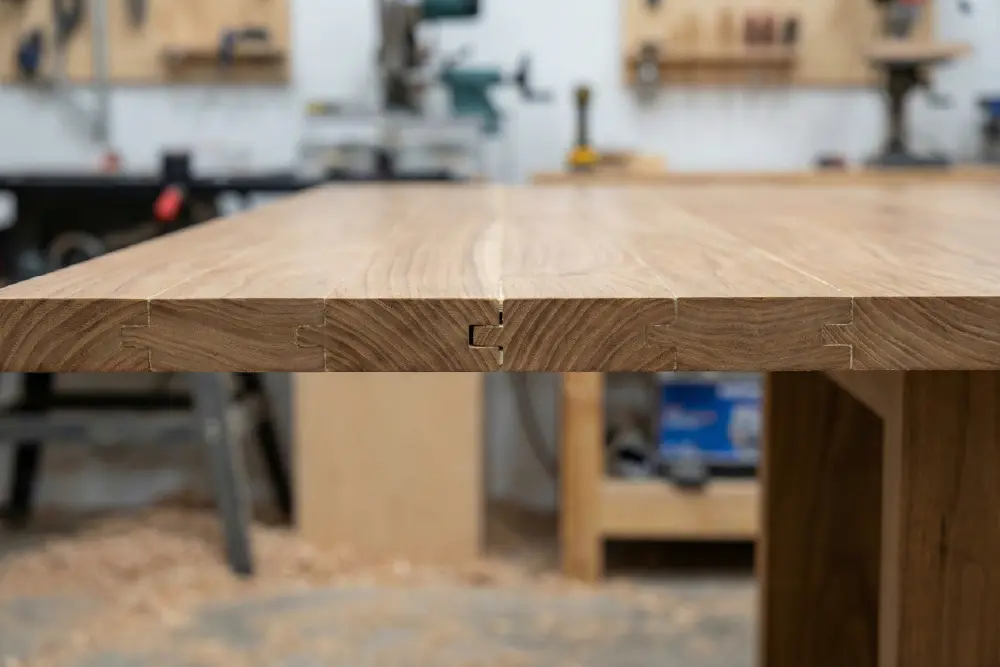
Large surfaces, such as dining table tops, must use specific construction techniques to remain flat. Relying on single wide boards creates risk and often leads to warping. Proper laminated panel construction focuses on balanced lamination, allowing for natural wood movement and correct panel orientation. Since large flat surfaces face unique risks, we have compiled specific strategies for Indonesian tables to avoid defects.
Key technical details include:
- Mechanical alignment: The use of tongue and groove or equivalent systems to prevent vertical displacement.
- Adhesion control: Calibrated glue spread and consistent press pressure.
- Stabilization periods: Sufficient resting time before machining to allow the wood to equilibrate.
Without these strict protocols, mindi wood panels may appear flat during shipment but will likely move or warp upon arrival due to environmental changes.
Structural Joinery Integrity
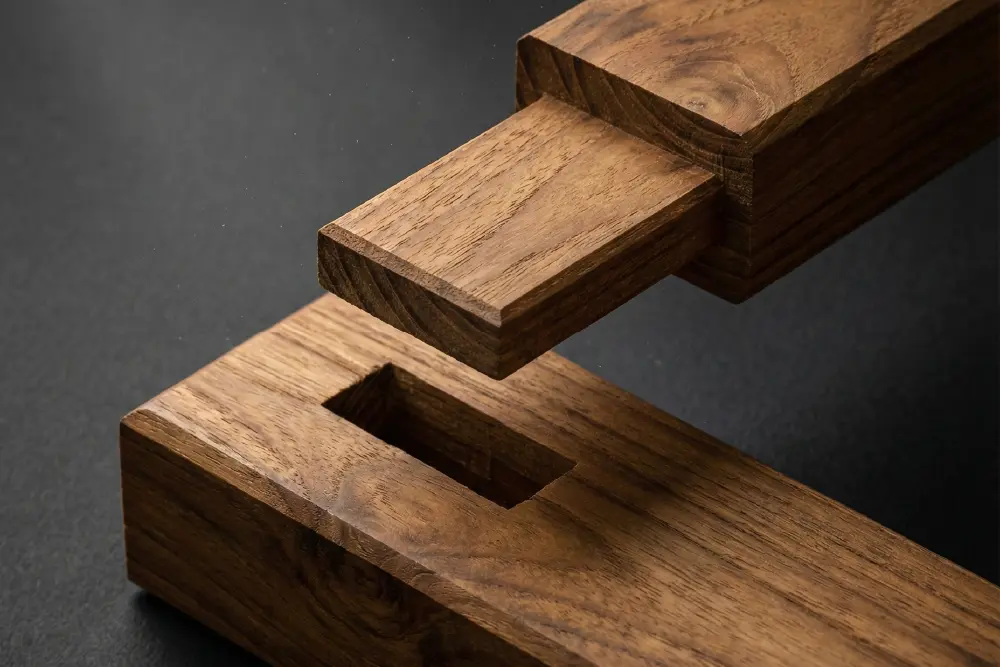
Structural integrity in chairs and heavy furniture demands robust joinery; dowel-only connections are insufficient. Because Mindi wood has moderate density, repeated load stress can loosen weak joints over time.
Reliable mindi wood chair construction utilizes:
- Mortise and tenon joints for primary structural strength.
- Dowels are strictly for secondary alignment support.
This distinction is critical because structural failures typically emerge months after use rather than during initial inspection. Factories that prioritize fast assembly over mechanical strength significantly compromise long-term durability. For a deeper technical breakdown of why this method outperforms others, read our analysis of mortise and tenon joinery.
Finishing System Consistency for Batch Production
The open grain structure of mindi wood offers distinct visual appeal while remaining highly sensitive to finishing variations. A stable finishing system ensures that every piece in a batch looks identical.
Key elements of a consistent process include:
- Surface preparation: A defined sanding sequence to ensure uniform absorption.
- Base coating: Application of a sealer or wash coat to control grain definition.
- Formulation control: Strict color-matching formulas for batch consistency.
This consistency is vital for buyers sourcing dark wood dining tables or private label collections where uniformity is expected. If finishing relies on manual adjustments without documented standards, color and texture variation become unavoidable.
Crucial Points for Evaluating a Mindi Furniture Supplier
Production Capability Beyond the “Golden Sample”
A flawless sample proves design potential, but it does not guarantee mass production capability. Repeatability is the true test. Buyers should inquire about the factory's kiln capacity, panel pressing machinery, and specific experience with mindi wood rather than general furniture production.
Proactive Quality Control Systems
Effective quality control must be preventive, identifying issues before they become defects. This means QC should exist at the raw material stage (MC check), joinery assembly, and pre-finishing, rather than just at the final inspection. Reactive QC systems only catch problems when it is too late to fix them efficiently.
Production Consistency via SOPs
A common frustration for buyers is receiving a bulk order that differs from the approved sample. Consistency depends on written Standard Operating Procedures (SOPs), controlled material sourcing, and trained production teams. Without these documented processes, a good sample is merely an exception, not the standard.
Supplier Red Flags: Signs of Manufacturing Risk
Process Deficiencies
Be wary of factories that rely heavily on manual judgment without documentation. The absence of MC records or a clear explanation of panel construction suggests a reliance on visual approval rather than technical precision.
Shallow Technical Understanding
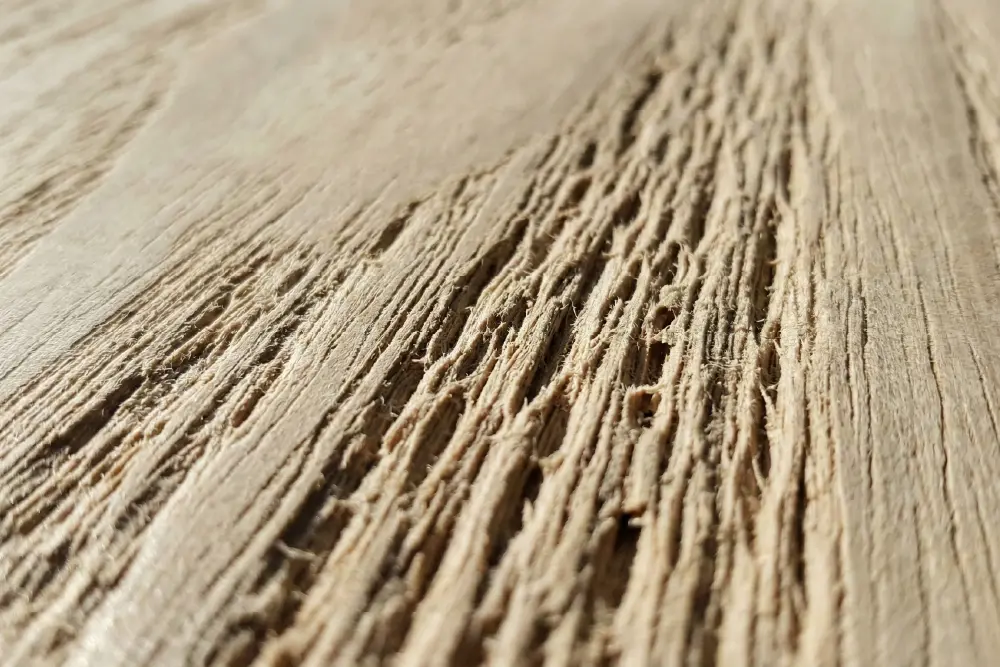
Avoid suppliers who dismiss technical concerns with vague statements like “Mindi is strong enough, no problem” or “We never had complaints.” A reliable manufacturer should be able to explain why their process works and how they mitigate risks (such as powderpost beetles).
Reactive Quality Control Structure
If quality control is limited to final inspection, defects are likely already built into the product. Preventive systems consistently outperform reactive ones in ensuring long-term quality.
How MPP Mitigates Risk Through Technical Standards
At MPP, we recognize that our buyers' profitability depends on product consistency. Therefore, our mindi wood furniture is produced with a strict process-first approach designed to eliminate common variables.
We ensure that all mindi wood is kiln-dried and checked for moisture at multiple stages to prevent post-delivery movement. Our panel construction uses controlled lamination methods, while chairs and load-bearing furniture rely on structural joinery rather than shortcuts. Furthermore, our finishing systems are standardized to guarantee batch consistency, ensuring that the product you receive matches the reference standard you approved.
Every product is expertly handcrafted, combining skilled workmanship with machinery precision. We apply this attention to detail to secure long-term performance, ensuring the product's integrity matches its visual appeal. As a reliable Indonesian furniture manufacturer, MPP supports buyers with free consultation, product development, and custom design support. We aim to be a strategic partner that aligns technical readiness with your market needs, allowing you to scale Mindi Wood collections with confidence and minimal risk.
Conclusion: Buy Mindi Wood Furniture With Technical Clarity
Mindi wood furniture performs exceptionally well when the factory respects its technical limits. Problems usually stem from process gaps rather than material flaws.
Before sourcing, buyers should:
- Audit moisture control protocols.
- Review engineered construction methods.
- Inspect joinery logic.
- Confirm finishing consistency.
- Verify production repeatability.
When buyers use technical evaluation as a filter, Mindi Wood becomes a stable, profitable choice for indoor furniture lines. A technical discussion with the manufacturer before sampling is the best way to assess market fit and production readiness.
Still Wondering Your Needs for Build Your Collection Line?
Schedule a Consultation and Discuss Your Needs with Us
FAQ: Mindi Wood Furniture Defects
1. Why do defects in mindi wood furniture often appear after shipping, not during inspection?
Most defects appear late because Mindi wood reacts to moisture imbalance and climate change. Furniture can look stable at inspection while internal stress is still present, which only releases after shipping, storage, or adjustment to a new environment.
2. Are mindi wood furniture problems caused by the wood itself?
No. Most problems are not caused by the material, but by improper processing. When drying, joinery, and production standards are rushed or handled generically, defects become predictable outcomes.
3. What is the main manufacturing mistake that causes warping and cracking in mindi furniture?
The most common mistake is poor moisture control. Skipping gradual pre-drying and forcing the wood into kiln drying too quickly creates internal stress that later causes warping, twisting, or cracking.
4. What moisture content is safe for mindi wood furniture?
Mindi wood furniture should be produced with a moisture content below 12%, reached gradually through proper pre-drying and controlled kiln drying. Drying the wood too fast increases the risk of internal stress and delayed defects after delivery.
5. How can buyers reduce risk when sourcing mindi wood furniture from Indonesia?
Buyers should evaluate the supplier’s production system, not just samples or pricing. Asking about drying methods, joinery standards, and bulk consistency controls helps prevent defects after delivery.

I am a self-taught graphic designer with a deep passion for exploring the creative world through various tools and techniques. I have honed my skills in Adobe Illustrator, Photoshop, and Lightroom, while continuously expanding my knowledge by diving into After Effects and Premiere. Photography has become an integral part of my life, and I actively engage with it to capture moments and experiment with visual storytelling.
My fascination with color theory, histograms, and innovative design approaches drives my work, as I am always seeking new ways to push the boundaries of my creativity. From photography models and motion graphics to textures, collage, and surrealism, I am captivated by the endless possibilities in design and constantly strive to challenge myself with fresh and exciting ideas.
0 Comments