
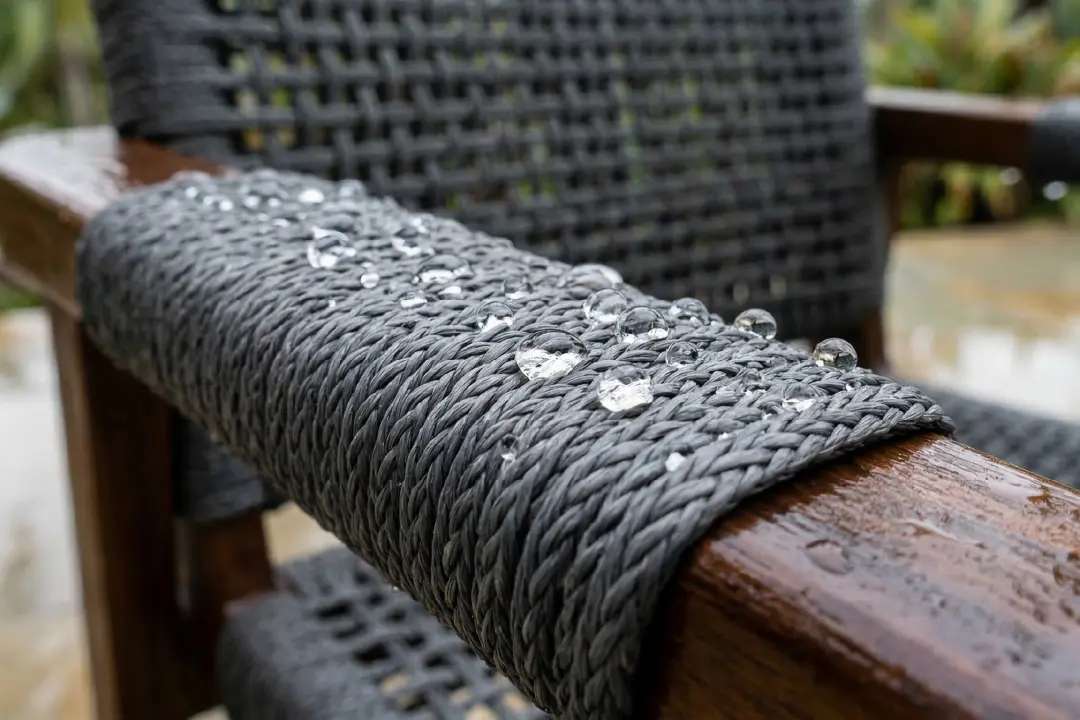
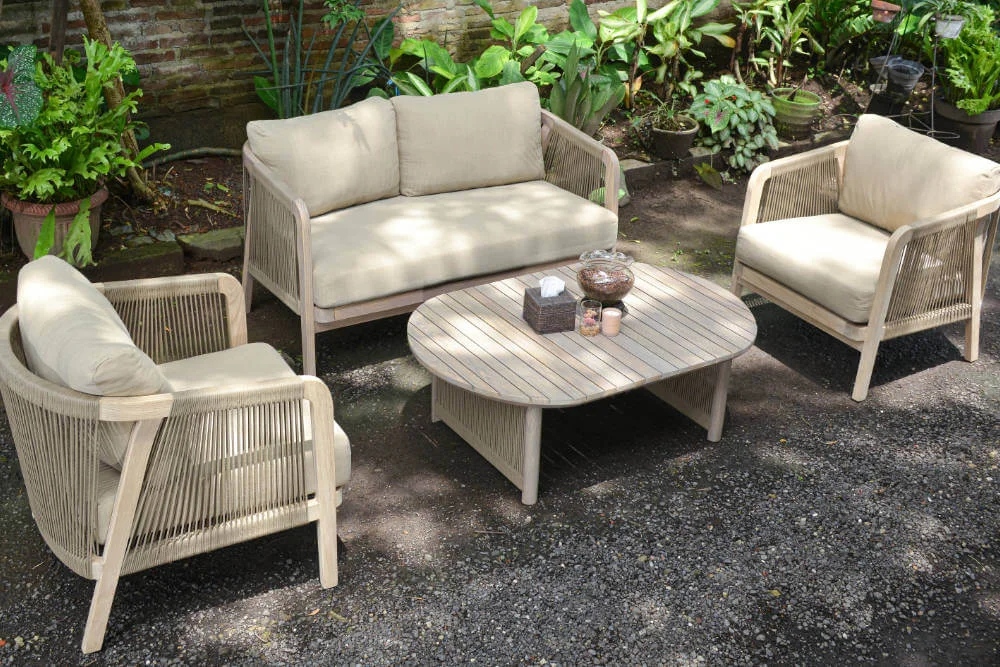
Outdoor rope is becoming increasingly popular, especially in patio furniture collections. Many of your competitors are already playing in this space, positioning rope as a premium design element.
Outdoor rope is not used as a load-bearing structure. The teak frame carries the main vertical weight. However, rope still works under controlled tension. When engineered correctly, rope improves lateral support, seating balance, and perceived product value.
This article explains why outdoor rope is a perfect match for Indonesian teak patio furniture, and how proper pairing makes the difference between decorative styling and engineered performance.
The Role of Outdoor Rope in Indonesian Teak Patio Furniture
In many teak patio furniture designs, rope is positioned as a visual element. Structurally, however, it still works under controlled tension within the overall construction system.
In typical teak patio designs:
- Vertical load from sitting is supported by the teak frame and seat base.
- Cushions provide surface comfort.
- Rope works mainly on the backrest and arm areas under lateral pressure.
When someone leans back, the rope handles horizontal force. It distributes that pressure across multiple anchor points instead of concentrating it on a solid wooden panel.
Teak acts as the rigid backbone. Rope acts as a controlled tension layer. It provides slight flexibility, which improves seating comfort without compromising frame stability.
This does not mean rope replaces structural wood. It means rope influences how force behaves across the furniture.
For a deeper look into teak durability and safety considerations, read our guide on Indonesian teak patio furniture as a safer choice.
Why Teak and Outdoor Rope Is a Perfect Match for Patio Furniture
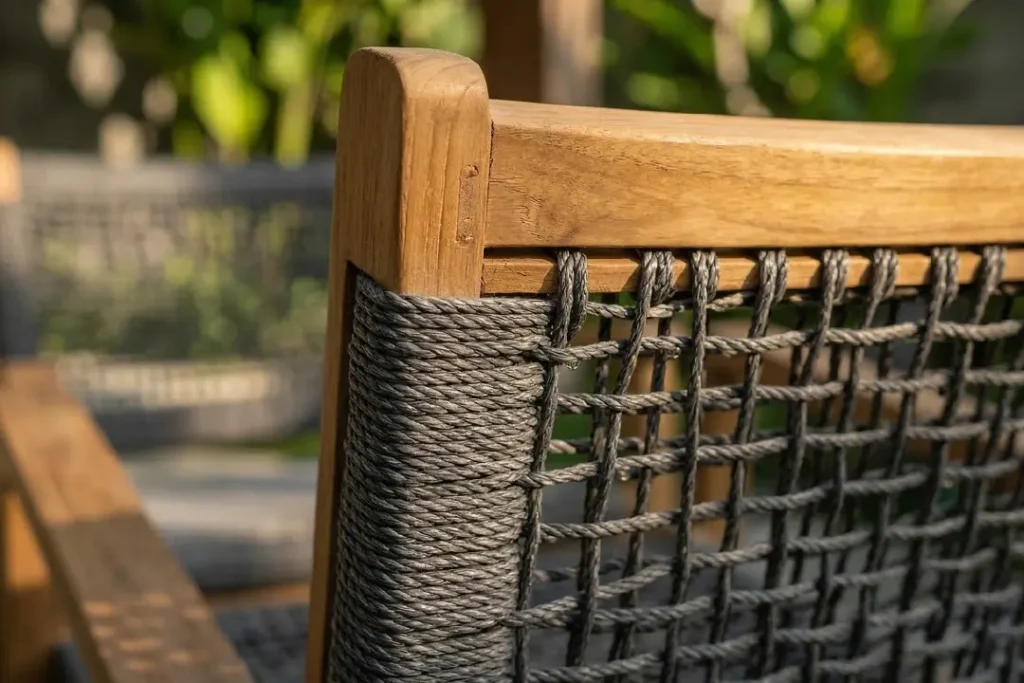
Indonesian teak and outdoor rope work better together because they contribute different strengths within the same construction system.
Teak delivers structural stability and natural warmth, while rope introduces visual lightness and controlled flexibility. Indonesian teak is strong in compression, remains dimensionally stable when the moisture content is kept below 12%, and performs reliably as a structural frame material.
Outdoor rope, on the other hand, works under tension. It creates visual openness, improves airflow, and reduces solid surface mass within the overall design. Rather than competing, these materials balance each other.
Teak absorbs the primary structural load. Rope responds to body movement and distributes lateral pressure across multiple anchor points. The cushion then bridges the comfort layer between the rigid frame and the woven surface.
The result is seating that feels stable yet responsive, not overly stiff and not overly soft. In humid or tropical climates, the open weave of rope also promotes better ventilation compared to fully paneled wooden backs, helping reduce trapped moisture around cushions.
In our recent production cycles, rope-based models have shown steady growth in buyer demand. Orders are no longer limited to patio lounge collections, but increasingly extend to dining chairs and hospitality seating.
This shift indicates that rope is evolving from a decorative trend into a cross-category design element with broader commercial relevance.
Explore why teak and rope outdoor furniture can be paired across different categories.
How Outdoor Rope Affects Teak Frame Performance
It is important to approach rope integration with realistic engineering considerations.
When rope tension is not properly calibrated, it can introduce continuous outward stress on the teak frame. Over time, this stress may affect armrests or backrest joints, particularly when frame thickness, joinery, or anchor positioning are not designed to accommodate tension forces.
The following risks are based on failure observations during our internal sample testing phase, where rope tension and frame interaction were evaluated under load conditions.
- Excessive vertical or lateral tension pulling against horizontal frame members
- Cracking around anchor holes drilled too close to the edge
- Joint weakening due to insufficient tenon and mortise engagement
- Visible teak stain bleeding into light-colored rope due to improper sealing
- Dimensional movement if the wood moisture content exceeds 12 percent
For a deeper explanation of structural movement and sagging prevention, see our guide on why furniture sagges and how to prevent it.
Preventive measures include:
- Ensuring adequate frame thickness to resist vertical rope tension
- Adding vertical internal support blocks to stabilize horizontal members under tension
- Using proper mortise and tenon joinery combined with appropriate adhesive application
- Applying teak block finishing to prevent natural oil staining on lighter rope colors
- Controlling wood moisture content to approximately 12 percent to minimize movement
During sample development at MPP, woven rope is intentionally observed under load before final approval. If performance is insufficient, additional internal support is introduced, joinery is re-evaluated, and frame dimensions may be adjusted.
This is why rope is not simply a visual accessory. It requires calibrated tension, structural reinforcement, and controlled installation.
Commercial and Functional Benefits of Outdoor Rope in Patio Furniture
When integrated properly, rope reduces visual heaviness, improves airflow in humid environments, and introduces subtle flexibility in backrest response. These adjustments enhance seating perception without altering structural integrity.
In premium markets, this lighter visual construction often supports higher perceived value. For retailers and importers, rope models create clearer product differentiation within the same teak-based portfolio.
Outdoor Rope vs Indoor Rope: Why Specification Matters
Rope used in furniture applications is generally categorized into indoor and outdoor grades. The difference is in material formulation and long-term performance under exposure.
Outdoor Grade Rope
Outdoor grade rope is specifically developed for exterior environments where furniture is exposed to sun, humidity, and repeated use.
Outdoor rope is typically:
- Available in round or flat profiles, depending on design and structural needs
- Manufactured using materials such as acrylic, olefin, polypropylene, or polyester
- UV stabilized to slow fiber degradation and color fading
- Water-resistant at its core to reduce moisture absorption
- Mold resistant under humid conditions
- Designed to maintain tension memory over time
These characteristics allow the rope to perform consistently under outdoor stress conditions.
Indoor Rope
Indoor rope is generally designed for decorative or controlled interior environments where exposure to sunlight and moisture is minimal.
Indoor rope is often:
- Cotton or decorative fiber-based
- Available in soft round or flat decorative profiles
- Not UV-treated for prolonged sun exposure
- More absorbent under humid conditions
- Less stable under constant outdoor exposure
When used in exterior applications, indoor-grade rope may experience premature fading, fiber breakdown, or loss of tension. The difference between indoor and outdoor rope is therefore not aesthetic, but performance-driven.
For broader outdoor collection insight, see: [Teak Rope Outdoor Furniture Collection Indonesia]
How to Source Teak and Rope from an Indonesian Outdoor Furniture Manufacturer
If you are sourcing Indonesian teak patio furniture with rope elements, ask your supplier direct technical questions.
For example:
- How is the joinery used for supporting the rope woven
- Is the rope UV-stabilized and tested?
- Is production fully in-house or partially outsourced?
A reliable manufacturer will have clear answers.
At MPP Furniture, teak and rope products are handcrafted with precision, combining traditional craftsmanship with modern machinery and strict quality control to maintain accurate drilling alignment, consistent rope tension, and reliable joint strength.
As an Indonesian outdoor furniture manufacturer with over 20 years of experience, we provide consultation, product development, and custom design support, backed by a 99 percent client satisfaction rate and a 0.56 percent complaint ratio.
This level of control is essential when integrating rope as a secondary tension element.
Conclusion
Outdoor rope in Indonesian teak patio furniture is not the primary load-bearing structure. Teak remains the backbone of the construction.
However, rope is more than decoration. It functions as a controlled tension element that influences comfort, lateral support, and visual balance.
When engineered correctly, teak and rope work together without competing. When engineered poorly, rope tension can create stress on the frame.
For retailers, importers, and project-based buyers, the real difference lies in sourcing from an Indonesian furniture manufacturer that understands both material behavior and construction detail.
If you are planning your next teak and rope collection, start by asking the right structural questions before focusing on appearance alone.
Develop Your Teak and Rope Collection with Confidence
Discuss your design concept with our team and explore sample development with proper structural evaluation.
FAQ: Outdoor Rope For Patio Furniture
1. Is rope outdoor furniture strong enough for commercial use?
Yes. Rope outdoor furniture can be strong enough for commercial use if the teak frame carries the primary load and the rope is outdoor grade with proper tension control. Structural engineering and reinforcement are essential for long-term performance.
2. Can rope tension damage teak frames?
Yes. Rope tension can damage teak frames if installed too tightly or if anchor points lack proper reinforcement. Correct calibration, adequate frame thickness, and structural support prevent this issue.
3. What is the difference between indoor and outdoor rope?
Outdoor rope is UV stabilized, water resistant, and designed to maintain tension under exterior exposure. Indoor rope is typically decorative, not UV-treated, and less stable for long-term outdoor environments.
4. Does rope furniture sag over time?
High-quality outdoor rope with proper tension memory resists sagging. However, poor-grade materials or incorrect weaving tension can lead to looseness over time.
5. Why combine teak and rope instead of solid teak panels?
Teak provides structural stability, while rope reduces visual heaviness and adds controlled flexibility. This combination creates a more balanced seating experience without compromising frame strength.

Hi, I’m Salman, founder of MPP Furniture, an Indonesian furniture manufacturer serving global retailers and project-based clients.
I began my career in my family’s export-oriented furniture company, gaining hands-on experience in production, construction, finishing, material performance, and product development. With a clear understanding of how international buyers evaluate furniture quality and reliability, I founded MPP Furniture to deliver export-ready products with consistent standards.
Here, I share insights from the perspective of a furniture manufacturer working directly with production teams on the factory floor, focusing on manufacturing and supplier evaluation.
Connect on LinkedIn
0 Comments