
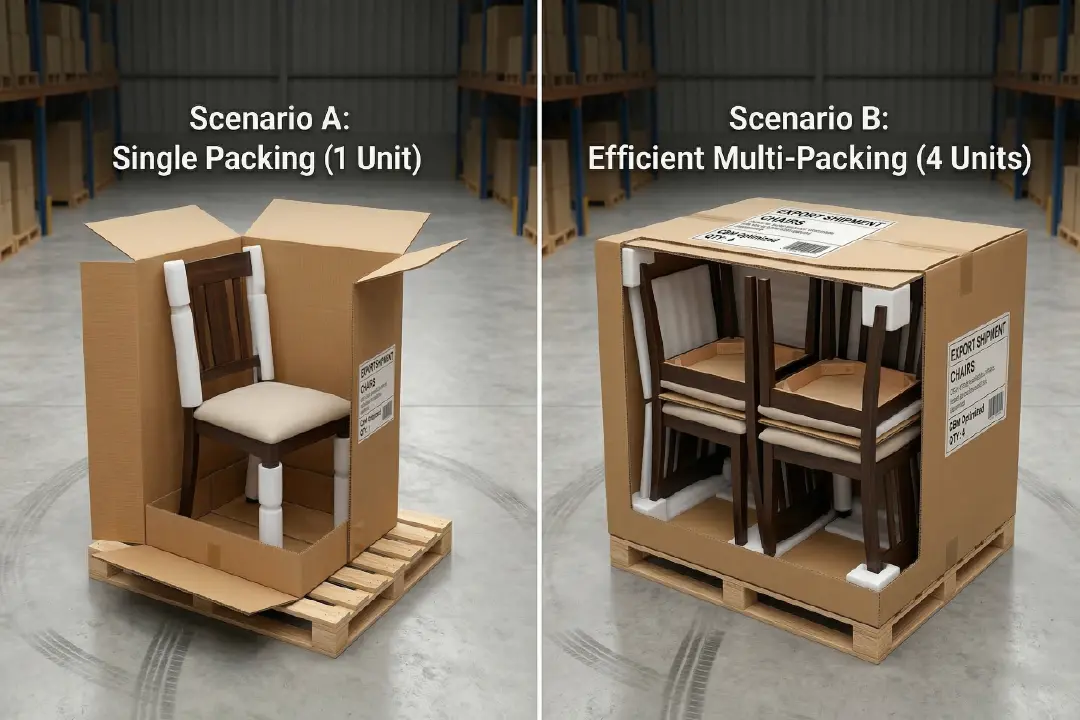
Multi-packing furniture can reduce shipping costs, improve CBM optimization, and help buyers move more units per container. However, this method introduces real risks, especially when carton weight, internal protection, and retail handling lack proper planning.
Instead of asking if multi-packing is universally better, B2B buyers should evaluate if it fits their specific product, sales model, and destination process. That is where an experienced Indonesian furniture manufacturer or Indonesian furniture supplier adds significant value.
In this article, we will cover:
- How multi-packing works in global furniture export.
- The main advantages include CBM optimization and freight savings.
- The hidden drawbacks, from physical handling challenges to internal damage risks.
- Risk reduction strategies used by top manufacturers to protect your goods.
- How to choose the absolute best packing method for your specific sales model.
What Is Multi-Packing in Furniture Export?
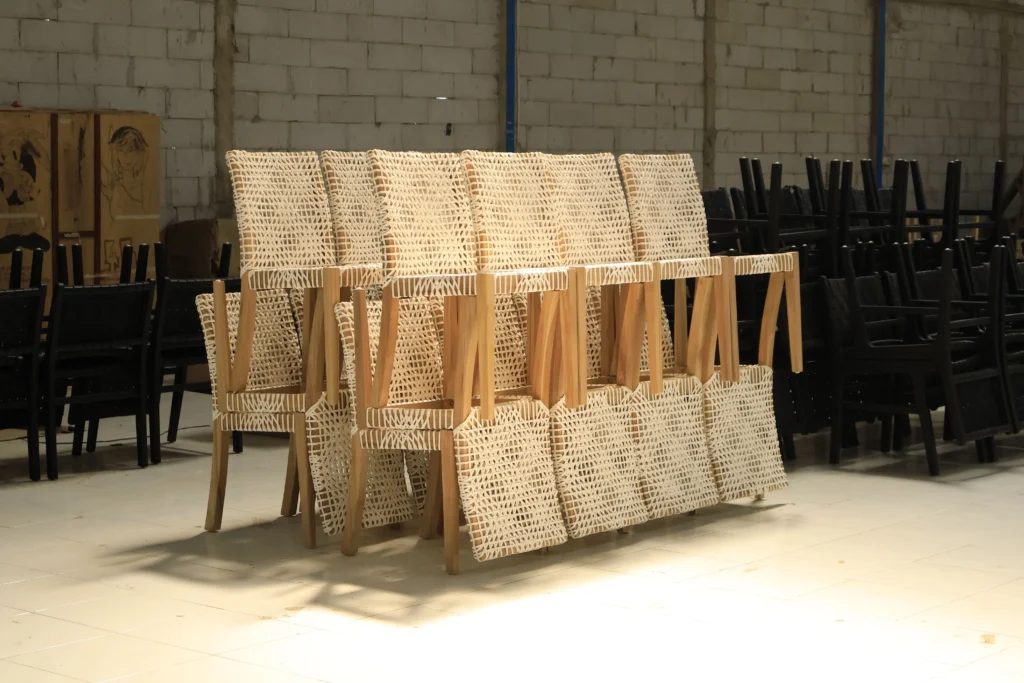
Multi-packing furniture means placing more than one furniture unit in a single export carton. In practice, this often applies to dining chairs, bar stools, side chairs, or small accent pieces. A buyer may request 2-pack, 4-pack, or 6-pack cartons instead of packing each item individually.
The core idea is simple. Tightly and safely packing several pieces together eliminates empty space. Consequently, this lowers the total carton count and improves container loading efficiency.
In furniture export packaging, wholesalers frequently use this method to achieve better freight efficiency. You will see this often in bulk furniture shipping, where the final buyer receives stock in volume rather than piece by piece.
For a broader look at the entire sourcing and logistics process, explore our complete guide on how to successfully import furniture from Indonesia.
The Main Advantages of Multi-Packing Furniture
Better CBM optimization
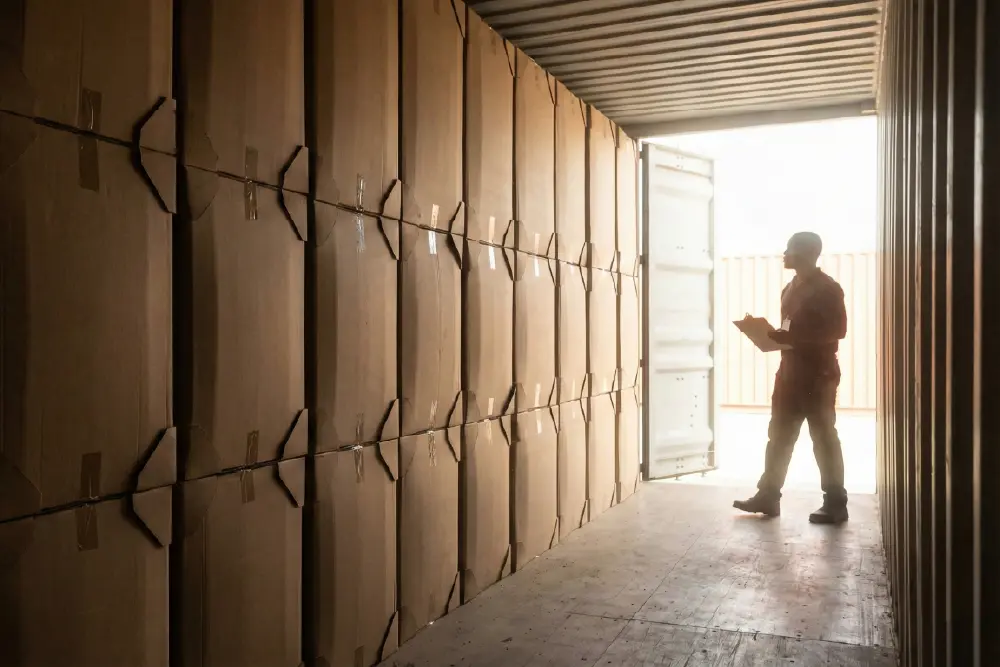
The biggest reason buyers ask for multi-packing furniture is CBM optimization. In furniture export, shipping empty air costs money. When chairs or similar pieces are packed one by one, wasted space surrounds each carton. Multi-packing eliminates those gaps, allowing more units to fit into the exact same container. As highlighted by Freightoscope’s analysis on container shipping costs, maximizing container utilization directly reduces transportation expenses by preventing buyers from paying for unused capacity.
This approach provides several key benefits:
- Maximized container space: Fewer empty gaps between boxes means higher volume utilization.
- Reduced per-unit freight: Fitting more chairs per shipment drives down the shipping cost per chair.
- Scalable savings: For buyers importing at scale, even a minor CBM gain creates massive savings across repeated orders.
As a result, multi-packing is an excellent fit for wholesalers, distributors, and large retailers who focus heavily on optimizing their landed cost per unit.
If you are scaling up your order volume to maximize container space, make sure to avoid common MOQ mistakes when working with Indonesian furniture manufacturers.
Lower packaging and freight costs per unit
Consolidating items reduces the total corrugated board, inner carton material, and outer wrapping required. Instead of six separate cartons for six chairs, a smartly designed 6-pack uses only one master carton.
This efficiency translates into distinct logistical and environmental advantages:
- Less raw material usage: Saving money on corrugated boxes and protective wrapping.
- Eco-friendly footprint: Using less cardboard and plastic aligns with modern sustainability goals. According to DHL Global's insights on sustainable logistics, reducing packaging volume directly lowers waste disposal costs and creates a leaner, greener supply chain.
- Streamlined handling: Moving, labeling, and loading fewer total packages.
- Lower overall shipping expenses: The combination of better container usage and reduced materials supports significantly lower furniture shipping costs.
For B2B buyers comparing suppliers, this factor is crucial. A supplier that thoroughly understands B2B furniture logistics can often generate more savings through intelligent packing than through a standard unit-price discount.
Easier Bulk Furniture Shipping and Warehouse Receiving
For many businesses, wholesale furniture packing dramatically improves the receiving process. If a warehouse utilizes palletized or bulk handling systems, multi-packed cartons make unloading and stock counting much smoother. In fact, logistics experts at Cyzerg note that handling consolidated, palletized cargo significantly speeds up the unloading process and reduces manual labor risks compared to moving loose, single boxes.
Warehouse teams experience these operational upgrades:
- Faster unloading times: Moving one large master carton is quicker than handling multiple small boxes.
- Simplified inventory checks: Counting fewer boxes accelerates the initial receiving process.
- Optimized palletizing: Larger, uniform master cartons generally stack better on warehouse pallets.
This strategy works beautifully when the buyer stores inventory in bulk and distributes it in later batches.
The Main Drawbacks of Multi-Packing Furniture
Heavier cartons and harder handling
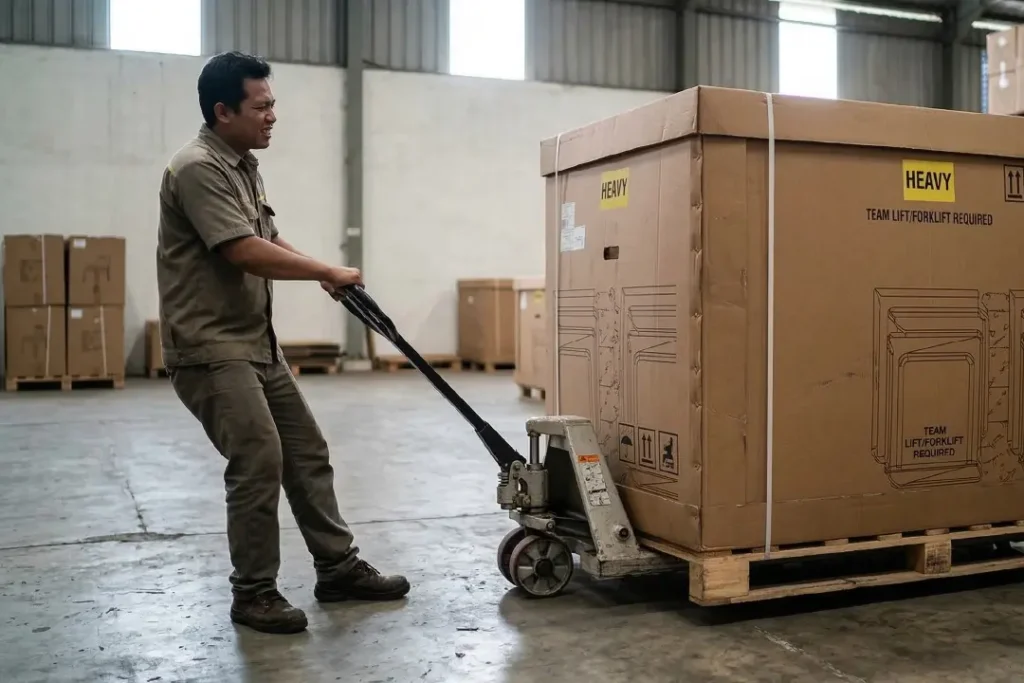
On the other hand, the cost-benefit of multi-packing comes with one obvious trade-off. The master cartons become significantly heavier and more difficult to maneuver.
While a carton filled with multiple dining chairs saves container space, it introduces physical handling challenges:
- Awkward lifting: Heavy, multi-item cartons can be tough for warehouse workers to lift, turn, or safely stack.
- Increased drop risk: Added weight makes boxes more prone to accidental drops and corner damage during transit.
- Slower manual labor: Unloading might require two-person lifts or specialized equipment, which slows down floor operations.
The buyer saves money on ocean freight but takes on more risk in physical handling. This dynamic proves why the best packing method for dining chairs relies on the destination workflow as much as shipping math.
Higher internal damage risk if the packing is poor
This remains the most serious logistical issue. When several furniture pieces share one carton, the factory must completely isolate them from one another. Otherwise, the items will rub together during export movement, container vibration, and inland delivery. FreightAmigo's guide on shipping damage confirms that improper packaging and inadequate internal cushioning are among the primary causes of cargo damage.
In practice, transit damage often stems from these internal issues:
- Frame friction: One chair frame rubbing against another during container vibration.
- Pressure marks: Heavy legs pressing tightly into upholstery or finished corners.
- Surface scratching: Finished surfaces sliding against each other without adequate foam barriers.
Therefore, multi-packing furniture is only as safe as the internal protection system. A reliable Indonesian furniture manufacturer treats multi-packing as a technical engineering task rather than merely a way to save carton material.
Extra work for retailers who sell piece by piece
Multi-packing creates friction for specific sales models. A retailer selling unit by unit might receive cost-efficient export cartons, but they will face extra labor costs upon arrival.
The destination team must manage these additional steps:
- Open and separate: Breaking down large master cartons into individual units.
- Repackage for final delivery: Sourcing new, single-item boxes for last-mile shipping to the end consumer.
- Manage extra handling time: Adding labor costs and increasing the chance of accidental damage during the repacking phase.
Consequently, single packing creates a much cleaner operational flow for e-commerce or piece-by-piece retail models, even if the initial freight cost sits slightly higher.
How an Indonesian Furniture Manufacturer Reduces Multi-Packing Risk
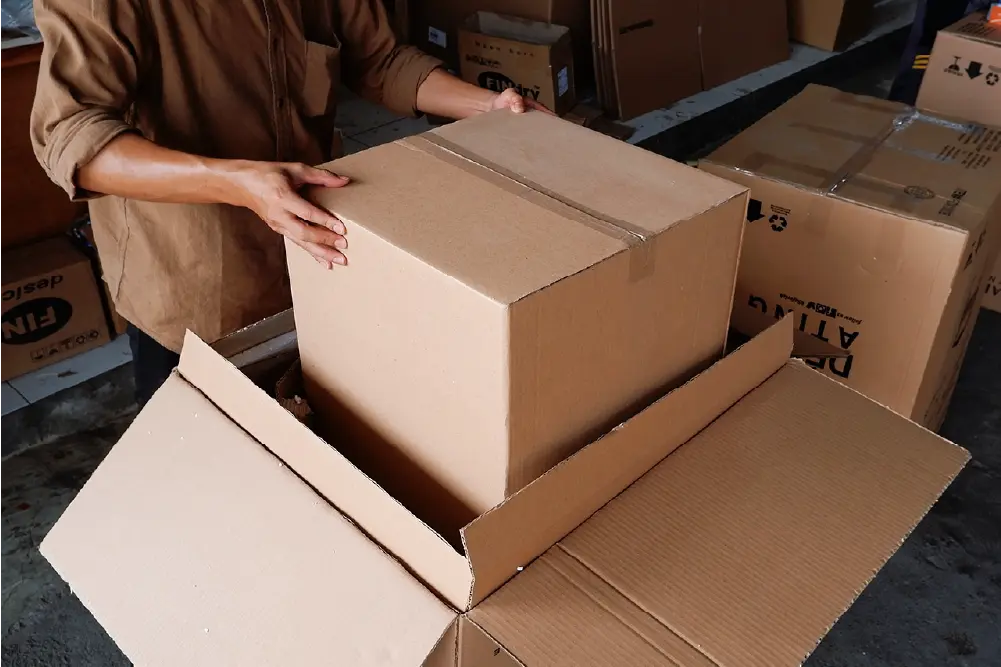
A successful multi-packing result relies heavily on strict factory discipline. Engineers must design the carton plan around the specific product shape, finish type, weight, and anticipated shipping route.
At MPP, the true value lies in producing wooden and rattan furniture while thoroughly planning what happens after production. Handcrafted furniture demands careful finishing consistency, accurate dimensions, and highly protective packing to survive the long, rough export journey.
We mitigate transit risks through a strict, multi-layered packing system. To keep the products completely stable inside the box, we utilize the following methods:
- Friction Protection: We apply a protective foam sheet directly against the furniture. This prevents the wood and delicate finishes from wearing off due to rubbing.
- Structural Buffering: We wrap the pieces in single-face corrugated paper.
- Impact Resistance: We add styrofoam and rigid corner protectors wherever needed for extra defense.
- Outer Sealing: We seal everything inside a heavy-duty kraft carton.
- Gap Filling: If a huge gap remains in the box, we fill that space with another smaller, empty carton to completely minimize internal movement.
This level of detail highlights where an experienced Indonesian furniture supplier acts as a strategic partner. A consultative manufacturer reviews whether a 2-pack, 4-pack, or 6-pack is realistic for the specific item, and then matches the packing plan directly to the buyer’s cost and damage-risk targets.
Discover exactly why controlling these specific production and packing details makes a direct manufacturer the safest option in your global supply chain.
The Best Packing Method for Dining Chairs: Multi-Packing vs. Single Packing
Ultimately, multi-packing makes the most sense when the buyer orders in high volume, utilizes bulk warehouse storage, and heavily prioritizes a lower landed cost per unit. Importers, distributors, and brick-and-mortar retail groups buying standard chairs typically thrive using this option.
Conversely, single packing works best when the buyer sells one piece at a time, ships directly to end users, or handles premium items with highly sensitive finishes. Single packing also proves beneficial in destinations with high labor costs, where unpacking and repacking create too much operational friction.
Multi-packing furniture stands as a highly effective export strategy for improving container efficiency and lowering the landed cost per unit. However, this strategy only succeeds when the product, the packing system, and the buyer's operational workflow all align. For B2B buyers, the smartest decision balances direct freight cost savings with the realities of warehouse handling.
Optimize Your Furniture Shipping with MPP
Finding the perfect balance between freight efficiency and product safety requires deep logistical expertise. You need a partner who understands production quality and container optimization.
At MPP, we help global buyers reduce their landed costs without sacrificing the integrity of the furniture. Contact us today to discuss your next order, and let our team engineer a customized packing strategy built exactly for your business model.
Your next best-seller might be here
Request a quotation and custom options tailored to your needs today via WhatsApp or email.
Frequently Asked Questions
What is multi-packing furniture?
Multi-packing furniture means packing several furniture units inside one master export carton, such as placing 2, 4, or 6 dining chairs into a single box.
Does multi-packing always reduce furniture shipping costs?
No. While it frequently lowers the freight cost per unit, the final financial result depends heavily on carton design, required product protection, and destination handling costs.
What products are best for multi-packing?
This method works incredibly well for chairs, bar stools, and similar repeating items that factories can stack or group safely using precise internal protection.
Is multi-packing good for retailers?
It benefits retailers receiving and storing bulk inventory in large distribution centers. It causes friction for retailers who sell and ship items one by one to consumers.
How can buyers reduce damage risk in multi-packing?
Buyers should partner with a manufacturer utilizing thick foam separators, rigid edge protection, precise carton sizing, and packing methods engineered specifically for the product’s shape and finish.

I am a self-taught graphic designer with a deep passion for exploring the creative world through various tools and techniques. I have honed my skills in Adobe Illustrator, Photoshop, and Lightroom, while continuously expanding my knowledge by diving into After Effects and Premiere. Photography has become an integral part of my life, and I actively engage with it to capture moments and experiment with visual storytelling.
My fascination with color theory, histograms, and innovative design approaches drives my work, as I am always seeking new ways to push the boundaries of my creativity. From photography models and motion graphics to textures, collage, and surrealism, I am captivated by the endless possibilities in design and constantly strive to challenge myself with fresh and exciting ideas.
0 Comments