If you’re choosing between teak and sungkai for your outdoor line, here’s the short answer you need: Sungkai isn’t built for the open sky. But with the right protection and design, Sungkai outdoor furniture performs beautifully in covered or semi-outdoor spaces.
We know in today's market, price is sensitive, and to be competitive, you must find a cheaper alternative to teak. For more than a decade, our team at MPP Furniture has worked directly with global retailers and importers to produce Sungkai wood furniture that balances cost efficiency with long-term performance.
This guide gives you a practical decision rule, the Indonesian furniture suppliers that make Sungkai work outside (in shade), and when to switch to teak. It’s written for retail and project buyers who want clear specs, not theory.
How to Decide Where Sungkai Fits Best
| Setting | Typical Location | Can Sungkai Work? | Notes |
| Indoor | Living, dining, bedroom, hotel rooms | Yes (ideal) | Stable humidity and long service life |
| Semi-outdoor / Covered | Roofed patios, verandas, cafés with awnings, pergolas that block rain | Yes (with proper build & coating) | Needs kiln-drying, smart construction, and an outdoor-grade finishing system |
| Full Exposure | Open gardens, pool decks, beachfront terraces | No: use teak | UV and direct rain will beat the coating quickly |
If your collection is for a covered space, Sungkai brings a clean, warm look that fits modern and casual styles without pushing your budget. But if your furniture will be fully exposed to the sun and rain, it’s better to go with teak. For a clearer picture of wood types and how they perform outdoors.
In short, Sungkai outdoor furniture can possible to used in semi-outdoor or covered areas, as long as the construction and finishing follow proper outdoor standards.
Read this article for a more comprehensive reading:
Best Wood for Outdoor Furniture from Indonesia (https://mppfurniture.com/indonesian-wood-for-outdoor-furniture/) and Sungkai vs Teak (https://mppfurniture.com/sungkai-wood-vs-teak-wood/).
Sungkai’s Natural Traits (Why Protection Matters)
- Density: typically 550–650 kg/m³: lighter than teak, which makes handling and freight easier.
- Appearance: light yellow tone, straight grain: great for modern and Scandinavian looks.
- Oil content: lower than teak; that’s why Sungkai needs engineered protection (finishing + design) in outdoor conditions.
- Workability: excellent; it machines and sands easily, supports custom shapes, and accepts stain well.
Bottom line: Sungkai wood is a smart material for indoor and semi-outdoor use. Outdoors, success depends on the environment, construction, and coating. Miss one, and claims go up.
For a deeper intro to material basics, you can skim Furniture Buyers: Don’t Buy Sungkai Wood Before Reading This (https://mppfurniture.com/furniture-buyers-sungkai-wood-must-reading/).
What Fails First Outside (and How to Avoid It)
Outdoor stress comes in three forms:
- UV light breaks down surface fibers and heats the wood, which speeds movement.
- Liquid water and humidity swings drive moisture in and out.
- Thermal expansion makes joints move; flat, unvented designs crack coatings.
Failure pattern we see in claims elsewhere: wet wood at assembly → rigid film coat → water pooling on flat tops → end-grain soaks moisture → joints open → finish lifts.
Prevention: dry the wood thoroughly, design for drainage, and use a system-finishing approach (not a single thick coat).
How Sungkai Outdoor Furniture Performs in Semi-Outdoor (Covered) Areas
At MPP Furniture, as one of the top Indonesian furniture manufacturers for Sungkai wood, we’ll break down what you should ensure before purchasing Sungkai from Indonesian furniture suppliers.
This is based on our years of experience producing Sungkai wood furniture. We standardize the following steps for Sungkai outdoor furniture, used under roofs, awnings, or pergolas.
Each of these standards is based on actual field testing and feedback from export clients in over 5 countries, ensuring the process we share here is proven in real-world conditions.
1) Drying & Moisture Control
This is the most important step because it will affect all the following stages.
- Kiln-dry target: 10–12% MC at assembly (±1.5% tolerance).
- Resting time: parts rest 24–48 hours after machining to let internal stress relax.
- Spot checks: we recheck high-risk areas (wide tops, mortises, leg bottoms) before finishing.
Why it matters: stable MC reduces cracks, joint movement, and coating failure once the product hits varying climates. Remember, all wood is a natural material, including Sungkai. If solid Sungkai wood remains wet, it will move; sometimes expanding, sometimes shrinking.
Our QC records show an average moisture content of 10.8% ±1.2 across production batches, minimizing expansion and coating failure risks.
2) Construction & Design That Tolerate Movement
Construction and design must work in tandem; a great design without proper construction will produce a product you cannot sell, and vice versa. Below are the essentials we align in production:
- Joinery: mortise-and-tenon or dowel with exterior-grade adhesive.
- Drainage & airflow: slatted surfaces, chamfered edges, and small gaps so water can exit.
- End-grain attention: feet, tops, and edges receive extra sealer because that’s where water sneaks in first.
- Hardware: stainless or coated brass screws and fittings; no ugly rust streaks.
Design tip: Avoid large, flat horizontal panels with no runoff. For loungers and tables, slats beat slabs in semi-outdoor spaces.
3) Finishing System (The Make-or-Break Step)
No matter how good your construction and design are, without the right finishing system, problems will surface in the field.
Think system, not a single miracle coat:
- Penetrating sealer to slow moisture exchange.
- Color/stain coat (if needed) to match assortment tones.
- Two to three UV-resistant topcoats using flexible resin, so the film moves with the wood.
- End-grain sealing and a satin sheen that hides small scratches better than high gloss.
From our long production runs, an outdoor-grade finishing system helps keep color stable and limits moisture ingress in covered areas. It also makes yearly maintenance simple: a light clean and a top-up coat when the sheen dulls.
We have consulted with Propan, the finishing brand we use: "Finishing is a critical final step, and we must use an outdoor grade that has been lab tested."
"This helps prevent water from entering the wood pores and reduces direct UV impact on the surface. It also helps the color stay consistent for around one year under typical semi-outdoor use," said Propan's technician.
In short, Sungkai outdoor furniture can be used in covered or patio areas, provided that the moisture content remains below 12%, the construction and design are properly executed, and the finishing uses outdoor-grade materials.
When Not to Use Sungkai
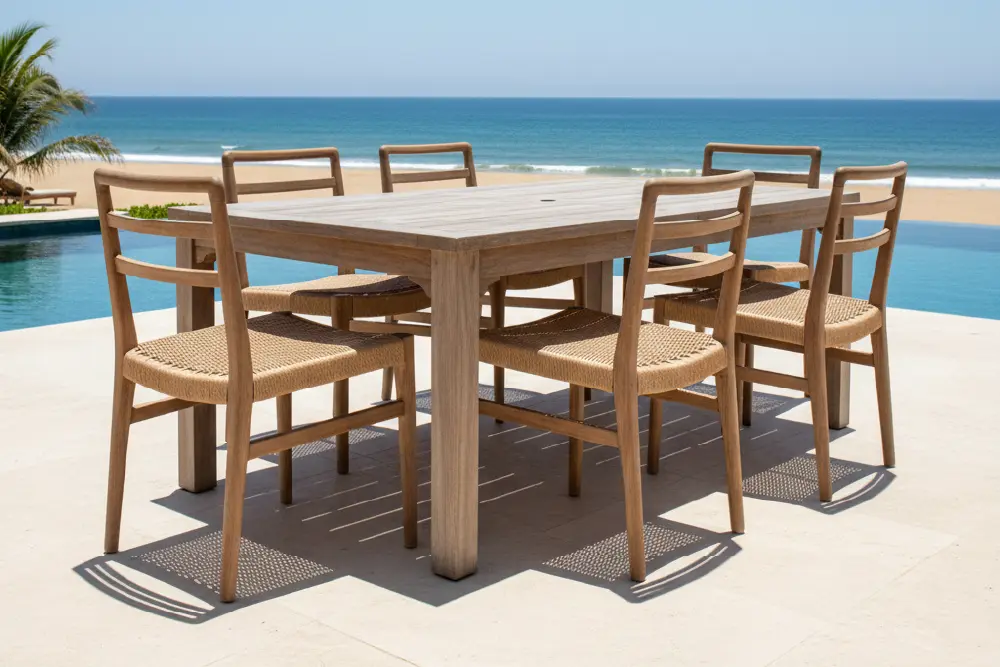
Choose teak if:
- The product sits in direct sun and rain.
- The project is coastal or often damp.
- Maintenance will be minimal, and you want predictable weathering.
Teak’s cells and natural oils shed water better and weather more predictably for full exposure. You can still keep Sungkai in the assortment for covered patios and semi-outdoor zones where it shines.
Explore the differences in detail here: Sungkai vs Teak Wood (https://mppfurniture.com/sungkai-wood-vs-teak-wood/).
Why Furniture Retailers Source MPP for Sungkai Outdoor Furniture
At MPP Furniture, we’ve built trust through consistent quality and honest communication. Buyers rely on us because we combine Indonesian craftsmanship with modern standards, ensuring each shipment meets expectations, making MPP an Indonesian furniture manufacturer partner you can rely on for Sungkai wood furniture.
Reliable Manufacturer
We run 100% in-house production with quality control at every stage and a client satisfaction rate consistently above expectations. Our export team keeps specs tight and lead times clear.
Expertly Handcrafted
Frames are built by experienced craftspeople, supported by CNC precision, which helps with consistency. The result: joints stay tight and silhouettes match the drawings your brand signs off.
Attention to Detail
From moisture checks to end-grain sealing and drainage-first design, our Sungkai outdoor furniture is engineered for shaded use, not just made to look good in photos.
One-Stop, Flexible Service
- Free consultation and free product development to hit your target look and price.
- Custom, private label, OEM options for retailers, importers, and project buyers.
- Mix Sungkai frames with synthetic rope, HDPE wicker, and quick-dry cushions for a stronger semi-outdoor story.
(For more material context, see our Outdoor Mahogany Guide: the process mindset is similar: https://mppfurniture.com/outdoor-mahogany-furniture-can-go-outside/)
Conclusion
Sungkai Outdoor Furniture can be a smart, good-looking, and cost-friendly choice: when it lives under a roof and is built with the right engineering, drying, construction, and coating. For open-sky exposure, move to teak. For shaded patios and verandas, Sungkai shines.
FAQs
Can Sungkai furniture be left in the rain?
No. Sungkai is for covered or semi-outdoor use. Short, light splashes are fine, but direct, repeated rain will shorten the finish life.
How long does Sungkai last in semi-outdoor areas?
With kiln-dried stock, smart construction, and an outdoor finishing system, Sungkai can serve for multiple seasons in shaded spaces. Plan simple yearly care: clean the surface and add a light top-up coat.
Is Sungkai cheaper than teak for outdoor projects?
Generally, yes. Sungkai is more budget-friendly and often cheaper to ship due to lower density. For full exposure, teak is still the better pick.
How durable is Sungkai wood?
Sungkai offers medium durability. Indoors it performs very well; in semi-outdoor areas under a roof it works when the build uses dried lumber, movement-tolerant joinery, and an outdoor-grade coating. It is not suited to constant sun and rain.
Is Sungkai wood good for furniture?
Yes. Sungkai’s light color and straight grain suit modern styles, and it machines easily for chairs, tables, and cabinets. Use it indoors or in covered patios; for open gardens choose teak.
When is teak the better choice?
Any project with full sun and rain, coastal sites, or low-maintenance needs. See wood for outdoor furniture from Indonesia for context.
Also read:
- Sungkai vs Teak (https://mppfurniture.com/sungkai-wood-vs-teak-wood/)
- Best Wood for Outdoor Furniture (https://mppfurniture.com/indonesian-wood-for-outdoor-furniture/)
- Furniture Buyers: Sungkai Must-Read (https://mppfurniture.com/furniture-buyers-sungkai-wood-must-reading/)
- Outdoor Mahogany Guide (https://mppfurniture.com/outdoor-mahogany-furniture-can-go-outside/)

Hi, I’m Salman, founder of MPP Furniture, an Indonesian furniture manufacturer serving global retailers and project-based clients.
I began my career in my family’s export-oriented furniture company, gaining hands-on experience in production, construction, finishing, material performance, and product development. With a clear understanding of how international buyers evaluate furniture quality and reliability, I founded MPP Furniture to deliver export-ready products with consistent standards.
Here, I share insights from the perspective of a furniture manufacturer working directly with production teams on the factory floor, focusing on manufacturing and supplier evaluation.
Connect on LinkedIn
0 Comments