Choosing between mahogany and oak isn't just about picking wood. It's about deciding which material best supports your retail positioning, aligns with your customer expectations, and delivers the margins you need.
Premium wood types such as oak, walnut, teak, and mahogany continue to dominate the high-end furniture segment, with buyers favoring intricate craftsmanship and long-lasting durability. Both woods serve premium markets. The question is which one better serves your specific retail strategy.
Why Material Selection Matters for Furniture Retailers?
The role of materials in product durability and perception shapes everything about how customers view your furniture. Mahogany wood is highly resistant to scratches, dents, and moisture damage, and is less likely to warp or crack over time. Oak is renowned for its exceptional toughness and density, highly resistant to dents and scratches, which is why it's often used for flooring.
How the choice affects pricing and positioning determines your competitive space. Depending on dimensions and thickness, oak prices vary between $1,200 and $1,800 per m³, while real mahogany normally costs around $4,000 per m³ in the timber trade, meaning mahogany costs almost four times as much as oak.
Why retailers compare hardwood options comes down to finding the sweet spot between material cost, customer perception, and achievable margins. Different woods serve different retail strategies.
Overview of Mahogany Wood in Furniture Manufacturing
Mahogany comes from the Swietenia species native to Central and South America, with Indonesian variants also serving global markets.
Mahogany typically has a deep reddish-brown hue that darkens with age, and its straight grain and smooth texture give it a refined appearance. This coloring creates immediate visual impact. Mahogany has a straight grain pattern with occasional swirls or interlocking grain, giving it a stunning, sophisticated look.
Common uses in furniture design span dining sets, bedroom furniture, office pieces, and display cabinets. Mahogany became the essential wood for furniture during the 18th century and was so well known for common household furnishings that items made from it were often referred to simply as "the mahogany".
Why mahogany is widely used in global furniture production relates to workability and aesthetics. Mahogany is a relatively light wood, which makes it easier to mill, cut, and carve than other hardwoods. Unlike other hardwoods, which can be brittle, Mahogany is straight-grained, resilient, and stronger, resisting shattering or cracking.
At MPP Furniture, we manufacture Indonesian mahogany furniture for international retailers. Our experience with this material shows it accepts finishing exceptionally well, creating rich coloring that appeals to customers seeking traditional elegance.
Overview of Oak Wood in Furniture Manufacturing
Oak comes from the Quercus species found across North America and Europe. Oak wood has a gray-yellow to yellow-brown core that differs in color from the surrounding sapwood, with only the heartwood suitable for processing.
Characteristics of oak wood center on grain patterns. Oak displays bold, complex, varied flame patterns. This pronounced grain creates visual interest that some customers prefer over mahogany's subtlety.
Common furniture applications include dining sets, flooring, cabinetry, and structural pieces where strength matters most. Oak furniture can withstand heavy use and is resistant to scratches and dents, making it suitable for both indoor and outdoor furniture.
Why oak is popular in certain markets connects to cultural preferences and price positioning. Oak is best suited for settings that require a solemn, heavy ambiance, such as a library, a courthouse, or any room that needs a classical look.
Mahogany vs Oak Furniture: Key Differences for Retailers
1. Durability and Strength
Oak is rated at 1,220 on the universal hardness scale, while mahogany is rated at 900. This means oak resists surface damage from denting and scratching better than mahogany.
However, hardness doesn't tell the complete durability story. Oak is generally more rigid and more resistant to dents and scratches, but mahogany remains a durable option that can last for generations with proper care.
Mahogany wood is harder than oak, making it more stable without grooves or pockets and resistant to water and scratches.
Wait, this contradicts the Janka rating? Not exactly.
The distinction lies in different durability measures. Mahogany's stability means it moves less with changes in humidity. Oak's hardness means it resists impact better.
For retailers, this translates to different use cases. Oak performs better in high-impact environments. Mahogany performs better in climate-variable conditions.
2. Appearance and Grain Pattern
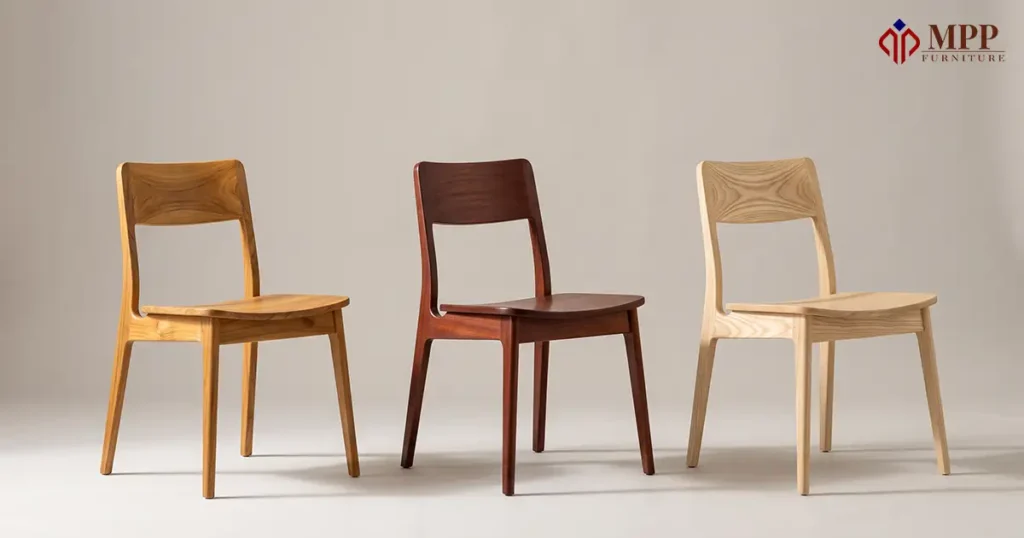
Mahogany can be pinkish-brown to reddish-brown, depending on growing conditions, and tends to darken over time, with a natural shine that keeps its beauty intact for decades.
Even though mahogany is red or orange, and oak is amber-colored, oak can be stained to match mahogany, so the aesthetic differences center mostly on grain patterns.
Mahogany grain is closely spaced and straight, offering a uniform, consistent appearance, while oak displays bold, complex, varied flame patterns.
For retailers, this grain difference affects customer segments. Customers preferring clean, contemporary aesthetics favor mahogany. Those seeking traditional, rustic character gravitate toward oak.
3. Weight and Workability
The harder, more complex grain patterns in oak make it less desirable for turnings, carvings, and hand machining, while mahogany's workability is easier.
Mahogany is surprisingly lightweight but can hold its own, while oak's exceptional toughness and density make it heavier.
For manufacturers, mahogany's workability reduces production time and tool wear. For retailers, lighter weight means lower shipping costs and easier customer handling.
4. Pricing and Market Position
The price difference creates distinct positioning opportunities. Expect the price tag for mahogany to be twice to three times that of oak, depending on where it's purchased and the type and degree of milling.
Furniture manufacturers typically apply a 3-4x markup on gross material costs to ensure profitability. When base material costs vary by 3-4x between mahogany and oak, this compounds through the markup chain.
For retailers, oak enables competitive pricing in mid-market segments. Mahogany supports premium positioning, where customers are willing to pay higher prices for refined aesthetics.
Which Wood Works Best for Different Retail Market Segments
1. Premium Furniture Collections
Mahogany dominates premium collections where aesthetics and prestige matter most. In commercial spaces, corporate offices demand consistent finishes and modular adaptability, with mahogany's rich aesthetic delivering an atmosphere of sophistication.
The investment justification works when customers view furniture as a long-term purchase. Mahogany wood begins as exquisite and simply grows more beautiful, with its colors and cat's-eye effects intensifying as the wood ages, making it perfect for precious heirloom furniture.
2. Mid-Range Furniture Products
Oak serves mid-range markets exceptionally well. Oak and walnut dominate residential applications in premium ranges while maintaining accessibility for budget-conscious buyers through traditional use and proven durability.
The pricing sweet spot for oak allows retailers to offer solid hardwood furniture without premium positioning. The average price paid for furniture in the US is $779 across the industry, and competitive pricing is cited by 60% of consumers as the most important purchase factor.
Oak furniture can address this price sensitivity while still delivering hardwood construction and a high-quality perception.
3. Design-Focused Furniture Lines
Material choice affects design possibilities. Mahogany has straight vertical grain patterns that don't loop or swirl, making it often used in modern and contemporary designs where these simple patterns allow the grain to be the main focus.
Oak's complex grain patterns suit traditional, rustic, and farmhouse aesthetics. Retailers focusing on these design categories benefit from oak's visual character and cultural associations.
Considerations When Sourcing Mahogany or Oak Furniture from Manufacturers
1. Availability of Materials
Mahogany is listed as endangered on the International Union for Conservation of Nature's Red List, but remains readily available from certified dealers. Indonesian manufacturers working with plantation mahogany and SVLK certification provide legal, sustainable sourcing.
Oak grows more widely across temperate regions, creating more predictable supply chains. However, oak trees have exceptionally long growth periods, which can exceed 100 years, making it difficult to find enough trees suitable for lumber.
2. Manufacturing Expertise
Indonesian manufacturers excel at mahogany production. Generations of experience working with tropical hardwoods translate to superior finishing and joinery quality. For comprehensive guidance on sourcing Indonesian mahogany, see our Indonesian mahogany furniture manufacturers page.
Oak manufacturing is concentrated in North American and European facilities where oak grows naturally. Importing oak to Indonesia for manufacturing incurs transportation costs that erode competitive advantage.
3. Production Flexibility and Customization
Both woods accept customization well. Mahogany is easy to work with by hand and with hand tools, sands easily, turns, glues, stains, and finishes exceptionally well.
At MPP, we offer custom mahogany furniture development for retailers seeking differentiated collections. Our Indonesian mahogany furniture buyers guide explains customization possibilities and production processes.
Choosing the Right Furniture for Retail Collections with Indonesian Furniture Manufacturers
There's no universal answer to the mahogany vs. oak debate. The right choice depends entirely on your retail strategy and customer base.
- Material choice aligns with target market positioning. Premium retailers targeting affluent customers benefit from mahogany's refined aesthetics and prestige associations. Mid-market retailers serving price-conscious buyers achieve better margins with oak.
- Balance durability, appearance, and cost based on customer priorities. There's no single winner in the mahogany vs oak showdown; it all comes down to what you're looking for in your furniture. Understand what your customers value most and select materials accordingly.
- Work with experienced manufacturers regardless of material choice. Manufacturers' understanding of export quality requirements delivers consistent results. Those lacking proper kiln drying, finishing systems, or quality control create problems that surface after delivery.
For retailers specifically exploring mahogany, our articles on outdoor mahogany furniture and mahogany insights from Indonesian furniture suppliers provide technical details and sourcing guidance.
Explore our complete furniture collections to see both mahogany and other hardwood options we manufacture for international retailers.
At MPP Furniture, we help retailers choose between mahogany, oak, and other hardwoods based on market positioning, customer expectations, and margin requirements. With 20+ years of manufacturing experience and complete production control, we deliver furniture that performs reliably while supporting your retail strategy.
👉 Let's discuss which wood materials best support your retail collection strategy.
Email Us: sales@mppfurniture.com
WhatsApp: +62 821-4630-5858
Planning your furniture sourcing? Schedule a free consultation to review mahogany vs oak options, pricing structures, and production capabilities for your specific retail market.
Planning your next best-selling collection?
Request catalog, pricing info, MOQ, and custom options today — we’ll respond quickly.

A passionate writer with 2+ years of experience in SEO who turns complex ideas into informative & helpful content. I share the challenges & important considerations when preparing a global furniture project, hoping to help MPP Furniture’s readers make more informed business decisions.
0 Comments