Whitewash furniture is furniture finished with a soft whitewashed effect that lightens the wood surface while still allowing the natural grain to show. This finish creates a cleaner, brighter, and more relaxed look, making it suitable for dining, bedroom, and storage furniture, as well as hospitality collections.
For furniture retailers, project-based buyers, and importers, this finish is not only about appearance. It can make a collection feel fresher and more commercially appealing, easier to style across different markets, and easier to sell within current design preferences.
This article explains what whitewash furniture is, why it remains relevant, which furniture types are best suited for this finish, and how to choose the right Indonesian furniture manufacturers to produce consistent, export-ready whitewash furniture collections.
What is Whitewash Furniture?
Whitewash furniture is wood furniture finished with a semi-transparent white layer that softens the original wood color while still allowing the grain to remain visible.
In furniture manufacturing practice, whitewash is not a single-step finish. It is created through a controlled process that typically includes:
- surface sanding to open the wood pores
- light white pigment application (wash layer)
- wiping or blending to control transparency
- sealing and top coating for durability
Unlike solid colors such as black or full paint finishes that fully cover the surface, whitewash works differently:
- Lightly penetrates the wood
- Reduces strong color contrast
- Keeps natural texture visible
That is why whitewash furniture feels softer, brighter, and more natural.
Historically, whitewash was made from simple materials like lime, chalk, and water and used for practical reasons such as cleanliness and protection. Over time, it evolved into a design-focused finish that balances aesthetics and function.
From our manufacturing experience, achieving a good whitewash finish is not only about color, but about control. Uneven absorption, poor sanding, or incorrect sealing can result in patchy tones or inconsistent grain visibility, which is why experienced manufacturers rely on layered finishing and strict quality control to maintain consistency across batches.
In short, whitewash is a controlled finishing method that lightens wood without removing its identity.
Why Whitewashing Wood Creates a More Marketable Look
Whitewashed wood creates a more marketable look because it aligns with what today’s end customers prefer: lighter tones, natural textures, and neutral palettes.
Reports by Houzz show a strong shift toward organic modern interiors, where materials like light wood, limewash, and soft finishes are widely used to create calm and natural spaces. At the same time, data from Fixr shows that most designers still prefer soft whites and warm neutrals for living and bedroom spaces, because these colors are easier to combine and feel more timeless.
This explains why whitewash works so well. It reduces the heaviness of solid wood while keeping the natural grain visible, resulting in furniture that feels lighter, softer, and more adaptable to different interior styles.
For furniture retailers, project buyers, and importers, this matters because your customers are the ones making the final decision. When a product looks easier to match and easier to place in their home, it becomes easier to sell.
Furniture with lighter and more neutral finishes is:
- easier to style in showrooms and catalogs
- easier to combine with other materials like fabric, rattan, or stone
- easier for customers to visualize in their own space
This directly affects how fast products move, how easily your sales team can present them, and how confident your customers feel when making a purchase.
In practice, this means whitewashed furniture is not only more modern in appearance, but also more flexible in the market. It can fit multiple design directions without requiring major product changes, making it a practical option for building collections that sell consistently across different regions.
Is Whitewash Furniture Still Relevant Today?
Yes, whitewash furniture is still relevant because it fits current market preferences for lighter tones, natural textures, and neutral interiors.
Similar to how weathered finishes support relaxed and premium design directions, whitewash also offers a lighter alternative for modern collections.
It works well across popular styles like organic modern, coastal, and minimalist design, making it easier for buyers to position themselves in different markets.
For retailers and importers, the advantage is simple: Whitewashed furniture is easier to combine, easier to style, and easier for end customers to accept.
This reduces styling risk and helps products sell more consistently across collections and regions.
In short, whitewash remains relevant because it is not trend-driven, but adaptable to how people design their spaces today.
What Types of Furniture Are Best Suited for Whitewash Finishes
Not every type of furniture benefits equally from a whitewash finish. This finish works best on categories where a lighter look, visible grain, and a softer overall appearance add more value.
Dining Tables and Dining Chairs
Dining tables and chairs work very well with a whitewash finish because the surface allows the natural grain to remain visible while the lighter tone improves the overall atmosphere of the dining space.
The whitewashed look also helps dining sets stand out more visually, especially when placed in real interior settings. For end customers, this makes the product feel more inviting and easier to imagine in their home.
This is why whitewash dining sets are highly suitable for both retail collections and hospitality projects.
Bedroom Furniture
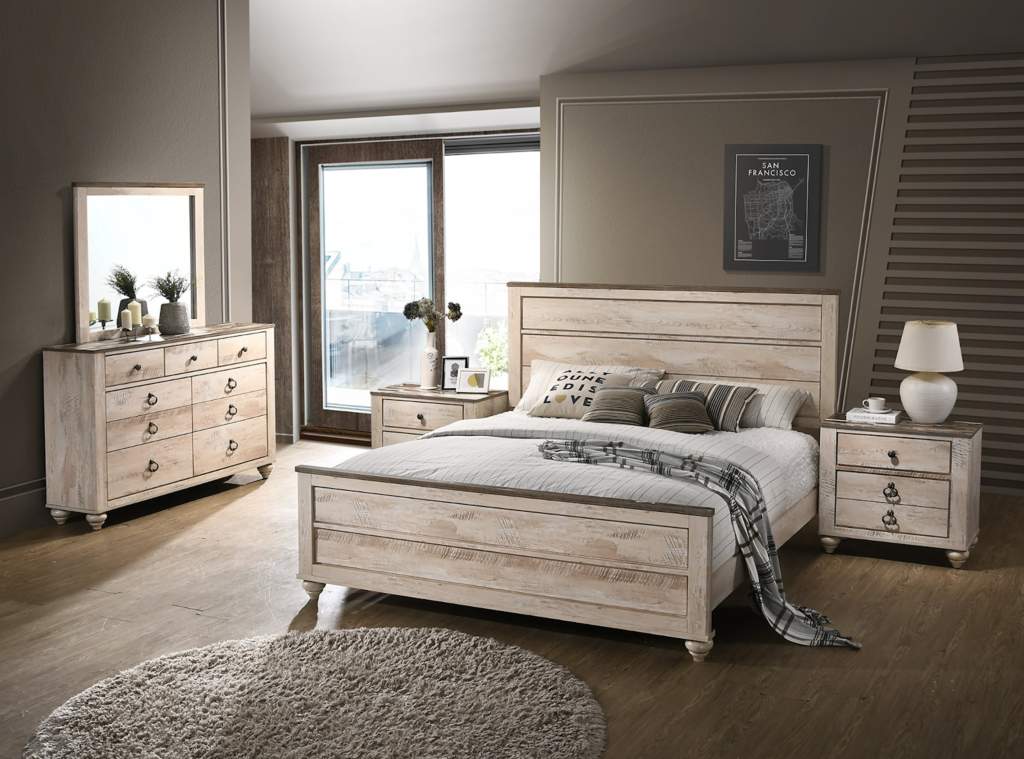
Whitewash furniture in the bedroom creates a calm and relaxing atmosphere, which supports how the space is actually used.
It works especially well for:
- bed frames
- bedside tables
- wardrobes
When combined with darker textiles such as carpets, bedding, or curtains, the contrast helps the furniture stand out while keeping the overall space balanced.
For retailers, this also opens the opportunity to sell bedroom pieces as a complete collection, increasing upsell potential.
Storage and Cabinets
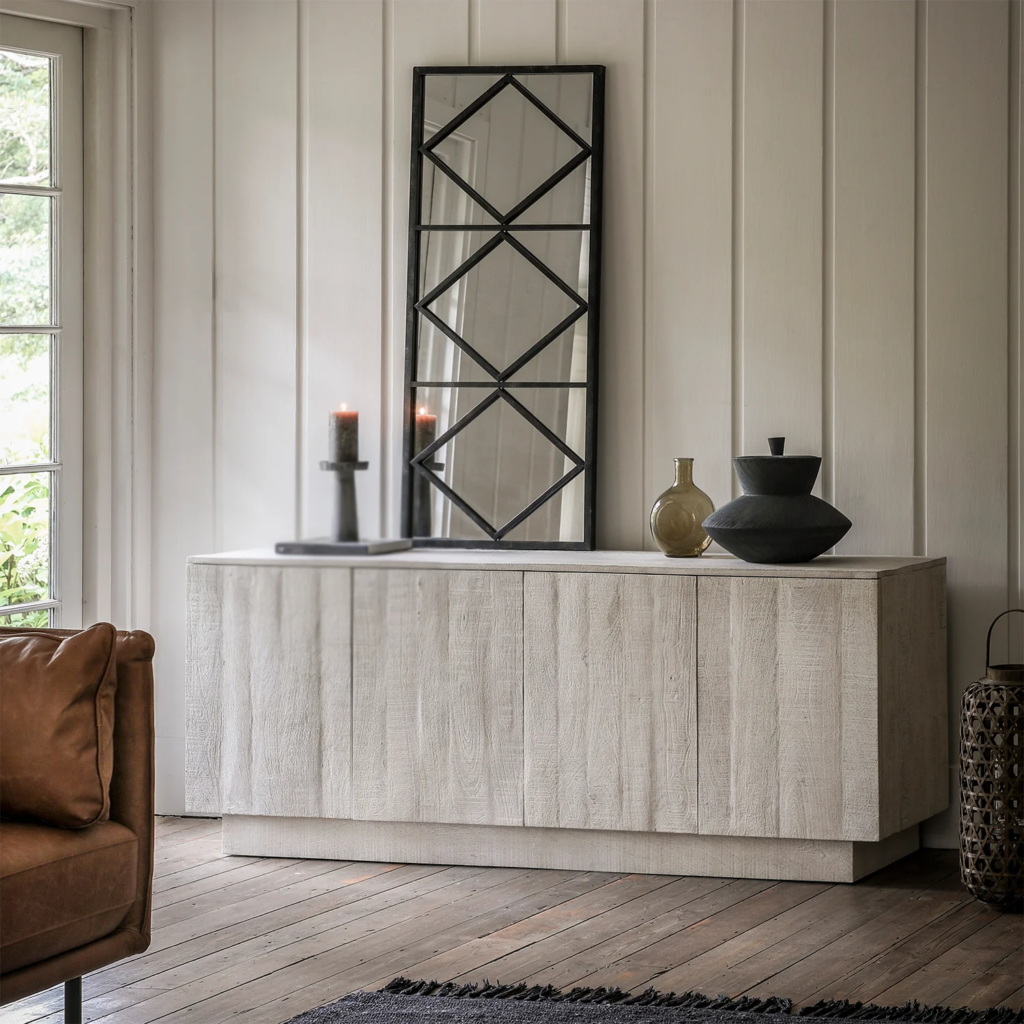
Large storage pieces often feel heavy when finished in darker tones. Whitewash reduces this visual weight, making them easier to place in modern interiors.
This is especially useful for:
- sideboards
- cabinets
- TV units
Whitewashed storage also works well with wall decorations and styling elements, helping create a more open and visually balanced space for end customers.
Occasional Tables
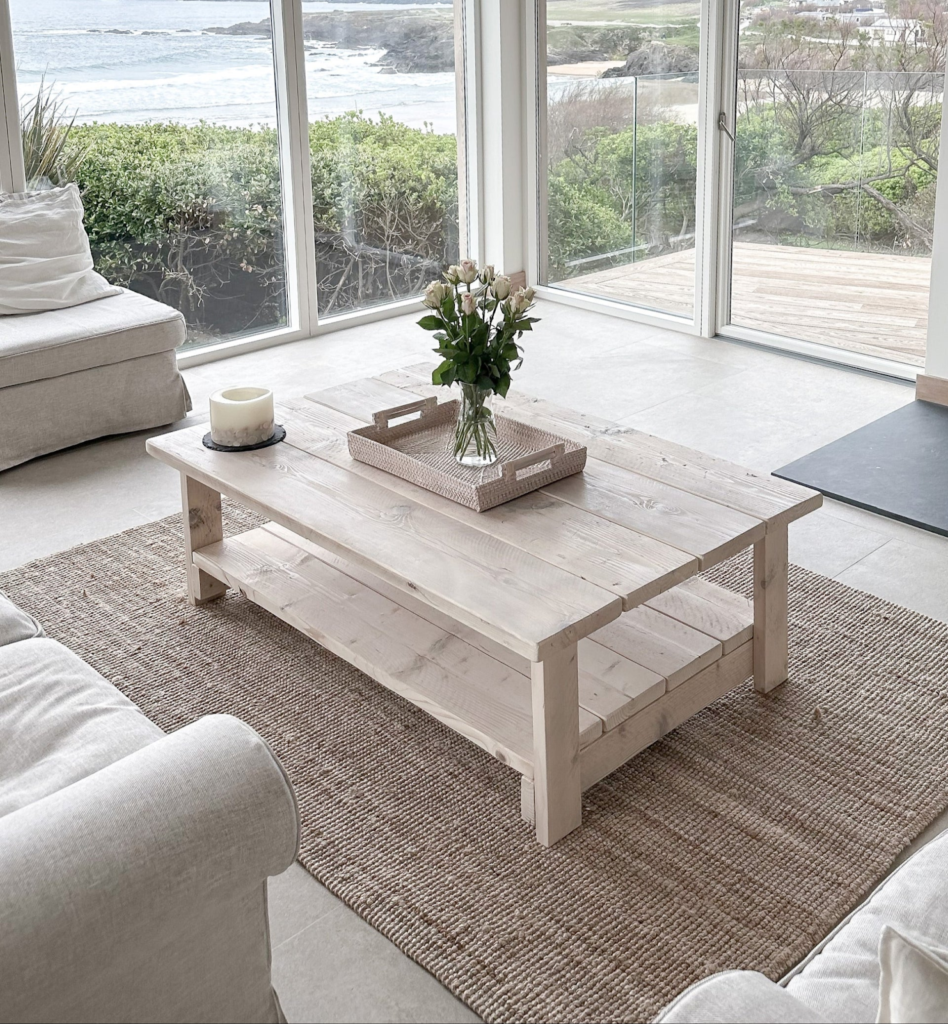
Occasional tables benefit from whitewash because they are often used as styling elements within a space.
The lighter tone makes them easy to combine with different materials such as fabric sofas, rugs, metal accents, or rattan. At the same time, the visible grain adds enough character without making the piece feel too dominant.
This makes occasional tables a flexible option for mixed-material collections and layered interior styling.
Coastal and Hospitality Furniture
Whitewash is widely used in coastal and hospitality environments such as beach resorts, villas, and cafes.
The lighter tone reflects more light, supports a relaxed atmosphere, and blends well with natural surroundings like sand, stone, and greenery.
From a marketing perspective, whitewashed furniture also stands out more in photos and real spaces, helping create a fresh and inviting visual that attracts customers.
Which Wood Species Work Best for Whitewash Furniture
Different wood species react differently to whitewash because of their grain and absorption behavior.
Mahogany
- smooth and consistent grain
- absorbs finish evenly
- produces a clean and refined whitewash result
Sungkai and Mindi
- naturally lighter color
- easier to achieve bright tones
- stable for large-scale production
Teak
- contains natural oils
- requires more controlled finishing
- can produce premium results when handled properly
This is where manufacturer capability becomes critical.
In practice, teak can be challenging for whitewash because its natural oil tends to resist lighter finishes. If the wood is not properly prepared, the result can look uneven or yellowish instead of clean white.
That is why teak must be properly kiln-dried, with moisture content below 12%, and treated with a sealing system to control oil migration before applying the whitewash layer.
Market preference also plays a role. From our experience, whitewash performs well in markets such as the US and Australia, where lighter and coastal styles are more accepted.
However, based on our direct discussions with a buyer from France, we found that they often prefer different tones, which means whitewash may not always suit that specific market.
This is why both material preparation and finishing process are equally important. Working with experienced Indonesian furniture manufacturers is essential to ensure proper wood preparation, controlled finishing, and consistent results across bulk production.
Wood treatment is the first step, but the finishing stage is where consistency is achieved. Controlled sanding, sealing, and multi-layer coating systems are essential to ensure stable color, even absorption, and consistent results across bulk orders.
At MPP Furniture, every step is handled in-house, combining handcrafted techniques with machine precision. This approach helps maintain consistent tone, smooth surfaces, and reliable quality across large-scale production.
Whitewash vs Weathered Finish: What Is the Difference?
Whitewash and weathered finishes serve different visual purposes. Whitewash creates a lighter, cleaner look, while weathered finishes produce a more aged and textured appearance.
From a collection standpoint, whitewash works better for modern, coastal, and minimalist styles because it feels fresh and easy to combine. Weathered finishes are more suitable for rustic or premium concepts that rely on depth and character.
In short, choose whitewash for flexibility and brightness, and choose weathered for a stronger, more aged visual direction
Conclusion: Why You Should Add Whitewash Furniture to Your Collections
Whitewash furniture helps you expand your collection into a lighter and more adaptable segment that fits current market preferences, especially within modern Indonesian furniture collections. It makes your products easier to position, easier to style, and easier for end customers to accept.
From a commercial perspective, this means better flexibility across markets, more consistent sell-through, and the ability to build cohesive collections without changing your core product structure.
In short, adding whitewash furniture is not just about following a trend, but about offering a finish that supports long-term product relevance and stronger market performance.
Ready to develop whitewash furniture for your market?
Share your requirements with us, and we will help you create a whitewash collection with the right tone, material, and finishing process to match your customers’ expectations and ensure consistency across production.
FAQs About Whitewash Furniture
1. What is whitewash furniture in simple terms?
Whitewash furniture is wood finished with a thin white layer that lightens the surface while keeping the natural grain visible, creating a softer and brighter look.
2. Is whitewash furniture still popular today?
Yes. Whitewash furniture remains popular because it fits modern design trends that favor lighter tones, natural textures, and neutral interiors.
3. Which wood is best for whitewash furniture?
Mahogany, sungkai, and mindi are ideal because they absorb finishes evenly, while teak can also be used, but requires more controlled preparation due to its natural oil content.
4. What is the difference between whitewash and a weathered finish?
Whitewash creates a lighter and cleaner look, while weathered finishes produce a more aged, textured appearance with deeper tones.
5.Is whitewash furniture suitable for all markets?
Not always. Whitewash works well in markets like the US and Australia, but some regions, such as parts of Europe, may prefer darker or more muted finishes.

Hi, I’m Salman, founder of MPP Furniture, an Indonesian furniture manufacturer serving global retailers and project-based clients.
I began my career in my family’s export-oriented furniture company, gaining hands-on experience in production, construction, finishing, material performance, and product development. With a clear understanding of how international buyers evaluate furniture quality and reliability, I founded MPP Furniture to deliver export-ready products with consistent standards.
Here, I share insights from the perspective of a furniture manufacturer working directly with production teams on the factory floor, focusing on manufacturing and supplier evaluation.
Connect on LinkedIn
0 Comments