Buying Indonesian outdoor furniture is often treated as a supplier decision. Buyers compare prices, request quotations, and choose an outdoor furniture manufacturer. But in practice, the problem is not only choosing the wrong manufacturer. It is also choosing the wrong product for the market.
You can work with a reliable Indonesian furniture manufacturer and still fail if the product does not match your market demand. This is why sourcing outdoor furniture should start with understanding your market first, before evaluating any supplier.
This article explains what you need to evaluate before placing any order, so you can avoid product mismatch, reduce complaints, and build a collection that actually sells.
Why You Need to Understand Your Market Positioning, Not Only Choosing Manufacturers
If you misidentify what your market actually needs, the product simply will not sell. It directly affects your cash flow, increases warehousing pressure, and often forces you to push products through discounts that weaken your brand positioning.
This is why defining your market comes first. You need to understand what design actually sells, what price range works, and what materials your customers expect.
A product can be well-made and produced by a reliable manufacturer, but still fail if it does not match market demand. In practice, this leads to slow-moving inventory and products that sit too long before being cleared.
We have seen this happen with a buyer from Spain who shifted from their usual teak and rope combination to a plastic-based design. The product itself was produced correctly, but it did not perform in their market, and sales were slower than expected. The issue was the mismatch between the product and the market.
Skipping market positioning creates this kind of risk. And once the product is already in your warehouse, it becomes much harder to fix.
What Successful Outdoor Furniture Sourcing Actually Means
Successful outdoor furniture sourcing is often misunderstood as getting the best price from an Indonesian furniture manufacturer.
In reality, it is defined by whether the product fits your market and sells consistently. A successful sourcing decision results in products that perform well after delivery, maintain consistent quality across batches, and can be reordered without unexpected issues.
When these elements are aligned, sourcing becomes predictable and scalable. When they are not, even a good price will not prevent problems such as complaints, inconsistent quality, and difficulty in repeating orders.
Key Product & Market Factors to Consider Before Sourcing Outdoor Furniture
1. Market Positioning: Who Are You Selling To?
Everything starts with who you are selling to. Whether you are targeting mid-market residential, premium buyers, or project-based clients will define the entire product direction.
Each segment comes with different expectations. Premium positioning usually demands teak wood, refined finishing, and long-term durability. Mid-market buyers are more price-sensitive but still expect comfort and reasonable durability. Meanwhile, hospitality and project-based clients focus heavily on durability and ease of maintenance because the furniture will be used intensively.
If your product does not match these expectations, it becomes difficult to sell, regardless of how well it is made.
2. Design Style: What Actually Sells in Your Market
Not every design works in every market. Selecting products based on catalogs or trends often leads to poor results because design preference is highly market-specific.
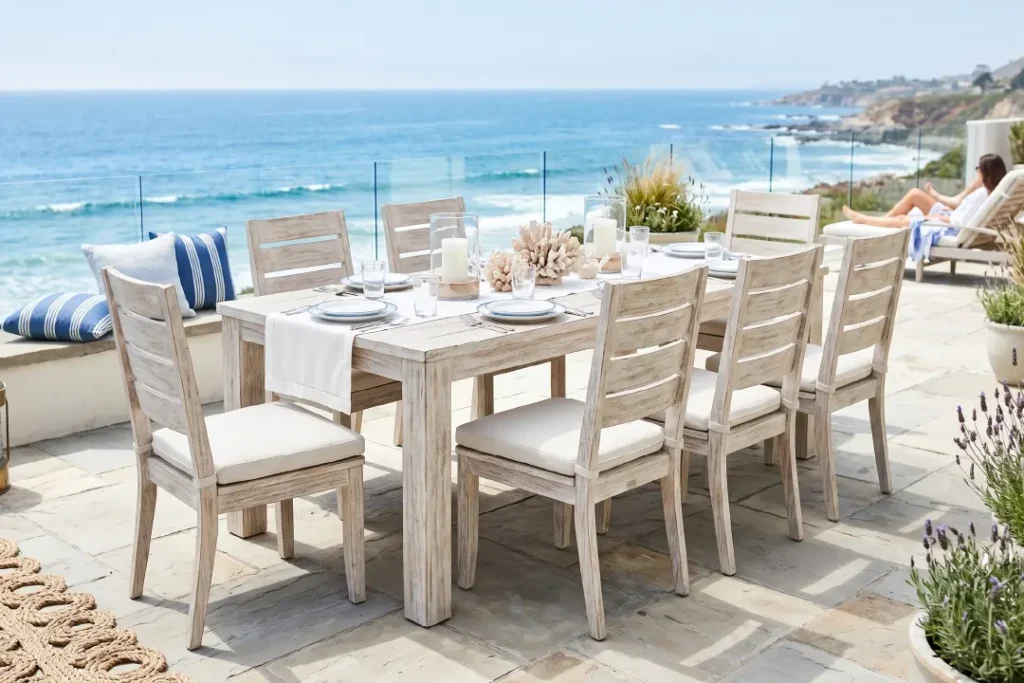
We have seen cases where a whitewash finish performed well in markets like Australia and the United States, but did not perform in France. The product itself was not the issue. The design simply did not match local preferences.
This is why design decisions should be based on what sells in your market, not just what looks appealing.
3. Material Selection: Durability vs Cost vs Market Expectation
Outdoor furniture is exposed to sun, rain, and humidity, so material selection must be considered carefully.
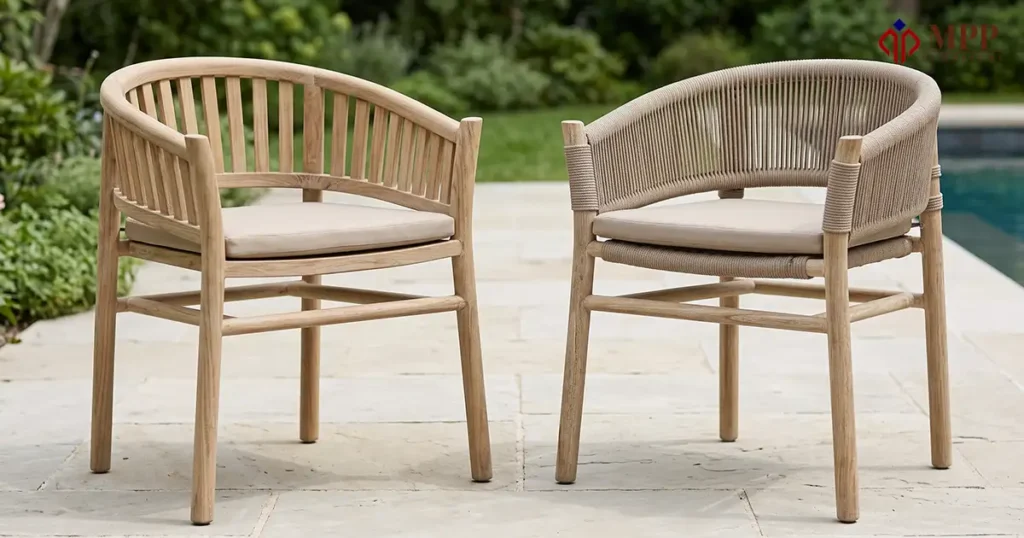
Teak is commonly used for full outdoor exposure because of its natural resistance. Materials like mahogany or sungkai are more suitable for covered or semi-outdoor areas. For design elements, both rope and plastic can be used outdoors, but they carry different positioning, with rope generally placed at a higher price point.
If you want to explore how material combinations work in real products, you can refer to why teak and rope for outdoor furniture is an irresistible combo
The challenge is balancing durability, cost, and market expectations. Choosing the wrong material can either increase cost unnecessarily or reduce product performance in actual use.
4. Fabric, Rope, and Foam: Where Most Complaints Come From
Many buyers focus on the frame, but most complaints come from the soft components.
Issues often arise from cushion foam losing shape, fabric fading or developing mold, or rope that is not suitable for outdoor use. These details are critical because they directly affect comfort and long-term performance.
For example, foam density plays a big role in seating comfort and durability. Fabric selection determines how long the product maintains its appearance under sun exposure. Even rope must be specified correctly for outdoor use.
In one case, a buyer from the United States requested multiple cushion samples with different foam densities before confirming their order. This level of detail is necessary to avoid problems after delivery.
5. Construction & Joinery: What Determines Product Lifespan
Two products may look identical on the outside, but perform very differently over time.
The difference lies in construction details such as joinery dimensions, assembly quality, and frame structure. Weak construction often leads to wobbling, loose joints, and shorter product lifespan.
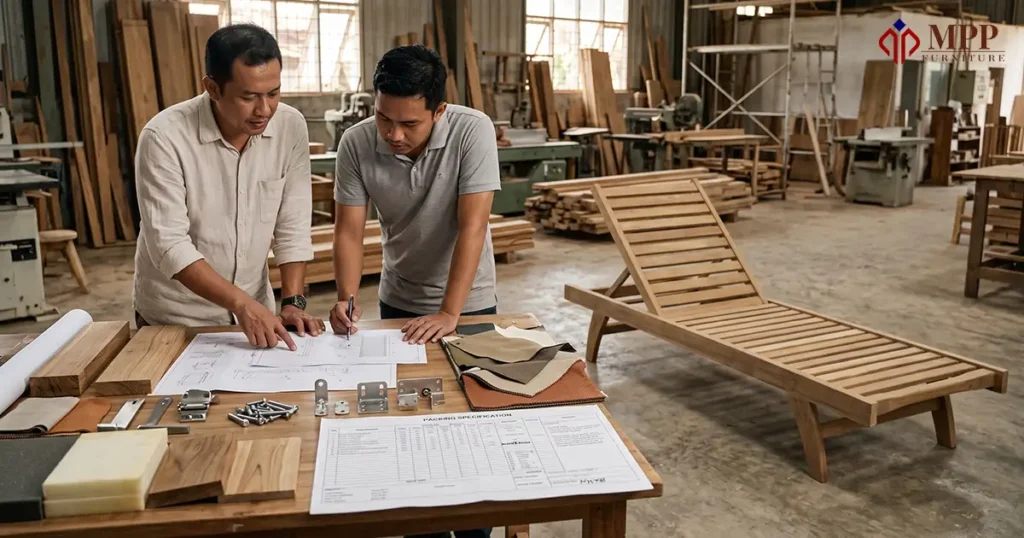
In practice, consistent construction quality does not come from design alone. It comes from controlled production systems and attention to detail at every stage.
This is where working with a manufacturer that combines handcrafted processes with structured quality control creates a more reliable outcome.
Common Mistakes Buyers Make When Sourcing Outdoor Furniture

1. Focusing Only on Price
Focusing only on price often leads to compromises that are not immediately visible. In many cases, the reduction does not come from one area, but from multiple points such as lower wood grade, simplified finishing steps, weaker joinery, or even adhesive quality.
These adjustments may not be obvious during initial inspection, but they directly affect how the product performs over time. This is why a lower price can often result in higher long-term costs through product issues, complaints, or reduced lifespan.
2. Following Trends Without Understanding the Market
Following trends without understanding the market is another common mistake. A design that looks attractive or is popular in one region does not automatically work in another.
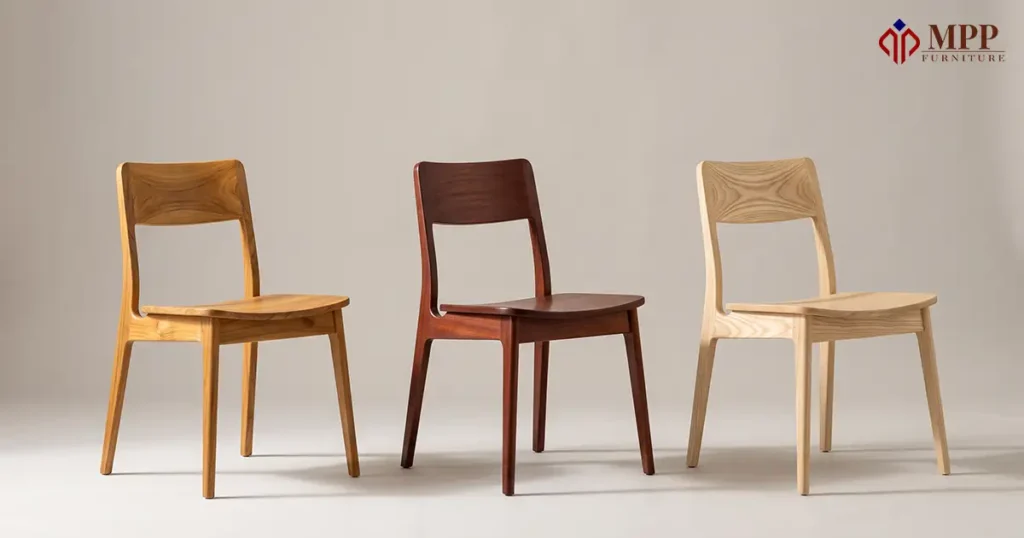
We have seen cases where buyers already knew a certain design would not perform well in their market, but still decided to proceed based on personal preference. For example, one buyer from Australia chose a black chair design despite knowing that darker tones did not perform well in their market. The product was delivered as expected, but sales were slower than anticipated.
This shows that personal preference or trends should not override market data when making sourcing decisions.
3. Ignoring Technical Specifications
Technical specifications are often overlooked, but they are one of the main causes of post-delivery issues.
Problems frequently come from details such as foam density, fabric selection, wood grade, and joinery type. These elements determine comfort, durability, and how the product performs under real conditions.
Without a clear understanding of these specifications, it becomes difficult to evaluate product quality properly. As a result, issues only appear after the product is already in use, when it is much harder to fix.
When You Are Ready to Source Outdoor Furniture, and When You Are Not
You are ready to source outdoor furniture when you clearly understand your market, have defined your product specifications, and can handle production requirements such as MOQ and quality control. At this stage, sourcing becomes a structured process, not trial and error.
You are not ready when decisions are still driven by price comparison, unclear product direction, or limited technical understanding. In this situation, sourcing often leads to mismatched products, slow-moving inventory, and avoidable losses.
How to Align Your Product Decisions with the Right Manufacturer
Once your product direction is clear, the next step is finding outdoor furniture manufacturers from Indonesia that can execute it consistently. This is not just about capability, but about how well they understand your market positioning and product requirements.
A suitable manufacturer should be able to adjust specifications, maintain quality across batches, and support your product development process. Without this alignment, even a well-defined product can fail during production or lead to inconsistent results.
This is why many buyers move toward long-term partnerships rather than transactional sourcing. When product decisions and manufacturing execution are aligned, it becomes easier to scale, repeat orders, and build a stable product line.
If you want a deeper understanding of how to evaluate suppliers, you can read the guide before buying outdoor furniture directly from Indonesian manufacturers.
Conclusion: The Right Product Decision Determines Your Sourcing Success
Sourcing outdoor furniture is not about choosing a manufacturer first. It starts with making the right product decisions based on your market.
When your product aligns with market demand, sourcing becomes more predictable. Products sell faster, complaints are reduced, and repeat orders become easier to manage.
Taking the time to define your product direction before placing an order will save you from costly mistakes and build a stronger foundation for long-term growth. You also can explore MPP’s Indonesian Outdoor Furniture Collections
Discuss Your Outdoor Furniture Sourcing Plan
If you already have a product idea or market direction, you can discuss it with our team. We’ll help you review specifications, materials, and feasibility before moving forward.
FAQs About Market Condition You Should Consider Before Buying Outdoor Furniture From Manufacturers
1. What should I consider before sourcing outdoor furniture from a manufacturer?
You should first understand your market positioning, including design preference, price range, and material expectations.
2. Why do outdoor furniture products fail to sell even with good quality?
Products often fail because they do not match market demand. Quality alone is not enough if the design, material, or price does not fit customer expectations.
3. What causes most complaints in outdoor furniture after delivery?
Most complaints come from soft components such as cushion foam, fabric, rope, and frame.
4. Is choosing the cheapest outdoor furniture manufacturer a good strategy?
Lower prices often involve compromises in material, finishing, or construction, which can lead to higher costs later through complaints and replacements.
5. When is the right time to source outdoor furniture directly from a manufacturer?
You are ready when you clearly understand your product specifications, market needs, and can manage production requirements such as MOQ and quality control.

Hi, I’m Salman, founder of MPP Furniture, an Indonesian furniture manufacturer serving global retailers and project-based clients.
I began my career in my family’s export-oriented furniture company, gaining hands-on experience in production, construction, finishing, material performance, and product development. With a clear understanding of how international buyers evaluate furniture quality and reliability, I founded MPP Furniture to deliver export-ready products with consistent standards.
Here, I share insights from the perspective of a furniture manufacturer working directly with production teams on the factory floor, focusing on manufacturing and supplier evaluation.
Connect on LinkedIn
0 Comments