High-traffic commercial spaces demand a lot from their furniture. Hotel lobbies, busy restaurants, and corporate offices are subject to constant use. Because of this, proper leather furniture care goes beyond aesthetics to serve as a key step in protecting your business investment and ensuring guest comfort.
Many business owners buy premium leather seating but apply residential cleaning methods. This often leads to premature damage in commercial upholstery. Commercial environments expose leather to different stresses, such as constant friction, food spills, and strict HVAC climates. In short, aligning your maintenance protocols with the intensity of the environment yields the best results.
This guide provides professional-grade upholstery maintenance tips. As an experienced Indonesian furniture manufacturer, we understand the science of leather performance. We will explain how to maintain your commercial pieces so they remain supple, visually appealing, and comfortable. Ultimately, well-maintained leather provides a superior customer experience, as nobody wants to sit on stiff, cracked, or deteriorating furniture.
Key Takeaways for Facility Managers:
- Prioritize guest experience: Preventing cracks and stiffness ensures your customers always enjoy a premium, comfortable seating experience.
- Adopt a commercial-grade strategy: Residential cleaning methods accelerate wear in high-traffic environments.
- Implement an SOP: Consistent daily dust removal and periodic deep conditioning prevent premature deterioration.
- Manage environmental stress: Regulating HVAC humidity and UV exposure protects organic leather fibers.
- Procure durable materials: Successful commercial upholstery maintenance starts with importing or sourcing the right corrected-grain or semi-aniline leathers.
Why Commercial Leather Requires a Different Care Strategy
Commercial leather experiences a much higher volume of interaction than residential furniture. A living room sofa might seat a family a few times a day. A hotel lobby sofa seats dozens of different people every single hour. This is why caring for high-traffic leather requires a completely different approach, especially regarding hospitality furniture maintenance.
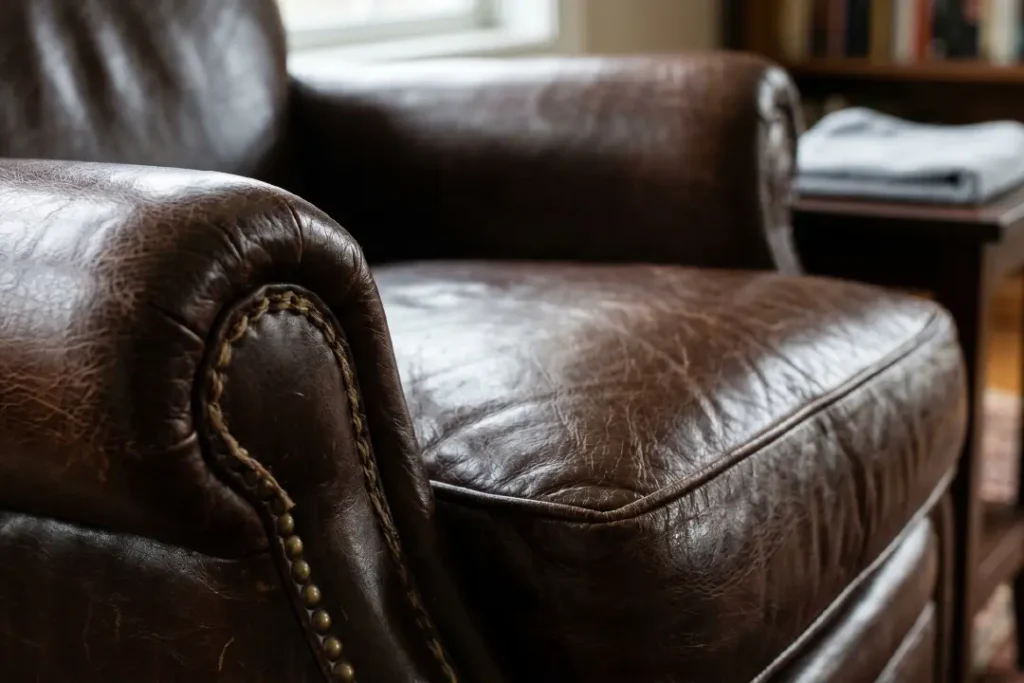
The Zero-Tolerance for Aesthetic Defects
Residential environments can tolerate minor wear and tear, but commercial spaces operate under much stricter visual standards. The physical condition of your seating directly influences brand perception and guest satisfaction, as documented by the industry experts at ISSA (The Worldwide Cleaning Industry Association). If a leather lobby chair or restaurant booth develops visible damage—such as deep cracking, peeling topcoats, or permanent discoloration—it instantly detracts from the premium experience your customers expect. Once the material reaches this level of degradation, routine cleaning is no longer effective. Business owners are then forced into costly operational disruptions, requiring either intensive upholstery repair or complete asset replacement.
High Traffic, Spills, and Accelerated Wear-and-Tear
Every time a guest sits down, surface abrasion occurs. This friction slowly wears down the protective topcoat of the leather. At the same time, human skin transfers oils and sweat. Over weeks and months, this leads to heavy sebum buildup. If this buildup is not removed, it chemically denatures the leather's natural collagen fibers, a process detailed by the restoration specialists at Leather Doctor.
Furthermore, the variety of clothing in public spaces accelerates this damage. In a hotel or restaurant, hundreds of guests sit down wearing raw denim, which causes aggressive dye transfer, or clothing with sharp metallic hardware like zippers, studs, and heavy belts. Bags and briefcases are also frequently placed on the seats. This introduces a much higher risk of micro-tears, punctures, and dye stains, requiring a stronger protective barrier cream than residential furniture.$$Image Placeholder: Close-up comparison showing surface abrasion or sebum buildup on untreated commercial leather$$
Commercial spaces also face a higher frequency of spills. From hot coffee in an office lounge to red wine in a restaurant, the leather needs to resist aggressive chemical reactions. Standard household cleaners often contain harsh chemicals that strip the leather of its essential moisture. This is why business owners benefit greatly from dedicated leather cleaning protocols designed specifically for high-use areas.
Exposure to Industrial Sanitation and Disinfectants
Unlike a home environment, commercial spaces—especially hospitality and healthcare venues—follow strict hygiene protocols. Janitorial staff frequently use broad-spectrum disinfectants or alcohol-based sanitizers to eliminate pathogens. If these industrial chemicals are accidentally applied, they aggressively dissolve the protective clear coat and permanently dry out the hide, according to warnings from the repair experts at Fibrenew. A proper commercial care strategy accounts for protecting the leather from these surrounding heavy-duty cleaning activities.
Preserving Regulatory Compliance Coatings
Commercial furniture is often manufactured with specific fire-retardant or antimicrobial treatments to meet local building and safety codes. Utilizing off-the-shelf residential cleaners can dissolve these invisible, legally required coatings. A targeted commercial care strategy ensures the seating remains compliant with safety regulations while staying pristine.
Establishing a Standard Operating Procedure (SOP) for Commercial Leather Seating
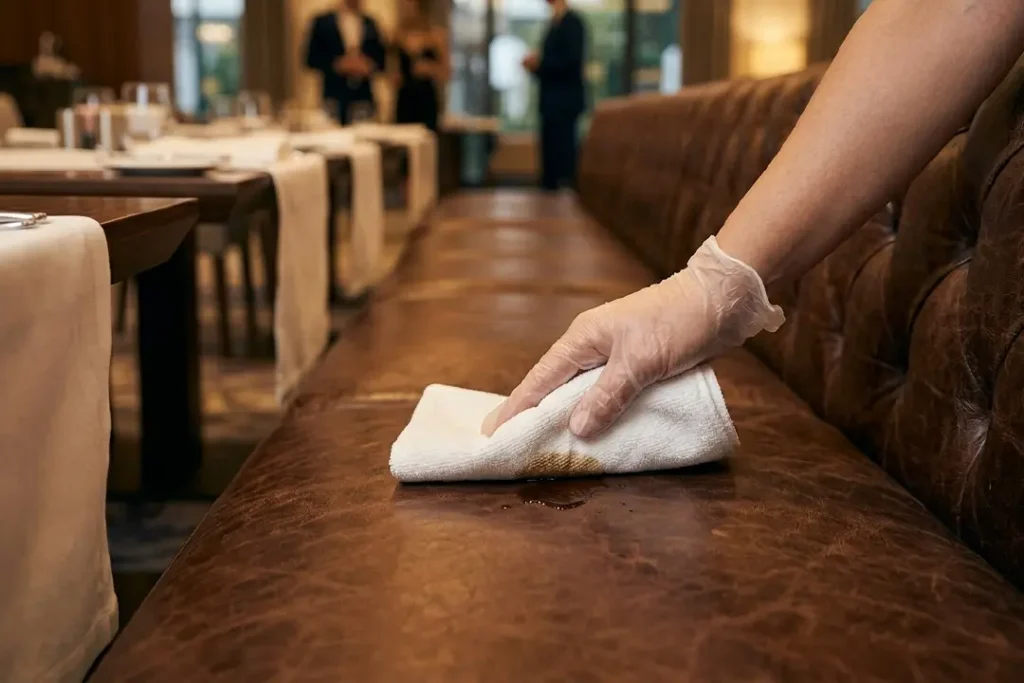
A reactive approach to hotel lobby sofa cleaning or restaurant seating care quickly leads to the severe aesthetic defects that damage brand perception. Establishing a proactive routine gives you the best chance of preserving your furniture against heavy traffic, harsh disinfectants, and abrasive clothing. Creating a clear Standard Operating Procedure (SOP) for your cleaning staff helps prevent dirt from settling, blocks dye transfer, and protects critical regulatory coatings.
Daily Wipe-Downs vs. Quarterly Deep Conditioning
We suggest dividing your maintenance SOP into manageable daily and quarterly tasks:
Daily Maintenance (Dust and Surface Cleaning):
- Focus on dust and abrasive particles: Dust and micro-debris from guests' clothing act like microscopic sandpaper on leather surfaces.
- Use dry microfiber and avoid room disinfectants: Having staff perform a daily wipe-down using a dry microfiber cloth helps trap dust without scratching the finish. Ensure janitorial teams know to keep broad-spectrum sanitizers and alcohol sprays away from these pieces to prevent accidental chemical stripping.
- Address light smudges immediately: A slightly damp cloth is usually sufficient for minor, superficial spots, preventing dye transfer from setting into the grain.
Quarterly Maintenance (Deep Cleaning and Hydration):
- Perform deep-pore cleaning: Every three to four months, it is highly recommended to extract embedded dirt, sweat, and denim dyes that have accumulated over time.
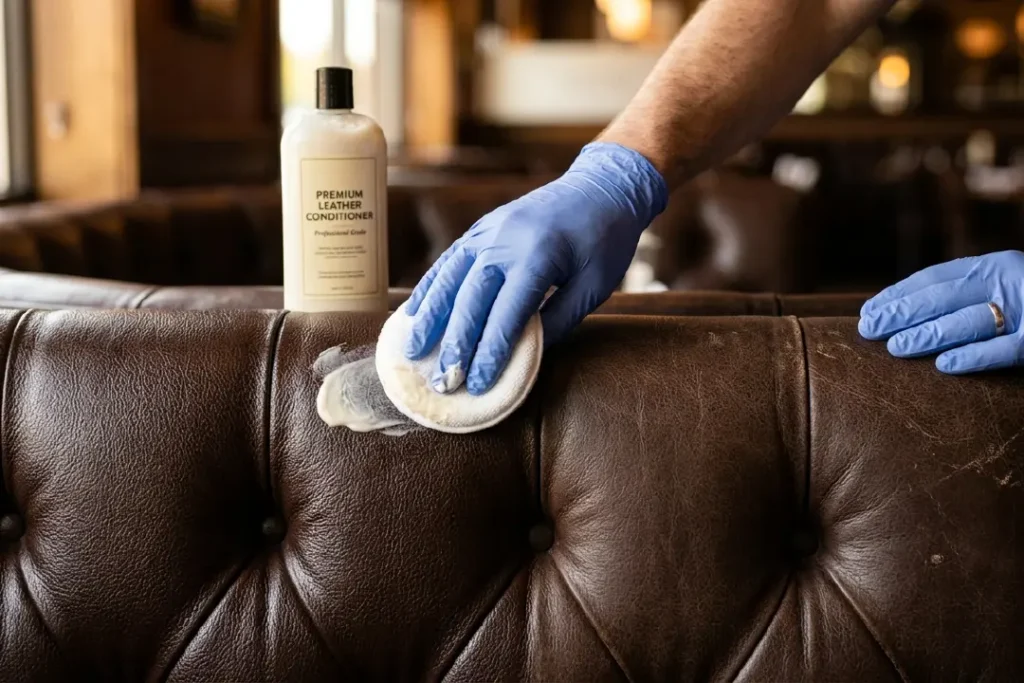
- Apply restorative conditioning and barrier creams: This step replenishes the oils lost to daily wear and evaporation, keeping the seat soft for your guests while adding a heavy-duty protective barrier against metallic clothing hardware.
- Use VOC-free, compliance-safe products: Opting for VOC-free conditioners safely hydrates the leather without stripping away invisible fire-retardant or antimicrobial coatings required by commercial building codes.
By maintaining an SOP like this, you protect the expertly handcrafted finish of the furniture, avoid costly operational disruptions, and maintain a pristine environment for your visitors.
Dealing with Common Commercial Stains
In high-volume environments, spills are inevitable, but the response to them dictates the longevity of your investment. A poorly handled stain on a prominent lobby chair instantly compromises the premium guest experience we discussed earlier. Furthermore, improper stain removal techniques—such as applying harsh commercial degreasers to organic materials—are a primary reason facility managers are forced into early and expensive asset replacements.
Safe Protocols for Ink, Food, and Beverage Spills
Removing stains without degrading the leather's commercial-grade finish requires a strict understanding of chemical reactions. We highly recommend equipping your staff with a pH-balanced cleaner. Standard alkaline solutions or harsh soaps will permanently alter the leather's color and texture because leather has a naturally acidic pH, a chemical reality highlighted by Advanced Leather Solutions. It is highly beneficial to avoid products containing strong surfactants, as they quickly dissolve the protective clear coat meant to defend against heavy traffic.
When a spill occurs—whether it is a dropped glass of wine or an ink pen leak—training staff to follow a strict emergency protocol prevents surface spills from becoming permanent defects:
- 1. Blot Immediately: Press a dry, absorbent cloth directly onto the spill to lift the liquid. Rubbing is highly discouraged because it pushes the liquid deeper into the leather pores.
- 2. Spot Test First: For stubborn marks, performing a spot test with your cleaner on an unseen area first prevents accidental discoloration.
- 3. Use Circular Motions: Utilizing a gentle circular motion cleaning technique helps lift the stain without stretching the hide, preserving the structural integrity of the seat.
Managing Cosmetics, Lotions, and Sunscreen Residues
In hospitality environments like hotels and resorts, guests frequently use hand creams, foundation, or sunscreen before utilizing lobby or lounge seating. These products contain heavy oils and minerals, such as zinc oxide, that easily transfer to the leather surface. Over time, they leave a tacky residue that attracts dark dust and grime. Furthermore, certain active chemicals in sunscreen chemically bond with the leather's topcoat, causing permanent white clouding, as noted in care studies from LeatherNeo. To combat this, daily wipe-downs with a dry microfiber cloth are essential to lift these residues before they bond with the clear coat.
How Environmental Factors Affect Leather in Public Spaces
Indoor environments in commercial buildings are heavily regulated by machines. While this keeps guests comfortable, it can severely stress organic materials like leather. Understanding environmental science is highly beneficial for good leather furniture maintenance.
Managing UV Exposure and HVAC Airflow Drying
Many business owners ask how to prevent leather furniture from cracking in air-conditioned offices. Air conditioning systems constantly pull moisture out of the air. Leather has hygroscopic properties, meaning it absorbs and releases moisture based on the surrounding air. Constant HVAC airflow drying accelerates moisture evaporation, which increases the stiffness of the collagen fibers and leads to eventual cracking, as proven in scientific research published via ResearchGate.
To counter this, monitoring the relative humidity in your space is a great strategy. Aiming to keep the room between 40 and 50 percent humidity provides an ideal environment. Also, direct sunlight from large lobby windows causes fading through UV radiation. Positioning your leather pieces away from direct sun or utilizing UV-filtering window films will help preserve the color.
Choosing the Right Commercial-Grade Leather from the Start
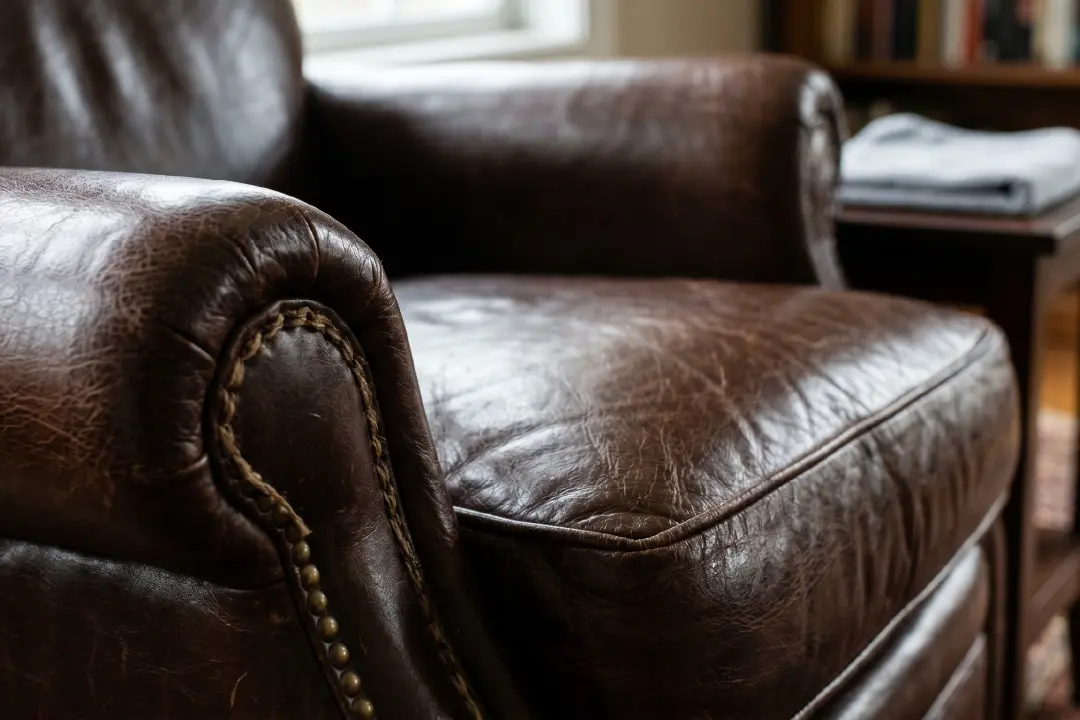
Maintenance is much easier when you start with the right materials. The truth is, no amount of maintenance or strict cleaning protocols can save the wrong type of leather from a high-traffic environment. Not all leather is suited for commercial use. Aniline leathers are beautiful but highly porous, making them a less ideal choice for a busy restaurant. Corrected-grain or semi-aniline leathers with durable protective coatings are generally much better suited for these high-traffic spaces.
Partnering with an Expert Manufacturer
The foundation of long-lasting furniture is the manufacturing process. For directors of procurement or business owners importing hospitality seating, working with reliable Indonesian furniture suppliers ensures that your products are built to withstand commercial use. As a dedicated Indonesian furniture supplier, we pay strict attention to detail during the upholstery process.
We offer 100% in-house production and full quality control at every stage. If your furniture procurement strategy requires specific durability ratings for a hotel project, we provide free new product development to match your exact specifications. By choosing a trusted partner for your imported seating, you get pieces designed from the inside out for high-traffic environments.
Conclusion
Maintaining the luxury appeal of a commercial space relies heavily on the condition of its seating. By implementing a strict maintenance SOP, facility managers can effectively defend their assets against harsh environments, accidental spills, and heavy daily traffic. This proactive approach ensures guests always experience the premium comfort they expect, ultimately safeguarding your brand's reputation and preventing costly operational disruptions.
Ready to Source Durable Leather Seating for Your Commercial Space?
Partner with an experienced Indonesian manufacturer for custom, high-traffic furniture built for longevity. Let’s discuss the material specifications for your next procurement project today.
FAQs About Commercial Leather Furniture Care
1. Why is my leather seating peeling?
Leather peeling is usually caused by using the wrong cleaning chemicals. Harsh solvents or alcohol-based cleaners dissolve the protective topcoat. Once this coat breaks, the underlying color layer begins to peel away under daily friction. Sticking to non-alkaline solutions is the best way to prevent this.
2. How often should leather furniture be conditioned?
In a busy commercial setting, applying a professional leather conditioner every three to four months yields the best results. High-traffic areas like hotel lobbies might benefit from conditioning every two months to prevent the hide from drying out and becoming stiff.
3. Can I use water to clean leather furniture?
We strongly recommend using a dry microfiber cloth for daily dust removal. However, you can use a lightly dampened cloth to address minor smudges or superficial spots. Soaking the leather with water carries severe risks, as excess water penetrates the seams, leading to potential internal mold growth and stiffness as the water evaporates.
4. What is the best way to clean white commercial leather?
White leather benefits from consistent daily maintenance to prevent dye transfer from guests' clothing, like blue jeans. Using a dedicated pH-balanced leather foam and a soft brush helps lift dirt from the grain, which can then be followed by a strong protective barrier cream.

Versatile Digital Marketing & Creative Specialist with a strong foundation in graphic design, product photography, and comprehensive brand strategy. Proven ability to bridge the gap between physical products and digital presence, translating complex concepts into high-converting marketing assets. Adept at leveraging SEO, web analytics, and engaging visual content to drive business growth and elevate brand identity in competitive markets.



0 Comments