When you buy Indonesian teak furniture, there is one thing that is often overlooked: not all teak wood is the same. Its quality depends on origin, age, grading, and composition. These differences directly affect durability, performance, and pricing.
The problem starts when all teak is treated as equal. In practice, this assumption often leads to quality issues that surface later as unexpected complaints and even brand damage.
This guide walks you through what actually makes teak different and how to evaluate it before sourcing from Indonesian teak furniture manufacturers, so you avoid costly mistakes.
The Common Assumption: “Teak Is Teak”
The assumption that all teak wood is the same is not correct. At a surface level, teak looks similar. The grain, color, and finished products can appear almost identical. This is why many buyers assume there is no real difference.
But this is where most sourcing mistakes begin. Teak is not a standardized material. Each grade has different strengths and composition. These differences are not always visible at the beginning, but they show up after the product is in use.
When the grade is not clearly understood, buyers often pay premium prices for average-quality teak. Over time, products become inconsistent, and customer complaints follow.
We have seen this in real cases. A European buyer once sourced teak bathroom vanity cabinets from another supplier. The price was lower, and the product looked fine at first. But after checking the material, we found a high portion of sapwood, often called “white teak.”
That explained the issue. In a humid environment like a bathroom, sapwood does not perform well. The problem was not the design or the price, but the teak grade used from the beginning.
You can explore a broader understanding of teak’s properties
Key Factors That Make Teak Wood Different
1. Origin of the Wood (Indonesia vs Other Regions)
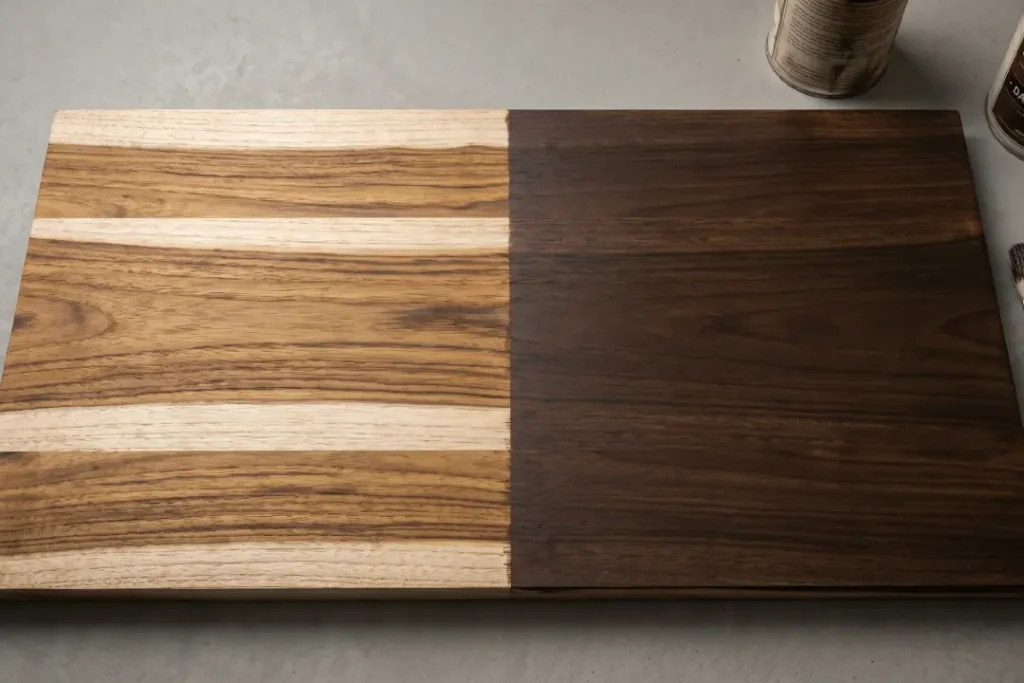
Teak from different regions does not perform the same. Indonesian teak is plantation-grown and regulated, which creates a more consistent supply and better quality control. In other regions, harvesting standards, legality, and processing methods can vary, which affects the final material.
Even within Indonesia, there are differences. Teak from Central Java and West Java can show variations in grain pattern and oil content. These differences may seem small, but they affect how the wood performs over time.
In practice, many buyers compare prices without comparing origin. This often leads to misleading conclusions, because the material itself is not equal.
You can learn more about Indonesian teak characteristics here
2. Age and Maturity of the Tree
All wood, including teak, needs time to reach its optimal condition. Mature teak, typically 20 to 40 years old, produces stronger and more stable material. The structure is denser, and the performance is more predictable.
The issue is that some teak is harvested too early, often below 15 years. This is commonly known as “jati kebon,” which contains a high proportion of sapwood, visible as the lighter or white part of the wood.
This type of teak is not fully developed. The fibers are not dense enough, which makes the wood more prone to movement, such as warping over time.
Another difference is in composition. Mature teak has a thicker heartwood core, while younger teak contains more sapwood. This directly affects durability and long-term performance.
3. Heartwood vs Sapwood Composition
A teak log consists of two main parts: heartwood and sapwood.
Heartwood is the inner part. It is denser, contains more natural oil, and is more durable. This is the part that gives teak its strength and resistance.
Sapwood is the outer layer. It is lighter, weaker, and less resistant to moisture and environmental changes.
This difference directly affects grading. Even though both are teak, the value and performance can vary significantly depending on how much heartwood is used.
High-quality Indonesian teak furniture uses minimal sapwood to maintain consistency. This helps improve structural stability, product lifespan, and moisture resistance.
When this is overlooked, the result is predictable. The product may look fine at the beginning, but it degrades faster in real use.
4. Grain Pattern and Density Differences
In practice, grain pattern is a simple way to read wood quality. Tighter grain usually means higher density, while loose grain indicates lower density. This affects how strong and durable the teak will be.
Density also influences how the wood reacts to finishing and environmental changes. Denser wood tends to respond more consistently, while less dense wood can behave unpredictably.
Inconsistent grain structure often leads to uneven finishing and unstable performance over time.
Teak Wood Grades You Should Know
The grading system helps buyers understand what they are actually purchasing.
Grade A Teak: Premium Quality for Long-Term Value
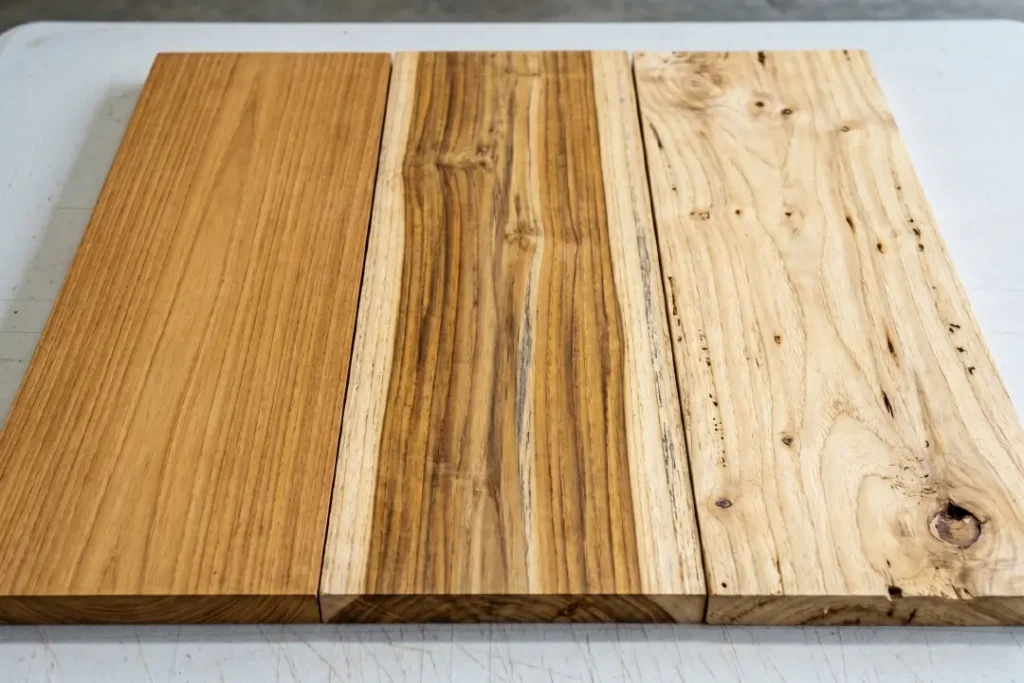
Grade A teak is the highest quality available. It uses mostly heartwood, comes from mature trees, and has consistent color and grain. This becomes even more important for outdoor use, where resistance to moisture is critical.
You can see how teak performs in outdoor applications here.
This is the type of teak used in premium furniture because it offers strong durability and stable long-term performance. Products made with Grade A teak tend to have fewer issues over time, which makes them suitable for high-end collections or demanding environments.
However, this quality comes at a higher cost. If your market is price-sensitive, Grade A may not always be the right choice. Even though the material is better, it does not automatically mean the product will sell.
Grade B Teak: Mid-Range Option with Trade-Offs
Grade B teak is a combination of heartwood and sapwood. It offers moderate durability and is commonly used for mid-range furniture collections. From a pricing perspective, it allows more flexibility, which makes it suitable for a wider range of markets.
Because the composition is mixed, both appearance and performance can vary from one piece to another if production is not well managed.
Grade B works well when the product positioning is clear, and expectations are aligned with the material used.
Grade C Teak: Budget Material with Limitations
Grade C teak contains mostly sapwood. It is the lowest grade in terms of durability and structural strength. The material is more prone to defects and does not perform well over long-term use, especially in environments exposed to moisture or frequent use.
This grade is often chosen to reduce cost. But in practice, the trade-off is clear. Lower durability increases the risk of product issues, which can lead to returns, complaints, and customer dissatisfaction. Over time, this can create more cost for the business than the initial savings.
In some cases, when teak does not meet the required balance between cost and performance, buyers start exploring alternative materials. You can explore other wood options for furniture.
Grading Insight
If you are focusing solely on price, a teak furniture manufacturer that doesn’t have strong product standards tends to reduce cost by using more sapwood.
Another common issue is focusing on grading without understanding the target market. If the pricing does not match customer expectations, the product becomes difficult to sell.
At MPP Furniture, we often use a controlled AB grade combination. This approach allows us to maintain consistent quality while keeping pricing competitive for our buyers.
How to Identify High-Quality Teak Wood for Furniture
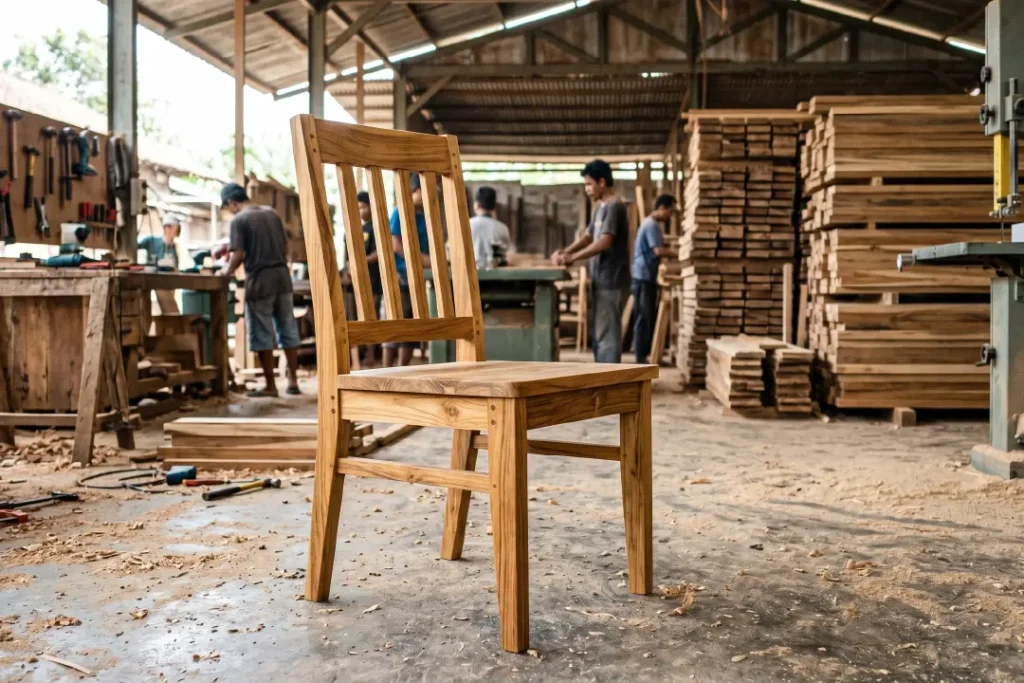
High-quality teak is best evaluated before finishing, during a factory visit. Once coated, color and texture can hide the real material. By checking unfinished products, you can clearly see grain consistency and the balance between heartwood and sapwood.
Asking the right questions is just as important as visual inspection. You need to understand the teak grade, heartwood composition, and how the wood is processed. Without this clarity, buyers often assume a quality level that does not match the actual material used.
At MPP Furniture, production is handled in-house with strict quality control from material selection to final inspection. This approach helps maintain consistency across batches, which is critical for furniture retailers and importers in managing long-term collections.
Material alone does not determine the final result. The same teak can perform differently depending on moisture control, construction, and finishing. This is why working with an experienced Indonesian furniture manufacturer is critical.
What This Means for Furniture Retailers
Understanding teak differences directly affects how you position your products. Choosing the wrong grade can lead to pricing that does not match your market, making products harder to sell.
When material quality does not align with expectations, the impact shows up in customer complaints and inconsistent product performance. Over time, this can weaken brand trust and reduce repeat orders.
Smarter buyers compare more than price. They evaluate material specifications, grading, and production capability to make decisions that reduce risk and improve long-term consistency.
Final Thoughts: Making Smarter Decisions When Sourcing Teak Furniture
Teak is not a standard material, and treating it as one often leads to avoidable mistakes. Understanding its differences helps you make decisions that align with your market, not just the material itself.
In practice, the goal is not to choose the highest grade, but to choose the right grade for your product, pricing, and customer expectations. This is what allows your furniture to sell consistently and perform well over time.
If you want to reduce risk and build a more reliable product line, the starting point is simple: understand the material, then choose the right manufacturing partner.
Planning Your Indonesian Teak Furniture Collection?
Discuss your product needs and get recommendations that balance quality, cost, and market fit.
FAQs About Teak Wood Quality
1. Why is teak wood quality different?
Teak quality differs because of variations in age, origin, and the ratio of heartwood to sapwood. These factors affect durability and performance.
2. What is the best grade of teak wood?
Grade A teak is the best because it uses mature heartwood with high oil content and strong durability.
3. How can I identify high-quality teak wood?
Look for tight grain, consistent color, and a slightly oily texture. These indicate better material quality.
4. Is Indonesian teak better than other teak?
Indonesian teak is often more consistent due to regulated plantations and controlled harvesting processes.
5. Why does teak furniture vary in price?
Price differences come from wood grade, age, and production quality, not just design.

Hi, I’m Salman, founder of MPP Furniture, an Indonesian furniture manufacturer serving global retailers and project-based clients.
I began my career in my family’s export-oriented furniture company, gaining hands-on experience in production, construction, finishing, material performance, and product development. With a clear understanding of how international buyers evaluate furniture quality and reliability, I founded MPP Furniture to deliver export-ready products with consistent standards.
Here, I share insights from the perspective of a furniture manufacturer working directly with production teams on the factory floor, focusing on manufacturing and supplier evaluation.
Connect on LinkedIn
0 Comments