
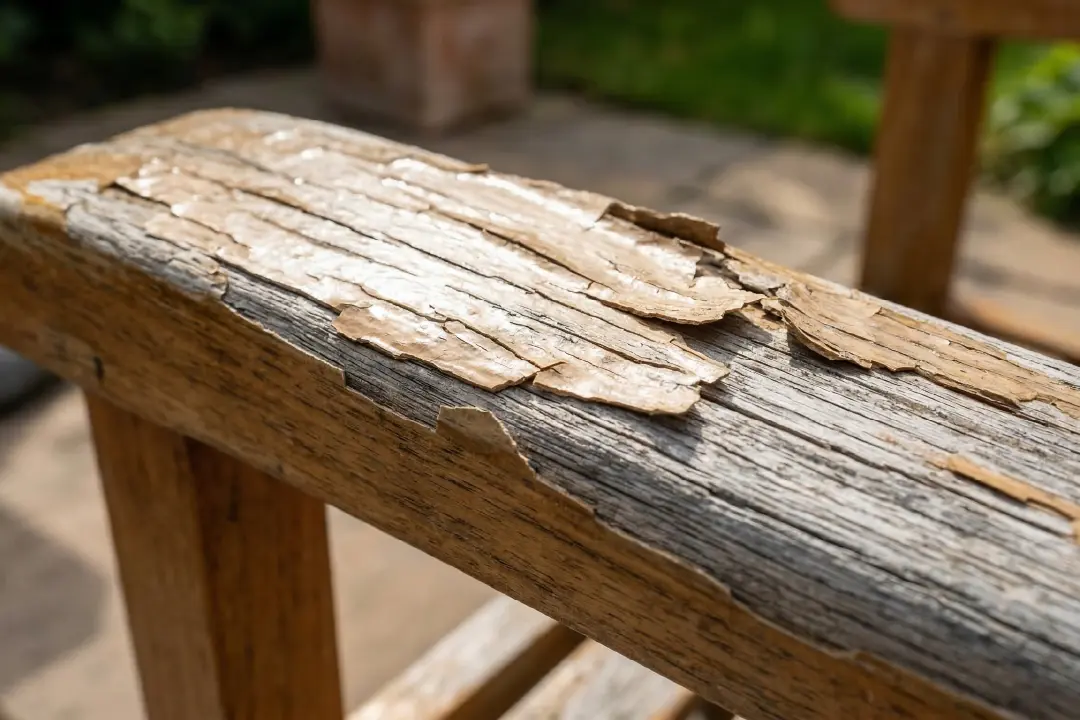
Outdoor furniture finish peeling and cracking is one of the most common product issues in export furniture. For buyers, this problem extends beyond appearance and can lead to claims, unhappy customers, and replacement costs.
In many cases, the problem does not stem from a single mistake. It happens because outdoor furniture faces sun, rain, humidity, and temperature changes every day. If the wood preparation, finishing system, or curing process is incorrect, the finish can fail much faster. Outdoor wood is especially exposed to moisture, UV radiation, and repeated expansion and contraction cycles, which can weaken both the wood surface and the coating over time.
The following guide explains what outdoor furniture finishing does, why it can peel and crack, how buyers can lower the risk, and how a reliable Indonesian outdoor furniture manufacturer approaches the craft to prevent these failures before shipment.
Key Takeaways for B2B Buyers:
- Environment vs. Craftsmanship: UV exposure and moisture cause coating stress, but proper manufacturing prevents premature failure.
- Process is Everything: Wood drying, layer building, and curing conditions hold equal importance to the coating material itself.
- Ask the Right Questions: Sourcing success relies on verifying a factory's specific outdoor finishing expertise and technical layer systems before ordering.
What Is Outdoor Furniture Finishing and Why Does It Matter
Outdoor furniture finishing is the protective layer applied to wood to help it resist weather exposure while also improving the final appearance. In practice, finishing affects three things: protection, surface look, and long-term usability. MPP’s own finishing guide explains that finishing protects wood from moisture and wear, improves appearance, and makes the product easier to use and clean.
For outdoor products, finishing matters even more because the furniture is used in open environments. A proper outdoor-grade finish should help slow down moisture entry, reduce UV damage, and stay flexible enough to move with the wood. According to quality certification standards from the Architectural Woodwork Institute (AWI), professional-grade outdoor finishes work by sealing the surface and using UV inhibitors to slow fiber breakdown.
Consequently, outdoor finishing functions as a core part of product performance, rather than a purely cosmetic step. If the finishing system is weak, the product may still look good at shipment, but problems will likely surface after the furniture reaches the buyer’s market.
Read our comprehensive Indonesian furniture wood finishing guide to learn more about our foundational approach to protecting solid wood.
Why Outdoor Furniture Finishes Can Peel and Crack
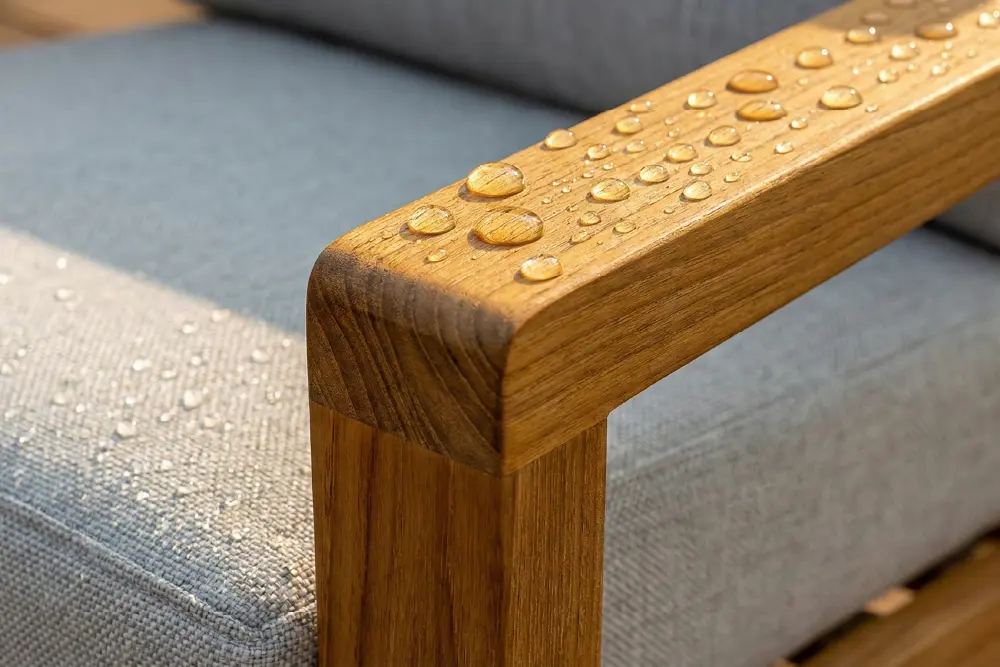
Exposure to UV and Weather
Sunlight is one of the biggest reasons outdoor finishes break down. As detailed by woodworking experts at THISisCarpentry, regarding wood movement, UV radiation, and environmental exposure slowly damage the wood surface and weaken the bond between the coating and the substrate. Rain, dew, and repeated wet-dry cycles also add pressure to the finish layer.
When constant exposure occurs, the coating can lose adhesion. At first, buyers may see fading or dryness. After that, small cracks can appear. If the system is poor, those cracks can eventually turn into peeling or flaking. Outdoor finishing materials designed for exterior use often include UV inhibitors and weather-resistant properties because standard indoor coatings cannot handle this level of exposure.
Moisture and Humidity Changes
Wood is a natural material, meaning it reacts constantly to changes in moisture. When humidity rises, wood can absorb moisture and expand. When conditions get dry, it shrinks. These repeated movements put intense stress on the finished film.
For that reason, moisture control matters long before the topcoat is applied. According to moisture measurement specialists at Wagner Meters, wood must be properly stabilized to acceptable moisture levels before finishing. If the wood is not dried properly, or if the moisture content remains unstable, the finish may look fine initially but fail later in the field. One benchmark article notes that full sun and high humidity increase the need for refinishing on hardwood outdoor furniture, demonstrating exactly how climate affects coating life.
For teak wood furniture and other solid wood outdoor products, this point is especially important. A hard finish on unstable wood often leads to tension between the coating and the wood's movement underneath. Over time, that tension physically breaks the coating.
Improper Finishing Application
As highlighted by regional manufacturing experts discussing common wood polish problems, even premium materials can fail if the process is rushed. Poor sanding, incompatible layers, uneven coating thickness, weak sealer bonding, or inadequate drying time can all lead to finish failure.
MPP’s existing finishing article points out common red flags such as a sticky feel, color inconsistency, and peeling or flaking, which indicate weak bonding or inferior materials. It outlines a professional layered process that includes sanding, sealer application, topcoat layers, and controlled drying and curing.
Peeling and cracking often begin with process control issues. If the manufacturer skips steps, uses indoor-grade materials for outdoor products, or pushes production too fast, the risk of failure increases dramatically.
How Buyers Can Avoid Outdoor Furniture Finishing Problems
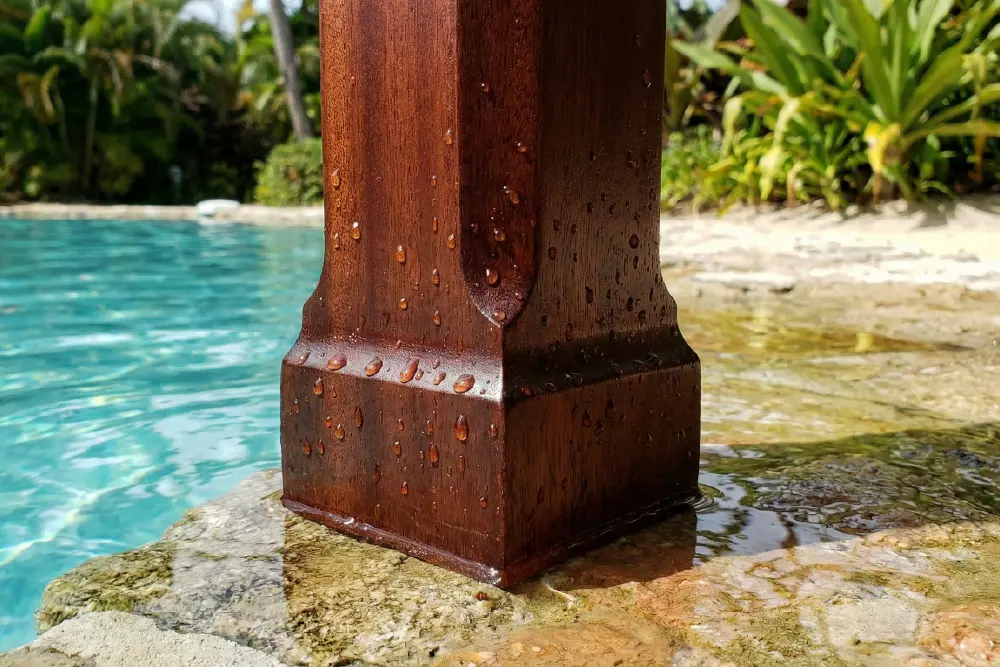
Ask About the Finishing System Used
Buyers should ask direct questions rather than simply requesting an attractive finish sample. Specifically, ask the manufacturer to define:
- The exact type of finish being used.
- Whether the material is formulated explicitly as outdoor-grade.
- The number of protective layers applied.
- The inclusion of UV-resistant and weather-resistant finishing properties.
Such details are critical because different finish types serve different functions. MPP’s guide explains that outdoor finishes are formulated to resist UV rays, moisture, and temperature changes, while other finish types are strictly suited for indoor or decorative use.
Check the Manufacturer’s Outdoor Furniture Experience
An experienced factory understands the unique demands placed on outdoor dining furniture. True experts know that crafting resilient Indonesian garden furniture and Indonesian patio furniture requires specialized treatments that differ entirely from indoor production. The finishing system, wood preparation, and curing conditions must precisely match the product’s real-world environment.
Ask whether the factory has consistent experience producing Indonesian outdoor furniture for export markets. You should also ask how they handle climate-related product risk. A factory well-versed in outdoor performance can explain the causes of peeling, cracking, fading, and maintenance expectations in simple, practical terms.
Explore our dedicated breakdown on finishing outdoor furniture in Indonesia to see the exact techniques required for export-grade weather resistance.
Request Swatches or Sample Pieces
A close-up image is helpful, but a physical sample is better. MPP’s own buyer guide recommends asking for close-up photos, videos, samples, and specific finishing details so buyers can evaluate quality without setting foot inside the workshop.
Use physical sample pieces to verify:
- Surface consistency and texture.
- Adhesion feel and coating build.
- Color evenness across the grain structure.
A sample helps buyers compare the finished appearance with the expected use. For example, a matte natural look may be right for some projects, but the actual protection level still needs to withstand the outdoor environment.
How MPP, a Reliable Indonesian Outdoor Furniture Manufacturer, Prevents Finish Peeling
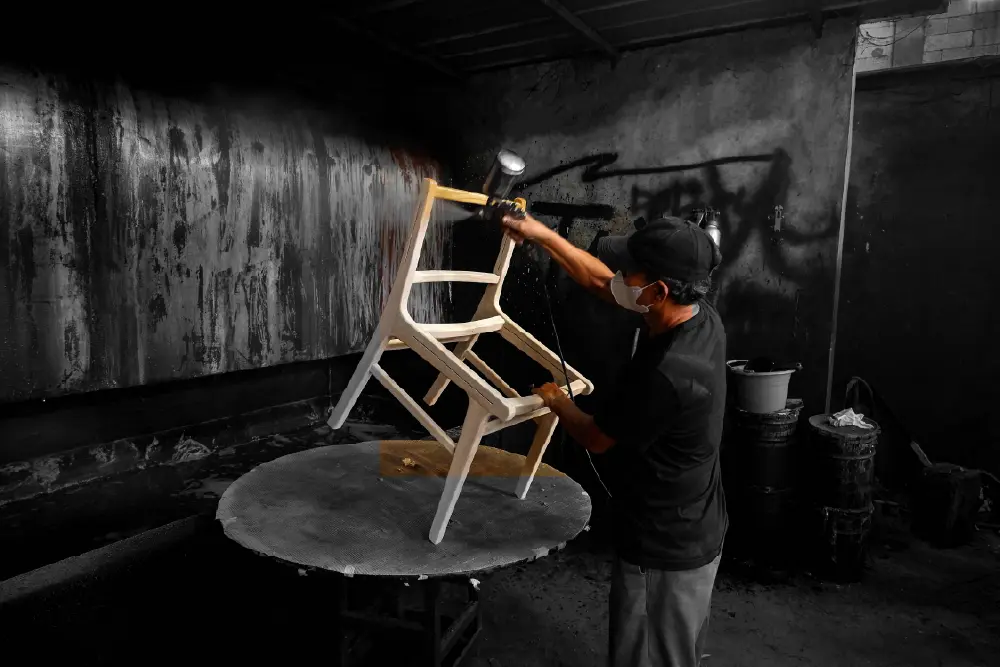
Proper Wood Drying and Moisture Control
Mastering wood preparation is the foundation of our craft. One of the primary ways to reduce finish failure is to start with properly stabilized wood. If the wood is still moving too much, even an exceptional coating system will struggle. Reliable manufacturers take moisture stability seriously before finishing ever begins.
Prioritizing this stage is crucial because wood movement is one of the hidden causes behind later cracks in the finish film. Buyers typically only see the final failure, but the root cause almost always starts much earlier in production.
Discover exactly how strict moisture content control prevents cracks and ensures long-term coating stability in our technical breakdown.
Multi-layer Finishing Process
We view finishing as a blend of art and exact science. A professional finishing system is meticulously built in stages, rather than relying on a single heavy coat. MPP’s in-house finishing process actively reduces weak spots by enforcing:
- Precise sanding for maximum mechanical adhesion.
- Specialized sealer application to lock the wood fibers.
- Staining (when required for specific design profiles).
- Multiple weather-resistant topcoat layers.
- Controlled drying intervals between each coat.
For outdoor furniture, this step-by-step process builds essential bonding and durability, reducing the weak spots that eventually become peeling points.
Using Outdoor-Grade Finishing Materials
Not every coating is suitable for exterior use. Outdoor furniture needs finishing materials engineered to handle UV exposure, moisture contact, and changing temperatures. Buyers should confirm that the system is formulated specifically for outdoor conditions, rather than prioritizing appearance alone.
MPP’s published guide states that our outdoor finish is formulated to resist UV rays, moisture, and temperature changes. This is the exact technical match buyers should look for when sourcing from an Indonesian teak furniture factory or other Indonesian furniture suppliers.
Controlled Drying and Curing Environment
Drying and curing are often overlooked by buyers, yet they have a massive effect on final adhesion. Industry-leading finish manufacturers like General Finishes emphasize that the environment drastically affects curing. If temperature and humidity are not controlled, the coating cannot properly cross-link, meaning the finish can be compromised before it ever reaches the shipping container.
MPP’s finishing guide specifically mentions controlled drying and curing environments as part of its professional process. That level of control is a strong signal of quality because poor curing is a leading reason a finish feels weak or fails prematurely.
Conclusion
Outdoor furniture finish peeling and cracking is a highly preventable problem. It often begins with unstable wood, the wrong coating system, or a rushed finishing process. For buyers, the most effective approach is to understand how the product is crafted from wood drying to curing, rather than focusing solely on the final aesthetic.
Choosing a reliable Indonesian outdoor furniture manufacturer matters deeply. A factory with outdoor experience, proper process control, and a dedication to the craft of finishing can help reduce risk, lower complaints, and support vastly superior long-term product performance.
Ready to source high-quality, weather-resistant outdoor furniture? Contact MPP today to discuss your next project, request a finishing sample, or explore our full catalog of expertly crafted Indonesian outdoor furniture. Let us help you deliver products your customers can trust year after year.
Ready to Source Weather-Resistant Outdoor Furniture?
Contact MPP today to discuss your next project, request a finishing sample, or explore our catalog of expertly crafted Indonesian outdoor furniture that lasts.
FAQs About Outdoor Furniture Finishing
1. Why does outdoor wood furniture finish crack and peel?
Outdoor finish usually cracks and peels because of UV exposure, moisture movement in the wood, and weak finishing application. In many cases, the failure comes from a combination of all three factors.
2. How can buyers prevent flaking on commercial patio furniture?
Buyers should ask about wood moisture control, outdoor-grade finishing materials, the layer system, and the curing process. They should request physical samples and verify whether the factory has proven outdoor furniture experience.
3. Is peeling always caused by bad material?
Not always. Material quality matters, but peeling can also result from poor wood preparation, incorrect coating selection, or rushed drying and curing times.
4. How long should outdoor furniture finishing last?
There is no single answer because climate, exposure, and finish type all affect lifespan. One benchmark notes that hardwood outdoor furniture in full sun and high humidity may need refinishing every 1 to 2 years for some oil-based systems.
5. What should buyers ask an Indonesian outdoor furniture manufacturer?
Ask what finishing system is used, how the wood is dried, how many layers are applied, whether the finish is outdoor-grade, and how curing is controlled before packing.

I am a self-taught graphic designer with a deep passion for exploring the creative world through various tools and techniques. I have honed my skills in Adobe Illustrator, Photoshop, and Lightroom, while continuously expanding my knowledge by diving into After Effects and Premiere. Photography has become an integral part of my life, and I actively engage with it to capture moments and experiment with visual storytelling.
My fascination with color theory, histograms, and innovative design approaches drives my work, as I am always seeking new ways to push the boundaries of my creativity. From photography models and motion graphics to textures, collage, and surrealism, I am captivated by the endless possibilities in design and constantly strive to challenge myself with fresh and exciting ideas.
0 Comments