
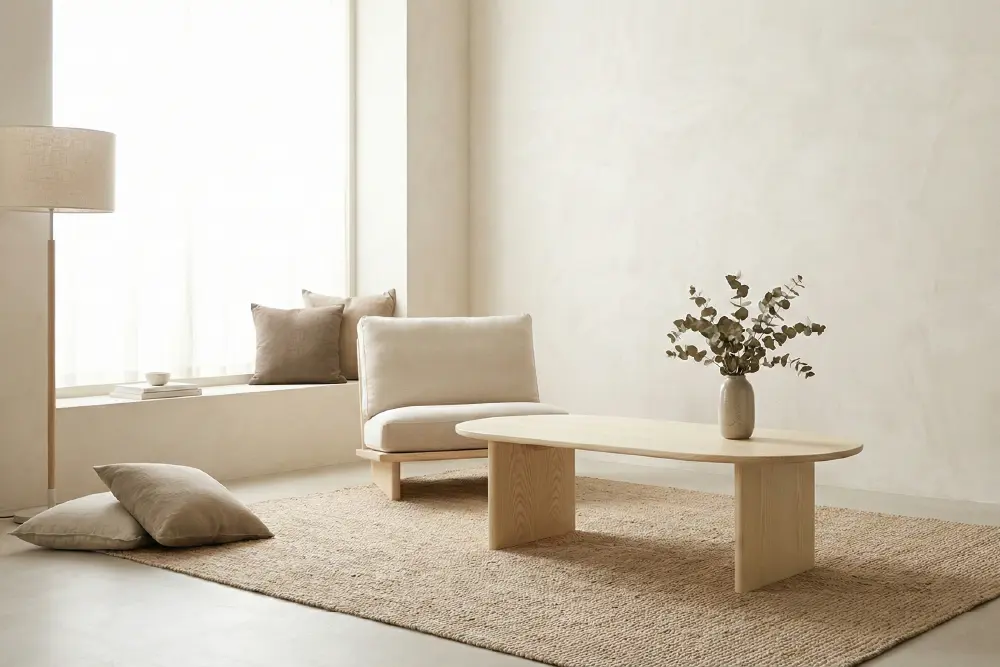
Introduction: Why the Global Furniture Industry Is Looking at Sungkai
The global furniture industry is under pressure from two sides. On one side, buyers want light-colored, natural-looking furniture that fits Japandi, Scandinavian, and minimalist interiors. Conversely, traditional hardwoods like White Oak and Teak face compounding supply constraints, longer growth cycles, and rising raw material costs.
Sungkai wood furniture strategically bridges this market gap. Once considered a local utility timber in Southeast Asia, Sungkai has secured a position in the international market as a reliable alternative for modern indoor furniture, a shift tracked in trade analyses such as those by the USDA Foreign Agricultural Service. While often marketed as Indonesian Oak or White Teak, its true commercial value lies in how effectively it balances design demand, production efficiency, and export practicality.
For furniture retailers, understanding Sungkai is no longer optional. It directly impacts product positioning, landed costs, inventory risk, and long-term brand equity.
What Is Sungkai Wood? A Technical and Commercial Overview
Botanical and Ecological Profile
Sungkai wood, or Peronema canescens, belongs to the Lamiaceae family. It is native to Indonesia and parts of Southeast Asia and is classified as a fast-growing pioneer species.
Unlike Teak, which may require 40 years or more to reach maturity, Sungkai is typically harvested at 15–20 years from managed industrial plantations. This accelerated growth cycle establishes it as a renewable option that aligns with modern sustainability expectations, specifically within the forestry context outlined in The State of Indonesia's Forests.
For retailers, this translates to a more stable supply chain and fewer disruptions compared to slow-growing temperate hardwoods.
Material Science and Visual Characteristics
Sungkai is distinguished by its pale cream to light yellow tone with a visible cathedral grain pattern. This grain serves as a primary commercial differentiator because it retains a premium visual profile even with minimal surface processing.
Structurally, Sungkai features an open-pore texture due to relatively large vessel sizes. This affects absorption rates for stains and finishes, which acts as both an aesthetic advantage and a technical requirement during production.
Average density ranges between 550 and 650 kg/m³. This places Sungkai squarely in the medium-density hardwood category, rendering it lighter than Oak yet possessing sufficient structural integrity for residential furniture applications.
Mechanical Properties and Structural Integrity
From a mechanical standpoint, Sungkai occupies a strategic intermediate position between premium hardwoods and lightweight tropical species. Its value lies in structural efficiency rather than raw mass.
Strength-to-Weight Ratio
Sungkai is significantly lighter than Teak and White Oak, yet it maintains adequate structural integrity for most indoor furniture applications. In practice, this means Sungkai performs effectively for chairs, dining tables, bed frames, and case goods where loads are predictable, and environments are climate-controlled.
Janka Hardness and Surface Performance
On the Janka hardness scale, Sungkai wood ranks below White Oak. This lower hardness enhances machinability, allowing for clean detailing and consistent mass production. CNC work, curved components, and fine profiles can be executed with reduced tool wear compared to denser hardwoods.
However, this same property renders Sungkai more susceptible to surface dents and pressure marks. In real-world usage, this serves as a surface consideration rather than a structural failure. The industry addresses this through several technical approaches: slightly thicker components, thoughtful edge profiling, and finishing systems that add surface protection without masking the natural grain.
Sungkai’s Role in Modern Furniture Design Trends
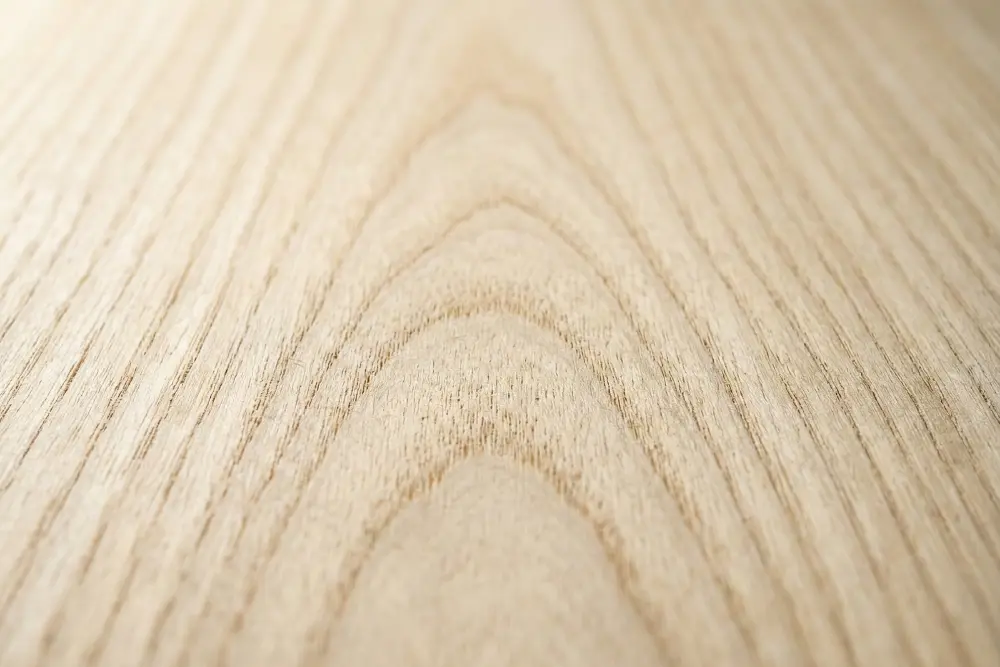
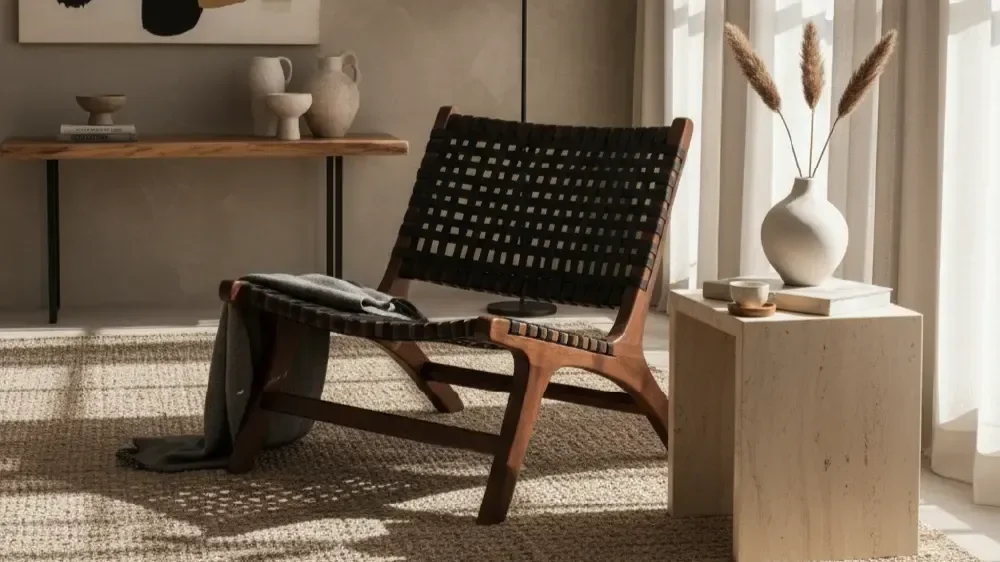
The Design Context Comes First: Japandi, Scandinavian, and Modern Minimalism
Before discussing Sungkai as a material, it is critical to understand the environments where it is being used. Japandi, Scandinavian, and modern minimalist interiors represent a fundamental shift in residential living preferences, as highlighted in forecasting reports like the Homes & Gardens 2026 Interior Trends.
These styles share several defining characteristics. Spaces are designed to feel light and open, with a strong emphasis on natural materials, neutral color palettes, and visible textures. Furniture forms are simple and functional, but never cold. Wood grain is not hidden; it is intentionally exposed as a central aesthetic element.
Another common trait is restraint. Heavy ornamentation, dark finishes, and glossy surfaces feel incongruous in these interiors. Instead, designers prioritize balance, calmness, and materials that age gracefully over time.
Consequently, not every hardwood fits these styles. The material itself must visually align with the philosophy before any finishing is applied.
What These Styles Demand From Wood Materials
From a material perspective, Japandi and Scandinavian furniture typically impose three specific requirements.
First, a naturally light base color. Designers require woods that appear airy without aggressive bleaching or artificial toning. Second, a visible but controlled grain. Flat, lifeless surfaces lack perceived value, while overly dramatic grain can overpower minimalist forms. Third, predictable performance in indoor environments, since these styles are primarily deployed in climate-controlled residential spaces.
Traditionally, woods like White Oak, Ash, and certain European hardwoods have fulfilled this role. However, supply constraints, rising prices, and extended lead times have made them increasingly difficult to rely on at scale.
Sungkai wood addresses these specific material requirements.
Why Sungkai Wood Fits These Styles So Naturally
Sungkai integrates seamlessly into these design languages because it inherently meets the majority of their material specifications without extensive intervention.
Its natural tone sits comfortably within the light, neutral spectrum favored by Japandi and Scandinavian interiors. Indonesian furniture Manufacturers do not need to rely on chemical bleaching to achieve the “natural” aesthetic; the wood delivers it natively. This allows the grain to remain honest and tactile, which is central to minimalist design philosophy.
Visually, Sungkai’s cathedral grain provides warmth without becoming visually noisy. It supports simple silhouettes and clean joinery, rather than competing with them. In minimalist furniture, this balance is critical.
From a production standpoint, Sungkai wood also supports consistency. Its workability allows Indonesian furniture manufacturers to produce refined shapes and repeatable components, which are essential for global collections sold across multiple markets.
Introducing Sungkai as an Alternative to Traditional Woods
In many collections, Sungkai replaces Oak and Teak because the market context has shifted.
White Oak remains a benchmark material, but it is heavy, expensive, and increasingly constrained by supply. For furniture designed for international distribution, weight directly impacts landed cost. For e-commerce-driven brands, this metric is even more critical.
Teak, while premium and durable, carries a visual identity rooted in classic or outdoor furniture. Its darker tone and oily surface often appear incongruous in light, minimalist interiors unless heavily modified.
Sungkai offers a strategic middle path. It delivers the visual cues designers seek from Oak, without the associated logistical and cost burdens. It offers a lighter, drier character than Teak, which aligns more effectively with modern indoor environments.
Why Sungkai Wood Works as a “Good Alternative,” Not a Downgrade
Classifying Sungkai wood as a “substitute” overlooks its strategic value. In the context of modern furniture, it functions as a calculated alternative.
Sungkai allows Indonesian furniture manufacturers to hit a mid-market price point while maintaining the look and feel of solid hardwood furniture. This is critical for retailers aiming to offer genuine wood products without pushing their collections into a narrow premium tier.
The material's density profile enables flat-pack and modular designs, which are increasingly ubiquitous in contemporary retail. This adaptability facilitates streamlined forms that heavier woods cannot easily support without excessive bracing, preserving the clean lines essential to modern aesthetics.
Most importantly, Sungkai aligns with current and near-future design directions. As trends move toward softer tones, natural finishes, and adaptable interiors, Sungkai’s flexibility in both light and dark staining positions it well beyond a single aesthetic cycle.
Strengths and Limitations of Sungkai Wood

After understanding why Sungkai fits modern design styles so well, the next step is to evaluate the material from a product performance perspective. This is where many retailers determine their long-term success with Sungkai.
Sungkai is not a flawless material, but its strengths are distinct, and its limitations are well understood by the industry. Success depends on how these characteristics are managed in commercial furniture products.
The Strengths: Why Sungkai Wood Works Commercially
From a retail and production standpoint, Sungkai offers several advantages that directly support scalable furniture programs.
Cost Efficiency Without Sacrificing Appearance
Sungkai enables the production of solid wood furniture with a premium visual presence at a mid-tier cost structure. This allows retailers to capture customers seeking "real wood" without the price barrier of luxury hardwoods.
High Finishing and Color Flexibility
Sungkai accepts stains and toners effectively. While its natural light tone is popular, it can also be finished to emulate darker woods such as Walnut or Smoked Oak. This grants retailers the flexibility to adapt one material supply chain to multiple color trends, as validated by reports on the return to sophisticated dark wood finishes in 2025.
Lightweight Structure for Logistics and Assembly
One of Sungkai’s most practical strengths is its density profile. Lighter furniture reduces international freight costs, simplifies warehouse handling, and supports flat-pack and modular designs. For e-commerce and urban retail channels, this is a major operational advantage.
The Limitations: Where Sungkai Requires Control
Understanding Sungkai’s limitations is essential, especially from an inventory and after-sales risk perspective.
Limited Natural Durability
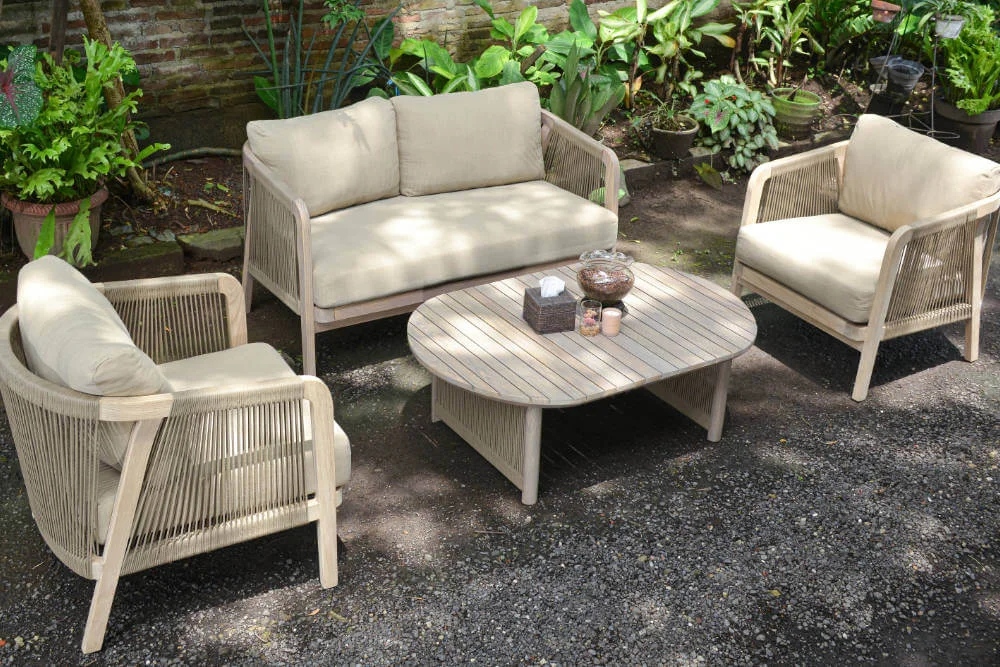
Sungkai is engineered strictly for indoor applications. It lacks the natural resistance required for outdoor environments unless heavily modified. Deploying it outside its intended application leads to premature degradation.
Sensitivity to Moisture and Movement
If kiln drying is not precisely controlled, Sungkai wood can experience moderate shrinkage or warping. This is especially relevant for export markets with dry climates, where improperly dried wood will destabilize after delivery.
Read more about how moisture content prevents cracks and learn the technical protocols for mitigating wood movement risk in our dedicated technical guide.
Surface Denting in High-Abuse Settings
Due to its lower hardness compared to Oak, Sungkai surfaces can sustain dents in high-impact or commercial-use environments. This does not affect structural integrity, but it does influence product positioning.
Real-World Applications of Sungkai Wood Furniture
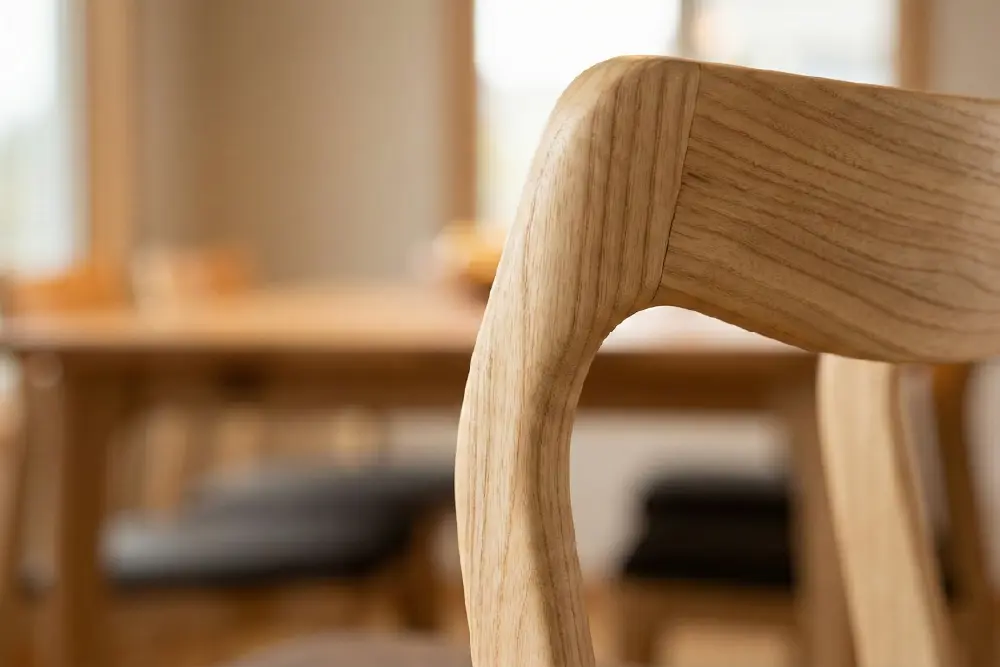
When evaluating Sungkai in real-world settings, the key is to deploy it where its strengths are visible, and its limitations are naturally protected. From a product design perspective, Sungkai performs best in furniture that is human-scale, visually exposed, and structurally efficient.
Below are the applications where Sungkai works by design.
Dining Chairs: Structural Efficiency Without Excess Mass
Dining chairs remain one of the strongest applications for Sungkai wood.
A chair concentrates load through legs and joints rather than wide horizontal surfaces. This utilizes Sungkai’s strength-to-weight profile effectively. When designed correctly, Sungkai chairs provide stability without requiring oversized sections.
From a real-life usage standpoint, chairs require frequent movement. Sungkai’s lighter weight prevents the ergonomic burden associated with heavy Oak seating. Surface denting is less critical here because contact points are limited and wear patterns feel natural over time.
This is why Sungkai chairs dominate Japandi and Scandinavian collections, especially for export and e-commerce models.
Coffee Tables and Side Tables: Low-Impact, High-Visibility Pieces
Sungkai functions more effectively for low tables than for dining tables, and the distinction is important.
Coffee tables and side tables experience lighter loads and lower impact forces. They are subject to frequent tactile interaction, but not repeated heavy pressure. This allows designers to showcase Sungkai’s grain and tone without overengineering the structure.
In living rooms, visual calm matters more than extreme hardness. Sungkai supports this by maintaining a cohesive, light aesthetic. Minor surface marks over time tend to read as patina rather than damage, which aligns with modern lifestyle expectations.
Sideboards, Cabinets, and Storage Furniture: Where Grain Does the Work
Storage furniture is where Sungkai truly excels.
These pieces are vertical or wall-adjacent, meaning visual surface quality takes precedence over load resistance. Sungkai’s cathedral grain adds depth across wide panels without needing heavy ornamentation.
From a design standpoint, these products rely on joinery precision and panel stability rather than hardness. Sungkai’s workability supports clean doors, consistent gaps, and smooth operation, which directly enhances perceived quality at retail.
Explore how this material defines the aesthetic in our collection of Mid-Century Modern style furniture in Sungkai.
Accent Furniture and Occasional Pieces
Benches for entryways, hallway consoles, writing desks, and display furniture are all strong candidates for Sungkai wood.
These products are used intermittently, placed in controlled indoor environments, and valued for appearance as much as function. Designers can use slimmer profiles and lighter silhouettes without compromising user confidence.
This category is especially attractive for retailers because it allows frequent collection refreshes without disrupting the core material strategy.
What This Means for Retailers, Designers, and End Buyers

At this point, Sungkai should no longer be viewed only as a material choice. It represents a strategic opportunity across the entire furniture value chain. When used intentionally, it creates advantages not just for retailers but also for designers and end buyers.
For Furniture Retailers: From Product to Portfolio Opportunity
For retailers, Sungkai opens a clear path to build scalable, modern collections without stepping into premium price pressure.
Commercial Opportunity, Not Just Cost Savings
Sungkai allows retailers to offer solid wood furniture with a premium look at a mid-market price. Beyond lower production costs, this accessibility unlocks a wider customer base seeking “real wood” without the premium pricing of Oak or Teak.
The material's lower density translates directly to reduced landed costs. This improves margin flexibility, allowing retailers to compete on price, invest more in branding, or absorb logistics volatility without eroding profitability.
Faster Inventory Movement and E-Commerce Readiness
Sungkai performs well in flat-pack and lightweight designs, which align with modern retail distribution models. Products move faster through warehouses, cost less to ship domestically, and suffer fewer transport-related damages.
This makes Sungkai especially attractive for retailers with strong online channels or urban store formats where logistics efficiency is paramount.
Risk Management Becomes a Differentiator
Retailers who understand Sungkai’s limitations and manage them properly gain a competitive edge. Verifying legal sourcing through frameworks like the Indonesian Timber Legality Assurance System (SVLK), insect treatment, and kiln-drying standards reduces downstream risk and builds long-term trust.
For a detailed roadmap on compliance, refer to our EUDR and SVLK guide for sourcing compliant mahogany and other Indonesian hardwoods.
For Designers: A Flexible Material With Clear Boundaries
For designers, Sungkai functions as a controlled design tool.
A Strong Visual Canvas
Sungkai’s grain and light tone provide a neutral but character-rich base. Designers can keep it natural for Japandi and Scandinavian collections, or push it into darker stains to follow emerging trends, all while maintaining visible wood texture.
This allows designers to refresh collections visually without changing material strategy.
Designing With Intention and Precision
Because Sungkai wood is not meant for heavy structural abuse, it encourages smarter design decisions. Designers focus on proportion, joint efficiency, and product context rather than brute mass.
This often results in furniture that looks lighter, feels more modern, and fits contemporary living spaces better.
See the full breakdown of why Sungkai wood is the designer's perfect choice for versatile modern collections.
For End Buyers: Access to Modern Solid Wood Living
For end buyers, the opportunity is about access and relevance.
Modern Solid Wood at a Reachable Price
Sungkai allows consumers to own solid wood furniture that feels modern, warm, and intentional without paying a traditional hardwood premium. This matters for younger urban buyers furnishing apartments or first homes.
Furniture That Fits Real Lifestyles
Lightweight, well-designed Sungkai furniture fits today’s reality. People move homes more often, buy furniture online, and expect products to assemble easily and look good in smaller spaces.
When positioned correctly, Sungkai furniture delivers durability where it is needed and visual comfort where it matters most.
Conclusion: Why Sungkai Works When It Is Chosen Intentionally
As interiors shift toward lighter, calmer, and more human-scale environments, materials that naturally support this philosophy gain relevance. Sungkai fits these spaces because its visual character, weight, and workability match how modern furniture is designed, shipped, and lived with today.
At the same time, Sungkai rewards clarity. When treated as a universal hardwood replacement, it fails expectations. When placed in the right product categories, processed correctly, and positioned honestly, it becomes a reliable and commercially sound material. The industry already understands this; the difference between success and failure lies in execution, not in the wood itself.
In short, Sungkai has moved beyond being “an alternative.” It has become a strategic material for an industry adapting to changing tastes, tighter supply chains, and more informed consumers. When chosen with intention and managed with discipline, Sungkai wood earns its place as a cornerstone of modern indoor furniture as a conscious design and business decision.
Your next best-seller might be here
Request a quotation and custom options tailored to your needs today via WhatsApp or email.
Frequently Asked Questions
Is sungkai wood good for furniture?
Yes. Properly kiln-dried and treated Sungkai wood is highly effective for various types of indoor furniture.
Is sungkai wood the same as oak?
No. While distinct from oak, it serves as a popular white oak alternative due to its similar grain patterns and light coloration.
Does sungkai wood attract insects?
Untreated Sungkai can attract beetles. Consequently, export-grade furniture requires chemical treatment to ensure long-term protection.
Is sungkai wood suitable for outdoor furniture?
No. Standard recommendations limit Sungkai to indoor applications unless it has undergone heavy modification.
Why is sungkai popular in Japandi furniture?
The natural light tone and visible grain perfectly complement minimalist and Scandinavian interiors without requiring extensive processing.

I am a self-taught graphic designer with a deep passion for exploring the creative world through various tools and techniques. I have honed my skills in Adobe Illustrator, Photoshop, and Lightroom, while continuously expanding my knowledge by diving into After Effects and Premiere. Photography has become an integral part of my life, and I actively engage with it to capture moments and experiment with visual storytelling.
My fascination with color theory, histograms, and innovative design approaches drives my work, as I am always seeking new ways to push the boundaries of my creativity. From photography models and motion graphics to textures, collage, and surrealism, I am captivated by the endless possibilities in design and constantly strive to challenge myself with fresh and exciting ideas.
0 Comments