Choosing the right wood can define your product’s success. For global retailers and importers, the question isn’t just what looks beautiful; it’s what sells and lasts in your market conditions.
If you’ve been considering mahogany furniture from Indonesia, you’re not alone. Many professional buyers consider mahogany wood furniture a strong contender, as it is affordable, elegant, and reliable for indoor use.
But is it truly the right fit for your product range, climate, and customer expectations? This article will help you evaluate that decision with practical insights from MPP Furniture, an experienced Indonesian furniture manufacturer trusted by importers and retailers worldwide for over two decades.
Who Should Choose Mahogany and Who Shouldn’t
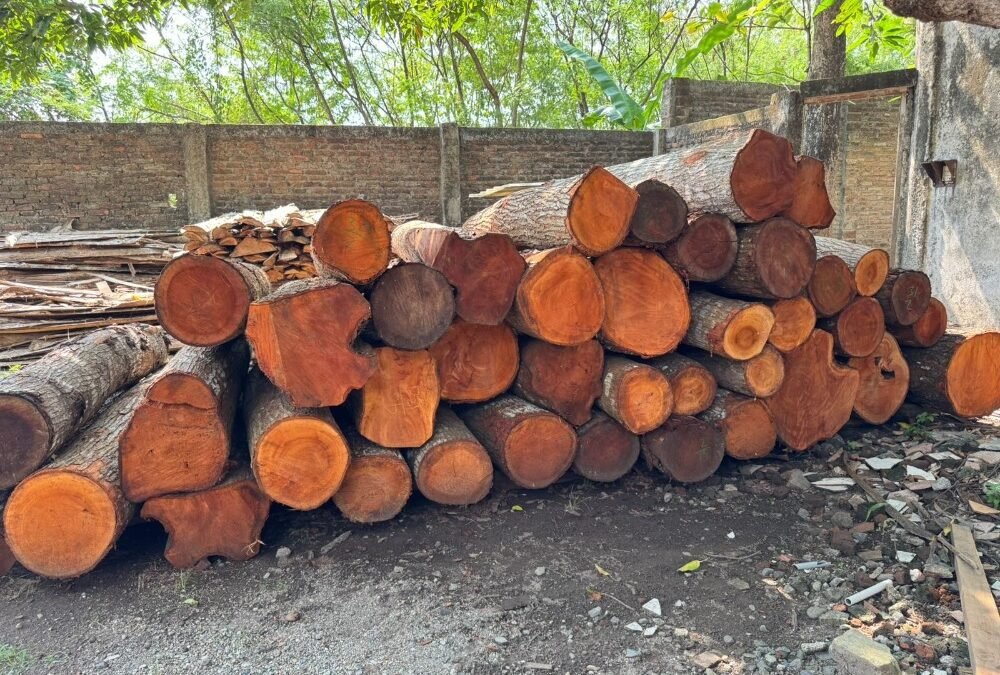
Thinking about sourcing mahogany wood furniture from Indonesia? You’re probably wondering whether Indonesian mahogany is good for furniture and where this beautiful hardwood actually comes from. This section helps you understand its best use cases, from indoor to semi-outdoor, and when you might want to consider other Indonesian woods for your collection.
Is Indonesian Mahogany Good for Furniture?
The answer is yes, Indonesian mahogany wood furniture is one of the most reliable indoor hardwood options for retailers and importers.
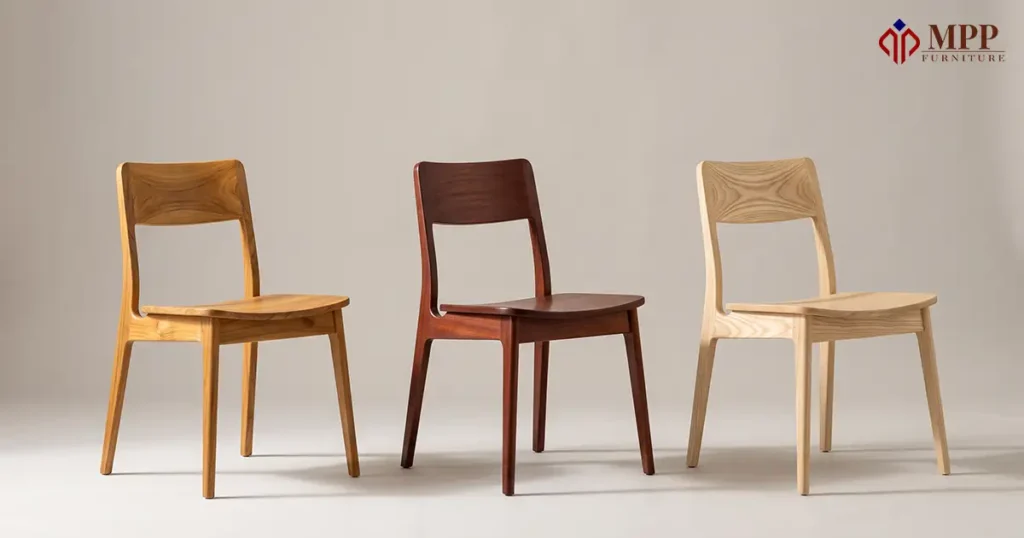
It offers excellent machining quality, smooth finishing, and consistent coloring, making it ideal for premium indoor collections such as dining sets, bedroom furniture, cabinets, consoles, and home offices.
Mahogany is also well suited to a living room collection, provided the proportions, finish, and material combinations are carefully balanced to create a warm, premium appearance without making the furniture feel visually heavy.
When kiln-dried correctly (10–12% moisture content), mahogany is stable and strong. It holds screws firmly and gives a luxurious, even tone under stain or lacquer.
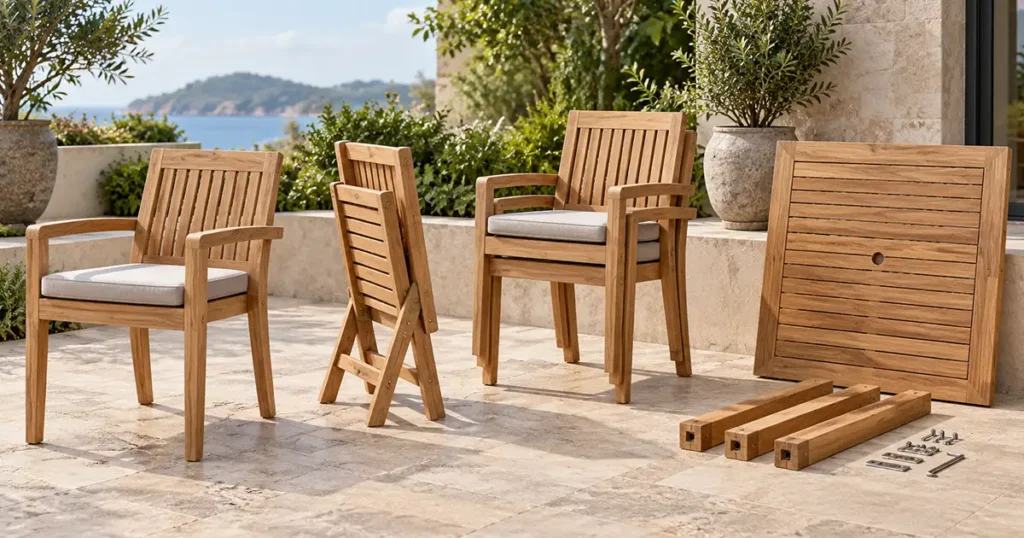
However, mahogany is not recommended for full outdoor use because it absorbs moisture more easily than teak. For outdoor settings, teak remains superior due to its natural oil content and weather resistance.
Indonesia’s mahogany offers unique advantages over other hardwoods:
- Fine grain and warm tone: A naturally even color ideal for staining or solid coatings.
- Workability: Easy to shape and sand, enabling detailed design and fine finishes.
- Durability: Strong enough for daily commercial use when properly dried and sealed.
- Sustainability: Plantation-grown and SVLK certified, ensuring legality and traceability.
Because of these traits, Indonesian mahogany furniture is trusted worldwide by retailers seeking affordable elegance with dependable performance.
Where Does Indonesia’s Mahogany Come From?
Mahogany in Indonesia originates locally, as the trees grow naturally on the islands of Java and Sumatra, primarily consisting of the Swietenia macrophylla species cultivated in managed plantations. Indonesian mahogany is SVLK-certified (the national legal wood verification system) and fully compliant with FLEGT licensing for export to the EU.
Indonesian furniture manufacturers like MPP Furniture select only plantation-grown mahogany that meets strict grain, color, and density requirements, ensuring every panel sands and finishes evenly.
Learn more about the origin and characteristics of Indonesian mahogany wood.
Indoor, Semi-Outdoor, or Outdoor; What’s Safe?
| Placement Type | Recommended Use | Why It Works / Doesn’t |
| Indoor (Ideal) | Dining, living room, bedroom, office | Stable when kiln-dried; long lifespan under stable humidity |
| Semi-Outdoor (Possible) | Covered patios, balconies, cafés | Works if protected from direct sunlight and rain; requires re-coating every 1–2 years |
| Outdoor (Avoid) | Pool decks, gardens, open terraces | High risk of swelling, cracking, or mold growth |
Summary: Mahogany is best for indoor and semi-outdoor spaces; not open-air exposure.
From our experience, mahogany can be placed or sold for semi-outdoor areas as long as it is not directly exposed to sunlight. Using a specialized outdoor finishing will help prevent water penetration and protect the mahogany furniture from moisture-related damage. Supporting our statement, here is the article on the outdoor purpose of mahogany wood
When Mahogany Isn’t the Right Fit
While mahogany excels indoors, it may not match all programs. Here’s a quick comparison:
| Wood Type | Best Use | Price Tier | Key Traits |
| Mahogany | Indoor premium | Better | Warm tone, smooth finish, cost-effective |
| Teak | Outdoor/high-end | Best | Naturally oily, durable, and long lifespan |
| Mindi | Trendy indoor / cost-down | Good | Light color, modern appeal |
| Sungkai | Minimalist / Scandinavian style | Good | Soft tone, lightweight |
Compare teak, mahogany, mindi, and sungkai in our detailed guide.
Cost & Positioning: Where Mahogany Fits in Your Lineup
Retailers often structure collections in a Good / Better / Best model:
| Tier | Material | Price Level | Ideal Market |
| Good | Mindi / Sungkai | Entry | Online retail, design-driven buyers |
| Better | Mahogany | Mid-premium | Brick & mortar retailers, brand stores |
| Best | Teak | Luxury | Premium outdoor or hospitality lines |
Mahogany hits the “better-tier sweet spot”, offering luxury appeal without the teak price.
It’s also ideal for container mix programs: Example: 60% mahogany SKUs, 25% teak, 15% sungkai, balanced by style and price.
See how other Indonesian woods compare for different segments in our B2B guide.
Technical Checklist: What to Reassure when Source Mahogany Wood Furniture
To get consistent results across batches, reconfirm these key specifications in your Purchase Order (PO) when sourcing from your Indonesian furniture suppliers:
1. Material & Moisture
- Species: Swietenia macrophylla (plantation-grown)
- Moisture content: 10–12% (KD standard)
- Lumber selection: Even color, straight grain, defect ≤ 5%
2. Joinery & Adhesive
- Mortise & tenon or dowel construction for load-bearing parts
- Industrial adhesive class D3–D4 (water-resistant PVA)
3. Finishing System
- Minimum 3-layer system: stain → sealer → topcoat
- PU or NC finish; 30–50 gloss units for satin sheen
- Optional UV coating for semi-outdoor pieces
4. Hardware & Packaging
- Brand-grade hinges and slides (e.g., Hettich, Hafele)
- Knockdown assembly guide included
- ISTA-certified packaging and humidity card inside each box
5. Quality Control Gates
- Lumber check; MC test before machining
- In-process inspection; sanding, assembly, finishing
- Pre-shipment: carton drop test and random QC sampling
Including this checklist helps maintain consistent quality across suppliers and shipments.
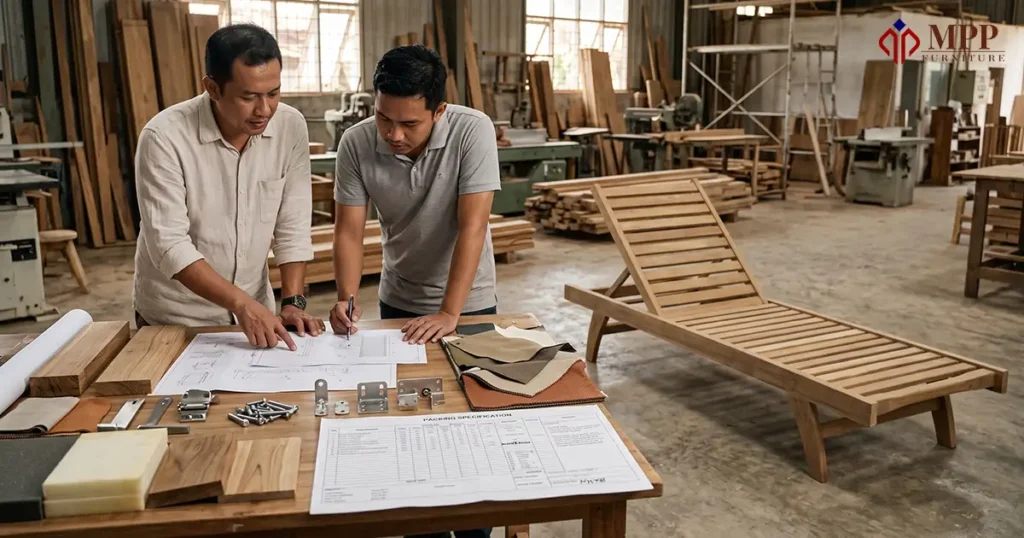
At MPP Furniture, this is exactly what we do to maintain long-term quality and consistency. Always make sure your Indonesian furniture manufacturer applies proper joinery techniques, such as tenon and mortise connections. This method is essential for structural strength and durability in every mahogany wood furniture construction.
Managing Export Risks; QC & Climate Adaptation
Mahogany performs beautifully indoors, but export buyers must consider climate-related QC. Here’s how reliable suppliers manage it:
- Humidity adaptation: MPP adjusts moisture target (10–12%) based on destination climate.
- Sealed end-grain: Reduces risk of cracking in dry regions.
- Coating control: Layer thickness adjusted for humid or arid destinations.
- Documentation: Every shipment includes an SVLK legality certificate, an MC report, and inspection photos.
Watch how MPP controls humidity and finishing consistency in our factory video.
How MPP Crafts Every Mahogany Piece
At MPP Furniture, each mahogany product is expertly handcrafted by trained artisans who combine traditional skill with modern machinery. Here’s how our process ensures precision and consistency:
- Drying; Kiln-dried to stable MC (10–12%)
- Machining; CNC-cut components for accuracy
- Assembly; Skilled joiners handle complex frames
- Finishing: Multi-stage coating with color QC panels
- Packing & QC; ISTA-tested, humidity-checked cartons
Every step reflects attention to detail and strict QC control, resulting in export-ready furniture trusted by retailers worldwide.
With a 99% client satisfaction rate and a 0.56% complaint ratio, MPP continues to be a reliable manufacturer for retailers, importers, and brand owners seeking consistent performance.
Build Your Mahogany Collection with Confidence
If your business focuses on premium indoor furniture and is looking for a teak lookalike, mahogany is a smart choice. It delivers a warm, classic look, reliable quality, and efficient pricing, especially when sourced from a trusted Indonesian furniture supplier like MPP.
With free consultation, OEM/private label support, and end-to-end QC control, MPP helps you build a consistent, profitable mahogany collection with peace of mind.
Your next best-seller might be here
Request a quotation and custom options tailored to your needs today via WhatsApp or email.
FAQ
Is Indonesian mahogany good?
Yes, it’s durable, smooth, and ideal for indoor furniture. When properly dried, it offers long-term stability and fine finishing.
Is there mahogany in Indonesia?
Yes. Most are plantation-grown Swietenia macrophylla from Java and Sumatra, harvested under SVLK-certified legal wood systems.
Can mahogany furniture be used outdoors?
Only in covered semi-outdoor spaces. For full outdoor exposure, teak is the better choice.
What is Indonesian hardwood?
A term for legally harvested tropical species like teak, mahogany, mindi, and sungkai, each with different uses and price tiers.
How does mahogany compare to teak in price and quality?
Mahogany is about 20–30% more affordable, making it ideal for indoor “better-tier” products that still convey luxury.

Hi, I’m Salman, founder of MPP Furniture, an Indonesian furniture manufacturer serving global retailers and project-based clients.
I began my career in my family’s export-oriented furniture company, gaining hands-on experience in production, construction, finishing, material performance, and product development. With a clear understanding of how international buyers evaluate furniture quality and reliability, I founded MPP Furniture to deliver export-ready products with consistent standards.
Here, I share insights from the perspective of a furniture manufacturer working directly with production teams on the factory floor, focusing on manufacturing and supplier evaluation.
Connect on LinkedIn
Nicely done.