White cushions can stain on teak furniture because natural teak oils can move to the wood surface and transfer to the fabric through heat, moisture, or direct contact. This behavior is usually natural and not automatically a product defect.
However, the risk of staining can increase when manufacturers do not properly manage wood drying, finishing, storage, and shipment preparation. In other words, teak oil bleeding may be natural, but poor production control can make the problem worse.
This article explains why teak oil can stain white cushions, why it is more common on new outdoor teak furniture, and how responsible Indonesian teak furniture manufacturers reduce the risk before the product reaches buyers.
What Is Teak Oil and Why Does It Matter for Furniture Durability
Teak is valued for its durability and long service life because it contains natural oils. These oils help the wood resist weather, moisture, and daily use better than many other hardwoods, which is why teak remains a popular choice for both premium indoor and outdoor furniture.
Buyers who want a broader explanation of why teak is widely used for exterior applications can also read more about teak wood as one of the best materials for Indonesian outdoor furniture
At the same time, the same natural oils that protect the wood can also create a side effect. Under certain conditions, part of the oil can migrate to the surface, and when a light-colored cushion sits against the frame, some residue may transfer onto the fabric.
So, teak oil is not the problem by itself. In practice, it is one of the reasons Indonesian teak furniture performs well; the issue only appears when natural oil migration meets heat, moisture, and white or cream-colored fabrics.
Why Teak Furniture Oils Can Stain Light Colored Cushions
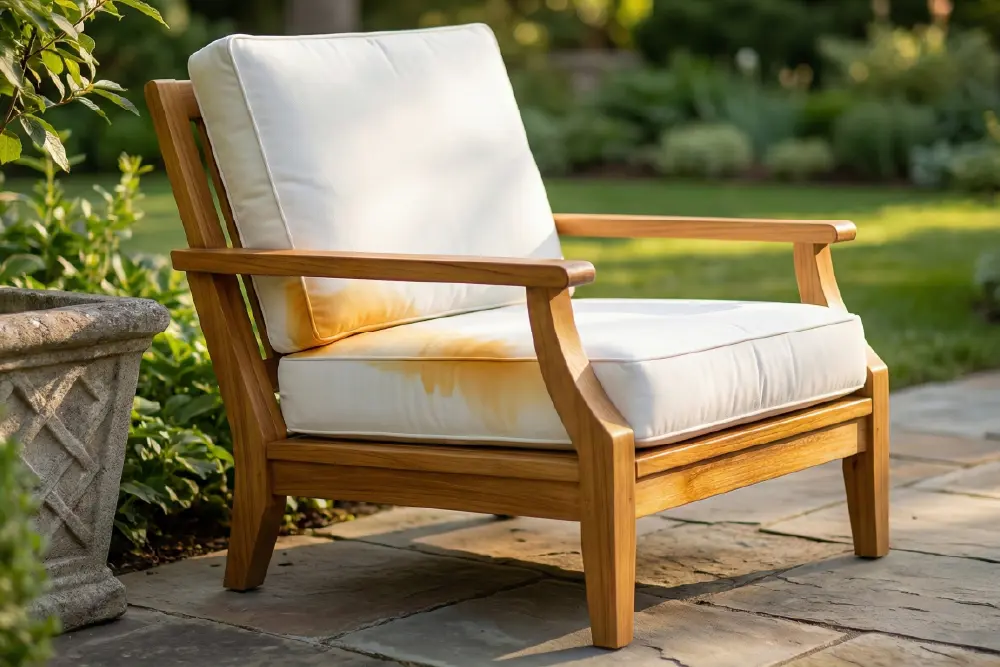
Based on real production experience, light-colored cushions can develop stains when natural teak oils migrate from the wood surface to nearby fabric.
This transfer usually happens when cushions remain in contact with teak frames exposed to heat, moisture, and outdoor conditions.
Dark-colored cushions rarely show this issue because the darker fabric tends to hide the light oil residue.
Natural Oils and Resin Migration
Teak contains natural extractives, including oil and resin. Over time, some of these substances can move from inside the wood toward the surface. This is more likely during the early life of the furniture, especially when the wood is newly made and first exposed to outdoor conditions.
That is why buyers may see marks on white cushions even when the frame still looks clean. A small amount of surface residue can be enough to leave a visible stain on pale fabric.
Exposure to Sun and Heat
Outdoor heat speeds up this process. When teak furniture sits under strong sunlight, the wood warms up, and natural oils can become more active near the surface.
This means a teak lounge, sofa, or dining chair placed in direct sunlight may release more residue than the same product kept in a shaded area. White cushions show this faster because contrast makes even a light stain easy to notice.
Moisture and Rain
Rain and humidity also play a role. When water touches the teak surface, it can carry some oil residue outward. If a cushion stays on the frame while the wood is wet, the risk of transfer goes up.
This is why early outdoor exposure often becomes the moment buyers first notice the issue. The furniture gets sun, then rain, then direct cushion contact. That combination creates the most common staining scenario.
Surface Contact Between Teak and Fabric
Contact matters just as much as climate. If the cushion sits tightly against armrests, seat rails, or back frames, the chance of transfer becomes higher.
This does not mean the design is wrong. It means the material pairing needs attention. White, off-white, beige, and other very light fabrics are simply less forgiving when they touch natural teak surfaces.
Why This Issue Is More Common on New Indonesian Teak Furniture
Teak oil bleeding is more noticeable on new furniture because the wood is still going through an early adjustment phase after production. During the first weeks or months of outdoor use, natural extractives are more likely to move to the surface, especially when exposed to heat, airflow, and humidity.
From production experience, this issue has been discussed internally with our production team and external specialists. One of the main findings is that newly processed teak may still carry surface residues if the wood preparation before kiln drying is not fully clean.
In addition, insufficient drying can increase the likelihood of oil migration. When the moisture content is not properly controlled, internal oils can move more actively to the surface under outdoor conditions.
Another contributing factor is the absence of proper surface sealing. Without the right sealing or surface treatment, teak oils can more easily reach the surface and transfer onto nearby materials such as cushions.
How Reliable Indonesian Teak Furniture Manufacturers Minimize Oil Bleeding
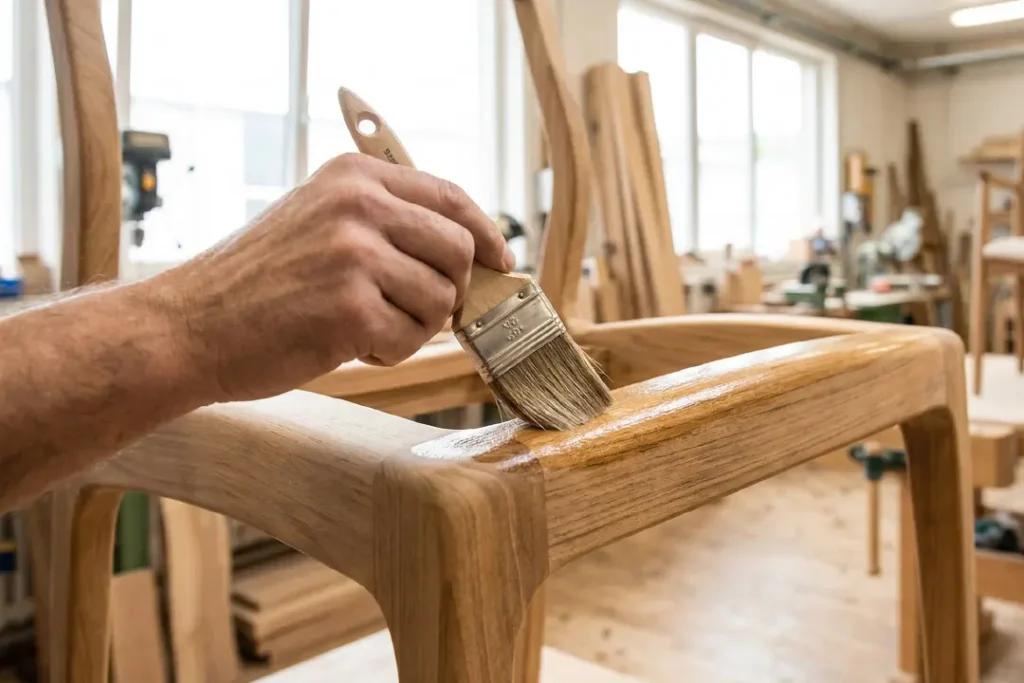
At MPP Furniture, teak furniture is produced through controlled drying, proper surface preparation, and finishing systems designed for minimizing the risk of staining on light-colored cushions.
1. Consistent Teak Timber Selection
The first step at MPP is timber selection. Consistent Indonesian teak furniture starts with consistent raw materials; if the teak grade varies too much, the final product will not be uniform.
This matters because stable material gives a stronger foundation for drying, finishing, and long-term outdoor performance.
2. Proper Wood Drying to Reach Ideal Moisture Content
For teak furniture, proper drying supports stability and reduces internal movement in the wood.
At MPP, Indonesian teak furniture is dried to a target moisture content below 12%, supported by full in-house production and quality control across a 16,000 square meter facility. This creates a more stable base for finishing and assembly.
However, drying alone is not enough. An Indonesian teak furniture supplier can reach the right moisture level, but still create staining risks if finishing and storage are not properly controlled.
3. Proper Finishing and Surface Treatment
At this stage, proper teak oil sealing and sufficient curing time are critical. Rushed production often leads to unfinished surfaces where excess oil can still migrate.
At MPP, each finishing step follows controlled timelines without being rushed, supported by adequate production capacity and lead time planning. This allows the surface treatment to perform as intended before shipment.
For buyers, one of the most important questions is whether the supplier applies proper sealing and how they control surface residue before delivery.
4. Proper Storage and Packaging Before Shipment
Even well-produced furniture can develop issues if storage is not handled properly before shipment. Exposure to moisture, dust, or pressure contact can affect the surface condition before the product leaves the factory.
Reliable manufacturers treat storage and packaging as part of product quality. They protect the surface, maintain cleanliness, and prepare the furniture for environmental changes during export.
How Buyers Can Minimize the Risk When Choosing an Indonesian Manufacturer
The safest approach is to evaluate the supplier before production starts. Buyers should not only ask whether teak oil bleeding is normal, but also how the manufacturer controls the risk during drying, finishing, storage, and shipment preparation.
First, ask about wood drying and moisture content targets. A reliable Indonesian teak furniture manufacturer should be able to explain how the wood is dried and how moisture is controlled for outdoor use.
Second, ask whether the supplier has real experience producing outdoor teak furniture. Manufacturers with outdoor experience usually understand how heat, rain, humidity, and cushion contact affect product performance.
Third, ask about finishing methods, sealing, and curing time. A good supplier should be able to explain how they reduce surface residue before shipment, not just whether they apply finishing.
Fourth, review the factory’s production and storage setup. Suppliers with in-house control are generally easier to evaluate because material handling, finishing, quality checks, and packaging can be monitored more consistently.
Fifth, ask for cushion recommendations. An experienced supplier should be able to advise on fabric color, material choice, and early-use handling, especially for white or cream-colored outdoor cushions.
For sourcing teams, this is also an after-sales issue. A lower price may not stay cost-effective if staining problems lead to complaints, replacements, or loss of buyer trust.
For a deeper understanding of how Indonesian teak furniture manufacturers support retailers from product development to delivery, you can explore this guide on Indonesian teak furniture for retailers.
Conclusion: Is Teak Oil Bleeding a Sign of Poor Quality?
No, not by itself. Teak oil bleeding is a natural behavior of oil-rich teak, especially on newer outdoor furniture, and it does not automatically mean the product is defective.
However, poor manufacturer control can make the issue worse. When drying, finishing, storage, or handling are not managed properly, a natural teak characteristic can turn into a preventable problem.
White cushions are more likely to show stains because natural teak oils can transfer through heat, moisture, and direct contact, especially during early outdoor use. This makes the issue more visible, even when the teak itself is good.
The real difference lies in how well the Indonesian furniture manufacturer reduces the risk. For buyers, this means choosing a supplier with proper process control, not just the lowest price.
For teams that want a deeper care reference after purchase, this teak furniture maintenance guide for cushion stains can help.
Want to Develop Indonesian Teak Furniture Without Teak Oil Bleeding?
Work with our team to develop teak furniture with proper material control, finishing systems, and outdoor performance in mind.
FAQs About Indonesian Furniture
1. Why is Indonesian furniture so popular?
Indonesian furniture is popular because it combines craftsmanship, durable wood materials, customization capability, and export experience that help global buyers source furniture more reliably.
2. Is Indonesian furniture of good quality?
Yes. Indonesian furniture is widely known for strong craftsmanship and material quality, especially when produced by experienced manufacturers with clear quality control processes.
3. What materials are commonly used in Indonesian furniture?
Common materials include teak, mahogany, sungkai, mindi, and rattan. Each material offers different durability, aesthetics, and price positioning.
4. Can Indonesian furniture manufacturers handle custom designs?
Many manufacturers support custom dimensions, finishes, materials, and product development for private label collections and project requirements.
5. What should buyers check before sourcing from Indonesia?
Buyers should evaluate product quality consistency, lead time reliability, export experience, product development support, MOQ structure, and communication clarity.

Hi, I’m Salman, founder of MPP Furniture, an Indonesian furniture manufacturer serving global retailers and project-based clients.
I began my career in my family’s export-oriented furniture company, gaining hands-on experience in production, construction, finishing, material performance, and product development. With a clear understanding of how international buyers evaluate furniture quality and reliability, I founded MPP Furniture to deliver export-ready products with consistent standards.
Here, I share insights from the perspective of a furniture manufacturer working directly with production teams on the factory floor, focusing on manufacturing and supplier evaluation.
Connect on LinkedIn
0 Comments