Finished outdoor furniture may look complete after production, sanding, finishing, and final assembly. But for importers and retailers, the real test is not only how the product looks at the factory, but how it arrives after export shipping.
This article explains how a manufacturer can protect outdoor furniture before it leaves the factory. The goal is simple: reduce scratches, pressure marks, coating damage, mold risk, cushion issues, and carton movement damage.
We will look at final inspection, surface protection, packaging structure, moisture control, and container loading. You will also see what buyers should check when working with an outdoor furniture manufacturer from Indonesia.
Why Finished Outdoor Furniture Needs Protection Before Export Shipping
Finished outdoor furniture needs protection because the final surface carries most of the visible value. A table, chair, lounger, or sofa frame may be structurally strong, but the finish can still be damaged by rubbing, pressure, or moisture during long-distance shipping.
This is especially true for indonesia outdoor furniture shipped by sea. Products move through factory handling, trucking, port storage, container loading, ocean freight, unloading, and warehouse receiving.
Outdoor furniture also tends to be large, heavy, and mixed-material. Wood, rattan, metal, glass, upholstery, and cushions all react differently to pressure and humidity, so one simple packing layer is rarely enough.
For buyers, the problem is not only appearance. Small surface defects can delay retail display, create customer complaints, reduce margin, or lead to replacement claims.
Common Shipping Risks That Can Damage Finished Outdoor Furniture
The most common risks are scratches, pressure marks, coating damage, mold, cushion compression, and carton movement. These problems often happen when products are packed too loosely, stacked without planning, or loaded without enough internal support.
Scratches usually come from surface-to-surface contact. During export shipping, vibration can turn small contact points into visible abrasion on tabletops, armrests, chair legs, or rattan details.
Pressure marks happen when heavy cartons press against finished surfaces for too long. This can leave dents, shine marks, or uneven areas, especially on softer finishes, upholstery, and woven parts.
Moisture is another major risk. Condensation inside containers can affect wood, rattan, cartons, and cushions, especially when products are packed before they are fully dry or cured.
Protection Starts with Final Inspection Before Packing
Good export protection starts before the first foam sheet or carton is added. A manufacturer should check whether the furniture is clean, dry, stable, and ready to be sealed for shipment.
Final inspection should cover surface condition, finish consistency, joint strength, dimensions, quantity, hardware, and accessories. This step helps catch problems while they can still be corrected at the factory.
Dust and residue should also be removed before packing. When dust is trapped under wrapping and pressure is added during shipping, it can act like a fine abrasive on finished surfaces.
For B2B buyers, this is why export packing should not be treated as a separate logistics task. It is part of manufacturing quality because it protects the product after production is finished.
How Surface Protection Preserves the Furniture Finish
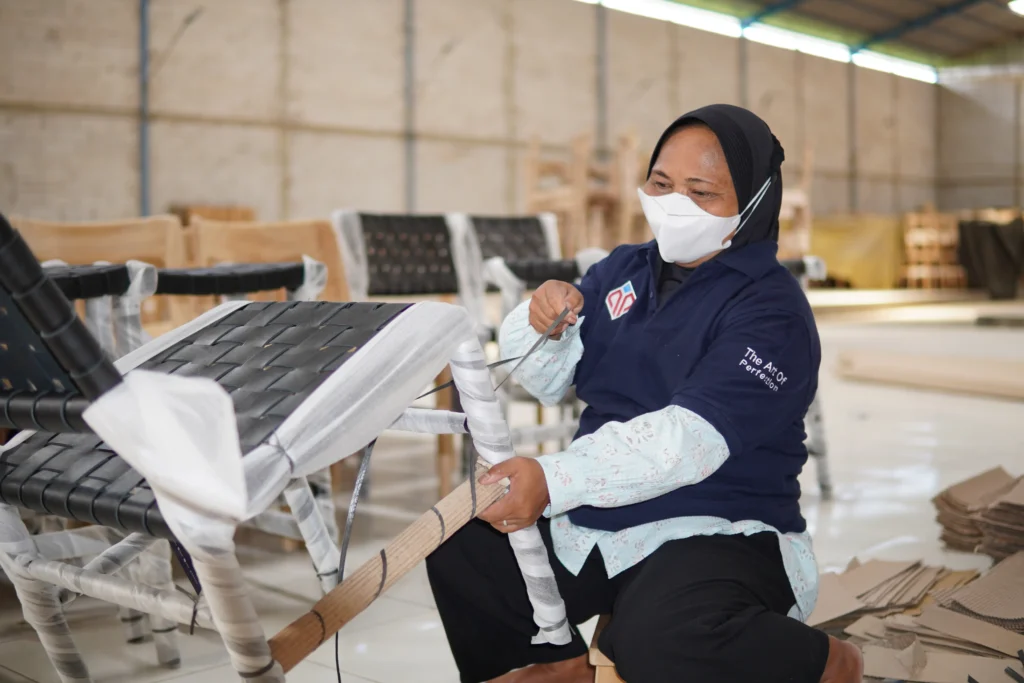
Finished outdoor furniture must be wrapped with suitable protection before export shipping. Foam sheets, carton sheets, and other soft layers help reduce direct contact with the finished surface.
Corners, legs, backrests, armrests, tabletop edges, and frame joints need proper coverage. These areas often receive the most pressure during handling, stacking, and loading.
Surface protection helps preserve the condition of outdoor furniture finishing by reducing direct rubbing, edge impact, and pressure transfer. This lowers the risk of scratches, dull marks, coating damage, and uneven surface marks.
Cushions, rattan, and rope details also need their own packing strategy. Cushions need protection from compression and moisture, while rattan and rope need support that protects their shape without crushing the material.
This is why protective layers should match the product, not only the carton size. Research on furniture packaging shows that packaging materials can affect furniture moisture content and surface finish, so manufacturers need to choose wrapping and inner layers carefully.
How Packaging Structure Prevents Pressure and Movement Damage
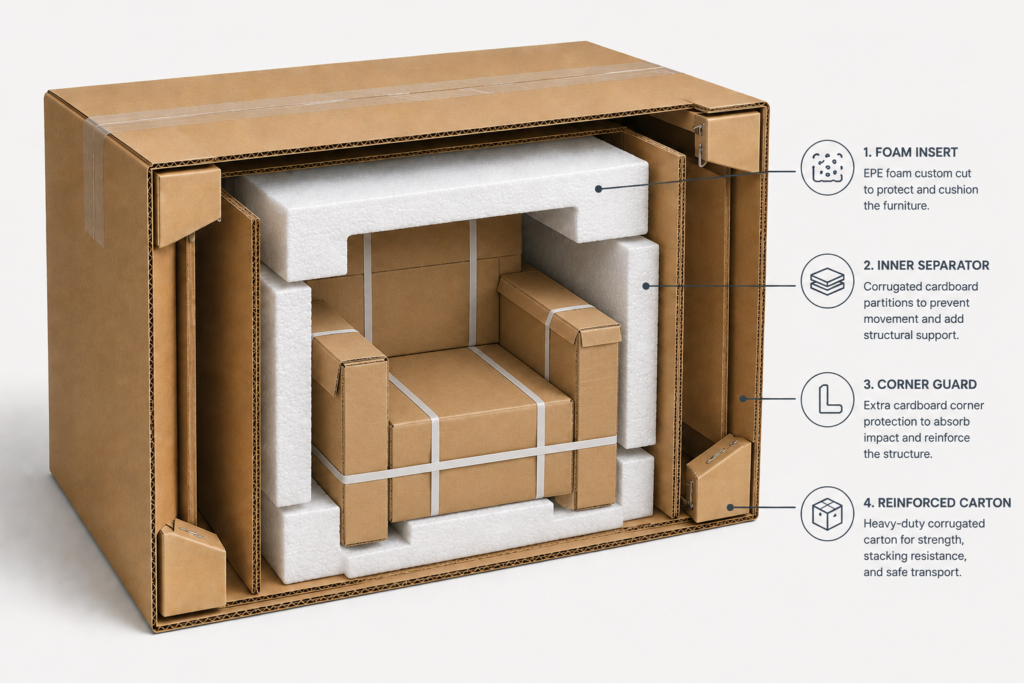
Packaging structure prevents damage by holding the product in place without squeezing it. A good carton should protect the item, support handling, and reduce movement during truck and sea transport.
Inner separators, foam inserts, corner guards, and reinforced cartons help prevent frame friction. They also reduce the chance of one part pressing directly against another finished surface.
For bulk orders, some buyers use multi-packing furniture to save container space and reduce landed cost. This can work well, but only when the internal protection is planned properly.
The risk appears when several items share one carton without enough separation. In that case, the buyer may save on freight but lose money through scratches, pressure marks, or extra warehouse handling.
Moisture Control Helps Preserve Finishing and Upholstery
Moisture control helps protect finishing, wood, rattan, cartons, and upholstery during export shipping. Sea freight exposes containers to humidity changes, temperature shifts, and condensation risk.
If outdoor furniture is packed too early, moisture can be trapped inside wrapping or cartons. This can lead to mold, odor, carton weakness, fabric issues, or coating problems.
Manufacturers can reduce this risk by allowing proper drying and curing time before packing. They can also use clean storage, dry packing conditions, cushion sealing, and desiccants when needed.
Buyers should ask how the supplier handles moisture before shipment. This is a simple question, but it can reveal whether the supplier understands real export risk or only focuses on production completion.
Container Loading Also Protects Finished Outdoor Furniture
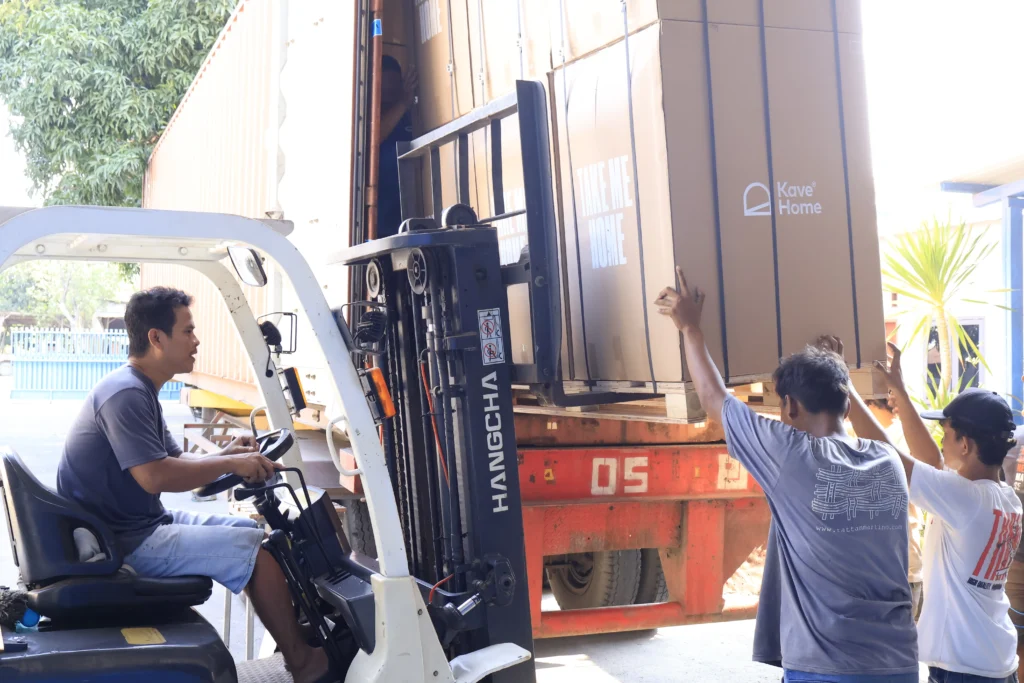
Container loading protects finished outdoor furniture by controlling weight, space, and movement. Loading is not only about fitting as many cartons as possible into one container.
Heavy cartons should be placed in a stable position so they do not crush lighter or more fragile items. Carton orientation should follow the product type, not only container space.
Empty gaps should be reduced because movement during transport can damage cartons and finished surfaces. When cartons shift, even strong packaging can fail.
Loading photos, carton marks, and clear packing lists help buyers verify how goods were arranged. This gives importers, distributors, and retailers better confidence before the container leaves the origin port.
What Buyers Should Check Before Shipment
Before shipment, buyers should ask the manufacturer for clear proof that the furniture is ready for export. This helps reduce damage risk before the container leaves the factory.
Check the final inspection result, surface protection method, carton structure, moisture control, carton marks, and loading photos. These details show whether the supplier protects the product only during production or until it is safely loaded.
A simple shipment checklist can include product condition photos, packing photos, cushion protection details, desiccant use when needed, and container loading documentation. This is especially important for retailers, importers, and distributors who need products to arrive ready for warehouse handling, retail display, or project installation.
How MPP Furniture Protects Finished Outdoor Furniture for Export
MPP Furniture treats export protection as part of the production process. As one of the indonesia furniture manufacturers, MPP combines handcrafted work, machinery support, and quality control at every stage.
Every product is built with attention to accurate dimensions, design consistency, and finishing quality. This matters because good protection starts with furniture that is already stable, clean, dry, and checked before packing.
MPP plans protection based on material, finish, product shape, packing method, and shipment needs. The goal is to preserve the finished surface, reduce movement, control moisture risk, and support safe container loading.
In practice, the packing method should be adjusted to the product type and shipment needs, because a dining chair, lounge chair, coffee table, and outdoor sofa may need different protection details.
For B2B buyers, this process supports smoother sourcing and fewer surprises after arrival. MPP also provides free consultation, free product development, OEM and private label support, and custom design services for buyers who need export-ready outdoor collections.
For buyers building outdoor living collections from Indonesia, this protection matters because the product must arrive ready for retail display, project installation, or warehouse distribution.
Conclusion
Finished outdoor furniture is not truly ready for export just because production is complete. It is ready when the surface, structure, moisture condition, carton fit, and loading plan are all prepared for long-distance shipping.
For retailers, importers, and distributors, this protection system helps reduce claims, delays, repair work, and resale problems. That is why buyers should review the supplier’s export protection process before the shipment leaves the factory.
In short, good protection is part of good manufacturing. Work with a manufacturer that understands how to protect finished outdoor furniture from production floor to container loading.
Planning to import finished outdoor furniture from Indonesia?
Contact MPP Furniture to discuss your product design, packing method, and export protection needs before your next shipment.
FAQs About Outdoor Furniture Export Protection
1. How do manufacturers protect finished outdoor furniture during export shipping?
Manufacturers protect finished outdoor furniture through final inspection, soft surface layers, reinforced cartons, inner separators, moisture control, and planned container loading.
2. What causes scratches and pressure marks during furniture shipping?
Scratches and pressure marks usually come from vibration, direct surface contact, weak internal separation, poor stacking, or heavy cartons pressing against finished surfaces.
3. Why is moisture control important for outdoor furniture export?
Moisture control is important because trapped humidity can cause mold, odor, carton weakness, cushion issues, and coating problems during sea freight.
4. What should buyers ask suppliers before shipment?
Buyers should ask about final inspection, packing materials, moisture control, carton structure, loading photos, and how fragile or finished surfaces are protected.
5. Is export packaging part of furniture quality control?
Yes. Export packaging is part of furniture quality control because a product that leaves the factory in good condition can still arrive damaged without the right protection system.


0 Comments