Teak furniture pricing confuses retailers constantly. One manufacturer quotes $800 for a dining chair. Another offers seemingly identical pieces at $400. A third charges $1,200. Which reflects fair value? Which hides quality problems?
Manufacturers typically aim for a 3-4x markup on gross material costs to ensure profitability, while retailers target reselling products at 1.5 to 2 times their costs. Understanding this structure helps you evaluate quotes intelligently instead of just comparing numbers.
Why Teak Furniture Pricing Matters for Retailers
1. Teak as a Premium Furniture Material
Quality Grade A teak furniture commonly serves 50-75 years with basic care, and examples from 100+ years ago remain functional today. This longevity creates a value perception that other materials can't match. Customers understand teak represents investment, not just a purchase.
2. Why Pricing Varies Significantly in the Market
Several factors affect teak wood pricing, including age and quality, origin, processing costs, and changes in demand. Grade variations, manufacturing quality, and design complexity all legitimately influence final costs. Price differences reflect real value distinctions when sourcing from reputable manufacturers.
3. Importance of Understanding Cost vs Value
A $3,000 teak dining set serving three generations (75 years) costs $40 annually, while a $600 budget set replaced every 6 years over the same period costs $100-120 annually. For retailers, this cost-per-year calculation determines whether teak furniture delivers margins justifying inventory investment.
Key Factors That Influence Teak Furniture Pricing
1. Quality and Grade of Teak Wood
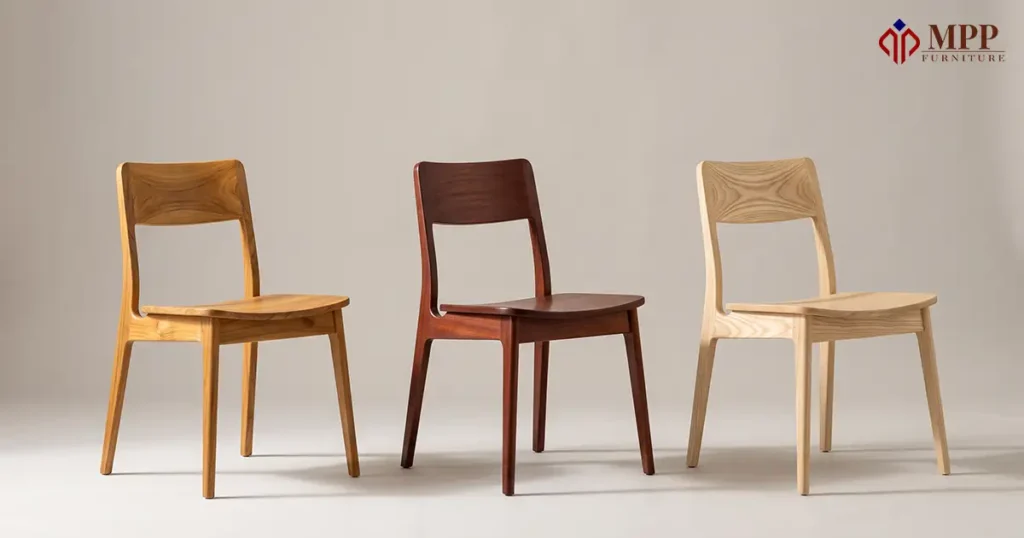
Grading systems are crucial to teak wood quality and price, with different systems having specific criteria, and higher grades commanding higher prices due to better quality and durability.
Grade A teak comes from the heartwood of mature trees (18-20+ years), features tight grain patterns, contains maximum natural oils, and shows consistent golden-brown coloring. This premium-grade costs the most but delivers superior outdoor performance.
Grade B teak includes some sapwood, shows less uniform coloring, contains fewer natural oils, and performs adequately for indoor use or covered outdoor applications. Price typically runs 20-30% below Grade A.
Grade C teak consists primarily of sapwood, has a lighter color and lower oil content, and is suitable for indoor furniture where appearance matters less than structure. Cost savings reach 40-50% versus Grade A, but durability decreases proportionally.
2. Furniture Design and Construction Complexity
Simple, clean-lined designs cost less to produce than intricate carved pieces. A basic teak bench requires minimal machining and assembly. An elaborately detailed dining chair with carved backs and turned legs requires skilled handwork, significantly increasing labor costs.
Joinery methods affect pricing substantially. Traditional mortise-and-tenon construction creates the strongest joints, requiring precise machining and skilled assembly. Dowel or screw-based joinery assembles faster at lower cost but compromises long-term durability.
3. Craftsmanship and Manufacturing Processes
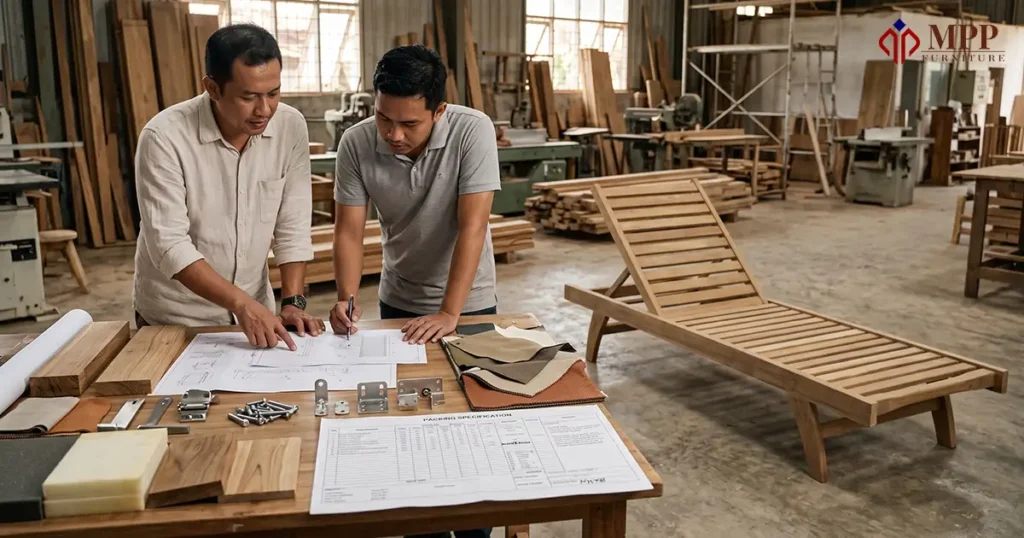
Manufacturers typically double the direct material and labor costs to set their prices. Labor quality determines whether that doubling delivers value or inflates mediocre work.
Indonesian manufacturers with generations of teak furniture experience produce superior joinery, finishing, and quality control compared to factories new to teak. This expertise shows in furniture that lasts decades, rather than pieces that fail within years.
At MPP Furniture, our 20+ years of manufacturing teak furniture demonstrate this expertise. Our craftspeople understand teak's characteristics, creating furniture engineered to meet the quality expectations of export markets.
4. Finishing Techniques and Surface Treatments
A natural teak finish requires minimal treatment, allowing the wood to weather to a silvery patina. This costs less but appeals primarily to customers who accept an aged appearance.
Oil finishes maintain golden coloring, requiring multiple application coats and periodic reapplication. Labor increases moderately while preserving the teak's natural look.
Lacquer or polyurethane finishes provide maximum protection and color control. Multiple coats, careful sanding between applications, and controlled-drying environments increase costs by 15-25% compared to a natural finish.
Production Volume, MOQ, and Their Impact on Pricing
Volume plays a critical role in determining your landed costs and ultimate retail margins.
1. Economies of Scale in Furniture Manufacturing
Quantity price breaks give better margins; the more you buy, the better your cost per unit. Fixed costs, such as machine setup, tooling preparation, and material procurement, are distributed across units. Larger orders reduce per-piece costs significantly.
2. MOQ Requirements and Pricing Adjustments
Indonesian teak furniture manufacturers typically set MOQs of 50-100 pieces per SKU for standard items. Orders meeting MOQ receive standard pricing. Orders below the MOQ are either rejected or subject to premium charges of 15-30%.
3. Planning Orders Strategically
Combine multiple SKUs to reach the total MOQ rather than ordering minimum quantities of single items. Container-load planning optimizes shipping costs while meeting the volume requirements manufacturers need for efficient production.
For detailed guidance on the teak furniture import process, see our article on how to import teak furniture from Indonesia.
Export and Logistics Costs for International Retailers
Logistics represents a significant portion of your landed cost and requires careful planning.
1. Packaging and Container Shipping
Teak furniture's weight and bulk create specific logistics challenges. A 40ft container holds approximately 200-250 dining chairs or 80-100 larger items, such as tables and benches.
Proper packaging prevents damage during ocean transit. Cardboard cartons with foam protection, wooden crates for delicate pieces, and container stuffing expertise all affect landed condition and costs.
2. Freight and Transportation Costs
Always calculate CIF/DDP costs, including duty, insurance, and freight. Ocean freight from Indonesia to the US West Coast has a transit time of 3-5 weeks. East Coast adds 2-3 weeks. Europe takes 4-6 weeks. Freight costs fluctuate based on season and global shipping demand.
3. Import Duties and Documentation
Duties vary by destination country and furniture classification. US furniture imports face duties of 0-10% depending on specific product categories. SVLK certification for legal Indonesian teak streamlines customs clearance compared to uncertified sources.
Evaluating Cost vs Value in Teak Furniture for Retail Collections
Quality teak furniture commonly sells in secondary markets for 40-60% of its original purchase price, even decades later, making it a genuine asset rather than mere consumption. This retained value matters to customers who view furniture as an investment.
Teak signals quality instantly. Customers understand teak costs more for reasons beyond aesthetics. This perception justifies premium pricing, supporting healthy retail margins.
Furniture retailers often apply markups ranging from 20% to 400% over wholesale cost, with high-end or custom furniture pieces commanding higher markups due to premium materials and craftsmanship. Teak furniture typically achieves margins toward the higher end of this range.
Why Many Retailers Source Teak Furniture from Indonesia
- Strong teak furniture manufacturing industry: Indonesia maintains established teak plantations, providing a consistent supply. Government SVLK certification ensures legal, sustainable sourcing meeting international regulatory requirements.
- Skilled craftsmanship and export experience: Indonesian manufacturers have served international markets for decades, understanding quality standards, documentation requirements, and logistics coordination that global retailers need.
- Competitive balance between cost and quality: Indonesian teak furniture costs less than domestic production while maintaining the quality standards that premium retailers require. Direct material access eliminates the import costs that manufacturers in other countries face.
For comprehensive coverage of what makes teak special, see our article on what makes teak wood so special.
Tips for Retailers to Optimize Teak Furniture Pricing When Importing
Smart pricing optimization requires strategic thinking beyond just negotiating lower unit costs.
1. Aligning Product Selection with Target Market
Stock teak furniture your customers actually want at prices they're willing to pay. High-end retailers serve affluent customers who are willing to pay premium prices. Mid-market retailers focus on simpler designs to maximize value perception while controlling costs.
2. Planning Order Quantities Efficiently
Manufacturers typically aim for a 3-4x markup on gross material costs, while retailers target a 1.5-2x markup to sustain sustainable profits, according to IMARC. Order volumes affecting your landed costs directly impact achievable retail margins. Plan quantities balancing MOQ requirements, container optimization, and realistic sales projections.
3. Building Long-Term Relationships with Manufacturers
Manufacturers prioritize established clients with proven order history. Your fifth order receives better pricing flexibility, faster production scheduling, and the option to test new designs, compared to first-time buyers.
At MPP Furniture, we structure pricing to reward partnership development. Retailers growing with us have access to better terms that reflect the mutual investment in a successful, long-term business.
Explore our complete teak furniture collections and teak furniture Indonesia factory capabilities.
Making Smart Pricing Decisions for Teak Furniture Retail Collections
Know what drives teak furniture pricing before placing orders. Material grade, construction quality, finishing standards, and volume economics all legitimately affect costs. Extremely low pricing signals compromised quality somewhere in the production chain.
Your pricing strategy centers around one question: who do you want your customer to be? Premium customers accept teak pricing when quality justifies the investment. Budget customers need value-positioned alternatives where teak might not be the right material choice.
Manufacturers that deliver consistent quality, meet delivery timelines, and support retailers operationally protect your margins better than those offering the lowest quotes but creating warranty and customer service problems. The cheapest manufacturer rarely delivers the best total cost of ownership when you factor in returns, replacements, and reputation damage from quality failures.
Successful teak furniture retail comes down to understanding the full cost structure, selecting products that align with your market positioning, and partnering with manufacturers who see your success as their own. Get these fundamentals right, and teak furniture becomes a profitable cornerstone of your retail collection strategy.
At MPP Furniture, we provide transparent pricing structures for teak furniture, helping retailers understand exactly what they're paying for and why.
👉 Let's discuss teak furniture pricing for your retail collection.
Email: sales@mppfurniture.com
WhatsApp: +62 821-4630-5858
Planning your next best-selling collection?
Request catalog, pricing info, MOQ, and custom options today — we’ll respond quickly.

A passionate writer with 2+ years of experience in SEO who turns complex ideas into informative & helpful content. I share the challenges & important considerations when preparing a global furniture project, hoping to help MPP Furniture’s readers make more informed business decisions.
0 Comments