You've done your research. You know teak furniture moves well in your market. Customers ask for it by name. Now comes the harder part: actually sourcing it right.
The problem? Teak is one of the most imitated woods in the global furniture market. Mills stamp misleading labels, factories mix grades without telling buyers, and what looks golden-brown in a catalog photo can arrive looking pale, dry, and structurally weak. For a retailer, that gap between expectation and reality has a direct cost.
This guide walks you through what genuinely separates high-quality teak furniture from the rest, from the raw wood itself to the finishing touches, so you can evaluate what you're sourcing before it ever lands in a container.
Why Quality Assessment Is Important Before Importing Furniture
Importing furniture without a proper quality evaluation is a gamble that rarely pays off.
Furniture has one of the highest return rates in retail. Industry data shows that furniture retailers face average return rates of 5–10%, with poorly handled returns costing 20-65% of the item's original value.
In e-commerce specifically, some studies estimate the return rate for furniture at 23%, making it the most frequently returned product category online.
When a piece arrives damaged, structurally weak, or visually inconsistent with what was promised, the cost doesn't stop at the return. It hits your brand reputation, customer trust, and long-term repeat business. For a retailer stocking premium teak pieces, one bad batch can undo months of positioning work.
Understanding material standards before placing an order protects all of that. It shifts the quality conversation from "we'll deal with problems later" to "we prevent them upfront."
Understanding the Characteristics of Teak Wood
Before you can identify quality furniture, you need to know what quality teak wood actually looks like. Teak (Tectona grandis) has distinct characteristics that set it apart from lookalikes and lower-grade teak.
1. Natural Color and Grain
Fresh-cut teak heartwood ranges from golden yellow to rich brown, with straight to slightly wavy grain patterns. The color comes from the wood's natural oils, which also give it that characteristic slightly oily feel when you run your hand across a freshly cut surface.
Grade A teak, sourced from the heartwood at the center of the log, shows the most uniform golden-brown tone. Lower grades, especially sapwood sections, tend to be pale or creamy white, with less consistent grain.
2. Natural Oils And Moisture Resistance
Teak's natural oil content is one of its defining advantages. These oils act as built-in preservatives, making the wood resistant to moisture, fungi, and insects without the need for heavy chemical treatment.
This is why teak has been used in boat-building and outdoor furniture for centuries. On a quality teak piece, the surface should feel slightly waxy or oily to the touch, and even through a finish, experienced buyers can detect this quality.
3. Density and Durability
Indonesian teak has a density of around 630–750 kg/m³ at 12% moisture content, placing it firmly in the hardwood category. This density contributes to dimensional stability, meaning the wood resists warping, shrinking, and expanding with changes in humidity.
High density also means the furniture holds joinery well and handles long-distance shipping without structural stress. Plantation teak harvested before 40 years tends to have lower density and less heartwood content, which is an important factor when evaluating supplier sourcing practices.
Signs of High-Quality Teak Furniture Construction
Good wood is just the starting point. How a manufacturer works with that wood tells you just as much about the final product's quality.
1. Solid Wood vs Veneer Construction
The clearest indicator of quality teak furniture is whether it uses solid wood or veneer over a cheaper substrate.
Solid teak construction means every structural component, including legs, frames, and tabletops, is made from teak throughout its thickness. You can usually confirm this by examining unfinished areas, undersides, or tenon joints where the cross-section is visible.
Veneer construction uses a thin teak layer bonded over MDF, particleboard, or lower-grade wood. The visual results can look similar in photos, but the structural differences are significant.
Veneer furniture is more susceptible to delamination in humid or changing climates, and repairs are far more difficult once the surface layer lifts.
For retail buyers sourcing premium teak furniture, solid wood construction is the non-negotiable baseline.
2. Joinery Techniques and Structural Strength
Joinery is where you separate furniture built to last from furniture built to ship. High-quality teak furniture uses traditional techniques such as mortise-and-tenon joints, dovetail joints, and dowel joinery.
These methods lock components together mechanically rather than relying entirely on adhesives or metal fasteners.
Look for clean, tight joints with no visible gaps. In well-made pieces, the joint should feel solid when you apply lateral pressure, with no rocking or flex.
Poorly constructed furniture often compensates with excessive glue, staples, or corner blocks that weren't part of the original design.
Joinery quality also reflects how a manufacturer handles drying and moisture control. Wood that hasn't been properly kiln-dried will continue to expand and contract after assembly, opening even good joints over time.
Ask suppliers about their kiln-drying process and target moisture content. Quality manufacturers target a moisture content of 8–12% before assembly.
3. Consistency in Wood Grain and Material Selection
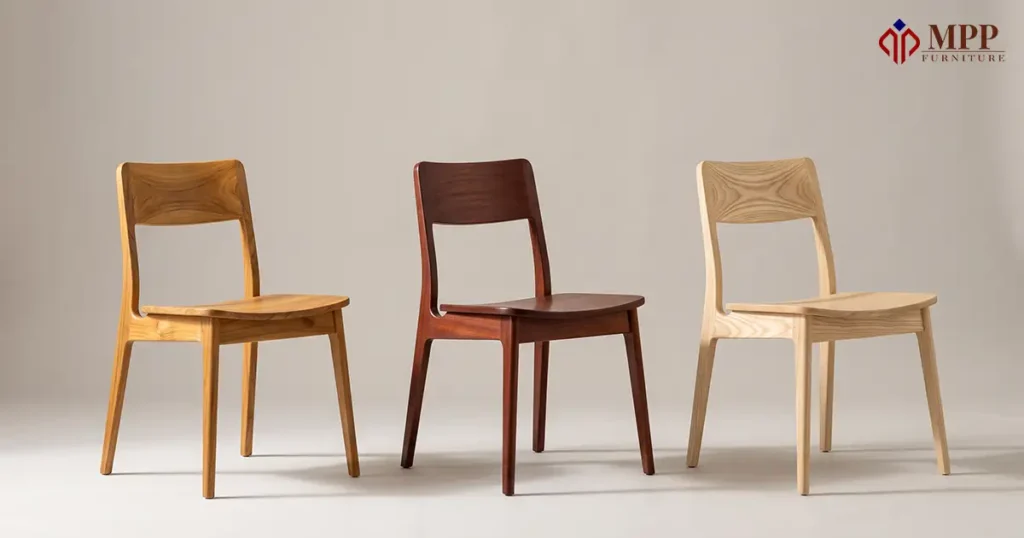
When you look at a quality teak furniture set, say a dining table with six chairs, the grain patterns and color tone should be cohesive across all pieces.
This means the manufacturer selected planks from compatible parts of the log or from matched batches, not just whatever was available on the floor.
Random grain direction within a single panel, obvious color mismatches between components, or visible sapwood sections mixed into heartwood are all red flags.
They indicate either poor material selection or that the manufacturer is using lower-grade wood while marketing it as premium.
Experienced manufacturers at the scale of a dedicated Indonesian teak furniture factory maintain wood selection protocols that ensure grain and color consistency across production runs, something smaller or informal operations often can't deliver reliably.
Evaluating Finishing Quality in Teak Furniture
The finish on a piece of teak furniture serves two purposes, is protection and presentation. A well-applied finish protects the wood through shipping, storage, and years of use. A poor finish chips, peels, or blotches, and in a retail environment, it's often the first thing a customer notices.
1. Surface Smoothness
Run your hand across the finished surface. Quality teak furniture should feel uniformly smooth with no raised grain, brush marks, or rough patches.
Teak's tight grain and natural oils make it an excellent candidate for fine finishing, but only when the surface has been properly prepared through multiple sanding stages before any coating is applied.
2. Coating Consistency
Hold the piece at an angle to a light source and look across the surface. You should see an even sheen with no drips, pooling, orange-peel texture, or uneven thickness.
These defects point to rushing the finishing process or to insufficient quality control during the final inspection.
3. Color Consistency Across the Piece
Teak's natural color variation is expected and desirable, as it signals genuine solid wood. But the variation should feel natural and gradual, not patchy or random.
If you're evaluating a furniture set, bring pieces together and compare surfaces under consistent lighting.
4. Protective Finish Type
For indoor retail use, quality manufacturers typically apply catalyzed lacquer or polyurethane finishes that provide long-term durability without obscuring the wood's natural character.
Oil finishes work well for outdoor or minimalist pieces, but require more maintenance. Ask your manufacturer what finish system they use and whether it's compatible with your target market's climate.
Why Experienced Indonesian Furniture Manufacturers Play a Key Role
Indonesia sits at the center of the global teak furniture industry for practical reasons. The country has deep expertise in working with teak, with generations of craftsmen who understand how the wood behaves through cutting, drying, machining, joinery, and finishing. That accumulated knowledge is hard to replicate elsewhere.
1. Expertise in Working with Teak Wood
Teak's high silica content, up to 1.4% by weight, makes it harder on tools than most hardwoods.
Experienced Indonesian craftsmen know how to maintain sharper tooling schedules, adjust cut angles, and manage the unique finishing properties of a wood that can resist coatings if surface oils aren't properly prepared before application.
For retailers who want to go deeper into the material itself, MPP Furniture's article on what makes teak wood so special covers the science in plain language.
2. Established Quality Control Processes
Manufacturers that have sustained export relationships over 10–20+ years have done so by building quality control systems that scale.
This means incoming material inspection, moisture content testing, in-process checks at joinery and finishing stages, and final inspection before container loading.
It also means traceable documentation, which is critical for import compliance in markets with strict wood sourcing regulations.
SVLK certification, Indonesia's timber legality assurance system, is one of the key markers that separates compliant, transparent suppliers from those cutting corners on sourcing.
3. Experience Exporting Globally
A manufacturer with deep export experience understands the full lifecycle of a piece of furniture: how it ships, what stresses it faces in transit, and what receiving markets expect.
This shows up in packaging quality, container loading methods, and documentation standards. It also means fewer surprises at customs.
Making Confident Decisions When Importing Teak Furniture with Indonesian Furniture Manufacturers
By the time you're making a sourcing decision, you've already done the harder part: understanding what good teak furniture actually looks like.
The evaluation framework above, covering wood grade, construction method, joinery quality, and finishing standards, gives you a practical checklist that applies across suppliers.
1. Quality Evaluation as a Foundational Step
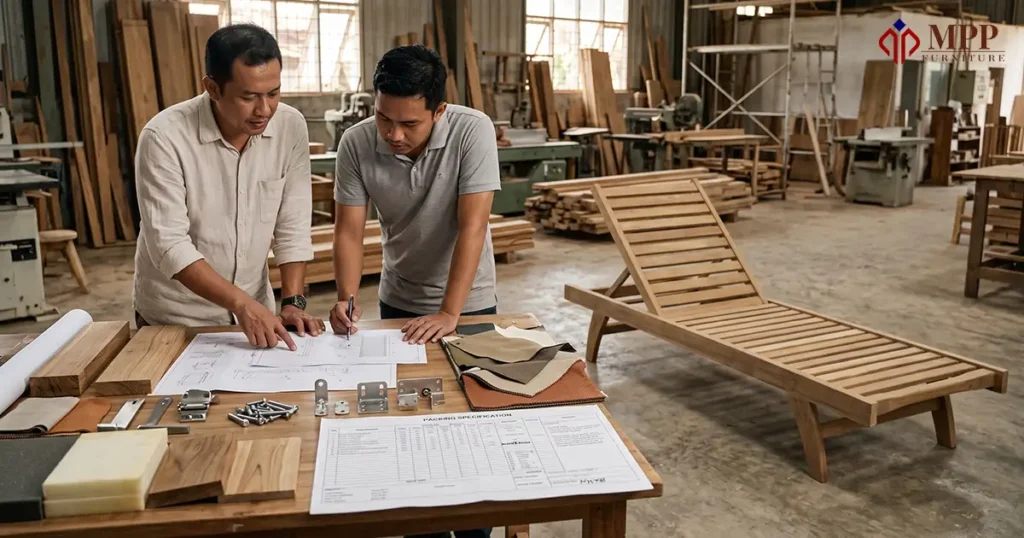
Every sourcing relationship starts with a sample order.
When evaluating samples, work through each category methodically by checking the wood surface for oil content and grain consistency, examining joints under pressure, inspecting the finish from multiple angles, and comparing color across multiple pieces.
Good manufacturers welcome this scrutiny. They've built their process around it.
2. Balancing Material Quality with Retail Pricing
Premium teak furniture carries a premium cost for good reasons. The material grows more slowly, is more difficult to work with, and is more expensive to source sustainably. But that premium translates directly into retail positioning.
Customers who buy solid Grade A teak furniture from a credible retailer are buying decades of use, and the return rates that come with poorly sourced furniture disappear almost entirely from the equation.
3. Building Partnerships with Reliable Manufacturers
The best sourcing relationships are built on shared standards, clear communication, and a manufacturer that understands your retail market.
Manufacturers with 20+ years of export experience, established quality systems, and SVLK certification have the infrastructure to be genuine long-term partners. That kind of relationship is what makes consistent quality at scale actually possible.
If you're ready to explore what that looks like in practice, start with MPP Furniture's services page or browse their full furniture collections to see the standard they deliver.
For a practical walkthrough of the import process, their guide on importing teak furniture from Indonesia is worth bookmarking.
👉 Let's discuss teak furniture for your retail collection.
Email: sales@mppfurniture.com
WhatsApp: +62 821-4630-5858
Planning your next best-selling collection?
Request catalog, pricing info, MOQ, and custom options today — we’ll respond quickly.

A passionate writer with 2+ years of experience in SEO who turns complex ideas into informative & helpful content. I share the challenges & important considerations when preparing a global furniture project, hoping to help MPP Furniture’s readers make more informed business decisions.
0 Comments