What is private label furniture? Private label furniture refers to products manufactured by a third-party factory but sold exclusively under a retailer's own brand name. This procurement strategy allows businesses to customize designs, control their pricing, and build strong customer loyalty without the heavy capital investment of owning manufacturing facilities.
A few weeks ago, a wholesale procurement manager asked us a very specific question. They wanted to know if we could make their imported furniture orders feel more exclusive and high-end by adding custom metal plates or leather burn embossing. That conversation highlights a difficult problem retailers face today. Retailers and wholesale buyers often source the exact same tables, chairs, and cabinets as their competitors. Consequently, they are forced to compete entirely on price. Competing solely on cost consistently squeezes profit margins and stifles business growth.
The most effective way out of this trap is private label furniture. In fact, according to Entrepreneur magazine, knowing exactly when to switch to private labeling is a crucial step for retailers who want to regain control over their margins and stop competing solely on price. By placing your own brand name on imported manufactured goods, you stop selling commodities. You start selling an exclusive retail collection that customers cannot price-check at the shop down the street.
This strategy allows you to control your pricing and your market positioning. Ultimately, white-label services and custom branding allow you to build a recognized B2B furniture brand while streamlining your global supply chain. In this article, we will explain the financial benefits of custom branded furniture, how the OEM manufacturing process works, and how to optimize your sourcing strategy.
Key Takeaways
- Optimize Procurement: Learn how importing exclusively branded furniture protects your business from direct price comparisons.
- Boost Profit Margins: Discover why customers willingly pay premium prices for curated retail collections rather than generic imports.
- Build Customer Loyalty: See how physical branding elements like metal badges and custom tags generate repeat B2B volume inquiries.
- Practical Implementation: Explore seamless methods for integrating your logo and signature style during the overseas manufacturing process.
- Ensure Brand Protection: Understand why rigorous factory quality control is essential for protecting your supply chain and brand reputation.
The Difference Between Selling Commodities and Building a Brand
When you procure generic, unbranded items, buyers only care about the cost. They will search online, compare your prices with other stores, and choose the cheapest option. If another shop offers a similar wooden dining chair for five dollars less, you lose the sale.
Conversely, when you sell private label furniture, you sell an exclusive product. Building a brand changes the buyer's focus from the price tag to the perceived value. A custom metal badge or leather burn emboss on a chair tells the customer they are buying a curated, professional experience.
This distinction is especially important for interior designers and project-based businesses. When an interior designer pitches a project to a hotel, presenting a unified, branded contract furnishings collection looks much more professional than offering generic catalog items. As a result, your retail inventory becomes unique, and your business becomes a recognized name in the industry.
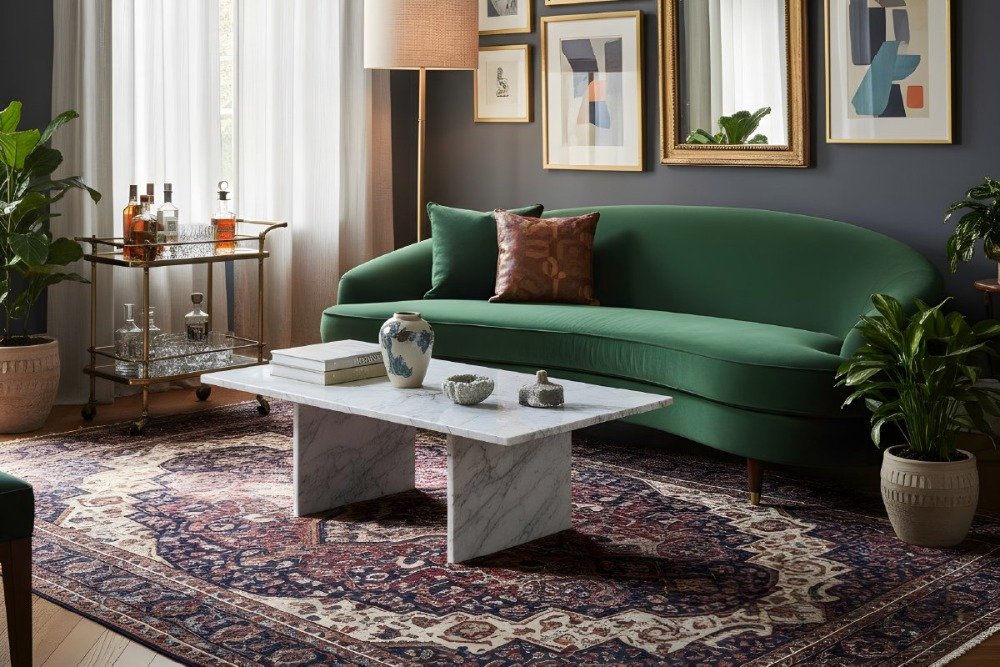
Core Benefits of Private Label Furniture for Retailers
Integrating custom branded furniture into your global sourcing strategy offers major financial and strategic advantages. It is a highly cost-effective procurement decision that directly improves your bottom line.
Commanding Higher Price Points and Better Margins
Unbranded furniture has a natural price ceiling. Shoppers generally know what a standard rattan chair should cost. However, adding your brand name immediately changes how the product is valued.
For example, a high-quality, expertly handcrafted chair with a custom upholstery tag feels like a premium designer piece. Customers are consistently willing to pay more for brands they perceive as trustworthy and exclusive. This means you can raise your retail prices with confidence. As highlighted by the Forbes Business Council, private brands consistently excel in challenging economies because they offer an exclusive perceived value that generic, interchangeable commodities simply cannot match.
Since your manufacturing and importing costs remain very similar to sourcing unbranded items, your profit margins improve significantly. The small extra cost of adding a metal badge or bespoke packaging pays off easily through the higher retail price you can command.
Fostering Customer Loyalty and Repeat Business
If a customer buys an unbranded table and loves it, they might not remember where they bought it two years later. They also cannot recommend your specific store to their friends easily.
Custom branding fixes this visibility problem. When your logo is physically attached to the product, the customer sees it every single day. If they decide they want matching chairs or a new cabinet later, they will actively look for your brand.
This fosters deep customer loyalty and generates repeat B2B wholesale and contract procurement inquiries. Furthermore, when their guests ask about the beautiful furniture in their home, your brand name naturally becomes part of the conversation.
Trade-Offs: White Label vs. Private Label Furniture
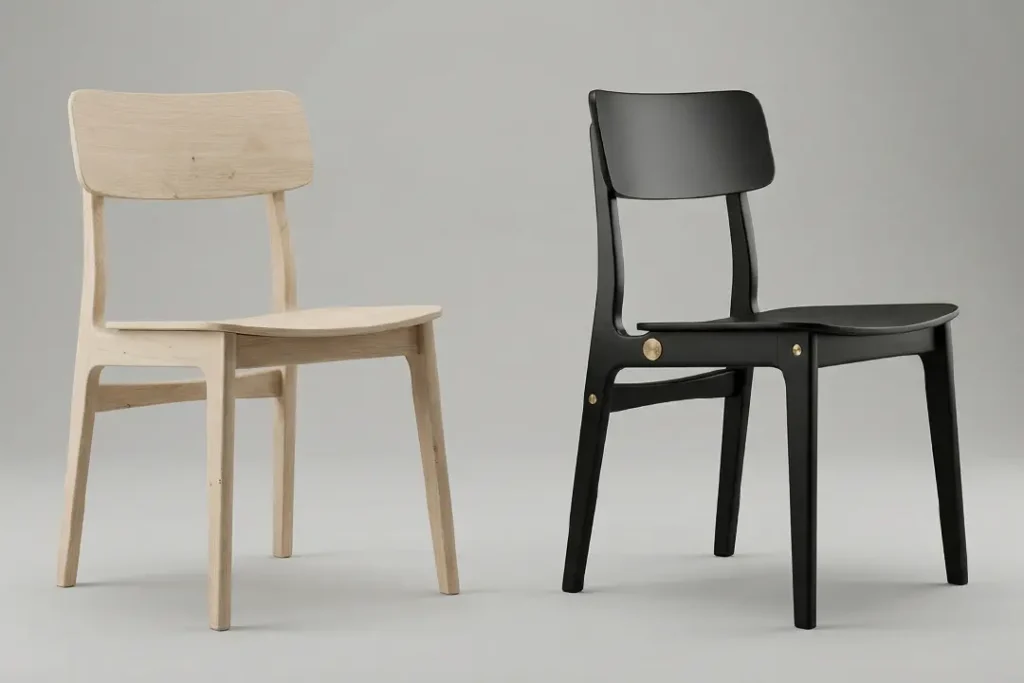
Understanding the difference between white label and private label furniture is necessary for planning your retail strategy. Both options are helpful, but they serve different business goals.
White label furniture refers to generic, ready-made products manufactured for multiple retailers. You procure the inventory, put your name on it, and sell it. It is fast, convenient, and usually requires lower minimum order quantities (MOQs). However, you still offer the exact same design as other retailers.
Private label furniture is produced exclusively for your brand. You work with a dedicated custom furniture supplier to modify the design, adjust the dimensions, or choose exclusive materials. This creates true brand differentiation.
The main trade-off is time and commitment. Private labeling takes a bit more time for product development and often requires higher initial sourcing volume. However, the long-term equity you build in a unique product makes it a better choice for serious retailers and high-volume importers.
How to Add Custom Branding to Wholesale Furniture
Adding your brand to a product should look natural. It must look like an intentional part of the original design, not a cheap sticker added at the last minute. Here are the most effective ways an experienced export manufacturer can integrate your brand identity:
- Custom Upholstery Tags: For sofas and cushions, we can sew custom labels directly into the seams. This gives the fabric a soft, tailored, and highly professional look.
- Metal Badges and Embossing: Small, engraved metal plates can be securely attached to the underside of chairs and tables using precision routing. For leather components, burn embossing creates a premium, rustic stamp.
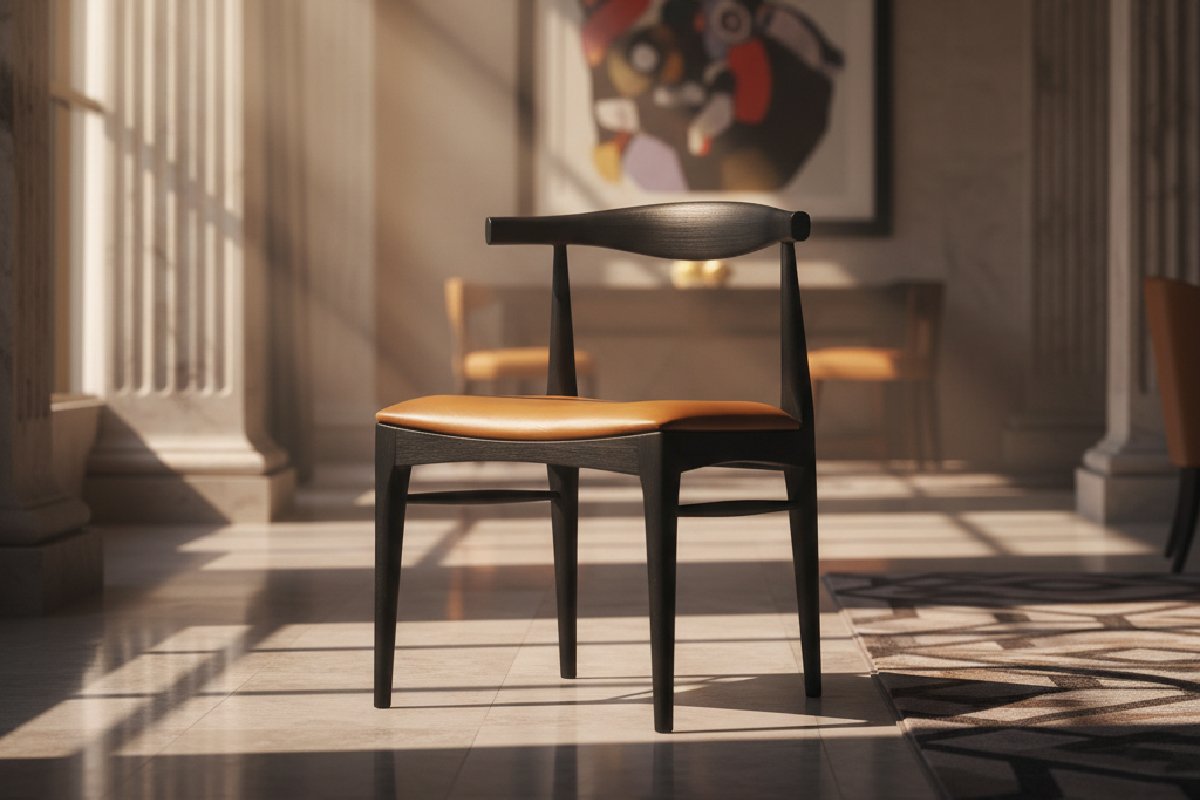
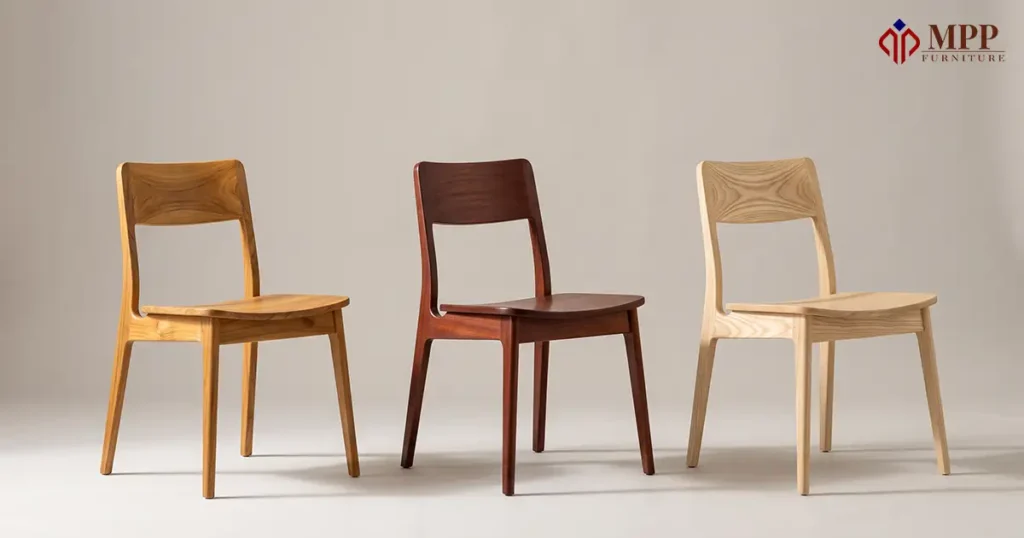
- Signature Finishes and Hardware: Establishing a signature style creates instant brand recognition. You can differentiate your imported inventory by selecting exclusive wood stains (like a signature matte black) or custom brass handles that other retailers cannot access.
- Bespoke Packaging: The customer experience begins at delivery. Printing your logo and brand colors directly on heavy-duty carton boxes builds immediate trust and is essential for businesses that drop-ship to end consumers.
Note: Creating physical branding elements like molds or badges requires a small one-time setup fee and a Minimum Order Quantity (MOQ). Yet, this minor initial investment is what permanently separates your product from cheap, mass-produced items.
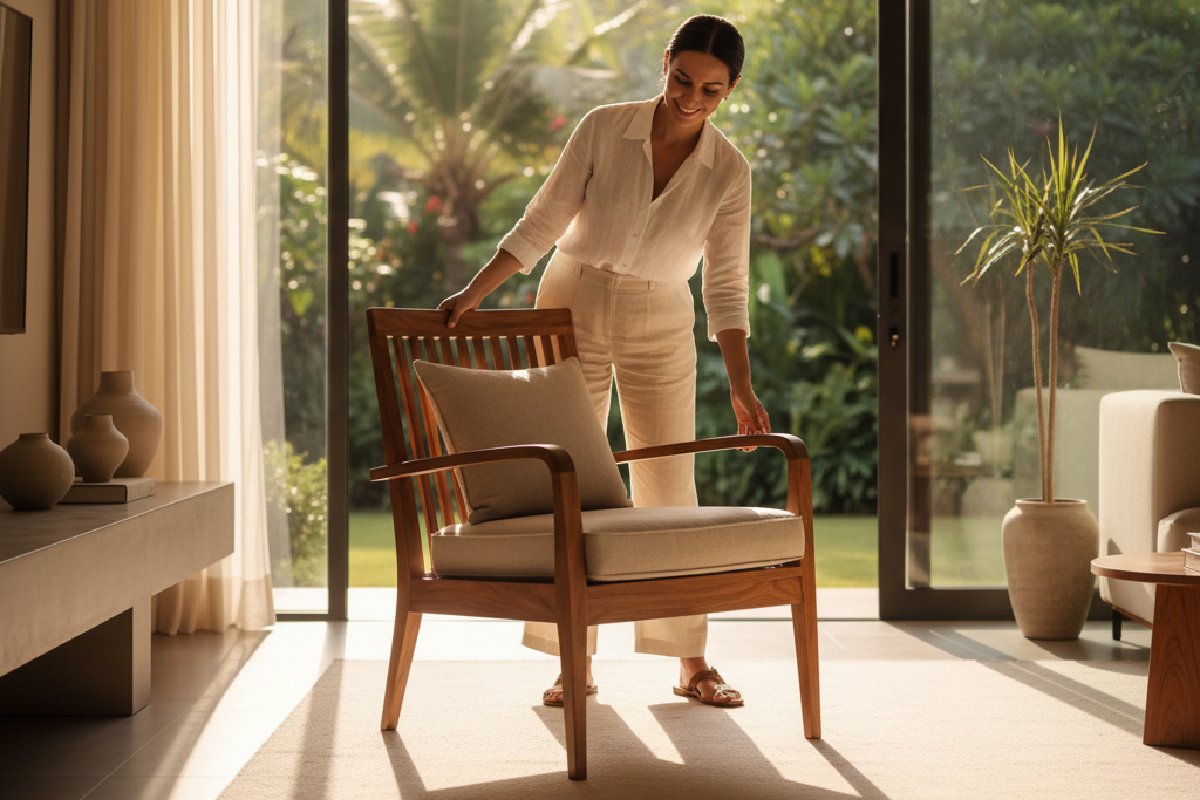
How Factory Quality Control Protects Your Brand
Your brand is only as good as the physical product behind it. If a customer buys your branded chair and it breaks a month later, your brand takes all the blame. The customer does not blame the overseas factory; they blame you.
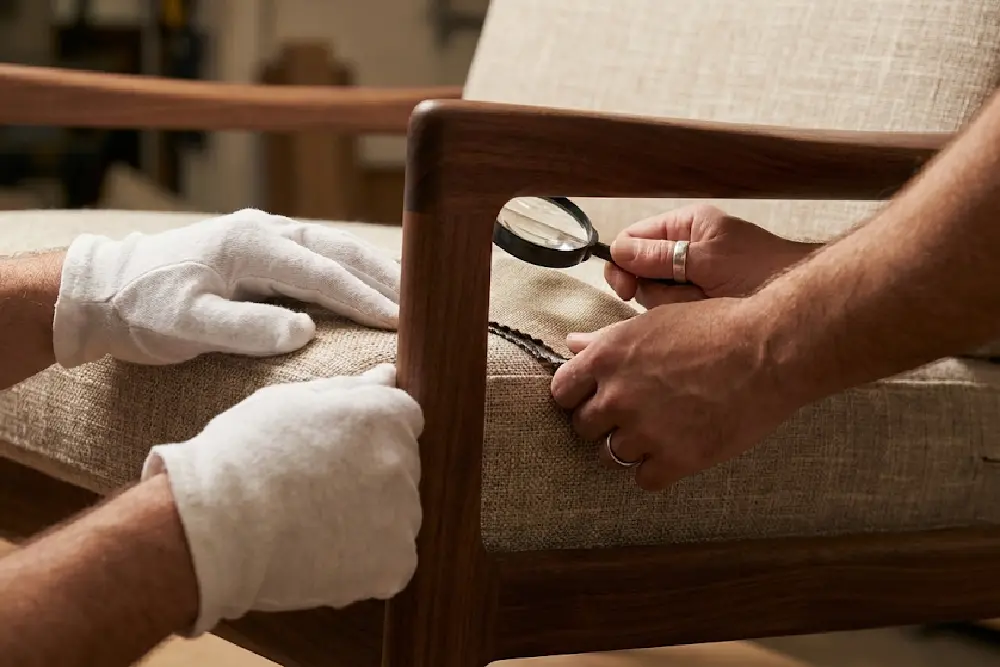
Therefore, partnering with an export manufacturer that prioritizes quality control represents a non-negotiable procurement decision. Issues like high wood moisture content can cause expensive tables to crack when shipped to dry climates. A reliable manufacturer will use properly kiln-dried wood to prevent these failures. Additionally, utilizing precision-cut joinery ensures frames remain perfectly stable over years of heavy use.
When your name is on the product, every joint must be strong, and every finish must be flawless. Rigorous factory-level testing guarantees your brand is associated with durability and high value.
Finding an Indonesian Furniture Manufacturer for Your Private Label
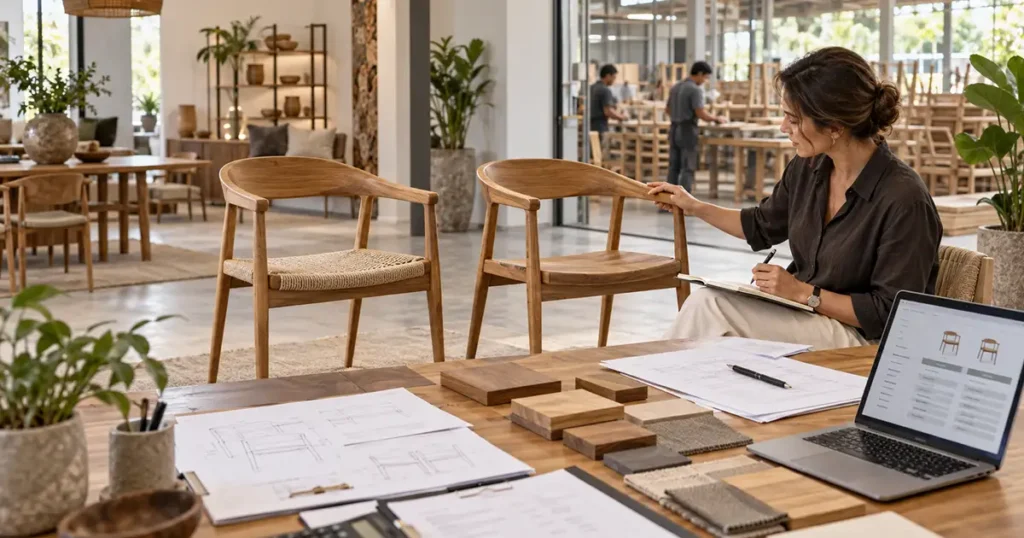
Whether you are a procurement director sourcing for hospitality projects or a retailer importing high-volume inventory, you need a reliable custom manufacturing partner. When you are ready to source customized products for your business, industry leaders like BigCommerce emphasize the absolute importance of partnering with a reliable, vetted factory that can support your long-term supply chain vision. At MPP Furniture, we specialize in helping global retailers, importers, and procurement teams build profitable brands through premium OEM furniture manufacturing.
Every piece of wooden and rattan furniture we produce is expertly handcrafted. We combine traditional Indonesian craftsmanship with advanced machinery to deliver consistent, high-quality results. We manage 100 percent of the production in-house, which allows us to maintain strict quality control at every single stage of the supply chain.
Our process is designed to make scaling your brand as smooth as possible. We offer convenient one-stop sourcing, free consultation, and free new product development to match your exact market needs. With a proven 99 percent client satisfaction rate and a minimal complaint ratio of 0.56 percent, you can trust us to bring your brand vision to life.
Summary
To summarize, private label furniture is a highly effective way to separate your retail store from the crowded market. By adding custom branding to your global procurement strategy, you increase the perceived value of your products, boost your profit margins, and build lasting customer loyalty. While creating a brand requires a reliable export manufacturing partner, the long-term financial benefits are clear. You stop sourcing interchangeable commodities and start building a valuable, independent business asset.
Ready to Launch Your Exclusive Private Label Furniture Collection?
Let’s discuss how our bespoke manufacturing and custom branding services can set your retail store apart and boost your profit margins.
FAQs About Private Label Furniture
1. What is the difference between white label and private label furniture?
White label furniture is a generic, pre-designed product sold to many retailers who can sell it under their own name. Private label furniture is often customized in design or finish and is manufactured exclusively for one specific retailer.
2. How do I start a private label furniture brand?
Start by finding a reliable furniture manufacturer that offers custom design and OEM services. Request a free consultation to discuss your brand vision, target audience, and the specific custom tags or packaging you want to use.
3. Does custom branding increase manufacturing lead time and cost?
The initial setup for creating custom metal badges, leather burn molds, or bespoke packaging usually involves a small one-time mold fee and may add a few days to your very first order. However, once your branding materials are in stock at the factory, the production time and cost for repeat orders remain nearly identical to standard manufacturing.
4. Can I add metal badges or leather embossing to wholesale furniture orders?
Yes. Most capable, full-service manufacturers allow you to add metal badges, upholstery tags, or leather burn embossing to your wholesale orders. This is a standard process to help B2B buyers build their unique retail collections.
5. Why is factory quality control important for my private label brand?
When your logo is on the product, the customer holds you responsible for any defects. Strict factory quality control prevents issues like cracked wood or wobbly legs, making sure your brand is always associated with high quality and reliability.

Versatile Digital Marketing & Creative Specialist with a strong foundation in graphic design, product photography, and comprehensive brand strategy. Proven ability to bridge the gap between physical products and digital presence, translating complex concepts into high-converting marketing assets. Adept at leveraging SEO, web analytics, and engaging visual content to drive business growth and elevate brand identity in competitive markets.
0 Comments