One wrong material choice can turn a profitable commercial project into an endless cycle of costly maintenance and ruined guest experiences. When engaging in custom furniture sourcing, the materials you specify dictate both immediate visual impact and long-term viability under heavy operational stress.
To protect your investments, aligning frame construction, upholstery science, and textural accents with their specific environments is non-negotiable. Partnering with an experienced Southeast Asian contract manufacturing partner requires FF&E procurement teams to speak the language of material engineering.
This guide deconstructs the core materials used in contract furniture manufacturing, covering three primary categories:
- Solid Wood Frameworks: Structural foundations including Teak, Mahogany, Sungkai, and Mindi.
- Upholstery & Cushioning Engineering: Comfort and durability through Performance Fabrics, Foam, and Leather.
- Weaving Materials & Textural Accents: Aesthetic detailing using Natural and Synthetic fibers.
Part 1: Solid Wood Frameworks for Commercial Furniture
The structural integrity of any custom commercial furniture relies on selecting the appropriate timber species for the intended climate and usage tier.
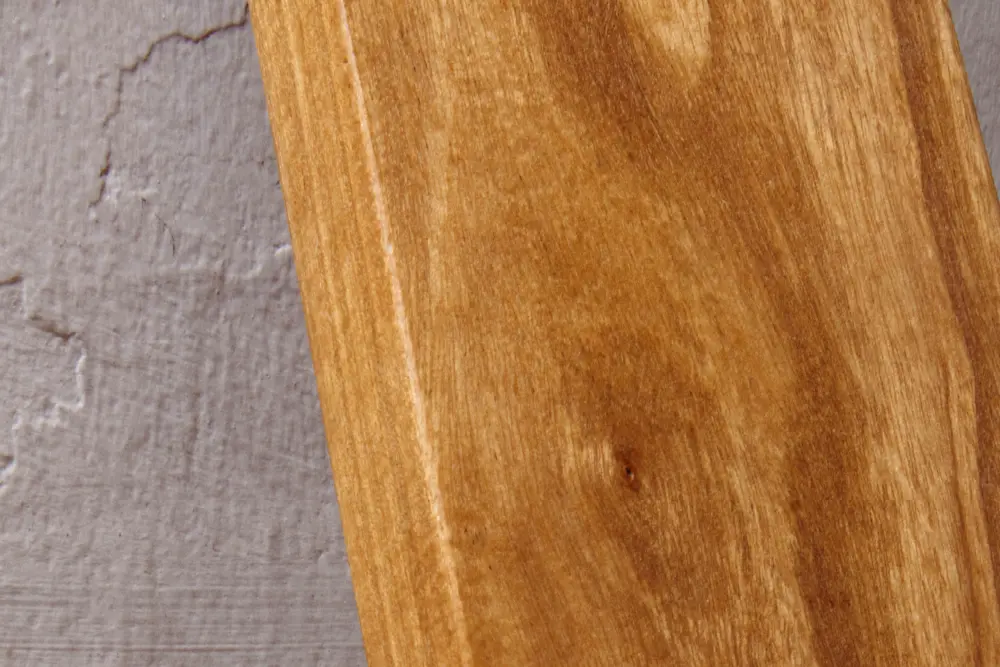
Teak Wood (Tectona Grandis) for Outdoor Hospitality Sourcing
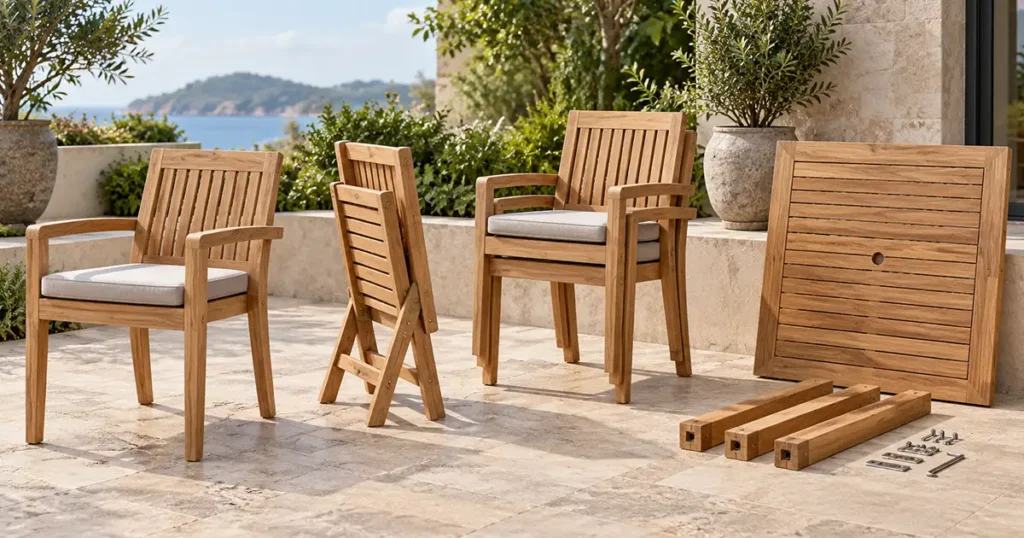
Teak stands as the industry standard for high-exposure outdoor environments. Its dense grain holds a high concentration of natural silica and rubber, acting as a self-lubricating defense mechanism. This allows the wood to withstand salt spray, continuous UV exposure, and moisture, weathering gracefully into a silver-gray patina without splintering or rotting.
The timber's structural density allows heavy commercial pieces to remain stable without excessive cross-bracing. In custom fabrication, teak excels in the following applications:
- Heavy-duty resort patio sun loungers
- Expansive outdoor restaurant dining sets
- Architectural public space benches
However, specifying teak introduces significant regulatory and operational challenges. On the regulatory side, buyers must treat SVLK certification as a procurement mandate to navigate traceability laws. For European markets, securing EUDR compliance is necessary to guarantee a legal harvest.
Operationally, teak’s natural oils present a unique hurdle. These oils often leach during the first few months of elemental exposure, risking permanent stains on light-colored outdoor cushions or porous stone patios. Furthermore, the technical experts at The Wood Database explain that the high concentration of antioxidants and natural oils in species like teak often prevents reactive finishes from curing properly, which explains why lacquers frequently remain tacky or eventually peel. Finally, the sheer density of teak increases final product weight, which drives up international freight costs and makes daily reconfiguration of patio layouts more labor-intensive.
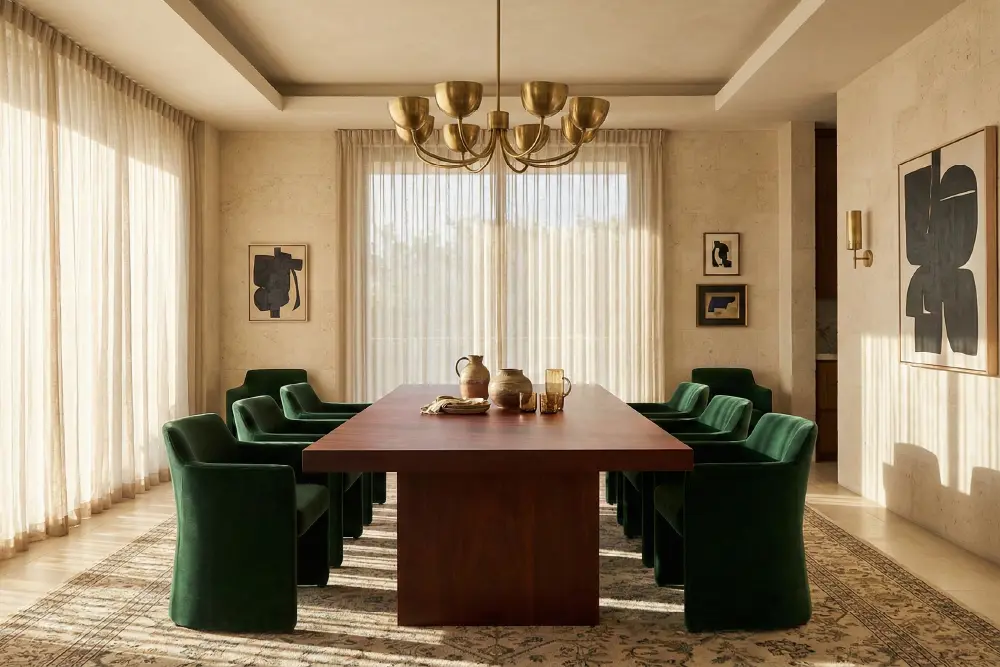
Mahogany (Swietenia Macrophylla) for Executive Interiors
Mahogany serves as a preferred choice for formal, climate-controlled environments like corporate boardrooms and fine-dining establishments. It's straight, fine-grain responds to the craftsman's tools with architectural precision, making it the gold standard for detailed carving.
This timber is exceptionally good for designs requiring polished elegance where a pristine silhouette is desired. You will frequently see mahogany crafted into:
- Grand corporate boardroom tables
- Intricate executive desks
- Premium high-backed restaurant seating
From a durability standpoint, mahogany’s superior workability comes with a trade-off in surface resilience. Because it is slightly less dense than teak, it is more susceptible to dents and scratches in high-traffic environments where furniture encounters frequent luggage impact or cleaning equipment.
Mahogany is also photo-reactive, meaning it develops a natural patina over time when exposed to light. While this aging process is often desirable, it can gradually shift the hue of applied stains, potentially altering the intended color palette of a room. Regarding stability, mahogany performs reliably in standard climate-controlled spaces. While it lacks the extreme moisture resistance of teak and can warp under sudden, extreme environmental shifts, it remains a durable and stable choice for indoor commercial settings.
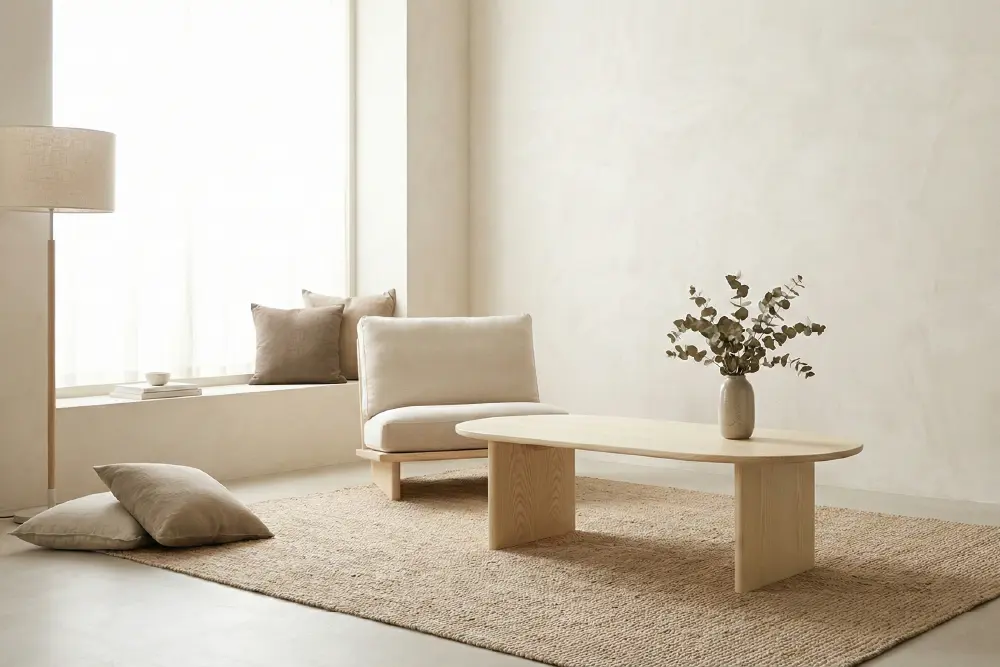
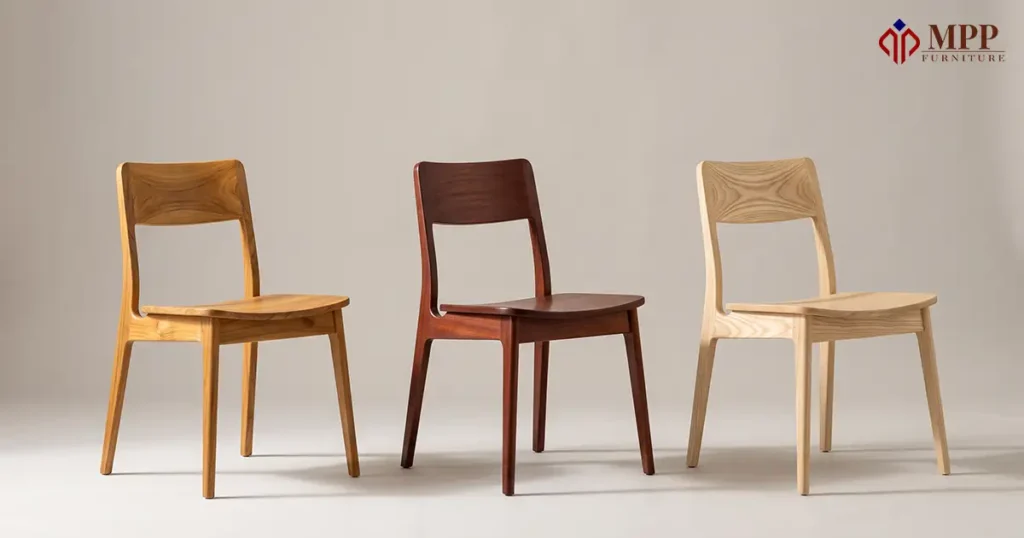
Sungkai (Peronema Canescens) for Modern Commercial Spaces
Sungkai, often dubbed "Indonesian Oak," is highly sought after for contemporary, minimalist, and Japandi-inspired commercial spaces. While categorized as a hardwood, its physical density and surface hardness sit far below those of Teak or Mahogany. An industry guide from Cali Floors defines the Janka scale as a primary measure of a wood's resistance to wear and denting, substantiating why lower-density hardwoods are significantly more susceptible to impact damage in high-traffic commercial zones.
Sungkai truly excels in designs that celebrate light, airy aesthetics. Its primary strength lies in its striking visual resemblance to premium White Oak or Ash wood. Offering a competitively lower price point, it serves as an excellent B2B procurement alternative for achieving a high-end Scandinavian look in large-scale hospitality rollouts.
Common applications include:
- Mid-century modern lounge chairs with exposed frameworks
- Scandinavian-style hotel dining tables
- Slatted architectural room dividers
Craftsmen favor Sungkai for its amazing workability in creating clean, contemporary lines. However, this ease of use carries a structural limitation: it lacks the internal density required for intricate carving. Fine carved details in Sungkai often lack the integrity found in Mahogany and are prone to chipping or structural failure over time. Furthermore, its porosity remains a risk; outdoors, it lacks the natural oils to repel moisture, leading to rapid degradation. The industry best practice is to utilize Sungkai strictly indoors and apply light-wash sealers to preserve its organic grain.
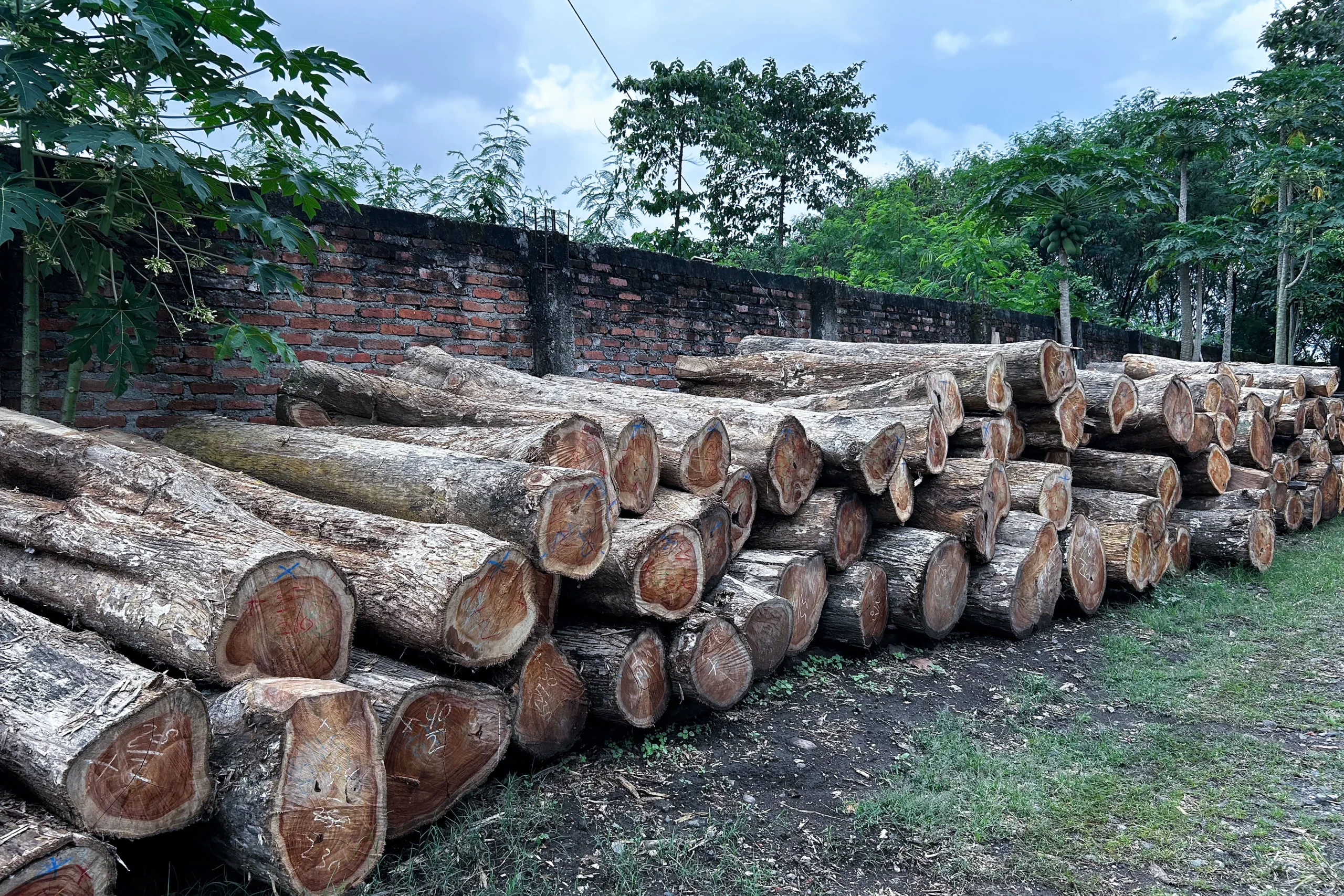
Mindi (Melia Azedarach) for High-Volume Hotel Rollouts
For commercial rollouts requiring hundreds of identical case goods, Mindi wood provides cost-effective scalability. While it shares the competitive price point and high workability of Sungkai, Mindi offers a much finer, tighter grain structure. This smooth surface texture provides a superior canvas for high-quality painting, lacquering, and veneering, ensuring a uniform finish across large hotel orders.
While Mindi shares a similar refined grain pattern with Teak, its natural color and performance characteristics remain distinct. It serves best as a specialized material for indoor case goods where a sleek, sophisticated finish is required without the heavy texture of open-pored woods. Technical resources from Workshop Companion detail how wood continues to move and warp until its internal moisture reaches equilibrium with the surrounding environment, which validates the necessity of our strict 8-10% kiln-drying mandate.
The primary risk with Mindi involves material preparation. It is highly susceptible to fungal attacks and internal splitting if its moisture isn't properly extracted prior to milling. Procurement teams must enforce a strict sourcing directive: require documentation from the manufacturer proving that the timber has been kiln-dried to an internal moisture content of 8-10%.
Transitioning from the structural foundation, the end-user's experience ultimately depends on the materials layered above the wood. This brings us to the science of seating.
Part 2: Upholstery & Cushioning Engineering for Custom Furniture
Hospitality furniture materials demand a rigorous, engineered approach to textiles and foams. The finest wood framework will fail the end-user if paired with inadequate seating architecture.

Performance Fabrics & Foam for Exterior Zones
Outdoor commercial environments demand seating that resists environmental degradation and recovers rapidly from rain or spills. Modern performance upholstery achieves this through solution-dyed acrylics, which lock color directly into the fiber before spinning to render the fabric highly fade-resistant and bleach-cleanable. When paired with reticulated quick-dry foam—which features an open-cell structure allowing water to pass through—the risk of internal mold is effectively mitigated.
These engineered materials are most commonly deployed in heavy-use exterior zones where rapid turnaround is required, including:
- Modular resort patio sectionals
- Deep cabana daybeds
- High-turnover outdoor dining cushions
While this engineering requires a higher initial capital investment, it is a necessary expenditure for longevity. The industry standard is to mandate reticulated foam for all outdoor applications. For indoor textiles, demand a minimum 40,000 Martindale rub count to survive heavy daily abrasion.
Leather for High-Traffic Luxury Venues
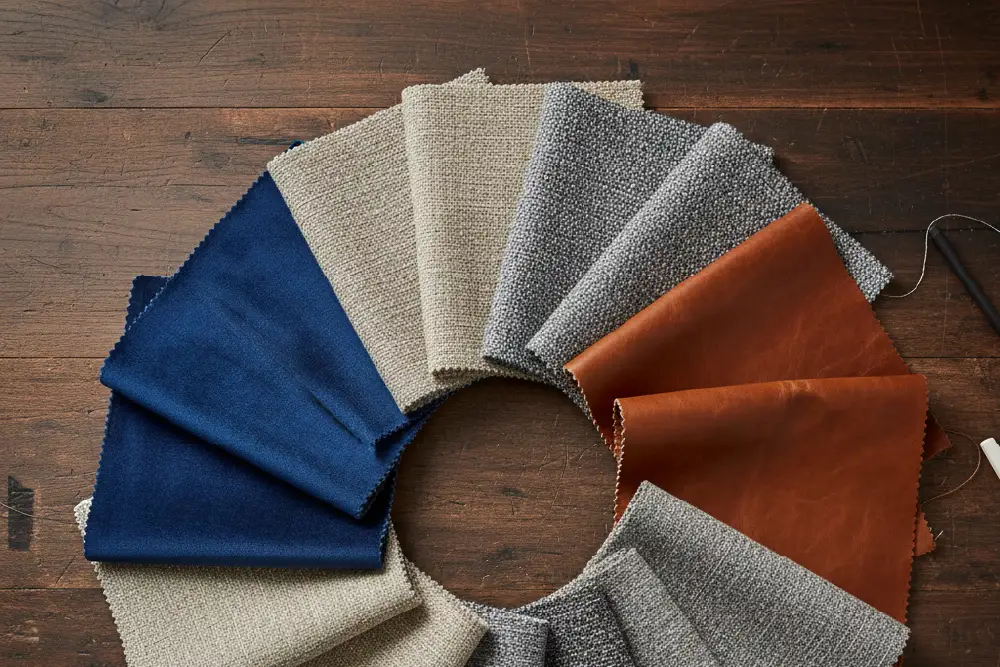
For high-traffic luxury indoor environments, seating must balance premium tactile aesthetics with heavy commercial usage. Semi-aniline leather strikes a practical balance. By retaining a thin layer of the hide's natural grain, it delivers an authentic hand feel. A light surface coating of pigment and polymer provides a protective barrier against liquid spills and body oils.
In commercial interiors, semi-aniline leather elevates the perceived value of a space while withstanding continuous guest turnover. Specialists at Moore & Giles clarify that while pure aniline hides age naturally, the protective pigment layers applied to semi-aniline leather effectively block the development of a patina to prioritize long-term stain resistance.
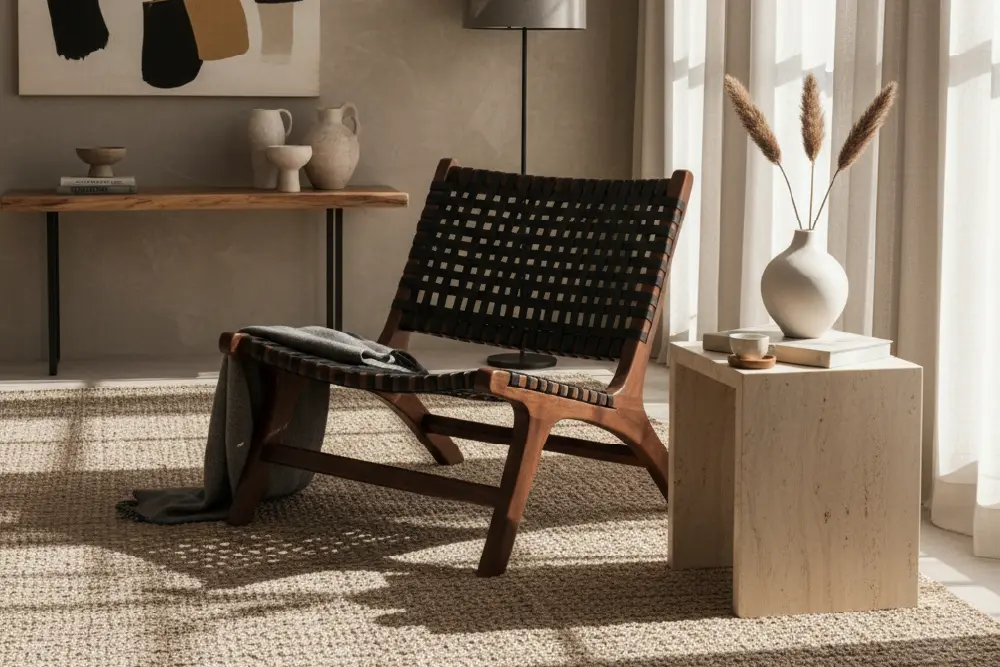
Specifying leather requires an understanding of thermal comfort. Full leather upholstery often lacks breathability, potentially leading to an uncomfortable, "sticky" feeling during long seating periods in warm climates. For designs requiring higher ventilation, woven leather or leather strapping serves as an excellent alternative. Woven structures maintain structural support while allowing air circulation, significantly enhancing the user experience.
The primary trade-off for semi-aniline leather remains the risk of the protective coating micro-fracturing under extreme, decades-long use. Procurement teams must ensure that these material choices align with the client's long-term aesthetic and comfort expectations.
Beyond structural wood and engineered seating, the final layer of material selection involves aesthetic detailing. Woven accents play a crucial role in finalizing the design's character.
Part 3: Weaving Materials & Textural Accents in Custom Fabrication
Woven elements introduce visual tension and organic warmth, often acting as a defining characteristic of a mixed-material piece. However, the choice between natural and synthetic fibers strictly dictates environmental viability.
Natural Weaving (Rattan & Water Hyacinth) for Wellness Spas
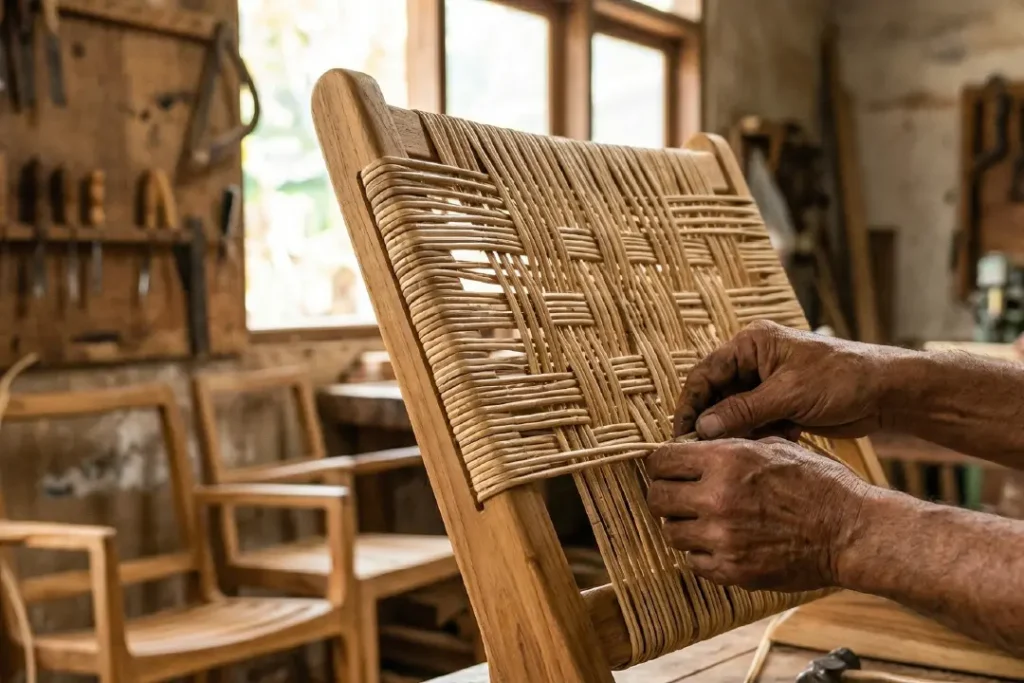
Natural organic weaves—such as kubu rattan, seagrass, and water hyacinth—excel in climate-controlled spaces like wellness spas and boutique interiors. They deliver a tactile richness and authentic warmth that synthetic alternatives cannot easily replicate, resonating well with eco-conscious brands.
These materials bridge the gap between structural furniture and decorative art, adding a bespoke, artisanal touch to pieces such as:
- Intricate accent lounge chairs for hotel lobbies
- Textured boutique hotel headboards
- Statement lighting pendants
This authenticity comes with high environmental sensitivity. Natural fibers readily absorb moisture from the air, inviting mold in humid conditions. They become brittle enough to snap when exposed to direct sunlight or overly dry air conditioning. The operational directive is to restrict natural organic weaves entirely to climate-controlled or fully covered environments.
Synthetic Weaving & Architectural Rope for Exposed Patios
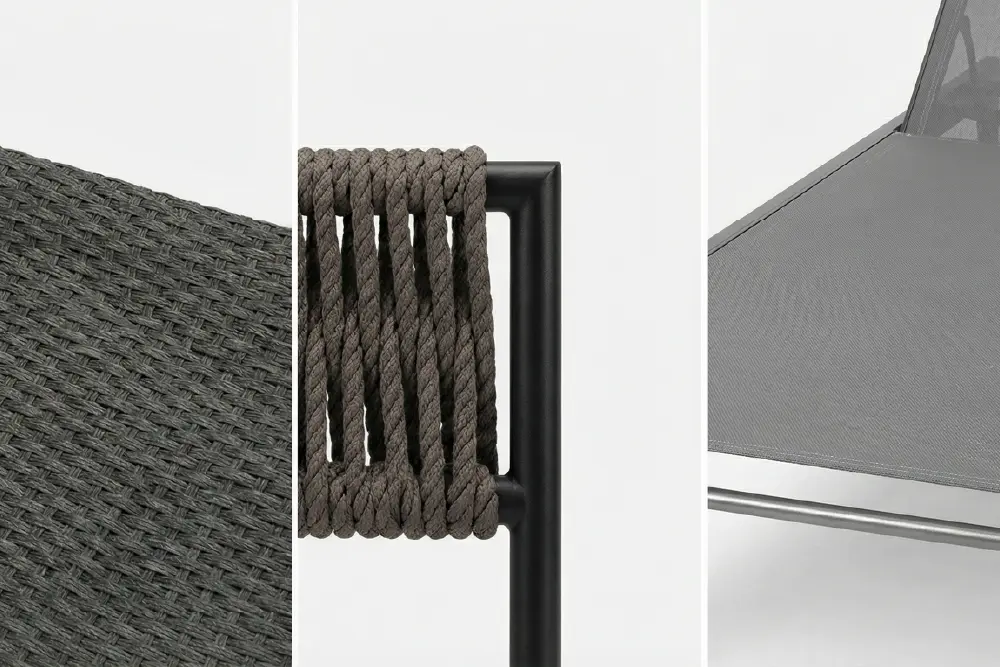
For environments facing continuous elemental exposure, high-quality synthetic materials have become the structural standard. Unlike early-generation plastics, modern UV-stabilized HDPE (High-Density Polyethylene) and marine-grade architectural ropes offer exceptional resistance to rain, salt spray, and chlorinated water. According to an analysis by 4 Seasons Outdoor, the evolution of high-performance architectural rope has largely eliminated early UV concerns, yet the material still demands specialized hand-braiding and significant lead times for any custom profile development.
Synthetic weaves are structural powerhouses for exposed settings, commonly formed into:
- Open-weave outdoor restaurant seating
- Balcony bistro sets
- Expansive marine deck loungers
While modern production techniques have largely solved weather resistance issues, the primary downside for designers is a lack of aesthetic variation. Achieving a truly custom "look," or a unique textural pattern, is possible with select suppliers, but this often requires significant lead times for development and production. Procurement teams must plan several months in advance when specifying custom synthetic weaves to avoid project delays.
Use the chart below as a quick-reference checklist for your next sourcing project.
| Material / Component | Ideal Environment | Biggest Risk / Downside |
|---|---|---|
| Teak Wood | Outdoor, coastal, high-moisture zones | Oil bleeding (staining/finish peeling), extreme weight/freight costs |
| Mahogany Wood | Climate-controlled executive interiors | Susceptibility to surface dents, photo-reactive patina, and shifting stain color |
| Sungkai Wood | Modern/Japandi indoor projects | High density-driven susceptibility to dents, weak carving integrity |
| Mindi Wood | High-volume indoor case goods | Requires strict 8-10% kiln drying; fine grain for painting/veneering |
| Performance Fabric | Heavy-use exterior zones | Stiff tactile feel, requires significant initial capital investment |
| Semi-Aniline Leather | High-traffic luxury lobbies/lounges | Low breathability (consider woven), micro-fracturing risk |
| Natural Weaving | Wellness spas, dry covered environments | Hygroscopic nature (mold), becomes brittle in direct sunlight |
| Synthetic Weaving | Exposed hospitality patios, marine decks | Narrow aesthetic catalog, long lead times for custom profile development |
Conclusion
Successful custom furniture manufacturing fundamentally depends on the engineering behind mixed-material furniture. Specifying SVLK-certified teak is ineffective if paired with standard indoor foam for a patio setting; investing in highly durable fabrics is compromised if the underlying Mindi frame was improperly kiln-dried and subsequently splits.
By looking past simple specifications and understanding how these materials behave under operational stress, procurement teams can make informed, strategic decisions. Establishing clear technical requirements ensures that custom commercial furniture sourcing yields products engineered for both immediate aesthetic value and commercial longevity.
Ready to Engineer Your Custom Commercial Furniture?
Partner with an experienced contract manufacturer. Let’s discuss your technical specifications and specify the perfect materials for your next hospitality rollout.
FAQs About Sourcing Indonesian Furniture
1. Why is Indonesian furniture popular for commercial projects?
Indonesian furniture combines expert craftsmanship, access to premium durable hardwoods like SVLK-certified Teak and Mahogany, and robust export experience. This makes Indonesia a highly reliable sourcing hub for global B2B buyers outfitting hospitality and commercial spaces.
2. Is Indonesian furniture suitable for high-traffic contract use?
Yes. When produced by experienced contract manufacturers using properly engineered materials—such as strictly kiln-dried frames, high-density reticulated foams, and UV-stabilized synthetic weaves—Indonesian furniture provides exceptional commercial longevity.
3. What materials are commonly used by Indonesian furniture manufacturers?
Key structural materials include Teak for outdoor exposure, Mahogany for executive interiors, and Sungkai or Mindi for volume case goods. These are frequently paired with commercial-grade performance fabrics, semi-aniline leathers, and both natural and synthetic weaves.
4. Can Indonesian manufacturers handle custom FF&E designs?
Yes. Leading Indonesian contract manufacturers excel at bespoke product development. They support custom dimensions, specialized finishes, and tailored material engineering for private label collections and complex hospitality rollouts.
5. What should procurement teams verify before sourcing from Indonesia?
Buyers must verify SVLK and EUDR legal compliance for timber, enforce strict kiln-drying documentation (8-10% moisture content), and thoroughly evaluate a manufacturer's quality control standards, export track record, and communication clarity.

Versatile Digital Marketing & Creative Specialist with a strong foundation in graphic design, product photography, and comprehensive brand strategy. Proven ability to bridge the gap between physical products and digital presence, translating complex concepts into high-converting marketing assets. Adept at leveraging SEO, web analytics, and engaging visual content to drive business growth and elevate brand identity in competitive markets.
0 Comments