Furniture pricing from Indonesia is not just about the number you see in a quotation. It reflects a combination of materials, production choices, and export-related costs.
If you misunderstand how pricing works, you might choose a cheaper supplier, but end up paying more later through quality issues, specification misalignment, delays, or unexpected costs.
This guide explains how pricing actually works, so you can make better sourcing decisions when working with Indonesian furniture manufacturers and protect your margins.
Why Understanding the Price of Furniture from Indonesia Matters for Importers
If you focus too much on getting the lowest price, the long-term impact on your business can be significant. What looks cheaper at the beginning can quickly turn into higher costs once quality, consistency, and scalability start to matter.
A lower price often comes with trade-offs. It can mean lower-grade materials, inconsistent finishing, or weaker packaging. In practice, we’ve seen buyers choose cheaper suppliers, and after reviewing them more closely, the lower price usually comes from factors like incomplete machinery, lack of certifications, or unstructured production systems.
This approach might still work for samples or even the first container. But when you move to repeat orders, scalability becomes a problem because the quality is not consistent, and customer complaints start increasing. In the end, you, as the buyer, carry that burden, not the supplier.
At the same time, pricing directly affects your profit margins and product quality. A lower cost may look attractive at first, but once quality drops, your margin shrinks. This is why pricing should always be evaluated alongside the supplier’s capability, not in isolation.
Another common mistake, especially for first-time buyers, is misunderstanding the total cost. The unit price is often quoted as FOB, meaning you still need to cover shipping, insurance, import duties, and local handling, all of which vary by destination. These additional costs can significantly affect your total landed cost, so understanding the full picture is critical before making a decision.
If you want a clearer breakdown of the process, you can read our guide on Shipping Process When Importing Furniture from Indonesia.
Key Factors That Influence Furniture Pricing in Indonesia
Indonesian furniture pricing is shaped by a few main variables. Once you understand these, pricing becomes much easier to evaluate.
Type of Wood
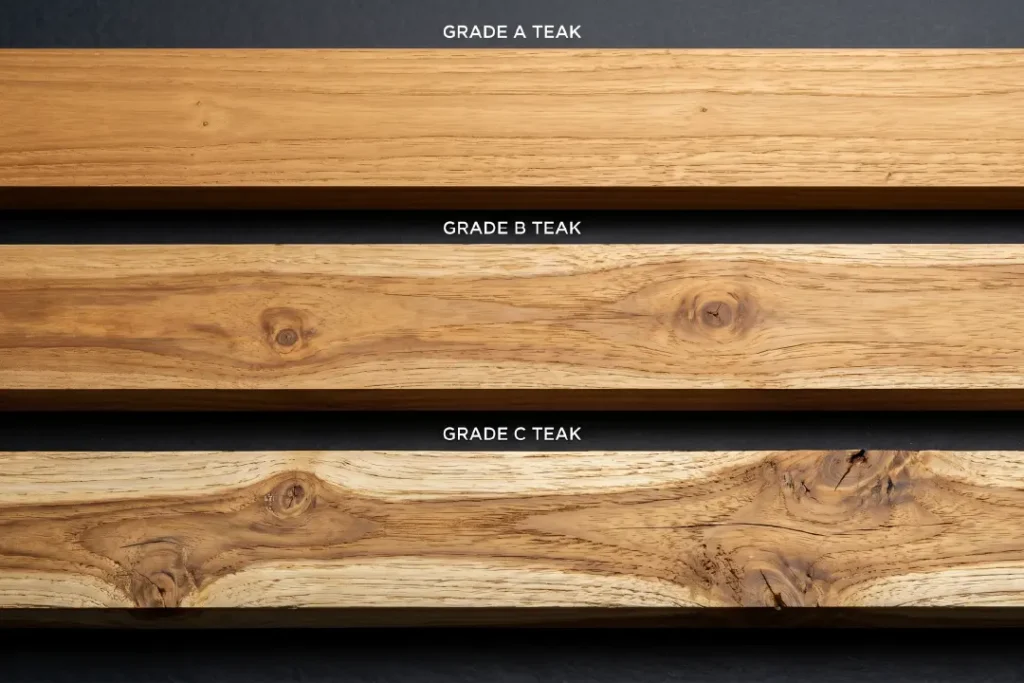
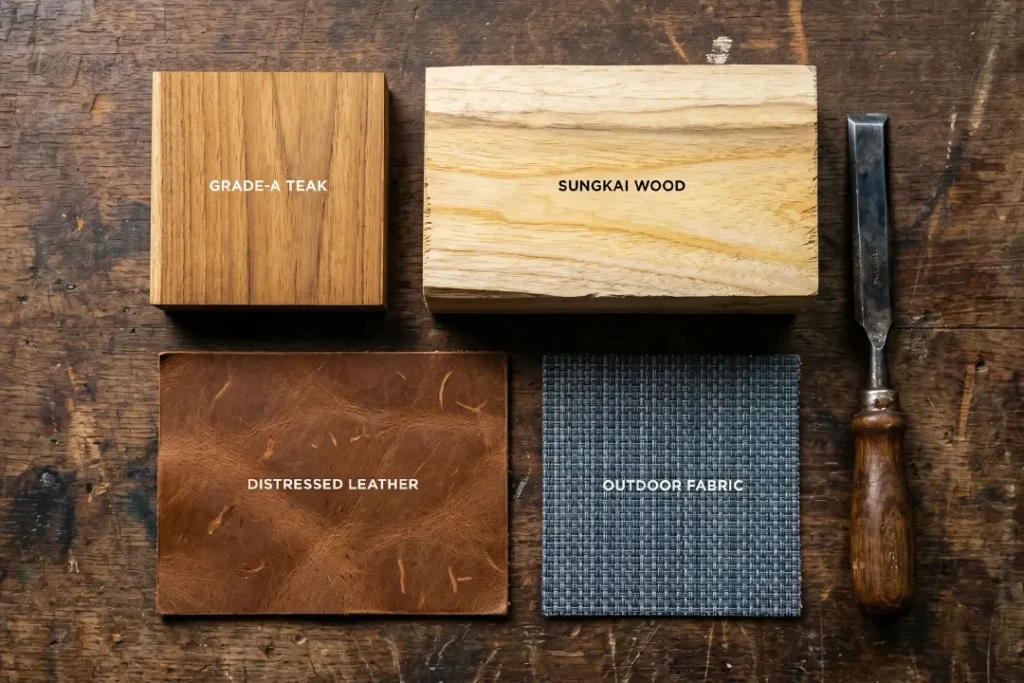
The type of wood used is one of the biggest factors affecting price. For example, teak is significantly more expensive than woods like sungkai because of its durability, density, and natural oil content.
Higher-quality wood also offers better stability and longer product life, which is important for export markets.
Type of Other Materials (Cushion and Weaving)
Furniture is not only about wood; additional materials also play a major role in pricing. For example, genuine leather will always be more expensive than faux leather, even if the design looks similar.
The same applies to cushions, where outdoor cushions require special materials that can withstand weather conditions, making them more expensive than standard indoor cushions.
Finishing Type
Finishing type affects both appearance and durability. Indoor and outdoor furniture use different types of finishing because the chemical composition and protection levels are not the same.
For example, water-based finishing, NC finishing, solid colors, or weathered effects all require different materials and processes, which directly impact cost.
Design Complexity
Design complexity also plays a significant role in pricing. Simple designs are faster to produce and use fewer resources, making them more cost-efficient.
On the other hand, complex designs with curves, detailed joinery, or mixed materials require more time, skill, and materials, which increases the overall cost. This is why two chairs that look similar at first glance can have very different prices.
Indonesian Furniture Cost Breakdown
To understand pricing clearly, you need to look at what you are actually paying for.
Raw Materials (Wood, Weaving, Cushion, Finishing Type)
At the most basic level, you are paying for what you can see. This includes the wood material, weaving, cushion, and finishing type used in the product.
The more premium the materials, the more premium the furniture you are buying from Indonesia. This is why it’s important to understand your market positioning, whether you are targeting high-end customers or a price-sensitive segment.
For example, in more price-sensitive markets, buyers often switch from teak to alternatives like sungkai to balance cost and product positioning.
Labor and Manufacturing Cost
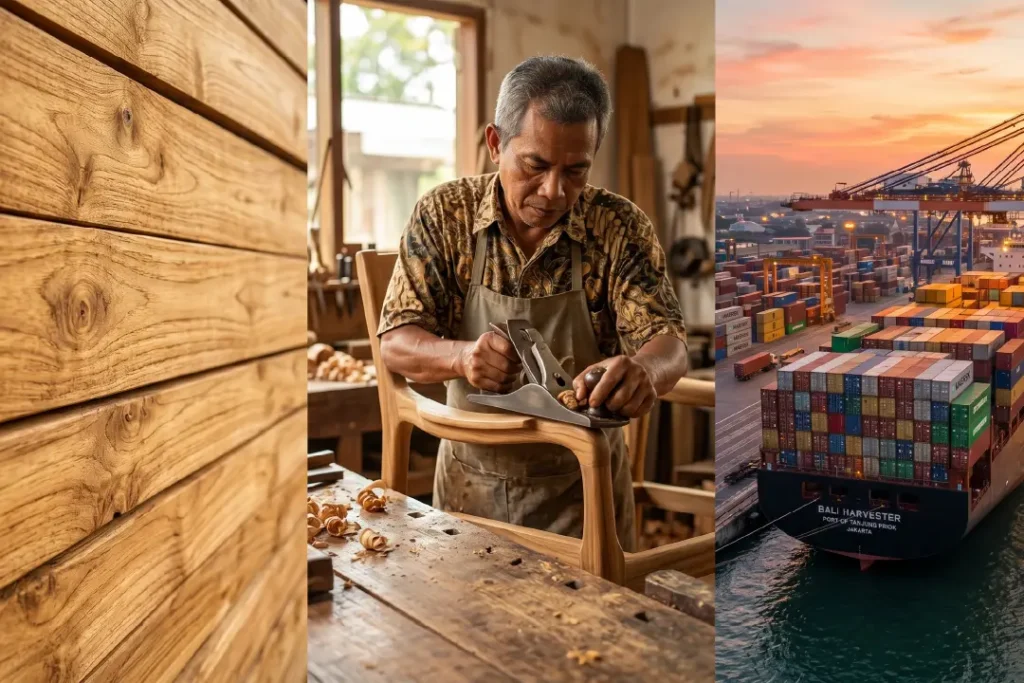
This is the part you don’t directly see, but it has a strong impact on quality. Indonesian furniture is known for combining handcrafted work with machine support, which requires skilled labor.
More detailed work means more time and expertise, which increases cost. At the same time, this is what improves product value, consistency, and overall finish quality.
Packaging Standard
Packaging plays a critical role in protecting your products during shipping. Simpler options like single-face wrapping may reduce cost, but they offer limited protection and a higher risk of damage.
Export standards such as ISTA 3A or ISTA 6A provide better protection but come at a higher cost due to stronger materials and stricter requirements. For example, ISTA 3A may use around 150 lbs of box strength, while ISTA 6A requires around 250–275 lbs, which directly increases packaging cost but reduces risk during transit.
Export and Shipping Costs You Need to Consider
Production cost is only part of the total price. Export and logistics add another layer.

FOB vs CIF Pricing Explained
FOB (Free On Board) means the supplier is responsible until the goods are loaded onto the vessel, while the buyer takes over shipping, insurance, and delivery afterward. This gives you more control over logistics and cost structure.
CIF (Cost, Insurance, Freight) means the supplier handles shipping and insurance until the destination port. While this is simpler for first-time buyers, FOB is more commonly used because the responsibility is split between seller and buyer more clearly.
Container Shipping Costs and Freight Rates
Container shipping costs depend on several factors, including destination, container size (20ft or 40ft), seasonality, and global logistics conditions. Freight rates can fluctuate significantly, especially during peak seasons or supply chain disruptions.
Another important factor is container utilization. If your products are not packed efficiently, you may not maximize the container space, which increases your cost per item. In practice, better planning in packaging and loading can reduce overall shipping costs and improve your margin.
Export Documentation and Handling Fees
These costs are generally already included in FOB or CIF pricing, so buyers often don’t see them as separate line items. They typically cover essential export documents such as the Bill of Lading (B/L), SVLK certification, Certificate of Origin (COO), and fumigation.
Even though they are included, these documents are critical for smooth export and import processes. Missing or incorrect documentation can lead to delays, additional charges, or issues during customs clearance.
Import Duties and Taxes in the Destination Country
Import duties and taxes are handled on the buyer’s side and are not included in FOB or CIF pricing. These costs vary depending on your country’s regulations, product category, and trade agreements.
For many buyers, this is one of the most underestimated costs. Understanding your local import rules early will help you calculate your true landed cost and avoid unexpected expenses when the goods arrive.
Why Furniture Prices Can Vary Between Suppliers
One of the most common reasons for price differences is material quality, especially wood grading. For example, teak can be classified into Grade A, B, or C, and each grade has a different price due to durability and appearance.
We’ve seen cases where a European buyer chose a cheaper supplier, only to find the material was mostly sapwood or lower-grade teak, while higher-standard manufacturers use Grade AB for better consistency.
Production standards also play a big role in pricing. Some suppliers operate with structured systems and controlled processes, while others rely on fragmented or outsourced production.
Experienced exporters understand documentation, packaging, and logistics requirements, which helps prevent delays and additional costs. Less experienced suppliers may offer lower prices, but mistakes in execution can become expensive for the buyer.
Certifications such as SVLK, FSC, or BSCI also impact pricing. These certifications indicate compliance with legal, environmental, and social standards, which are increasingly required in many markets.
In short, price differences are not random. If you want to avoid costly mistakes, it’s worth understanding how to choose the right Indonesian furniture manufacturer before making a decision.
Tips for Comparing Furniture Supplier Quotations
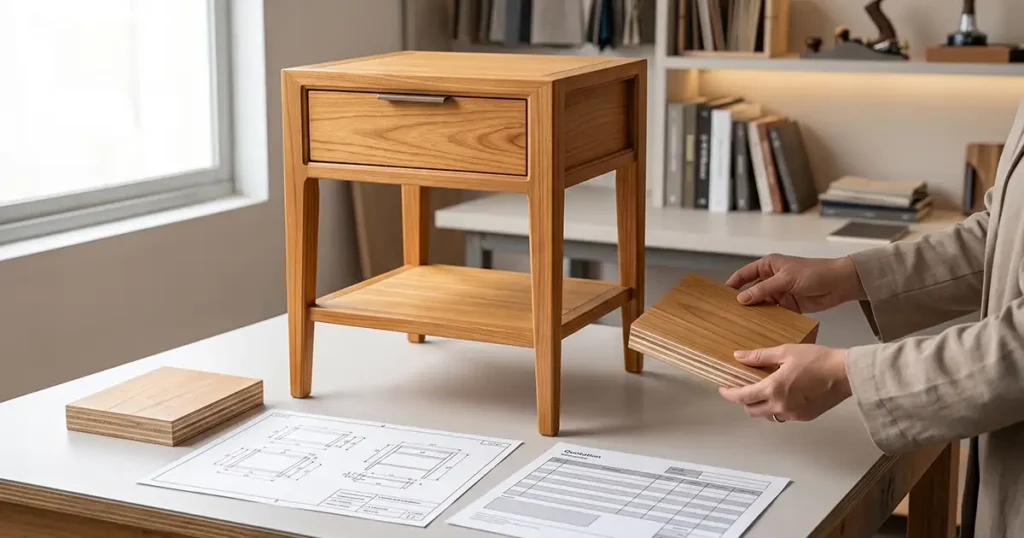
When reviewing a quotation, don’t just look at the final price. A proper quotation should clearly outline material specifications, finishing details, packaging standards, and pricing terms such as FOB or CIF. The more transparent the breakdown, the easier it is for you to compare suppliers fairly.
Before making a decision, ask the right questions. Clarify what materials are used, what finishing is applied, what packaging standard is included, and whether there are any additional costs. These questions help you avoid misunderstandings and give you a clearer picture of what you are actually paying for.
A quotation alone is not enough to evaluate a supplier. To reduce risk, it helps to understand what actually happens when you visit an Indonesian furniture supplier, even if it’s done virtually.
Be careful with pricing that looks too good to be true. Extremely low prices, vague specifications, or incomplete breakdowns are common red flags. In many cases, these issues only appear after production starts, when changes become more expensive and difficult to fix.
Why Many Retailers Choose Indonesian Furniture Manufacturers
Many retailers continue sourcing from Indonesia because of its balance between quality. If you are still evaluating your options, you may want to explore whether Indonesian furniture is the right sourcing choice for your business.
Another reason is flexibility in materials and product development. From teak and mahogany to rattan and mixed materials, manufacturers in Indonesia are used to adapting designs based on buyer needs. In practice, this makes it easier for retailers to build collections that match their market positioning, rather than relying on standard catalog products.
For many buyers, the real difference comes from working with manufacturers that operate with full control over production and export. At MPP Furniture, the process is handled in-house, from material selection to final preparation. It allows us to maintain consistent quality and avoid surprises during shipment.
Final Thoughts: Start Sourcing Furniture from Indonesia with Confidence
Understanding how pricing works on Indonesian furniture is the first step to making better sourcing decisions. Instead of focusing only on price, request detailed quotations and product information so you can evaluate what is actually included and avoid hidden costs.
Working with transparent and experienced Indonesian furniture manufacturers will help you reduce risks, maintain consistent quality, and plan your business more effectively. Clear communication and structured processes make a big difference, especially when you are scaling your orders.
If you are starting or improving your sourcing strategy, having the right support matters. With the right partner, you can manage your Indonesian furniture orders with more confidence, from product development to final delivery.
Let’s Build Your Collections of Furniture from Indonesia the Right Way
Turn your ideas into production-ready products with clear pricing and consistent quality.
FAQs
1. Why is Indonesian furniture pricing different between suppliers?
Because of differences in material quality, production standards, and export experience. Lower prices often mean trade-offs.
2. What is included in furniture pricing from Indonesia?
Typically, materials, labor, finishing, and packaging. Shipping and import costs are separate, depending on the terms.
3. How can I avoid hidden costs when importing furniture?
Ask for detailed quotations, confirm specifications, and understand all export and import-related costs upfront.
4. Does higher price always mean better quality?
Not always, but extremely low prices usually indicate compromises. The goal is to find balanced pricing with clear value.

Hi, I’m Salman, founder of MPP Furniture, an Indonesian furniture manufacturer serving global retailers and project-based clients.
I began my career in my family’s export-oriented furniture company, gaining hands-on experience in production, construction, finishing, material performance, and product development. With a clear understanding of how international buyers evaluate furniture quality and reliability, I founded MPP Furniture to deliver export-ready products with consistent standards.
Here, I share insights from the perspective of a furniture manufacturer working directly with production teams on the factory floor, focusing on manufacturing and supplier evaluation.
Connect on LinkedIn


0 Comments