A common technical inquiry in the outdoor furniture industry centers on a simple question: "Why do wood tables have slats?" The answer is rooted in basic physics and wood science. By allowing standing water to drain quickly and fresh air to circulate freely, this design prevents moisture accumulation and significantly extends the product's lifespan.
In short, slat design is a functional requirement for weather-resistant wood furniture, serving a critical practical purpose beyond mere aesthetics. Understanding this mechanism helps ensure structural stability when specifying or importing wood designs for wet climates. Stocking properly designed furniture generally helps minimize customer complaints and lower return rates associated with weather damage.
This article examines the primary scientific reasons why slat design is fundamental to the durability of exterior woodwork. We will analyze the impact of rapid drainage on rot prevention and discuss how air circulation manages the thermal stresses that typically lead to warping. By exploring these technical factors alongside material selection and maintenance, this guide provides a complete overview of optimizing product performance in challenging environments.
How Water Drainage Prevents Wood Rot
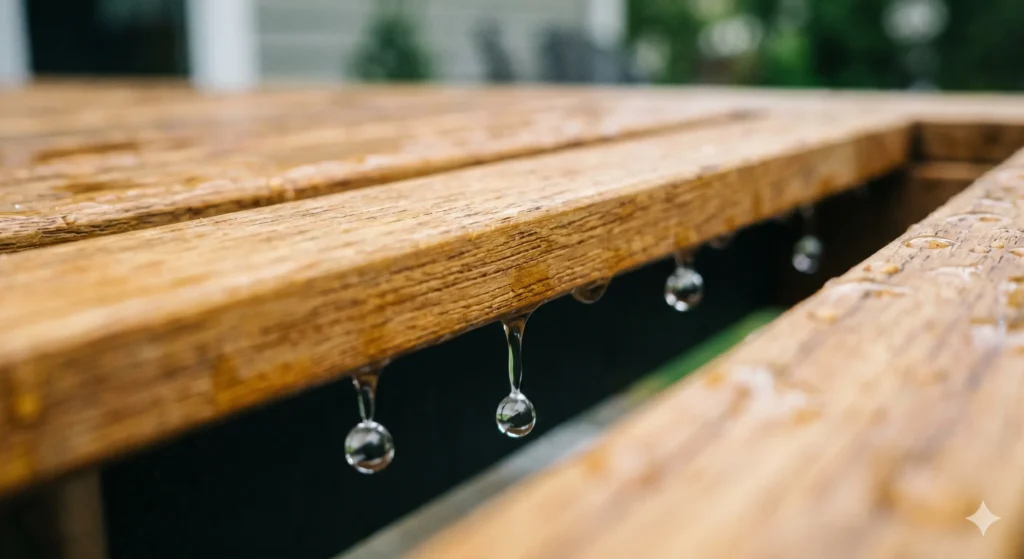
Rain, morning dew, and even high ambient humidity create standing water on flat surfaces. If a solid piece of wood stays wet for days, water pools on the surface, and this continuous moisture accumulation leads directly to fungal decay.
Because fungi thrive in damp, dark environments, water sitting on a flat table eventually penetrates the timber's microscopic fibers, breaking the wood down from the inside out. Slatted outdoor furniture solves this problem by creating clear paths for gravity to pull water away. This simple gap between wood boards remains a highly effective method for wood rot prevention.
When water drains immediately, the wood surface dries much faster, allowing the sun and wind to easily evaporate any remaining moisture. Consequently, this substantially minimizes the risk of rot because a slatted surface starves the rot-causing fungi of the water they need to survive. According to The Wood Database's comprehensive guide on biological decay thresholds, wood-rotting fungi generally cannot survive when the internal moisture content remains consistently below 20 percent.
The Role of Airflow in Temperature Regulation
Wood is a natural, porous material that reacts constantly to its environment, with changes in ambient humidity and temperature causing natural wood movement. When the summer sun heats a solid wooden table, the top surface expands while the shaded bottom side stays cool and contracted.
This uneven thermal expansion causes severe warping and bowing. Over time, the stress can crack a solid piece of wood in half. Slat design prevents this physical stress by allowing continuous cross-ventilation. As explained in Wagner Meters' technical breakdown of acceptable wood moisture levels, continuous airflow helps maintain surface equilibrium and prevents the localized humidity traps that cause severe thermal stress.
Because air flows freely around every side of each individual board, the temperature stays balanced across the whole piece of furniture, maintaining the structural integrity of the outdoor tables. The small gaps give each slat enough room to expand and contract naturally without pushing against its neighbor.
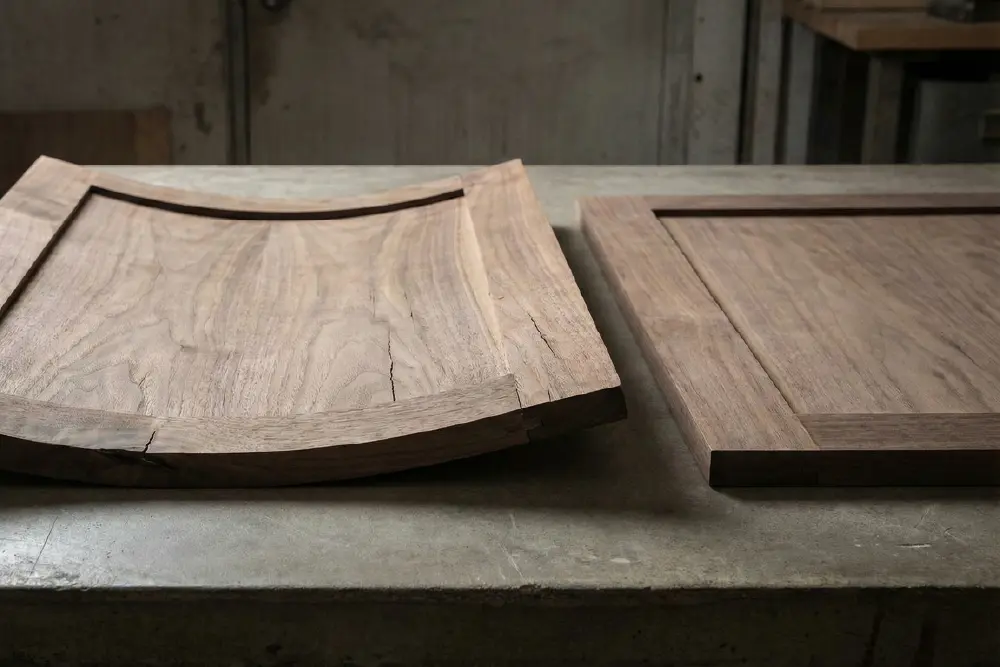
Technical Integration: EMC and Dimensional Stability
Before fabrication begins, the timber must reach a state of Equilibrium Moisture Content (EMC), where the moisture within the wood fibers balances with the ambient humidity. Physical failure often occurs when the wood's internal moisture differs significantly from its environment. For a deeper dive into the exact mathematics of wood movement, the IPPC's technical report on the physical properties and moisture relations of wood details how environmental humidity dictates expansion and contraction across different climates.
- Shrinkage and Structural Splitting: When timber carries a moisture percentage higher than the local EMC, the wood releases vapor and contracts. In a solid tabletop, this shrinkage creates massive internal tension across the wide surface, frequently resulting in "checking" or deep structural splits. Conversely, in a slatted design, each board contracts independently; the gaps between them simply widen by a fraction of a millimeter, effectively neutralizing the tension.
- Expansion and Joint Failure: In highly humid or tropical environments, wood fibers absorb moisture and swell. A solid design has no inherent room for this expansion, which forces the center to "cup" or causes the joinery to fail under pressure. A slatted configuration acts as a mechanical expansion joint, providing the necessary clearance for each board to swell into the air gap without distorting the overall surface. To understand how construction methods impact structural longevity, Plankville offers an excellent guide on how joinery and grain direction affect outdoor tables.
The Role of the Kiln
Kiln drying serves as the technical "reset." By precisely bringing the timber to a stable range (typically 8% to 12%), manufacturers minimize the total "delta" or difference between the factory state and the eventual destination's EMC. This process, combined with the mechanical advantages of slats, ensures the furniture remains stable regardless of whether it is shipped to a dry desert or a humid coastline.

Trade-offs: Solid Tops vs. Slatted Designs
Many procurement decisions involve choosing between a solid top and a slatted top for outdoor tables. While a solid top looks sleek and resembles indoor dining furniture, it carries a high risk of product failure in fully exposed outdoor environments. These designs face a dual threat: water stagnates on large flat surfaces, and trapped heat triggers the uneven thermal expansion mentioned earlier.
When procuring outdoor collections, evaluating the product lifecycle is critical. The following table summarizes the key considerations for both design paths:
| Feature | Solid Top Design | Slatted Top Design |
|---|---|---|
| Aesthetic | Seamless, indoor-style look | Contemporary, textured appeal |
| Moisture Management | High stagnation risk | Optimal drainage & airflow |
| Thermal Stability | Vulnerable to warping | Regulated via cross-ventilation |
| Commercial Risk | Higher post-sale liability | Low defect & return rates |
Slatted designs provide reliable weather resistance and typically lower the risk of post-sale defect claims by surviving seasonal weather exposure without requiring heavy upkeep.
Material Suitability: Evaluating Timber Species for Slatted Construction
While slat design provides the mechanical framework for longevity, the inherent biological properties of the timber species determine the final performance. Not all wood is suited for slatted exterior use, as the increased surface area exposed by the gaps requires a high level of natural resilience.
- High-Oil Hardwoods (Class 1 & 2 Durability): Species like Teak (Tectona grandis), Iroko, and Cumaru are ideal for slatted configurations. These timbers contain high concentrations of natural oils and resins that act as a built-in water repellent. Even when water moves through the slatted gaps, these resins prevent the moisture from saturating the core of the board.
- Low-Density Softwoods: While species like Pine or Cedar are common in outdoor applications, they often lack the density required to resist the localized moisture intake that occurs at the edges of each slat. Without heavy chemical pressure treatment, these woods are prone to internal rot, as the slatted gaps can inadvertently trap moisture if the wood is too porous.
- The "Splintering" Factor: Some hardwoods, such as White Oak or certain varieties of Eucalyptus, exhibit significantly higher tangential shrinkage rates. This movement causes the sharp edges of individual slats to check or splinter over time as the wood fibers pull apart at the corners. This difference in stability becomes obvious when comparing the tangential shrinkage profile of White Oak (10.5%) directly against the exceptionally low tangential shrinkage of Teak (5.3%), as documented by The Wood Database. Teak remains the industrial benchmark because its stable grain prevents the slats from becoming brittle, while its high silica content provides natural resistance to environmental abrasion.
Maintenance Tips for Slatted Wooden Furniture
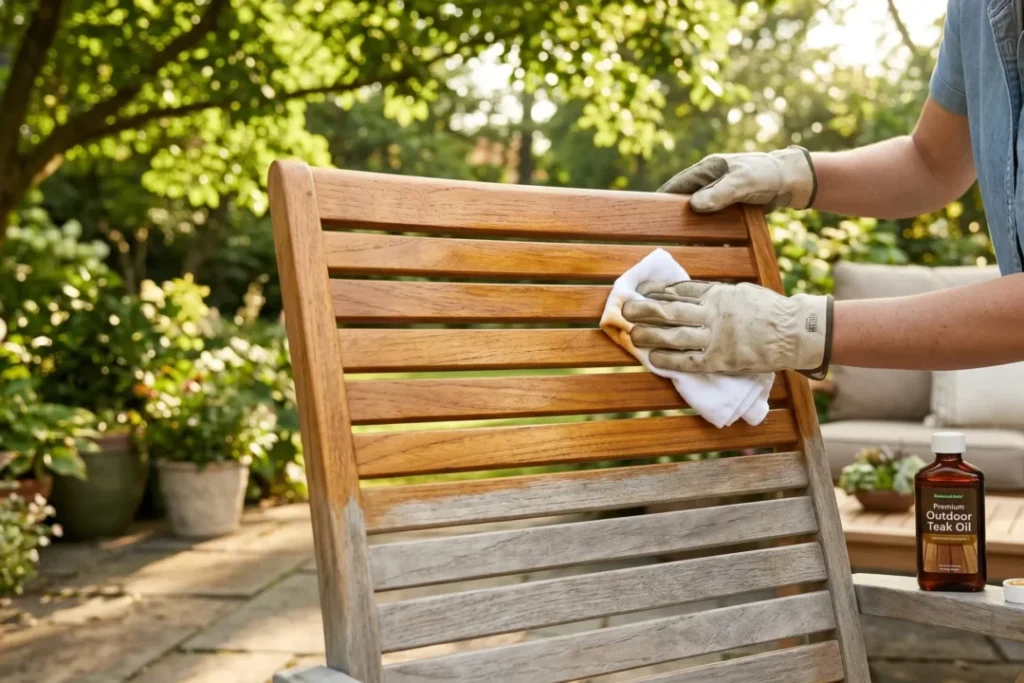
Even with optimal species selection and engineering, slatted designs require basic care to maintain their structural integrity. Dirt and water naturally fall through the gaps, but it is essential to check these spaces regularly to remove trapped leaves or debris. Since wet organic matter holds moisture against the wood, clearing these gaps is a simple but effective preventive measure. When exploring routine care strategies, Lazy Susan Furniture outlines practical, everyday steps on how to keep outdoor wood furniture from rotting throughout the changing seasons.
Inspecting hardware is equally important. While standard steel screws will rust and expand after a few rainstorms—potentially cracking the wood and creating black stains—strict manufacturing specifications require marine-grade hardware. Utilizing premium fittings prevents this chemical reaction and preserves the long-term stability of the table.
Cleaning and Oiling Best Practices
Wash the furniture with mild soap and water once a season, using a soft-bristle brush to clean the sides of the individual slats. Avoid using high-pressure washers, as they can damage the dense grain structure of the wood.
If a project requires keeping the original golden-brown color, a teak oil or water-based sealant should be applied once or twice a year. If a silver-gray patina is preferred, the wood can be left untreated; the inherent oils will still provide protection from decay even as the aesthetic shifts over time. If you need practical maintenance advice, Knotty Log Woodworks details the best methods to waterproof wood furniture for outdoors to ensure maximum weather resistance.
Sourcing Quality Outdoor Furniture from Indonesia
For global import programs, supply chain reliability is just as important as the design itself. As an experienced Indonesian furniture manufacturer, we understand the specific technical demands of the global market and build our products with strict attention to detail.
Technical Compliance and ESG Standards
Sustainable procurement is a cornerstone of modern manufacturing. We ensure all our teak is sourced through legal plantations verified by SVLK certification (Indonesia’s Timber Legality Assurance System). This compliance simplifies the "due diligence" process for international importers, guaranteeing that every piece meets the highest environmental and social governance (ESG) standards.
Logistical Efficiency and QA
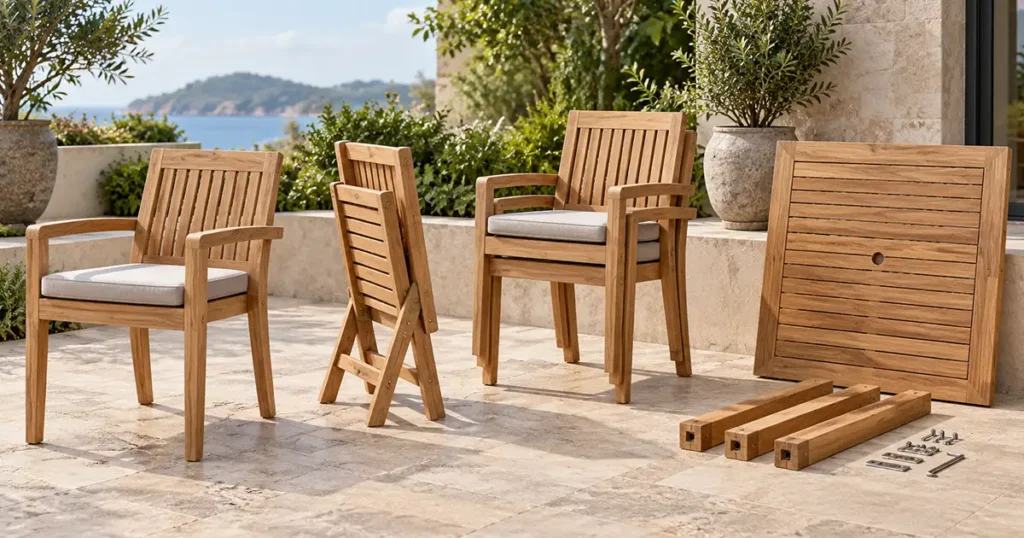
The structural nature of slatted designs facilitates advanced Knock-Down (KD) engineering, which provides several logistical advantages:
- Reduced Shipping Volume: Flat-packing minimizes the cubic measurement (CBM) of each unit.
- Container Optimization: Improved landed costs through higher container utilization.
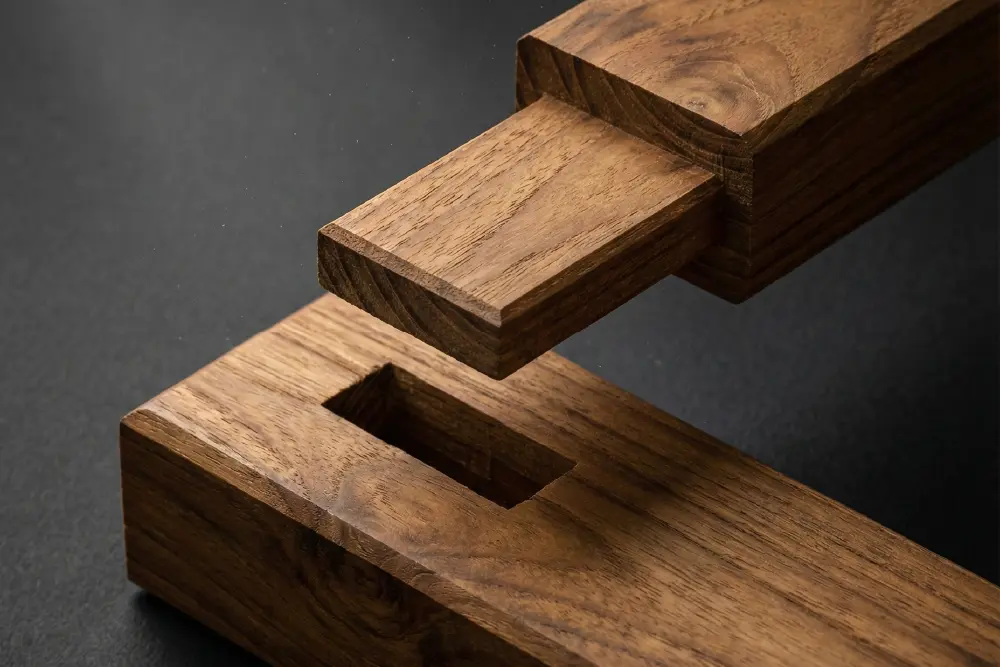
- Structural Reliability: Precisely engineered joints that ensure easy assembly without compromising stability.
Our QA protocols focus heavily on structural accuracy and finishing excellence to secure stable procurement pipelines for our partners. MPP Furniture is dedicated to supporting your B2B needs, offering a completely smooth process from the initial design phase to final delivery.
We provide free consultation and free new product development for our partners. If you need exclusive custom design services, private labels, or OEM manufacturing, our team is ready to help. Because we handle 100% of the production in-house, we control the quality at every single step.
As a leading Indonesian furniture supplier, we maintain a 99% client satisfaction rate and are very proud of our minimal complaint ratio of just 0.56 percent. We help importers, retailers, and project-based businesses find exactly what they need.
Conclusion
To sum up, slat design provides a highly effective method for protecting outdoor furniture by combining immediate drainage, unrestricted airflow, and mechanical dimensional stability. This approach ensures the wood remains balanced and resilient against environmental stress. When sourcing teak furniture from professional Indonesian manufacturers, selecting slatted configurations helps secure enduring performance for commercial applications. If you are looking for dependable outdoor furniture sourcing solutions, contact us today to discuss your specific requirements.
Ready to Source Durable, Weather-Resistant Outdoor Furniture?
Let’s discuss how our precision-engineered, slatted teak designs can elevate your B2B procurement and minimize post-sale defects.
FAQs About Outdoor Furniture Slat Design
1. Why do outdoor wood tables have slats?
Outdoor wood tables feature slats to allow rainwater to drain and air to circulate. This prevents water pooling, stops wood rot, and helps the timber dry quickly after exposure to rain.
2. How can I prevent wood rot on my patio furniture?
Keeping the furniture clean and ensuring water drains freely is highly effective. Routinely remove trapped leaves and debris from the gaps, allow the wood to dry completely, and apply a suitable oil or sealant for extra protection.
3. Is solid teak a good choice for wet climates?
Yes. Teak has a high natural oil content and a dense grain structure that resist moisture penetration. Combined with a slatted design, teak performs exceptionally well in wet environments.
4. Will slatted outdoor furniture warp easily?
No. The gaps between the slats create constant cross-ventilation. This airflow balances the temperature across the wood, preventing the extreme thermal expansion and contraction that cause warping in solid pieces.
5. Why is marine-grade hardware necessary for slatted furniture?
Slatted furniture requires many screws to secure the individual boards. Marine-grade hardware resists rust. Standard screws can rust, expand, crack the wood, and leave dark stains on the surface.

Versatile Digital Marketing & Creative Specialist with a strong foundation in graphic design, product photography, and comprehensive brand strategy. Proven ability to bridge the gap between physical products and digital presence, translating complex concepts into high-converting marketing assets. Adept at leveraging SEO, web analytics, and engaging visual content to drive business growth and elevate brand identity in competitive markets.
0 Comments