Teak has long been considered one of the best materials for outdoor furniture. Many retailers, importers, and hospitality buyers choose teak because of its durability, premium appearance, and long outdoor lifespan. Buyers who prioritize long-term durability and premium positioning often explore complete outdoor furniture collections designed specifically for hospitality, retail, and commercial outdoor environments.
But most articles only discuss the advantages.
In practice, outdoor furniture material selection is also a business decision. The wrong material can lead to higher warranty claims, faster product replacement, customer complaints, and lower long-term margins.
Based on discussions with outdoor furniture buyers and manufacturing experience in Indonesia, this article explains the real pros and cons of Indonesian teak wood for outdoor furniture, including the business impact behind each decision.
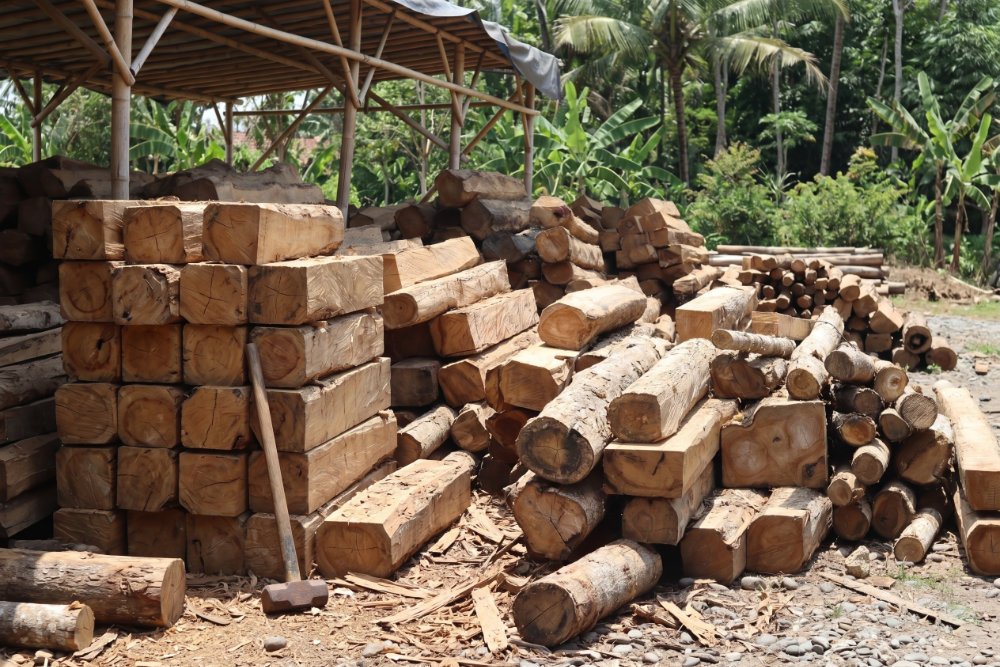
Why Choosing the Wrong Outdoor Furniture Material Can Cost You More Than You Expect
Outdoor furniture faces constant exposure to sunlight, rain, humidity, temperature changes, and moisture. Because of this, material performance directly affects product lifespan and customer satisfaction.
Many outdoor furniture problems actually start with material selection. For example:
- Wood cracking after seasonal changes
- Loose joints due to wood movement
- Surface fading after outdoor exposure
- Mold growth in humid environments
- Higher after-sales complaints
For retailers and importers, these issues create hidden operational costs. Returns, replacements, damaged reputation, and warranty handling can reduce profitability over time.
This is one reason why many buyers eventually move toward teak after experiencing problems with lower-grade materials.
For many retailers and importers, understanding why teak performs better in long-term outdoor applications becomes important before deciding which materials are suitable for their market positioning.
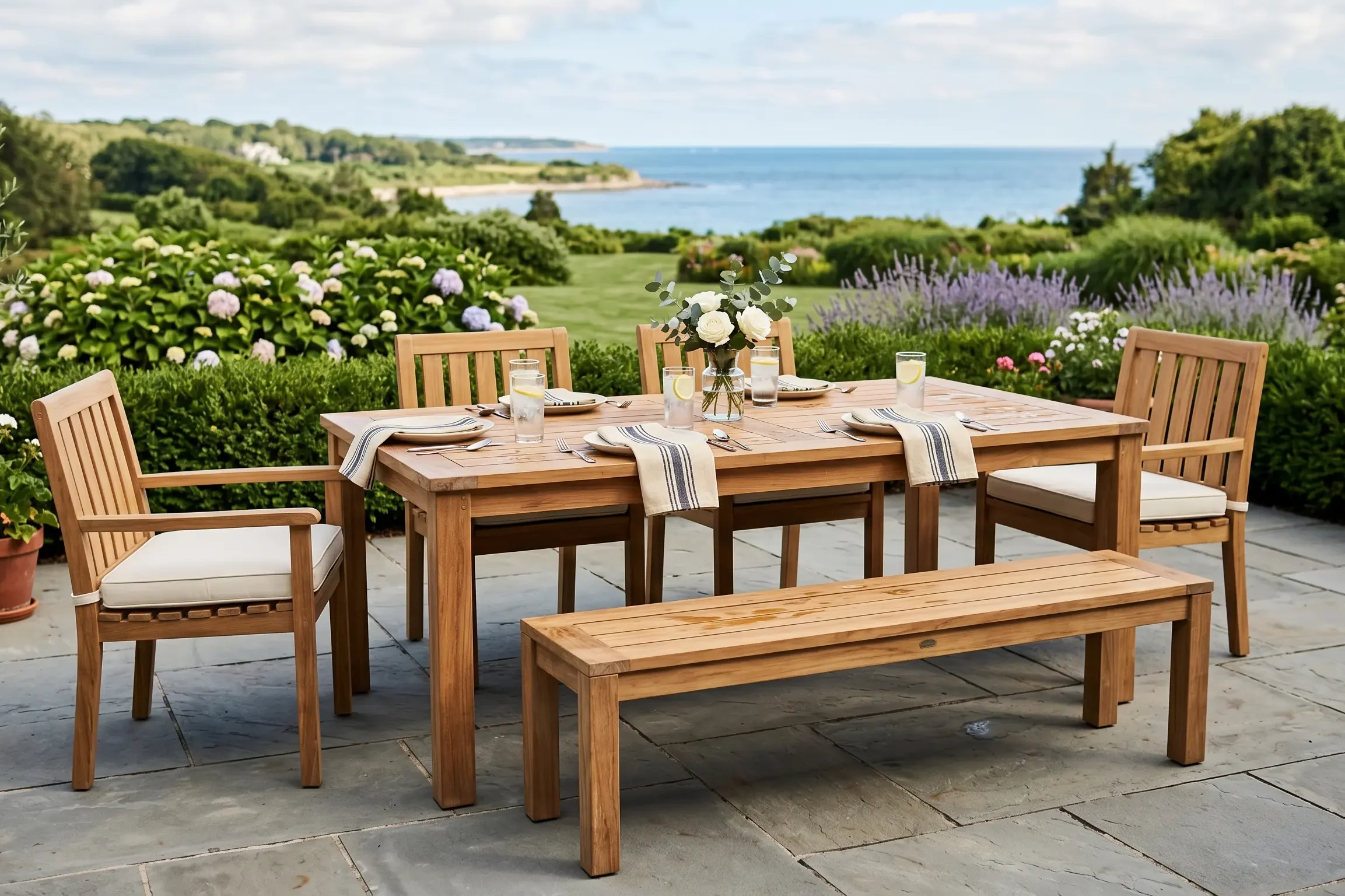
The Key Advantages of Teak for Outdoor Furniture
Natural Resistance to Weather, Moisture, and Pests
One reason Indonesian teak wood is widely used for outdoor furniture is its natural oil content.
These natural oils help teak resist:
- Rain and moisture
- Humid weather
- Wood rot
- Insects and termites
This makes teak suitable for outdoor environments where other woods may deteriorate faster.
From a business perspective, this means fewer product failures and lower long-term warranty risk.
For hospitality projects, restaurants, resorts, and outdoor retail collections, material reliability becomes very important because outdoor replacement costs are usually high.
High-Dimensional Stability That Reduces Structural Issues
Wood naturally expands and contracts when exposed to moisture and temperature changes.
However, teak has relatively high dimensional stability compared to many other hardwoods. When properly kiln-dried and manufactured, teak tends to move less over time.
This reduces risks such as:
- Joint loosening
- Surface warping
- Structural instability
- Visible cracking
In practice, dimensional stability also helps retailers maintain more consistent product quality across seasons and shipping destinations.
Long Lifespan That Lowers Replacement and Warranty Costs
One major advantage of teak outdoor furniture is its lifespan.
High-quality teak furniture can last for many years, even under outdoor exposure. For buyers, this changes the value calculation completely.
Several outdoor design and material specialists also highlight teak’s long-term durability and weather resistance as one reason it remains widely used in premium outdoor environments.
The initial purchase cost may be higher, but the replacement frequency is usually lower compared to cheaper outdoor materials.
For project buyers and retailers, this often means:
- Lower long-term operational cost
- Better customer satisfaction
- Fewer product complaints
- Stronger premium positioning
This is why teak is commonly used in hotels, resorts, villas, and premium outdoor projects.
Many hospitality buyers choose teak outdoor furniture collections because a longer product lifespan helps reduce replacement frequency and maintenance costs in commercial outdoor spaces.
Low Maintenance Compared to Other Outdoor Materials
Many outdoor woods require frequent coating, repainting, or intensive maintenance.
Teak generally requires less maintenance because of its natural resistance properties.
Some buyers prefer maintaining the original golden-brown teak color using teak oil or protective treatment. Others allow teak to age naturally into a silver-gray patina.
Both options are common in the outdoor furniture market.
For importers and retailers, lower maintenance requirements can become a stronger selling point because end users often prefer practical outdoor furniture solutions.
Strong Market Recognition That Supports Premium Positioning
Teak already has strong market recognition globally.
Many buyers already associate teak with:
- Luxury outdoor furniture
- Long-lasting quality
- Premium hospitality furniture
- High-end outdoor living
This recognition helps retailers position products in higher-value market segments.
In many markets, “teak furniture” itself already carries perceived value before customers even evaluate specifications.

The Disadvantages of Teak You Should Consider
Higher Purchase Cost at Manufacturer Level
Teak is not a low-cost material.
Compared to many other woods, teak has a significantly higher raw material price. This affects:
- Product pricing
- Inventory investment
- Cash flow planning
- Minimum order budgeting
For some markets, this can reduce competitiveness against lower-priced outdoor furniture products.
This means teak is usually more suitable for businesses targeting medium to premium market positioning instead of price-sensitive mass markets.
Heavy Material Weight That Affects Shipping and Landing Costs
Teak is a dense hardwood, which means outdoor furniture made from teak can be heavy.
This affects:
- Container optimization
- Shipping costs
- Handling efficiency
- Landing cost calculations
For importers, freight cost efficiency becomes an important consideration, especially for bulky outdoor collections.
A good furniture manufacturer usually helps optimize construction and packaging to reduce unnecessary shipping inefficiencies.
Natural Oil Can Affect Finishing and Cushion Materials
One issue that is rarely discussed openly is teak oil migration.
Teak contains natural oils. If drying, sealing, or finishing processes are not handled properly, these oils can migrate to the surface.
In some cases, this may:
- Affect finishing adhesion
- Stain light-colored cushions
- Create an uneven surface appearance
This does not automatically mean the teak is defective. In fact, high oil content contributes to teak durability.
However, it does mean the manufacturing process must be controlled carefully.
This is one reason why outdoor teak performance depends heavily on factory capability.
Color Changes Over Time Are Not Always Preferred by All Markets
Teak naturally changes color over time when exposed to outdoor conditions.
The original golden-brown tone gradually becomes silver-gray.
Some markets prefer this natural aging process because it gives a mature outdoor look. But other buyers prefer maintaining the original teak appearance.
Because of this, retailers need to understand customer expectations before selecting finishing systems and maintenance recommendations.
Requires a Capable Manufacturer to Ensure Performance
Teak alone does not guarantee good outdoor furniture performance.
Even premium teak can fail if:
- Moisture content is unstable
- Construction quality is poor
- Joinery is inconsistent
- Finishing is rushed
- Quality control is poor
In practice, many outdoor furniture issues come from manufacturing inconsistency rather than the teak itself.
This is why choosing the right outdoor furniture manufacturer is just as important as selecting the material.
When Teak Is the Right Choice for Your Outdoor Furniture Business
Teak works best for businesses targeting:
- Premium outdoor furniture markets
- Hospitality projects
- Long-term customer value
- Lower replacement frequency
- Stronger product positioning
For retailers and importers, teak is often a better fit when the business strategy focuses on durability, reputation, and long-term customer satisfaction instead of competing purely on low pricing.
In many cases, buyers who initially avoid teak because of pricing eventually return to teak after dealing with warranty problems from lower-grade materials.
This is especially common in outdoor hospitality and coastal projects where environmental exposure is more aggressive.
Why Teak Performance Depends on the Outdoor Furniture Manufacturer
Material quality is only one part of outdoor furniture performance.
The manufacturing process plays a major role in determining how teak furniture performs after shipment and outdoor use.
At MPP Furniture, outdoor furniture production combines traditional craftsmanship with controlled manufacturing processes, including:
- Material selection
- Kiln drying control
- Construction consistency
- Finishing inspection
- Quality control at every stage
Because outdoor furniture faces continuous environmental stress, attention to detail becomes important for reducing structural and finishing issues after delivery.
For B2B buyers, a reliable manufacturer also helps simplify product development, customization, and long-term supply consistency.
Conclusion
Indonesian teak wood remains one of the strongest materials for outdoor furniture because of its durability, weather resistance, long lifespan, and premium market perception.
However, teak also comes with trade-offs. Higher material costs, heavier weight, natural oil behavior, and manufacturing dependency all affect business decisions.
For retailers and importers, the question is not simply whether teak is good for outdoor furniture.
The real question is whether teak aligns with your market positioning, customer expectations, and long-term business strategy.
When paired with proper manufacturing and quality control, teak can become a long-term investment that supports product reliability, stronger margins, and premium outdoor positioning.
Ready to Source Premium Teak for Your Outdoor Furniture Collection?
Let's discuss how we can support your long-term business strategy with durable, high-quality teak furniture manufactured for reliability and premium positioning.
FAQs About Teak Furniture
1. Is teak good for outdoor furniture?
Yes. Teak is widely considered one of the best woods for outdoor furniture because of its natural resistance to moisture, weather, insects, and wood rot.
2. Why is teak furniture expensive?
Teak is expensive because of its durability, slow growth cycle, high raw material value, and long outdoor lifespan.
3. Does teak furniture require maintenance?
Teak requires less maintenance than many outdoor woods. However, some buyers apply protective treatment to maintain the original teak color.
4. How long does teak outdoor furniture last?
High-quality teak outdoor furniture can last for many years when properly manufactured and maintained.
5. What makes Indonesian teak wood popular?
Indonesian teak wood is known globally for its durability, workability, and suitability for premium outdoor furniture production.

0 Comments