Wood furniture cracking can create serious after-sales pressure for retailers, importers, and distributors. Customers may ask for replacements, store teams may blame the supplier, and the supplier may say the crack is normal wood movement.
The right answer depends on evidence. Outdoor wood furniture should be evaluated by the likely cause of the crack, where it appears, when it appears, how severe it is, how the product was used or stored, and whether the same pattern appears across multiple units.
From the perspective of an Indonesian furniture manufacturer, a crack should not be judged by appearance alone. A small surface check on exposed end grain is different from a split at a joint, glue line, or load-bearing part. That difference matters because it affects whether the issue is normal wood behavior, usage exposure, or a production problem that needs supplier review.
Why Cracks in Outdoor Wood Furniture Should Not Be Judged Too Quickly
Outdoor wood furniture is exposed to humidity, sunlight, rain, heat, dry air, and storage changes. Because wood is a natural material, it expands and shrinks as it gains and loses moisture.
In 2025, MPP Furniture received a complaint from a buyer in France about cracks found on outdoor furniture. After reviewing the production data and the photos shared by the buyer, the cracks were identified as normal surface checking. The lines were small, followed the wood grain, and appeared after the furniture moved from a humid production area to a drier retail market.
At the same time, retailers should not ignore cracks. A crack can be harmless, but it can also point to poor drying, weak construction, poor glue bonding, or design planning that does not allow wood movement.
The goal is not to defend every supplier or reject every claim. The goal is to judge the issue fairly, so your team can reduce returns, protect margin, and discuss claims with better proof.
Wood Checking vs Cracking: Simple Terms Retailers Should Use
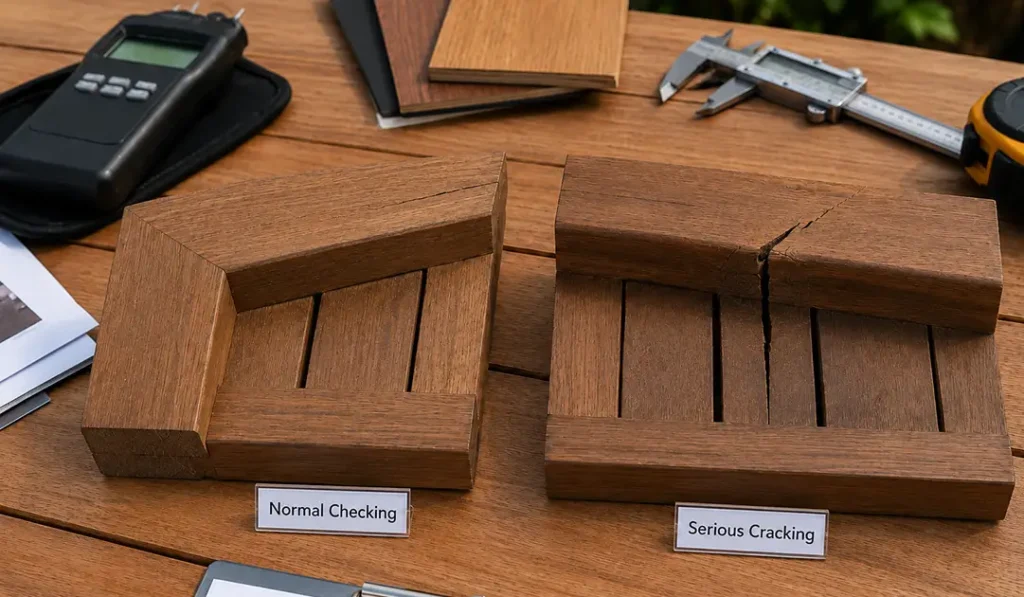
Before filing a claim, retailers should use clear terms. Many disputes happen because one side calls a small surface check a defect, while the other side sees it as normal wood movement.
| Term | What It Means | Common Signs | How Retailers Should Read |
| Wood movement | Natural expansion and shrinkage as wood gains or loses moisture. | Slight movement, small gaps, or minor size changes after humidity shifts. | Usually normal if the product remains stable, safe, and functional. |
| Surface checking | A shallow line on the wood surface, often following the grain. | Fine lines on the surface or end grain, usually not deep. | Often normal if it does not grow, weaken the structure, or affect daily use. |
| Crack or split | A deeper opening that may affect the strength of the furniture part. | Open line across a joint, glue line, leg, frame, tabletop, or load-bearing area. | Needs supplier review if it affects stability, safety, or product function. |
This is why wood checking vs cracking should be explained clearly to store teams and customers. A small surface check is not the same as a structural split. Clear wording helps retailers discuss claims more fairly with suppliers and avoid treating every line in solid wood as a defect.
When Cracking Is Normal and When It Becomes a Manufacturing Problem
Normal outdoor furniture cracking is usually small, shallow, and limited to the surface. It often follows the grain and does not make the furniture unstable. For example, a fine line on the end of a teak armrest may be normal if it does not grow, open widely, or weaken the product.
A crack becomes more concerning when it appears in a structural area, such as a joint, glue line, chair leg, load-bearing rail, or tabletop connection. Pattern also matters. If the same crack appears in the same location across many units, the issue may be related to production, material selection, moisture control, or construction planning.
In June 2024, MPP Furniture reviewed a complaint from a buyer in the United States about a visible line on an outdoor table. After the crack was measured and monitored, it stopped growing after the wood completed its adjustment period. The table did not warp, no part shifted, and the structure still carried weight properly.
In this type of case, the crack is better understood as stable wood movement, not a manufacturing defect.
A Retailer’s Evaluation Framework: Cause, Location, Timing, Severity, and Pattern
Before calling wood furniture cracking a defect, retailers should review more than one photo. The crack should be checked by location, timing, severity, affected quantity, and usage condition.
| Evaluation Point | What to Check | Why It Matters |
| Location and direction | Surface, end grain, joint, glue line, screw area, leg, tabletop, or load-bearing part. Check if it follows the grain or cuts across the wood. | Surface checks may be normal. Cracks near joints, glue lines, or structural parts need closer review. |
| Timing | During unpacking, after storage, or after months of outdoor use. | Helps separate production issues from storage, climate exposure, maintenance, or weathering. |
| Severity | Depth, width, length, and impact on product use. | A stable hairline check may be acceptable. A wide opening that weakens the frame needs review. |
| Affected quantity | Number of affected units, SKU, batch details, shipment date, and receiving date. | One unit may be isolated. Repeated cracks across many units may suggest batch, design, or production issues. |
| Usage condition | Full sun, rain, poolside areas, covered patios, dry warehouses, or poor storage airflow. | Helps both sides understand whether the crack is linked to exposure, care, or production. |
Retailers should send close-up photos with scale, full product photos, and notes about storage and usage. This gives the supplier enough context to review whether the issue is normal wood movement, usage-related damage, or a possible manufacturing problem.
Why Moisture Content and Kiln Drying Reduce Risk but Do Not Remove Wood Movement

Moisture content and kiln drying matter because they help reduce unstable movement before production begins. Well-controlled drying can lower the risk of cracks, loose joints, warping, and finishing failure.
But kiln drying is not a promise that outdoor wood furniture will never move. Wood continues to react to humidity, sunlight, rain, and temperature changes after shipment. Purdue Extension explains that wood changes dimension as it gains or loses moisture, which is why drying can reduce risk but cannot fully stop wood movement.
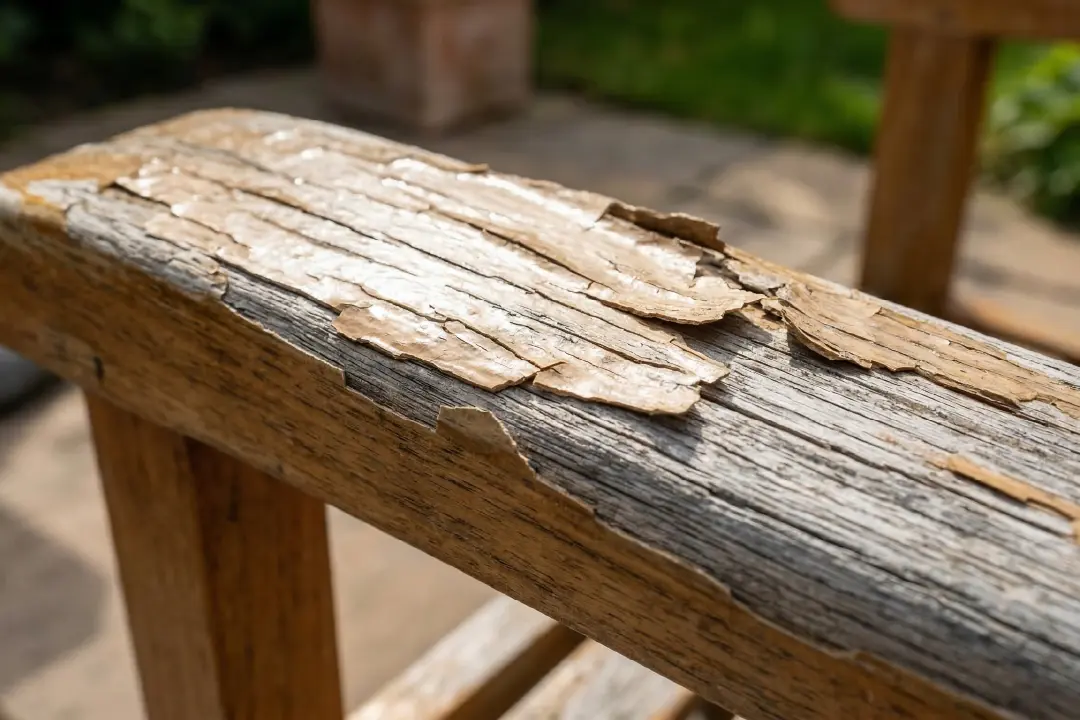
At MPP Furniture, moisture content is controlled within the 8% to 12% range before final QC, as part of the production logic explained in MPP’s guide on kiln-dried wood for Indonesian furniture. This helps maintain wood stability while still respecting the natural behavior of wood.
How Construction and Outdoor Furniture Finishing Affect Cracking Risk
Construction design can reduce or increase outdoor furniture cracking. Good design gives wood room to move. Poor design traps movement and turns natural stress into visible cracks.
Retailers should look at joint design, tabletop construction, slat gaps, drainage gaps, screw placement, corner blocks, and end-grain sealing. Outdoor tables, benches, and lounge pieces need construction planning that accounts for water, heat, and movement.
Finishing also matters, but it has limits. Outdoor furniture finishing can slow moisture exchange and protect the surface from sun and rain. The USDA Forest Products Laboratory also explains that coatings slow moisture movement, but they do not make wood fully moisture-proof.
This is why a thick coating is not always the best answer. If the wood underneath is unstable, or if the construction does not allow movement, the finish may crack, peel, or open with the wood.
Retailers can review MPP’s articles on proper wood preparation before production and outdoor furniture finishing for garden furniture for more context.
What Supplier QC Evidence Retailers Should Ask For Before Filing a Claim

A professional claim should include clear records from both sides. Retailers should prepare container opening photos or videos, full product photos, close-up crack photos, batch number, shipment date, receiving date, warehouse condition, product treatment, and usage condition.
Suppliers should also be able to support the review with QC records, such as raw material checks, moisture records, drying process, batch information, construction inspection, joint and glue inspection, and final QC notes. This helps both sides understand whether the crack is related to production, handling, storage, outdoor exposure, or actual product use.
For retailers sourcing outdoor collections, supplier selection should go beyond price and product photos. Working with an Indonesian Outdoor Furniture Manufacturer that understands moisture content, construction planning, finishing limits, and QC documentation can help reduce after-sales risk before products reach the market.
Final Thoughts: Judge Cracking by Evidence, Not Assumption
Wood furniture cracking should be reviewed with evidence, not quick assumptions. Small surface checks can be part of normal wood movement, but cracks near joints, glue lines, legs, tabletops, or load-bearing parts need closer supplier review.
Retailers should check the crack’s location, timing, severity, affected quantity, usage condition, and supplier QC records before calling it a defect. This helps separate normal wood movement from usage-related damage or a real manufacturing problem.
At MPP Furniture, cracking claims are reviewed through production records, QC checks, and buyer evidence. This helps both sides discuss the issue fairly and reduce unnecessary claim disputes.
Planning to source outdoor wood furniture with clearer claim handling and better production control?
Talk to MPP Furniture about material preparation, moisture control, construction checks, outdoor finishing direction, and custom furniture development for your retail market. Our team can help you evaluate outdoor furniture risks before they become after-sales problems.
FAQs About Wood Furniture Cracking Claims
1. Is wood furniture cracking always a defect?
No. Wood furniture cracking is not always a defect. Small surface checks can be part of normal wood movement, especially in outdoor furniture exposed to humidity, sunlight, rain, and dry air.
2. What is the difference between wood checking and cracking?
Wood checking is usually shallow and follows the wood grain. Cracking or splitting is deeper, wider, and may affect joints, glue lines, legs, tabletops, or load-bearing parts.
3. When should retailers treat a crack as a manufacturing problem?
Retailers should review a crack as a possible manufacturing problem when it appears near joints, glue lines, structural parts, or when the same crack appears in the same location across many units.
4. Can kiln-dried outdoor wood furniture still crack?
Yes. Kiln drying reduces the risk of cracking, warping, and loose joints, but it does not stop wood movement completely. Outdoor wood still reacts to climate and usage conditions after shipment.
5. What evidence should retailers send before filing a cracking claim?
Retailers should send container opening photos or videos, full product photos, close-up crack photos, batch number, shipment date, receiving date, warehouse condition, product treatment, and usage condition.

A versatile content creator with a strong foundation in product photography and videography, and a comprehensive brand strategy. Capable of creating engaging content to connect consumers and producers, web analytics, and engaging visual content to drive interest and growth for a product or brand.


0 Comments