Most furniture surface issues are not caused by finishing or construction. They start from poor wood preparation long before production begins.
Furniture may look perfect when it leaves the manufacturer. Still, cracks, peeling finishes, and uneven color often appear after it reaches your warehouse or end customers when wood preparation is not done properly.
This article explains why wood preparation matters, what problems it can cause, and how buyers can avoid these risks by choosing the right manufacturer.
This insight is based on real production experience from an Indonesian furniture manufacturer with over 20 years of export experience and direct work with global buyers.
Why Furniture Defects Often Start Before Production Begins
Wood is not a static material. It is a natural material that constantly reacts to its environment by absorbing and releasing moisture. This is why moisture content becomes a critical factor in furniture manufacturing.
Even after being shaped into furniture, wood continues to move. The goal of wood preparation is not to eliminate this movement, but to control it within a safe and predictable range.
When wood preparation is not done properly, this movement becomes uncontrolled. The material may appear stable during production and even pass factory inspections, but the problem has already been built into the product.
In many cases, defects only appear after the furniture reaches your warehouse or end customers. Cracks, peeling finishes, and uneven color occur because the wood continues to move beyond what the construction and finishing can tolerate.
In short, defects are not created during finishing or assembly. They are already built into the material before production even begins.
Common Surface Problems in Furniture Production
These issues are commonly found in Indonesian furniture production, especially when wood preparation is not properly controlled.
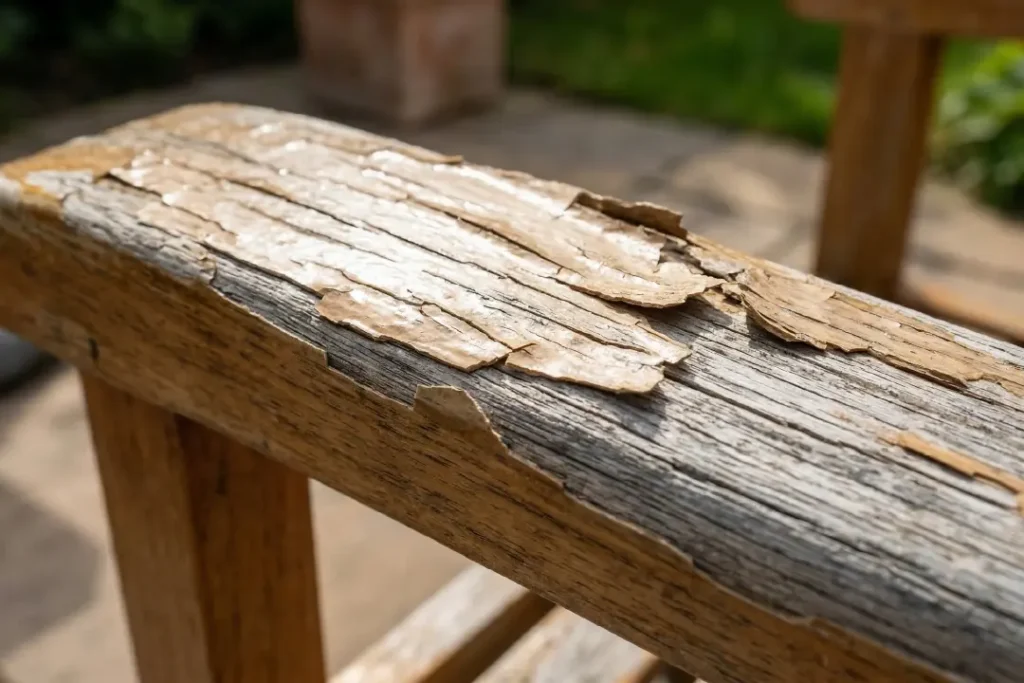
Cracking and Warping
Cracks and warping occur when wood is not properly dried before production. When wood with uneven moisture content is exposed to a new environment, it shrinks or expands at different rates.
This uneven movement creates internal stress. Warping usually appears first, followed by cracking as the stress builds and releases.
For example, when the moisture content across a tabletop is inconsistent, some panels move faster than others, causing the surface to bend before it cracks
This behavior is strongly related to moisture imbalance, which plays a critical role in wood stability.
In our production experience, this issue is rarely visible during factory inspection because the stress is still locked inside the material and only appears after delivery.
Assembly Issues Due to Unstable Wood
Even strong joinery systems, such as mortise and tenon, can fail if the wood continues to move after assembly. Joints loosen, chairs wobble, and structures lose stability over time.
This means that strong construction alone is not enough. When wood preparation is not properly controlled, especially in terms of moisture content, the material will still move and cause defects.
This happens because joinery depends on stable dimensions. When wood changes after assembly, the joint fit weakens.
From a manufacturer's perspective, unstable wood also disrupts workflow. Components that should remain straight after machining can bend before assembly, leading to rework and longer lead times.
Uneven Color and Finishing Absorption
Uneven finishing is often caused by inconsistent wood condition, not finishing errors.
Different parts of the same product absorb stains at different rates due to variations in density and moisture content. This results in patchy color and inconsistent appearance, which can significantly affect product value in premium Indonesian furniture markets.
In production, this also slows down the finishing process. Teams must adjust the application and perform repeated touch-ups because absorption behavior varies across components.
The issue is not the coating, but the condition of the wood underneath.
Peeling and Finishing Failure
When wood still contains excess moisture, finishing layers cannot bond properly to the surface.
This leads to peeling, flaking, or sticky finishes over time. The coating may look fine at first, but it fails as the wood continues to release moisture.
This is not a finishing defect, but a material preparation issue. Finishing systems are designed to work on stable wood, and even high-quality coatings will fail when applied to unstable material.
What Is Wood Preparation and Why Does It Matter
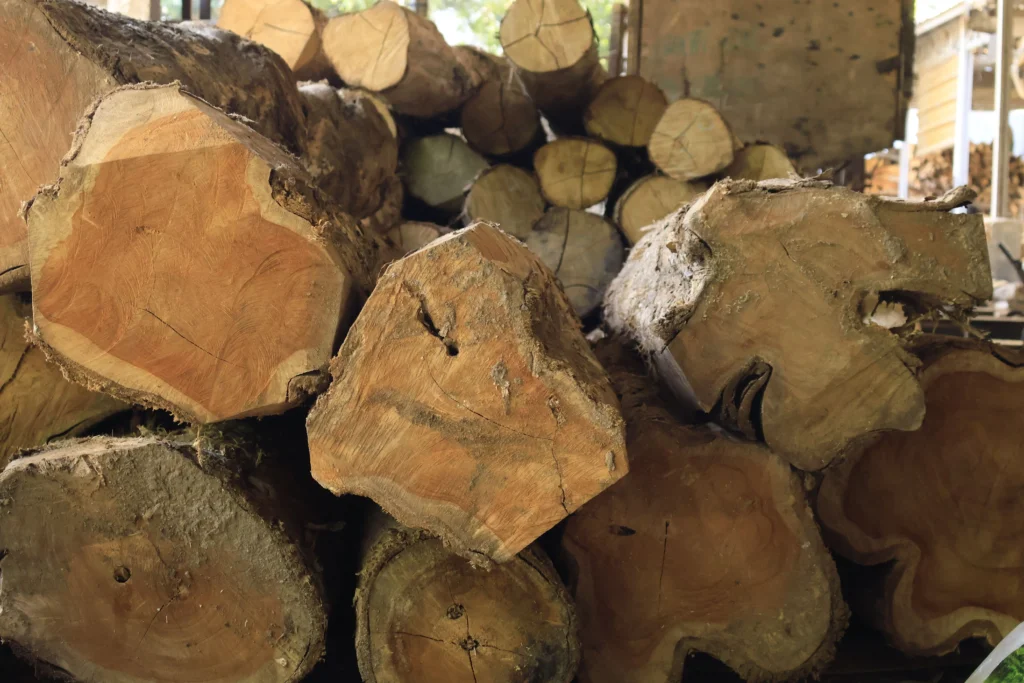
Wood preparation is the process of selecting, grading, drying, and stabilizing wood before it enters production.
This is a critical stage in furniture manufacturing because it determines whether the material will remain stable during production and after it reaches the customer.
When wood preparation is done incorrectly, the entire production process becomes unstable, even if the design, joinery, and finishing are done properly.
The logic is simple:
- Poor wood preparation → unstable wood
- Unstable wood → movement during and after production
- Movement → failure in assembly and finishing
Wood preparation typically includes:
- Wood selection and grading
- Moisture control
- Drying processes, including air drying and kiln drying
- Storage and conditioning before use
From an Indonesian furniture manufacturer's perspective, MPP Furniture, wood preparation is not just one step. It is the foundation of the entire production system.
Key Wood Preparation Issues That Lead to Defects
Inconsistent Wood Selection and Grading
Not all wood behaves the same, even within the same species. Wood is a natural material, and its characteristics vary depending on its source, age, and growth conditions.
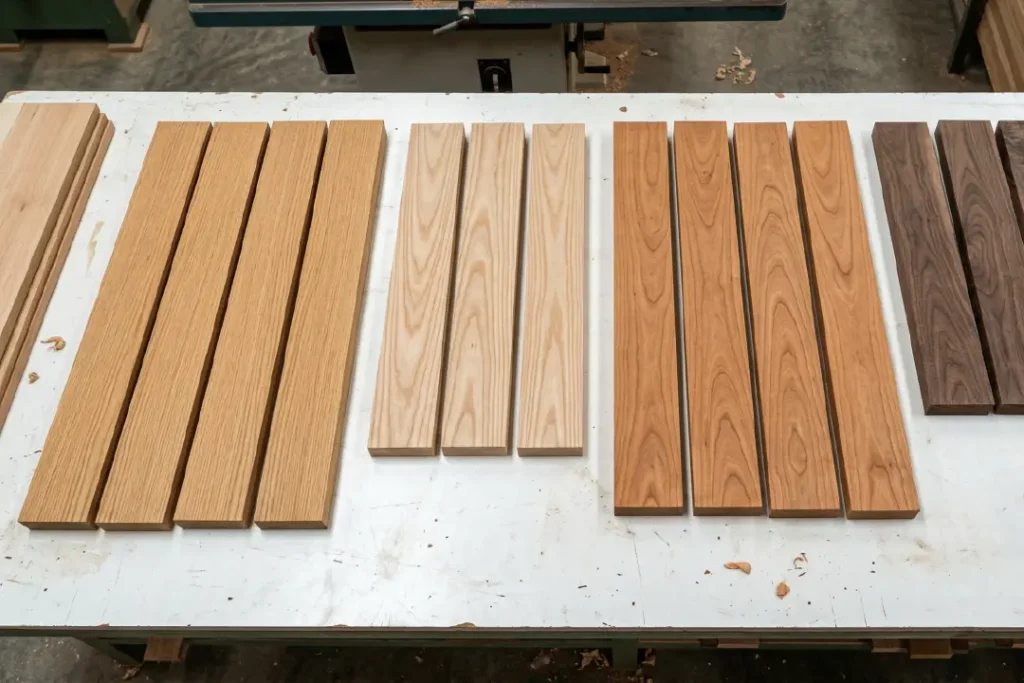
In our experience, grain pattern, density, and color can differ significantly even within teak. When the wood does not come from the same log or source, the variation becomes more visible and more difficult to control.
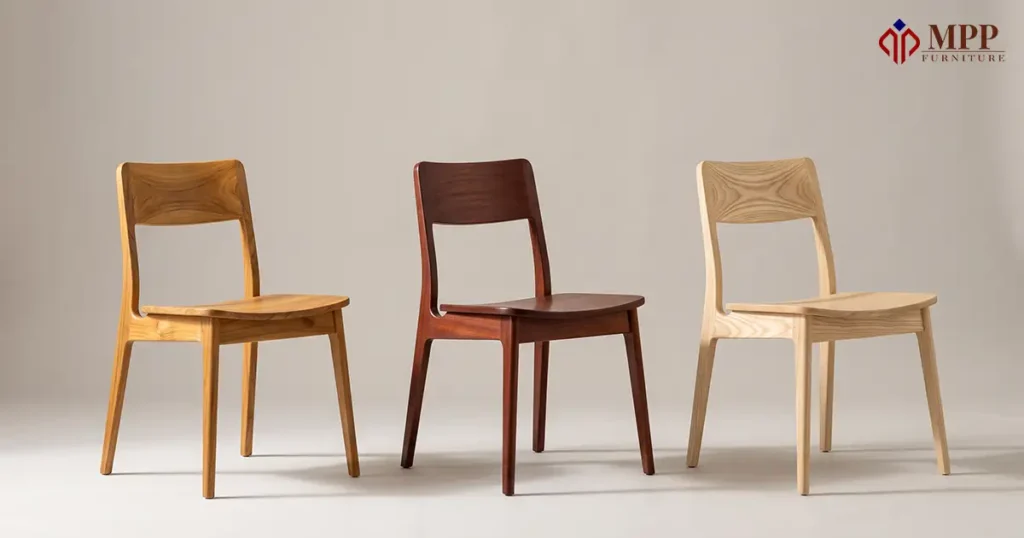
This often results in inconsistent appearance, such as uneven color tones where some parts appear darker or more reddish, while others look pale. More importantly, these variations also affect how the material behaves during production, leading to uneven movement and performance.
Uncontrolled Moisture Content
Moisture content (MC) is one of the most critical indicators of wood stability.
When wood enters production with a moisture content above a controlled level, it will continue to shrink after manufacturing. This movement may not be visible during production, but it becomes a problem after the furniture reaches a different environment.
As the wood adjusts, internal stress develops and is released through defects such as cracking, warping, and joint failure.
From a manufacturing perspective, keeping moisture content consistently below 12% is a widely accepted benchmark to reduce these risks.
Improper Wood Drying
Drying is not simply about reducing moisture content. It must be controlled carefully to prevent internal damage to the wood.
In furniture manufacturing, two main drying methods are used: air drying and kiln drying. Both must be applied correctly, depending on the wood size and condition.
If the process is not controlled properly:
- Drying too fast can create internal stress and cause cracking
- Drying too slowly can lead to inefficiency and biological risks, such as mold
- Inconsistent drying results in uneven material performance
For example, placing thick wood directly into a kiln without proper air drying can cause the outer layer to dry faster than the core, leading to cracks. Similarly, increasing kiln temperature too quickly can create internal tension that damages the material.
From our experience, drying is one of the most sensitive stages in wood preparation, and small mistakes at this stage often lead to major defects later.
What Is the Cost of Poor Wood Preparation
For Indonesian Furniture Manufacturers
For manufacturers, poor wood preparation leads to internal inefficiencies that disrupt production stability.
These include:
- High rejection rates
- Rework and production delays
- Inconsistent output quality
As a result, operational costs increase, and production becomes less predictable. This also affects reliability, which eventually impacts the buyer.
For Furniture Buyers
For buyers, the impact is more serious because it appears after delivery, when the product is already in the market, especially in competitive segments such as Indonesian furniture, where consistency and quality directly affect brand reputation.
Common consequences include:
- Customer complaints
- Product returns and replacements
- Damage to brand reputation
In many cases, the issues experienced by buyers are directly linked to the rework and instability that already occurred during production. What starts as a material problem at the factory becomes a business problem in the buyer’s market.
In this industry, a strong partnership must create mutual benefit for both sides, where quality, consistency, and reliability are aligned from the beginning.
This is why choosing the right Indonesian furniture manufacturer is not just a sourcing decision, but a risk management decision.
How Reliable Indonesian Furniture Manufacturers Prevent These Issues
Reliable Indonesian furniture manufacturers do not try to fix defects at the finishing stage. They prevent them from the beginning through a controlled wood preparation system.
This is how MPP Furniture, a reliable Indonesian furniture manufacturer with over 20 years of export experience, prevents defects before they happen.
1. Consistent Material Control: Selection, Grading, and Moisture
At MPP Furniture, wood preparation starts with strict material control. Wood is carefully selected and grouped based on density, grain, and quality to reduce variation in performance and appearance.
Moisture content is treated as a controlled system, not a one-time check. Multiple checkpoints are applied throughout production to ensure that only stable material moves forward.
As a standard practice, moisture content is maintained below 12% to minimize wood movement and reduce the risk of defects after delivery.
2. Controlled Drying System to Prevent Internal Stress
At MPP, the drying process is carried out gradually to avoid internal stress. A combination of air drying and kiln drying is applied depending on the wood size and condition.
MPP operates dedicated kiln drying chambers to achieve consistent moisture levels, ensuring the wood reaches optimal stability before entering production.
Wood is never rushed into kiln drying without proper preparation, and temperature changes are carefully controlled to prevent internal damage.
3. Full Production Control and Experience-Based Discipline
MPP Furniture operates with full in-house production, allowing complete control from wood preparation to finishing.
This ensures better coordination between processes, faster detection of issues, and consistent quality across batches. Problems are prevented early instead of being corrected later.
With more than 20 years of experience working with international buyers, MPP understands that most defects originate from unstable material, not finishing. That is why wood preparation is treated as a non-negotiable foundation in every project.
Conclusion
Furniture surface problems are not random. They are the result of decisions made long before production begins.
Cracks, warping, uneven finishing, and structural instability are not caused by finishing alone. They originate from unstable wood due to poor preparation.
This is why evaluating Indonesian furniture suppliers should go beyond samples and appearance. The real question is how the manufacturer controls wood preparation, from material selection to moisture and drying systems.
Build a More Reliable Indonesian Furniture Supply with the Right Manufacturer
Working with a furniture manufacturer in Indonesia that applies controlled wood preparation systems helps reduce defects, protect your brand, and ensure consistent product quality.
FAQs About Wood Preparation in Indonesian Furniture
1. What causes furniture surface defects?
Indonesian furniture surface defects are usually caused by unstable wood due to poor preparation, not finishing or construction.
2. Is cracking or warping a manufacturing defect?
Not always; cracking and warping often happen because the wood was not properly dried or stabilized before production.
3. What is wood preparation in furniture manufacturing?
It includes wood selection, drying, moisture control, and conditioning before production begins.
4. Why does furniture crack after delivery when wood preparation is poor?
Because internal stress and moisture imbalance are not visible during inspection and only appear after the furniture reaches a different environment.
5. How can buyers avoid defects in Indonesian furniture?
Buyers can reduce defects by choosing Indonesian furniture manufacturers that apply controlled wood preparation systems, including moisture control and proper drying processes.

Hi, I’m Salman, founder of MPP Furniture, an Indonesian furniture manufacturer serving global retailers and project-based clients.
I began my career in my family’s export-oriented furniture company, gaining hands-on experience in production, construction, finishing, material performance, and product development. With a clear understanding of how international buyers evaluate furniture quality and reliability, I founded MPP Furniture to deliver export-ready products with consistent standards.
Here, I share insights from the perspective of a furniture manufacturer working directly with production teams on the factory floor, focusing on manufacturing and supplier evaluation.
Connect on LinkedIn


0 Comments