Outdoor furniture is often treated as one broad category, with many retailers assuming that any product labeled for exterior use can be placed in gardens, patios, or poolside areas without much difference.
However, poolside spaces are not the same as regular outdoor areas. Misunderstanding this difference can impact sales and product performance, as furniture near a pool faces significantly more water, chlorine, salt, humidity, wet users, and frequent cleaning.
This article explains the poolside vs outdoor furniture difference in a simple way, covering why the environment matters, what makes poolside furniture more demanding, and what retailers should check before adding these products to their collections.
Why This Distinction Matters for Retailers
For retailers, product selection is not only about style. It also affects customer satisfaction, repeat sales, complaints, and long-term trust.
A chair that works well on a shaded patio may not perform the same beside a swimming pool. The exposure is different, so the product needs different material choices, finishing, construction, and maintenance expectations.
This is where many buying mistakes happen. Retailers may choose beautiful outdoor pieces but later face fading, staining, rust, cracking, or slow-drying cushions because the products were not made for poolside use.
In short, poolside furniture is a more demanding outdoor category. Understanding the difference helps retailers guide customers better and reduce after-sales problems.
Understanding the Role of Environment in Furniture Performance
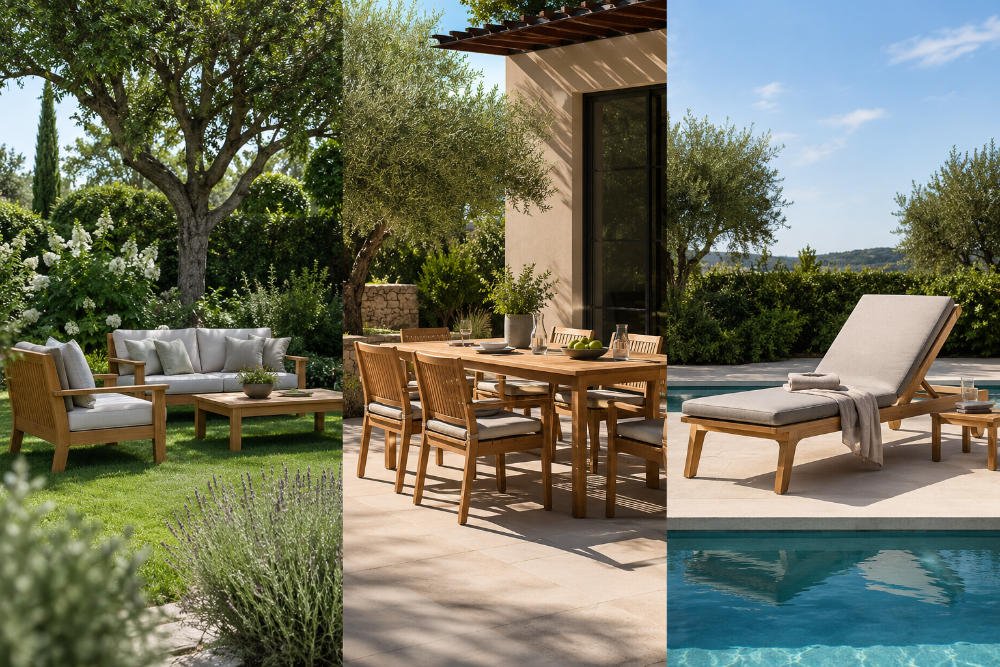
Outdoor furniture performance always starts with the environment. A garden, patio, and poolside area may all be outside, but each one puts different pressure on the product. Therefore, the environment should directly guide product selection.
Garden furniture often deals with rain, soil moisture, leaves, mold risk, and shaded areas. For this category, buyers can explore Indonesian garden furniture that fits open-air and green spaces.
Patio furniture usually faces sun, rain, food spills, and daily family use. Outdoor dining sets, for example, need stable construction, comfortable seating, and surfaces that are easy to wipe, as seen in outdoor dining furniture from Indonesia.
Poolside furniture faces heavier exposure. It must handle water splash, wet towels, chlorine or salt residue, body oils, sunscreen, strong sun, and more cleaning than many other outdoor products.
Poolside vs Outdoor Furniture: The Key Differences That Matter
Resistance to Water and Moisture
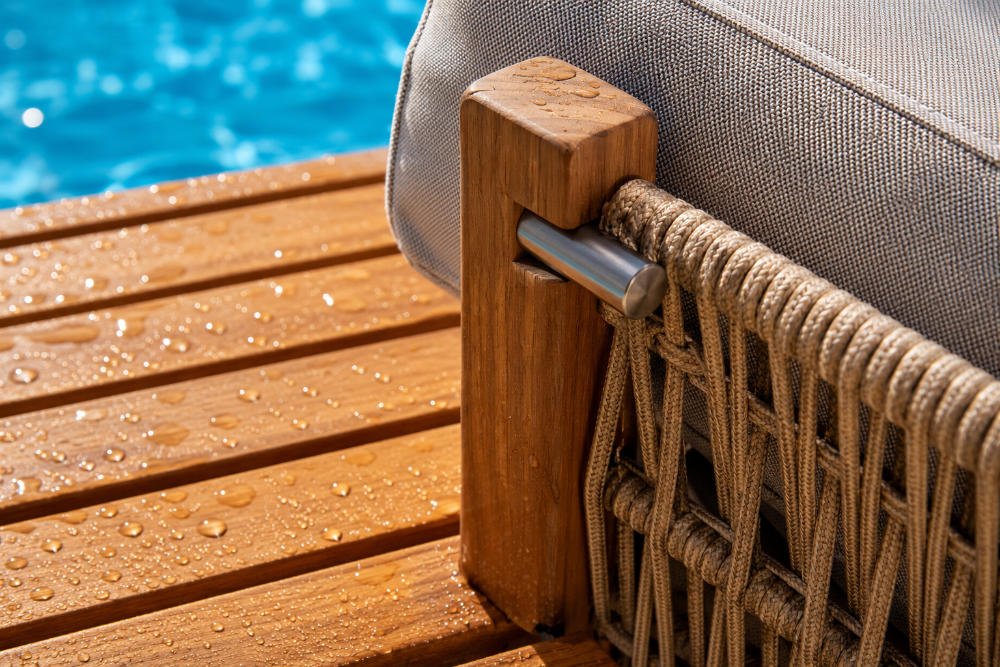
The biggest poolside vs outdoor furniture difference is water exposure. Regular outdoor furniture may face rain, but poolside furniture often gets wet every day.
This means the design should not trap water. Slatted surfaces, proper gaps, stable joinery, and fast-drying materials help reduce water buildup.
For wooden furniture, moisture control before production matters. If wood movement is not managed well, the furniture may crack, warp, or create stress around the joints over time.
Resistance to Chlorine, Salt, and Chemicals
Poolside furniture also faces chemical residue. Chlorine from pool water, salt from saltwater pools, sunscreen, and body oils can sit on the surface after use.
This can affect finishing, fabric, rope, metal parts, and cushions. A product may look suitable outdoors, but it may still fail faster if its surface system is not prepared for poolside conditions.
Retailers should avoid saying a product is completely chemical-proof. A safer and more accurate claim is that the furniture is designed with materials and finishes that are more suitable for poolside exposure.
Material Requirements and Performance
Regular outdoor furniture usually focuses on sun and rain resistance. Poolside outdoor furniture needs to go further because it must resist moisture, heat, residue, and frequent cleaning.
Teak wood (Tectona grandis) offers exceptional durability due to its dense grain and natural oils, providing robust resistance against constant moisture. This timber is historically trusted for demanding maritime applications, including ship decking and water-contact construction. Furthermore, its inherent resistance to various chemicals makes it highly effective at withstanding chlorine and saltwater exposure in pool environments. For technical specifications and density metrics, refer to this botanical species profile.
Teak can be a strong option because it performs well outdoors. For a deeper material discussion, retailers can refer to teak outdoor furniture from Indonesia.
Outdoor rope can also work well when it is made for UV exposure and tension stability. The teak and rope outdoor furniture collection is a good reference for buyers who want outdoor pieces with a lighter and modern look.
Comfort and Functional Design
Poolside furniture is used differently from patio or garden furniture. People often sit, stretch, lounge, or move around while wet.
Because of this, comfort and function matter a lot. Loungers, lounge chairs, side tables, daybeds, benches, and relaxed seating often fit pool areas better than formal dining pieces. Functional design should match how customers actually use furniture in poolside settings.
Cushions should be easy to remove, clean, and dry. Fabrics should be selected with moisture, sunlight, and cleaning in mind.
Safety and Practical Features
Safety also matters because the area is often wet. Retailers should check for stable frames, smooth edges, and surfaces that do not become too slippery.
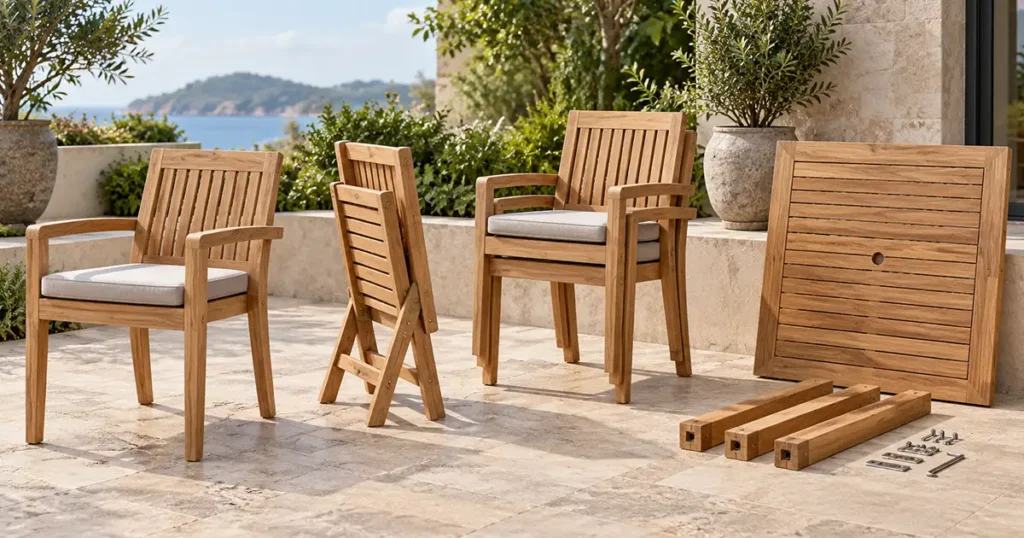
Products that are easy to move without becoming unstable add practical value. Features like wheels on heavy loungers or stackable frames improve safety and usability for both residential and commercial buyers.
Maintenance and Cleaning Needs
Poolside furniture needs easier maintenance than many regular outdoor pieces. It faces water spots, sunscreen marks, towel moisture, dust, and residue from pool chemicals.
Retailers should think about cleaning before selling the product. If customers need complicated care, the product may create more complaints after purchase.
Simple cleaning guidance can help customers use the furniture better. For example, wiping surfaces regularly and allowing cushions to dry properly can support longer product life.
For commercial buyers such as hotels, villas, and resorts, maintenance matters even more. Their furniture is used by many guests, so easy cleaning and reliable performance can reduce operational work.
What This Means for Retailers: Key Takeaways for Product Selection

Retailers should first check the material grade and overall construction. Poolside furniture must handle constant exposure to water and chemicals to ensure long-term performance.
Material selection plays a critical role in determining whether furniture is suitable for pool environments. The design should not trap moisture inside seats, joints, or frames.
Functional design should match how customers actually use furniture in poolside settings. Additionally, easy maintenance and cleaning are essential factors for both residential and commercial buyers.
Understanding these differences helps retailers choose products that perform better and sell more consistently.
How MPP Furniture Supports Outdoor and Poolside Product Development
MPP Furniture ensures long-term outdoor durability through a fully in-house manufacturing process within a 16,000 square meter facility. Each piece utilizes kiln-dried teak with strict moisture control, reinforced outdoor joinery, and outdoor-grade finishing to withstand harsh environments. By combining modern machinery with handcrafted precision, buyers receive reliable, batch-to-batch consistency for high-traffic commercial use.
To support global retailers and hospitality projects, MPP Furniture offers flexible OEM, ODM, and private label services with absolutely no design fees. Built for scale, the facility utilizes over 200 craftsmen to produce up to 30 containers per month with predictable lead times. Furthermore, all custom furniture is SVLK certified and Law Label compliant, ensuring it arrives ready to sell in the US, Europe, and beyond.
For buyers who want to discuss product direction, material selection, or custom collection planning, visit an experienced Indonesian furniture manufacturer and start a discussion with the team.
FAQs About Poolside vs Outdoor Furniture Difference
1. What is the difference between poolside furniture and outdoor furniture?
Poolside furniture is outdoor furniture designed for heavier exposure to water, chlorine, salt, humidity, sun, and wet users. Regular outdoor furniture may not always be suitable for those demanding conditions.
2. Can regular outdoor furniture be used near a pool?
Yes, but only when the material, finishing, construction, fabric, and hardware can handle poolside exposure. Retailers should check these details before selling it as poolside furniture.
3. What material works well for poolside furniture?
Teak, outdoor-grade rope, aluminum, sling, and performance fabrics can work well for poolside furniture. The final performance still depends on construction, finishing, drainage, and care.
4. Is teak suitable for poolside furniture?
Yes, teak can be suitable for poolside furniture because it handles moisture better than many woods. However, the design still needs proper drainage, outdoor-grade finishing, and correct maintenance.
5. What should retailers check before buying poolside furniture?
Retailers should check water resistance, chemical exposure, drying speed, material grade, finishing, fabric quality, hardware, safety, and cleaning needs. These details help reduce product complaints after purchase.
Plan a Poolside Furniture Collection That Sells and Scales
MPP Furniture ensures long-term outdoor durability through fully in-house manufacturing. We combine modern machinery with handcrafted precision to deliver reliable batch-to-batch consistency and offer flexible OEM, ODM, and private label services with zero design fees.

I am a Web Designer, Technical SEO Specialist, and writer with 6+ years of experience in website optimization and search visibility. For more than a year, I have supported MPP Furniture’s growth, and I am currently expanding my role as an author to help B2B furniture buyers make more informed business decisions through informative, practical, and impactful articles.
0 Comments