Retailers often agree on one thing: outdoor dining chairs are easy to list, but not always easy to profit from. A chair might look attractive in a catalog, but if it moves slowly, breaks too soon, or creates customer complaints, your actual margin quickly shrinks.
This guide will help you choose outdoor dining chairs with a profit-first mindset. Instead of focusing solely on the supplier's initial price, you will learn how to evaluate durability, material value, design demand, comfort, price positioning, and supplier consistency.
We will also explore how to build a smarter product mix, avoid common sourcing mistakes, and select products that drive repeat sales. The goal is simple. We want to help your outdoor dining chair category perform better with fewer after-sales problems.
Why Product Selection Directly Impacts Retail Profit
Not all outdoor dining chairs perform equally well on the retail floor. Some products sell fast because their design is universally appealing, the material feels premium, and the price aligns with the customer's budget.
Others might seem profitable at first glance due to a low buying cost. However, if that chair leads to returns, negative reviews, or stagnant inventory, the retailer ultimately loses time, valuable shelf space, and customer trust.
True profit comes from securing the right combination of features, design, build quality, and supplier support. This is exactly why partnering with an experienced Indonesian furniture supplier is essential when you need reliable, repeatable quality rather than just one impressive sample.
What Drives Profit in Outdoor Furniture Retail
Profitability in outdoor furniture retail relies on three main pillars: cost, perceived value, and market demand. A product must be affordable enough to protect your margin while remaining strong enough in appearance and build quality to justify its retail price tag.
A low price does not automatically guarantee profit. If a product feels flimsy, looks overly generic, or degrades quickly after outdoor exposure, customers will hesitate to buy or simply will not return for future purchases.
Conversely, a higher-cost chair can yield better margins if it sells faster and instills buyer confidence. For instance, teak outdoor furniture is highly valued because the wood naturally resists moisture, decay, and insects. This durability significantly reduces long-term product risks.
Understanding global market demand is also crucial for retailers looking to maximize profit. According to recent Indonesian furniture industry statistics, the export volume of Indonesian outdoor furniture increased by 12% during the 2022 to 2023 period. Furthermore, Indonesia currently supplies furniture to over 150 countries worldwide, proving the high international trust in its manufacturing capabilities.
Partnering with experienced Indonesian suppliers allows retailers to confidently tap into this expanding market while maintaining consistent product quality.
Factors That Determine Profitable Outdoor Dining Chairs
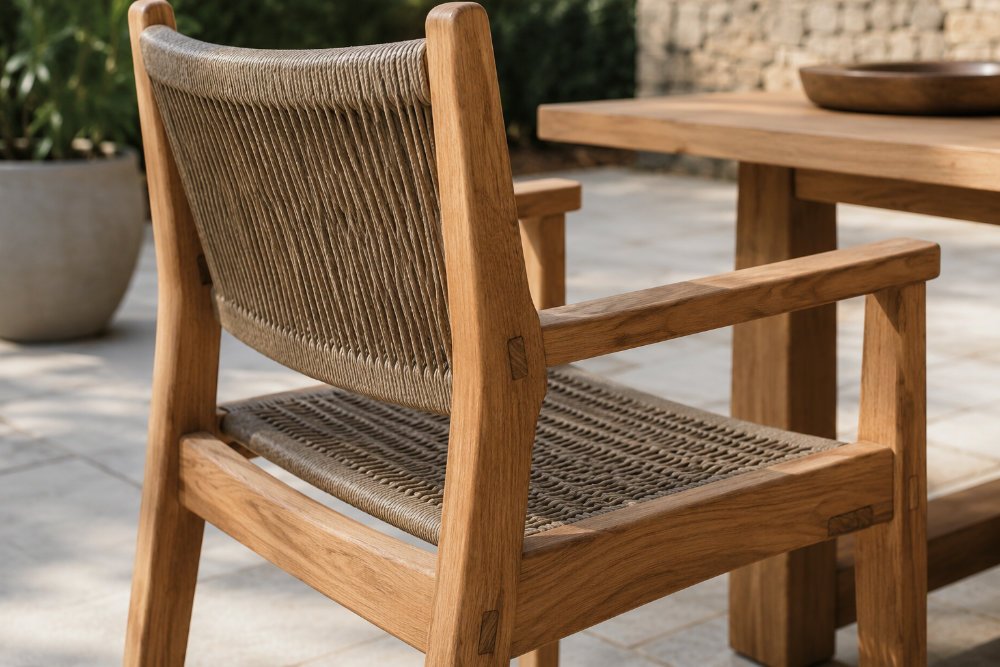
Durability and Long-Term Performance
Outdoor dining chairs must endure sun, rain, humidity, constant body movement, and frequent handling. If the internal construction is weak, minor issues will quickly escalate into major customer complaints after just a few months of use.
Based on case studies of buyer behavior from our outdoor dining collection, professional clients frequently conduct rigorous impact and drop tests to guarantee this structural integrity. Passing these physical tests proves that the chair can withstand real-world commercial and residential use.
Prioritizing durability helps retailers protect customer satisfaction. Making the wrong material choices often leads to warranty claims, bad reviews, and lost consumer trust.
Material Selection and Cost-to-Value Ratio
Retailers should evaluate materials based on their overall value rather than price alone. Teak, outdoor-grade rope, synthetic rattan, and mixed-material designs can all perform exceptionally well when matched with the right target demographic.
For premium and upper mid-range buyers, combining teak and rope offers a compelling balance of natural warmth and modern aesthetics. You can observe this strategic approach in our teak rope outdoor furniture collection in Indonesia.
Design Appeal and Market Demand
A profitable outdoor dining chair needs to be visually appealing without relying too heavily on fleeting trends. Retailers require fresh designs that possess enough visual longevity to remain sellable across multiple seasons.
Natural textures, clean frame lines, neutral color palettes, and balanced proportions consistently perform well in global markets. These elements make it easier for customers to integrate the chairs with existing tables, patios, and resort-style spaces.
Comfort and User Experience
Comfort directly impacts conversion rates because customers instinctively imagine how a chair will feel during long meals. Seat height, backrest angle, armrest placement, and woven tension all influence the final buying decision.
A visually stunning chair that feels uncomfortable will quickly lose a sale during a showroom test. For online retail, these comfort indicators must be clearly communicated through detailed product descriptions, high-quality photos, and precise dimension charts.
To achieve the perfect seating experience, one of our buyers recently requested three rounds of sample revisions for their newest collection. Each physical prototype was shipped directly to the US so their team could evaluate the comfort firsthand. This rigorous testing process ensures the final product meets the exact ergonomic standards expected by their market.
Price Positioning and Margin Potential
Retailers must select chairs that fit cleanly within a planned retail price band. A premium chair requires visible value indicators through its material, finishing, comfort, and brand story. Mid-range products demand a different balance. They need to look attractive and perform reliably outdoors while remaining accessible enough to drive higher-volume sales.
Practical Features That Improve Sell-Through
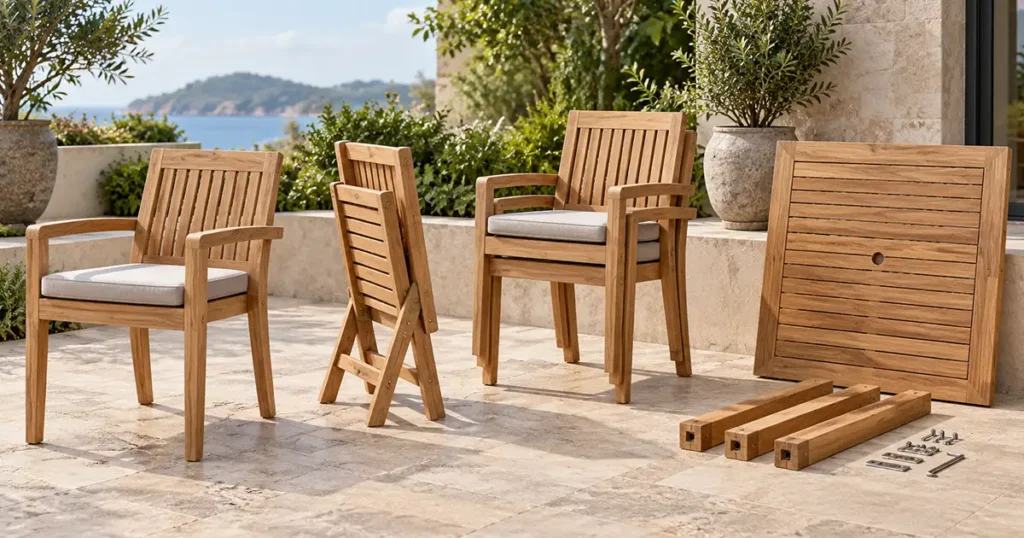
Subtle features can significantly accelerate the sales process. Stackability, easy maintenance, compact footprints, cushion variations, and multiple color options make products easier to display and purchase.
For example, one of our buyer in spain successfully utilized the same dining chair frame for over three years, simply refreshing the collection annually by introducing different outdoor rope colors. This demonstrates how smart product variations can sustain sales momentum without introducing unnecessary inventory risks.
Supplier Reliability and Consistency
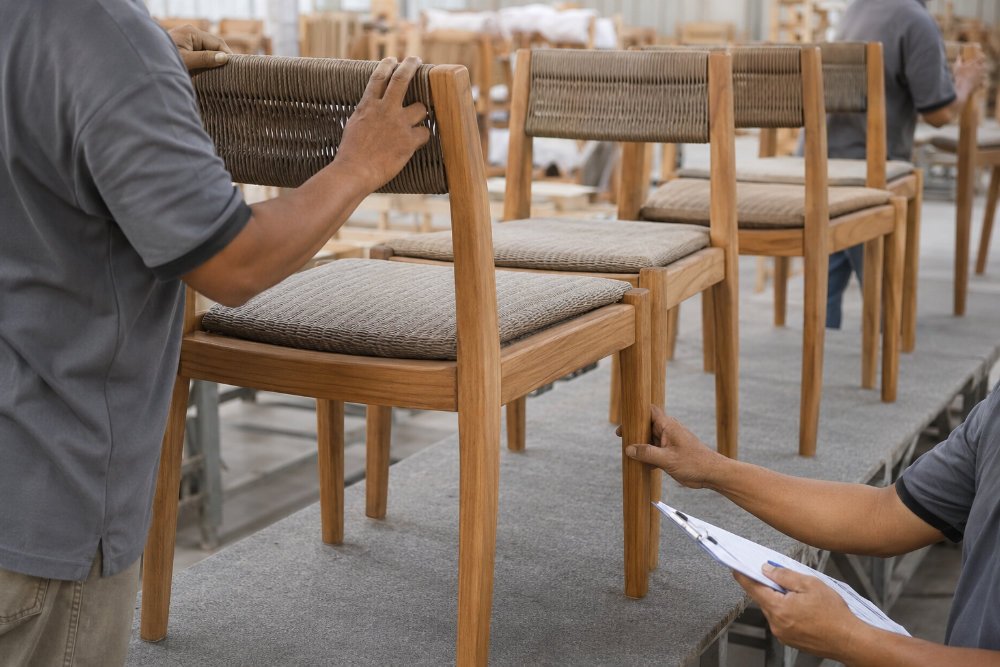
A flawless initial sample is not enough to guarantee retail profit. Bulk production must strictly adhere to the approved standards for material selection, finishing, weaving, joinery, packaging, and delivery schedules. Working with a reliable manufacturing partner ensures quality control across every production stage. For retailers, this eliminates unwanted surprises when transitioning from sample approval to full-scale repeat orders.
Read Also: How to Find a Reliable Outdoor Dining Chair Supplier in Indonesia
How to Build a Profitable Outdoor Dining Chair Product Mix
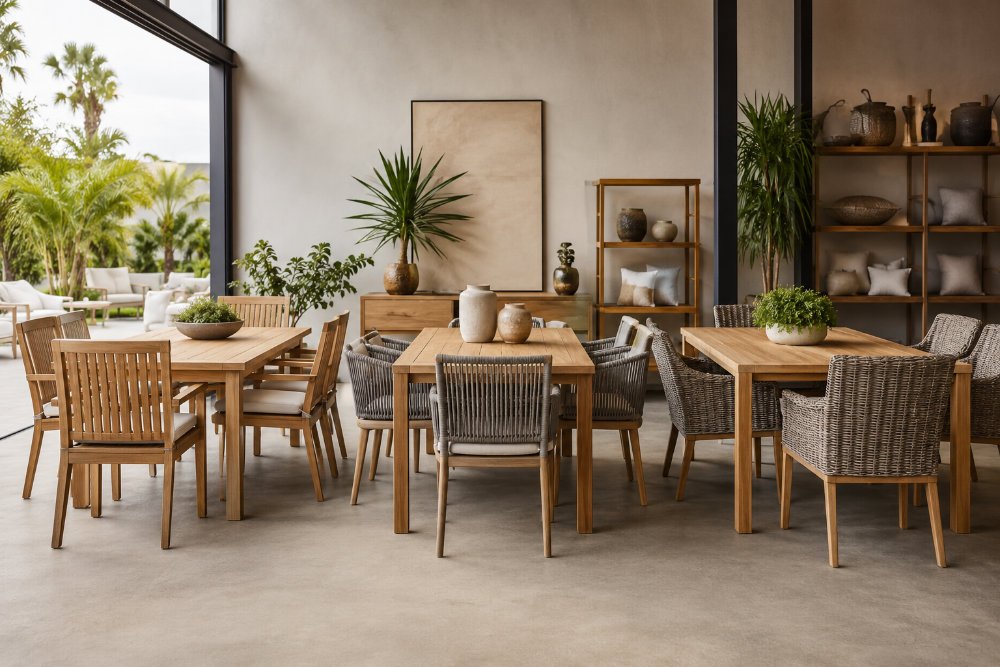
A robust product mix should incorporate both premium and mid-range options. Premium chairs elevate your brand value, while mid-range alternatives drive sales volume.
Retailers can strategically use a "hero product" to capture customer attention, then surround it with more accessible, easy-to-buy options. This setup encourages customers to compare choices without feeling overwhelmed.
Avoid stocking too many competing styles. Instead, curate a cohesive family of products centered around a specific theme, such as solid teak, teak and rope combinations, or weather-resistant rattan.
Bundling is another highly effective tactic to increase average order value. Pair dining chairs with matching tables, combine armchairs with side chairs, or offer customized cushion packages that align with the same overarching collection.
Common Mistakes That Reduce Retail Profit
- Choosing solely based on supplier price: A lower purchasing cost quickly becomes expensive if it results in customer complaints, high return rates, or stagnant stock.
- Ignoring local market preferences: A product that dominates one region might completely fail in another market due to differences in climate, architectural styles, or local spending habits.
- Working with inconsistent suppliers: As highlighted in our guide to Indonesian teak outdoor furniture, bulk production can drastically differ from the original sample if the manufacturer lacks strict controls over material selection, finishing, or construction.
- Overloading inventory with slow-moving designs: Retailers should adopt a strategy to test, measure, reorder, and expand their inventory based entirely on actual sales data rather than assumptions.
What This Means for Retailers: Key Takeaways
Choosing outdoor dining chairs for retail profit requires looking far beyond the initial price quote. The most important question is whether the product can sell well, perform reliably outdoors, and protect your customer's trust over time.
- Durable chairs reduce returns: Strong, weather-resistant materials directly improve the product's perceived value and lifespan.
- Design and comfort drive sales: A well-proportioned, comfortable chair supports faster conversion rates on the retail floor.
- Clear price positioning protects margins: Aligning the product's features with your target price band ensures consistent profitability.
- Reliable suppliers build consistent collections: Partnering with a dependable manufacturer guarantees quality across repeat orders.
To review relevant product options that meet these strict criteria, explore our outdoor dining chair collection.
FAQs About Choosing Outdoor Dining Chairs for Retailers
1. How do retailers choose outdoor dining chairs that sell well?
Retailers should evaluate outdoor dining chairs based on long-term durability, material value, market design demand, user comfort, strategic price positioning, practical features, and the consistency of the supplier.
2. Are cheap outdoor dining chairs good for retail profit?
Cheap chairs are not automatically profitable. If a low-cost item generates customer returns, warranty complaints, or slow sales, it will ultimately reduce your total profit margins.
3. What materials are best for outdoor dining chairs?
Teak wood, outdoor-grade rope, synthetic rattan, aluminum, and mixed-material designs perform exceptionally well when properly aligned with your specific target market and retail price level.
4. Why does supplier consistency matter for outdoor dining chairs?
Supplier consistency guarantees that retailers receive the exact same quality standard across all repeat bulk orders. This reliability protects customer trust and ensures long-term sales growth.
5. How can retailers improve their outdoor dining chair margins?
Retailers can optimize their margins by selecting products that offer strong perceived value, durable construction, clear market demand, and built-in cross-selling potential.
Develop Highly Profitable Outdoor Dining Chair Collections
MPP Furniture helps B2B buyers develop highly profitable outdoor dining chair collections by offering free consultations, product development assistance, custom design support, and strict in-house production control from initial design to final delivery.

I am a Web Designer, Technical SEO Specialist, and writer with 6+ years of experience in website optimization and search visibility. For more than a year, I have supported MPP Furniture’s growth, and I am currently expanding my role as an author to help B2B furniture buyers make more informed business decisions through informative, practical, and impactful articles.
0 Comments