A reference image can show what a solid mahogany headboard should look like, but it does not give a manufacturer everything needed to reproduce that product across a bulk order.
Dimensions, mattress size, installation method, construction, finish, and visible details still need to be discussed. Product development is where those decisions move from an idea into something the buyer and manufacturer can physically review and approve.
The goal is to reach a mahogany headboard whose design and technical details are clear enough to become the agreed reference for production.
This article explains how that development process moves from design intent and product use to workable construction, sample review, revision, and final approval before bulk production begins.
Start With a Clear Design and How the Mahogany Headboard Will Be Used
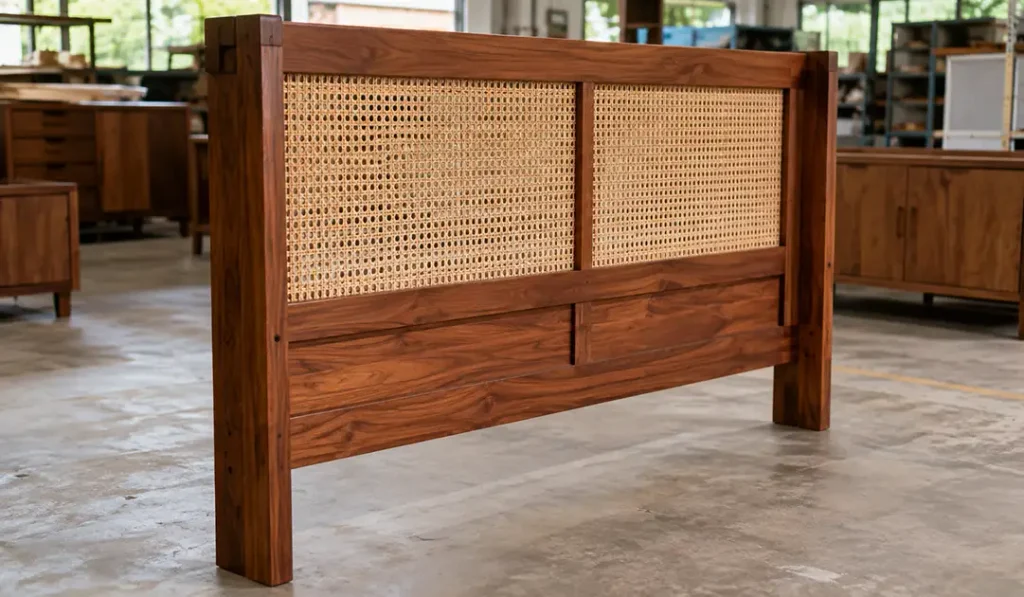
Before working on the construction, the manufacturer first needs to understand what the headboard should look like and how it will be used. This gives the factory a clearer picture of the product the buyer wants to create before translating the concept into a workable product.
Mattress size should also be confirmed early. A headboard for a Queen bed will not necessarily use the same proportion as one developed for a King or custom-size bed. For example, a wider King-size headboard may need different proportions so the design does not look too heavy or bulky.
The installation method is another part of the development brief. A solid mahogany headboard may be attached directly to the bed, designed as a freestanding piece, or mounted to the wall. Each approach can affect the construction, attachment points, support, and how the back of the headboard needs to be treated.
MPP Furniture experienced this during a solid mahogany headboard development project for a buyer in the Maldives. The design used a solid mahogany frame with rattan webbing in the center.
Before we moved into sampling, the buyer confirmed that the headboard would be placed in the middle of the room instead of against a wall. This meant guests would also see the back of the product.
Because both sides would remain exposed, the buyer asked us to use rattan webbing on both the front and back so the headboard would look properly finished from either direction.
This is why placement should be discussed before construction is finalized. A headboard that sits against a wall may need a different rear treatment from one that can be viewed from several sides.
Retailers developing several bedroom products can also read our custom bedroom furniture in Indonesia guide for a broader look at how dimensions, materials, finishes, and product details can be adapted across a collection.
Let the Manufacturer Translate the Design Into Workable Construction
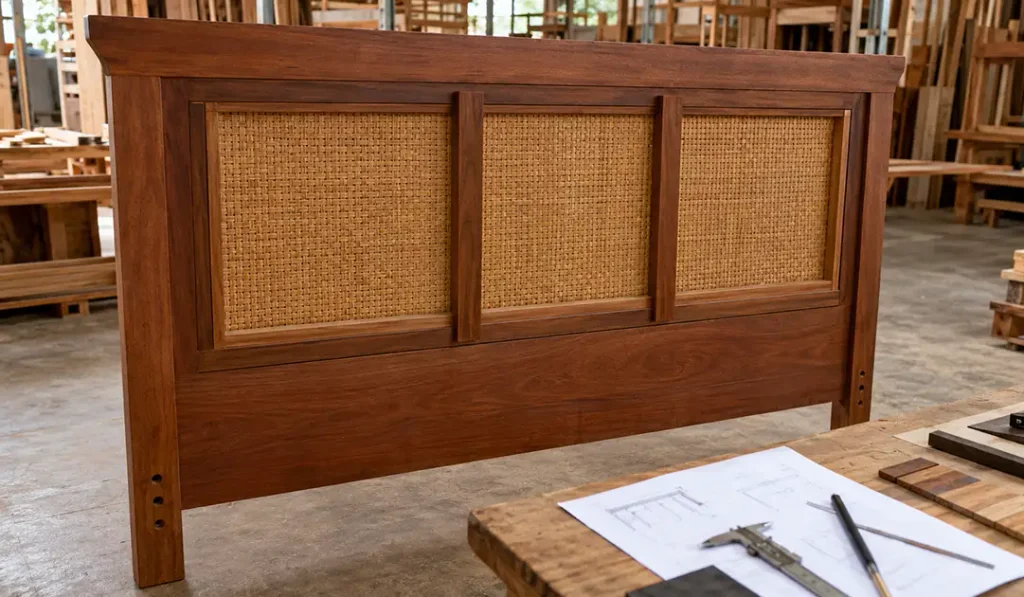
Once the product vision is clear, the manufacturer's role is to translate it into construction that can support the intended use and reduce the risk of product failure after the furniture reaches the retailer's customer.
The buyer does not need to specify every production detail, such as mortise-and-tenon dimensions, joint construction, or machining methods. These are technical decisions the manufacturer should work out based on the design, material, and how the product will be used.
From our experience at MPP Furniture, we also give buyers construction feedback during product development. In one headboard development, for example, we recommended using three vertical supports instead of two because the section would later be covered with woven material.
With only two supports, the woven section would have had less structural support and a higher risk of damage. Adding a third vertical support gave the weaving a better structural base while keeping the design direction requested by the buyer.
Construction decisions should also match how the material is being used in the product. Our guide to ideal mahogany furniture applications gives broader context on where mahogany can make sense across different furniture types.
This is where working with an experienced furniture manufacturer in Indonesia can add value. The factory is not only reproducing the reference image, but also identifying construction changes before the product moves into sampling.
Product development should therefore not mean copying a reference image as literally as possible. The manufacturer needs enough room to solve technical problems while still respecting the design direction agreed with the buyer.
If a construction adjustment changes the visible proportion, spacing, thickness, or another design detail, the change should be discussed with the buyer before the sample is finalized.
Develop a Sample to Validate the Solid Mahogany Headboard
Once the sample is ready, the buyer can see how the headboard actually looks and feels at full scale. A drawing can show dimensions, while a rendering can show the intended appearance, but neither gives the same view as having the physical product in front of you.
This is where the buyer can review whether the proportion feels right, whether the details match the original expectation, and whether any part still needs to be adjusted.
If something does not look or work as expected, the buyer can request revisions before approval. A revision could involve the width of a frame section, spacing between rails, overall height, mounting details, finish tone, or another visible part of the design.
The sample also gives the manufacturer a chance to review the product from the production side. The team can check how the construction works in practice, whether any production step needs adjustment, and whether the same construction can be repeated consistently during bulk production.
The purpose of the sample is not only to prove that one solid mahogany headboard can be made. It is to find what should still be corrected before that headboard is repeated across a bulk order.
Use the Approved Sample as the Reference for Bulk Production
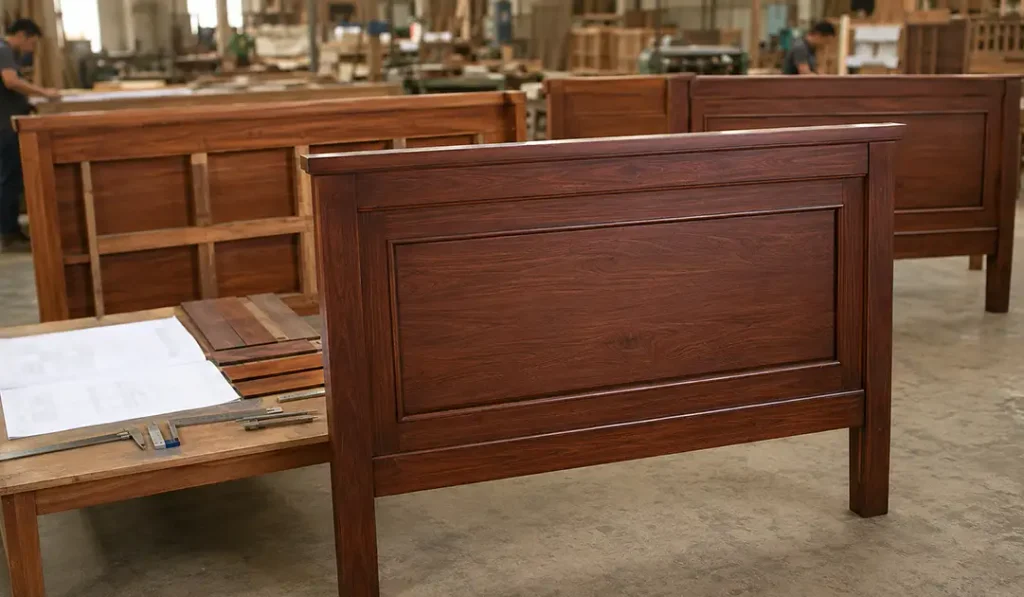
A finished sample and an approved sample are not automatically the same thing.
Sample made: The manufacturer has produced a physical unit based on the current requirements.
Sample reviewed: The buyer has checked the mahogany headboard and may still request changes.
Sample approved: The requested revisions have been completed, and both sides have accepted the final result.
Before bulk production starts, the final dimensions, construction, finish, and other agreed details should already be confirmed. Any changes from the sample review should also be completed at this stage.
The approved sample then becomes the physical reference for bulk production, supported by the final drawings, specifications, finish references, and revision notes.
This helps both sides work from the same product version and reduces the risk of the factory producing from an earlier revision.
From Approved Solid Mahogany Headboard to Production With MPP Furniture
At MPP Furniture, development can start from a buyer's drawing, reference image, or existing mahogany headboard concept. Our team works with the buyer to turn those requirements into construction and production details that can be applied in the factory.
After approval, the finalized product details continue into MPP's in-house production. Handcrafted work is supported by production machinery and quality checks, with the approved sample and specifications used during production.
Because development and manufacturing stay within one production flow, the requirements discussed during sampling can remain connected to the details used in production.
For retailers developing private-label or custom bedroom collections, MPP also provides free consultation, free product development, and OEM services from initial concept through production.
Buyers planning a wider assortment can also explore Indonesian bedroom furniture collections
Final Thoughts
Developing a solid mahogany headboard is not only about matching a reference image. The buyer needs to define how the product should look and be used, while the manufacturer translates that direction into workable construction.
The sample gives both sides a physical product to review before the dimensions, construction, finish, and other agreed details are approved. Once those decisions are finalized, the approved sample can serve as the reference for bulk production.
For retailers, this process helps reduce the gap between the original design expectation and the product that eventually goes into production.
Have a Solid Mahogany Headboard Concept?
Bring your drawing, reference image, mattress size, and intended use to MPP Furniture. Our team can help turn the idea into workable construction, develop the sample, and prepare the approved product for production.
FAQs About Solid Mahogany Headboard Development
1. What information should retailers provide before developing a solid mahogany headboard?
Retailers should provide a design reference, mattress size, expected dimensions, intended placement, mounting method, finish direction, and visible details they want to maintain. These inputs help the manufacturer understand the intended product before technical development begins.
2. Can a manufacturer develop a solid mahogany headboard from a reference image?
Yes. A reference image can be used as a starting point, but it is not a full production specification. Dimensions, construction, materials, mounting, finish, and other relevant details still need to be discussed and agreed.
3. Why is a sample needed before bulk headboard production?
A sample lets the retailer and manufacturer review the headboard at full scale. It can reveal issues with proportion, dimensions, construction, mounting, finish, material appearance, or visual details before the product is repeated in bulk.
4. When is a headboard sample ready to become the bulk-production reference?
A headboard sample is ready after the buyer and manufacturer have agreed on the final dimensions, construction, materials, mounting details, finish, and requested revisions. The approved sample can then work alongside the agreed specifications as the reference for production.
5. Can solid mahogany headboards be developed for different mattress sizes?
Yes. Queen, King, and custom sizes can be developed. Mattress size should be confirmed early because it can affect headboard width, proportion, mounting positions, support, and other construction details.

Hi, I’m Salman, founder of MPP Furniture, an Indonesian furniture manufacturer serving global retailers and project-based clients.
I began my career in my family’s export-oriented furniture company, gaining hands-on experience in production, construction, finishing, material performance, and product development. With a clear understanding of how international buyers evaluate furniture quality and reliability, I founded MPP Furniture to deliver export-ready products with consistent standards.
Here, I share insights from the perspective of a furniture manufacturer working directly with production teams on the factory floor, focusing on manufacturing and supplier evaluation.
Connect on LinkedIn

0 Comments