A teak dining chair can look attractive on a quotation until you compare it with a chair made from a lower-cost wood. Suddenly, the material premium becomes a margin question: will your customer pay enough to make the higher teak dining chair cost worthwhile?
That is where many retailers get stuck. Choosing the cheaper chair can protect upfront cash, but choosing teak without a clear selling reason can leave expensive stock sitting in the warehouse.
So, is a teak dining chair worth it? For retailers, the answer depends on how much value its durability, perceived quality, selling price, and lower after-sales exposure can create for the collection.
Why 'Worth It' Is the Right Question for Teak Dining Chairs
Retailers are not buying timber; they are buying a product that needs to sell, perform well after delivery, and support the intended margin. A more expensive material can make business sense when customers understand its value and are willing to pay for it.
The global market validates this premium, with the teak furniture sector projected to reach $6.4 billion by 2034. Consumers increasingly view teak not just as a commodity but as a long-term asset that can last decades. By stocking teak, retailers align with a profitable market shift toward enduring quality.
Dining chairs make this calculation especially relevant because customers move, pull, lean on, and load them many times each day. A beautiful chair that develops loose joints or inconsistent movement can quickly turn a good sale into a complaint.
This means the purchase price should not be viewed alone. Teak is worth the premium when its higher cost supports better product life, stronger price positioning, lower after-sales exposure, or a combination of these benefits.
What You’re Really Paying for With Teak Dining Chairs
The teak premium is not just payment for a famous wood species. Buyers are paying for material characteristics, manufacturing work, finishing control, and the ability to position the finished chair within a higher-value collection.
At the same time, teak by itself does not make a good chair. Premium wood still needs accurate production, consistent joints, proper moisture control, and careful finishing before its material advantages become useful at retail.
Even the highest grade of teak cannot save a chair built with careless construction. If a manufacturer relies on shortcuts instead of proper mortise and tenon joinery, that premium timber will ultimately look, feel, and perform like a cheap product on your showroom floor.
Structural durability under frequent daily use
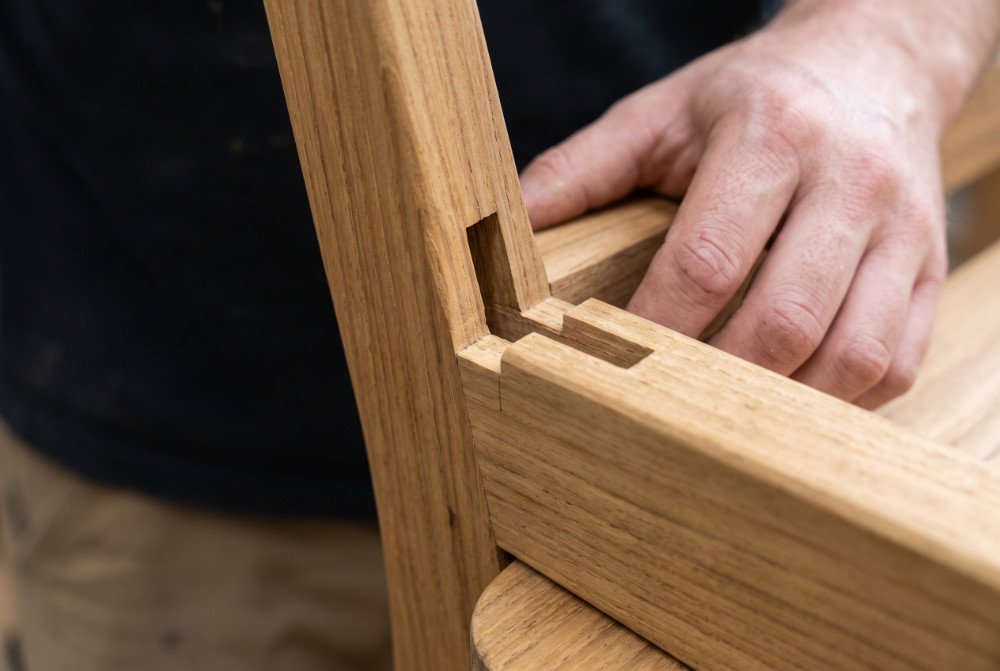
Dining chair durability starts with the wood, but it continues through the way the frame is made. At MPP Furniture, we combine handcrafted work with machine-supported production, utilizing 3-axis and 5-axis CNC machines for precision mortise and tenon joinery, alongside controlled kiln drying that maintains moisture content below 12%. By keeping the entire production process in-house, we successfully maintained a remarkably low 0.56% defect rate in 2024.
Teak grade matters as well because heartwood and sapwood do not perform the same way. For a deeper explanation of how origin, maturity, and grading affect performance, read why not all teak wood is the same.
For retailers, paying more for teak only makes sense when the construction matches the material's potential. When properly manufactured, premium teak easily outperforms alternatives like eucalyptus or cedar. This exceptional longevity directly protects your margins from costly returns and translates to a remarkably low cost-per-year of service.
Brand recognition and perceived value among end customers
Teak already carries a premium reputation in many furniture markets. That familiarity can make the sales conversation easier because customers often associate teak with longevity, natural beauty, and higher-grade furniture.
Retailers can then focus more on design, comfort, proportion, upholstery, and how the chair fits the dining space. But perceived value only becomes useful when the target customer accepts the final retail price.
This is why teak can work well as a premium dining chair material without needing to become the material for every SKU. It can anchor the upper end of a collection while other materials serve customers with different budgets.
Long-term appearance retention compared to lower-cost alternatives
Teak's appearance can support long ownership because the wood is valued for its grain, warm tone, and ability to age naturally. For customers buying furniture with a longer ownership mindset, that visual life can support the idea of a dining chair investment piece.
The wider business case goes beyond appearance alone. For more context on lifespan, maintenance, perceived value, and replacement cycles, read our discussion of the investment value of teak furniture.
Where the Premium Pays Off for Dining Chairs
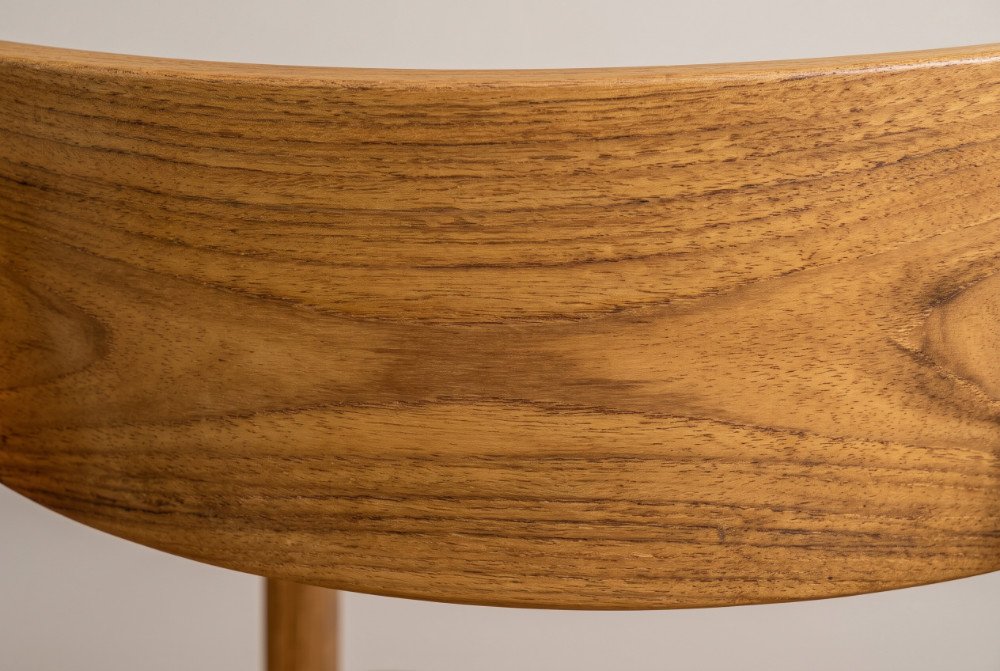
Teak works best when its material strengths match the reason customers are buying the chair. The premium becomes easier to defend when the customer values long use rather than choosing mainly by the lowest price.
Collections positioned for hospitality, contract, or high-end residential clients
Hospitality, contract, and upper residential collections often place more weight on construction, repeat use, material reputation, and finish consistency. In these segments, a higher acquisition cost may be acceptable because product performance supports the overall positioning.
Retailers still need to match material choice with the market instead of assuming teak will sell because it is premium. For a deeper look at assortment roles and market fit, read how retailers can evaluate Indonesian teak dining furniture.
Commercial demand for teak is accelerating, with the hospitality sector expanding at a 6.9% CAGR through 2034. Hotels and upscale restaurants specify teak because its durability signals premium quality to guests. For retailers, the initial material premium is easily justified by significantly lower replacement costs.
Markets where durability under heavy use is a selling point
Durability has more commercial value when customers actually care about it. Restaurants, hospitality buyers, and households buying for long-term use may respond more strongly to construction and material performance than customers shopping mainly around style.
In these markets, retailers can turn durability into a practical selling reason. The customer is not simply paying for teak; the customer is paying for confidence that the chair is designed for repeated use.
Long-term investment pieces marketed on lasting quality
A dining chair investment piece needs to feel relevant beyond one short trend cycle. Teak can support that position because its material reputation fits collections built around lasting quality, natural materials, and restrained design.
Retailers should still be careful with the word "investment." The commercial case is stronger when the chair's build quality, comfort, finish, and customer expectations support the claim.
Where the Premium May Be Harder to Justify
A better material does not automatically create a better retail result. Sometimes the market simply does not reward the extra amount paid for teak.
Highly price-sensitive retail segments
If customers compare chairs mainly by upfront price, teak can push the SKU beyond the range they are willing to consider. The chair may have strong material value but still move too slowly.
That creates a different cost for retailers because capital stays tied up in inventory. In this case, a lower-cost wood with controlled construction may produce a healthier commercial result.
Trend-driven collections with a shorter expected shelf life
Some dining collections are designed to change quickly as colors, silhouettes, and interior trends shift. A long-lasting premium timber offers less business advantage if the retailer expects to replace the design direction after a short cycle.
Teak may still work as a hero product, but using it across the full range can place too much cost into features the customer may never fully value.
Markets where customers prioritize style over long-term durability
Some customers buy based on shape, upholstery, color, or visual mood before asking about wood species. In these markets, good design using another suitable timber may sell more easily than teak at a higher price.
This does not make teak a poor material. It simply means material value and customer value are not always the same thing.
How to Decide if Teak Is Worth It for Your Dining Chair Collection
Start with your customer rather than the wood. Ask whether the buyer will pay more for teak, how intensively the chair will be used, and whether the expected selling price can absorb the higher sourcing cost.
Then look beyond the quoted unit price. For a clearer view of material, labor, finishing, packaging, and export variables, read what affects furniture pricing costs from Indonesia.
Next, it is time to run the actual numbers. To see the true commercial upside, you must calculate the margin difference against the expected product lifespan and your projected complaint or return rates. A higher landed cost often makes perfect business sense when the material’s durability significantly reduces costly replacements and keeps your inventory moving smoothly.
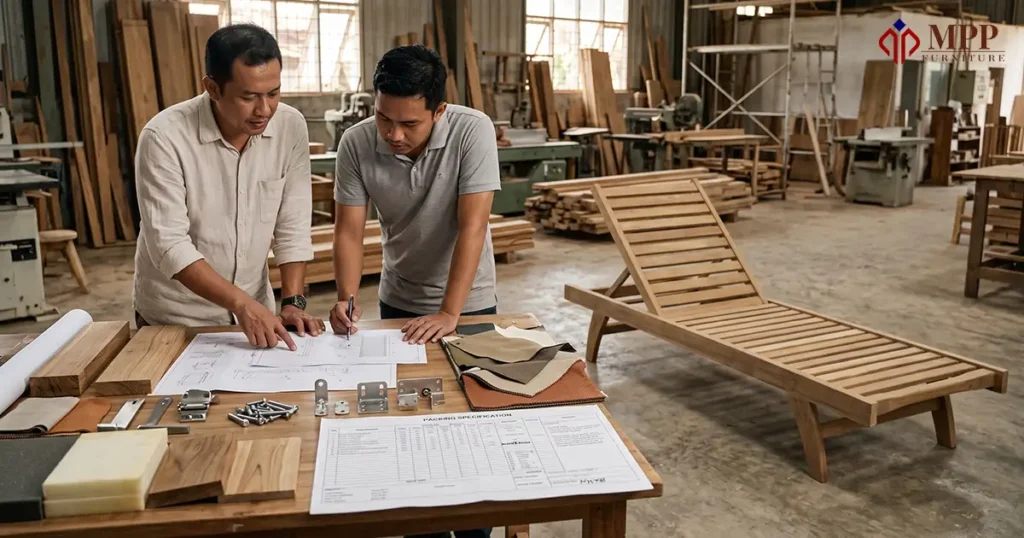
You should also ask how the chair is actually produced. If you want to review MPP's approach to moisture control, joinery, in-house production, customization, and inspection, see our teak furniture Indonesia factory service page before building your specification.
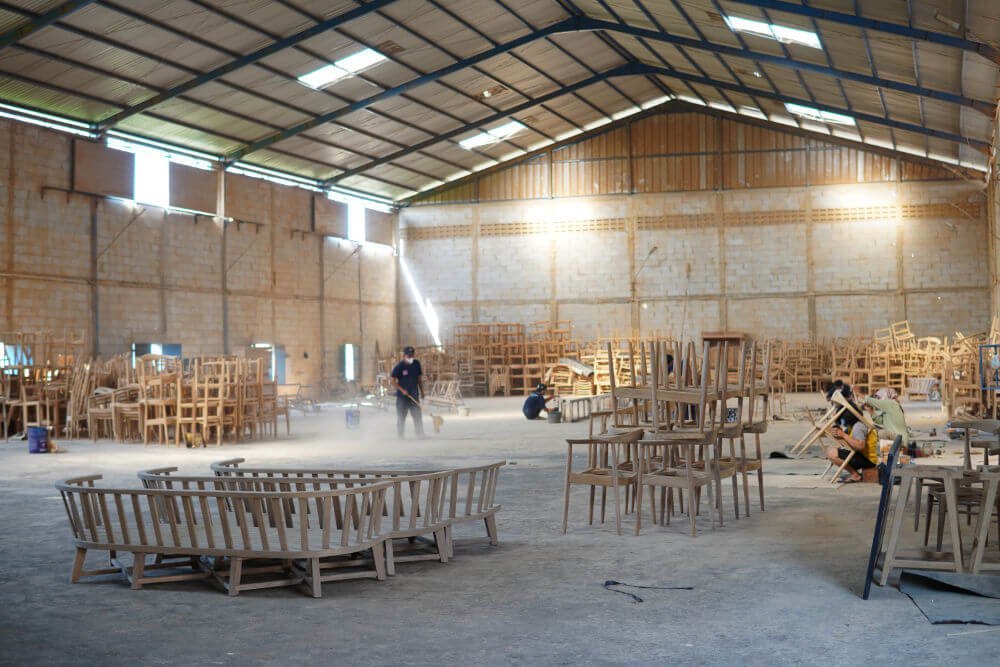
A profitable retail program requires a reliably scalable supply chain. Partnering with a direct manufacturer offering predictable lead times and up to 30 containers per month ensures your inventory keeps pace with demand. Backed by 20 years of export experience, buyers can confidently plan repeat programs without quality drops.
At MPP Furniture, we can also develop mixed dining programs instead of pushing teak into every position. This allows you to use teak where customers value it most, then combine other woods, rattan, upholstery, or custom details across supporting price points.
Final Thoughts: Takeaways on Whether Teak Is Worth It for Dining Chairs
Teak is worth the premium when its durability, material reputation, and long-term performance support a retail price your customer accepts. It becomes harder to justify when price sensitivity, fast design cycles, or slow inventory movement prevent the business from recovering the added cost.
The better decision is not "teak or no teak." It is deciding where teak deserves a place in your assortment and where another material creates better value.
As one of the Indonesian furniture manufacturers working with international B2B buyers, MPP Furniture can help you compare materials, develop custom dining chair designs, and adjust specifications around your target market and price position.
Frequently Asked Questions About Sourcing Teak Dining Chairs
1. Why is teak significantly more expensive than other woods like acacia or eucalyptus?
The premium accounts for teak's natural oils, dense grain, and structural durability that resists warping and heavy daily wear. This exceptional durability translates to a 50 to 75-year lifespan, allowing retailers to position these chairs as high-margin, long-term investments rather than easily replaceable fast furniture.
2. Can I mix teak with other materials in my dining collection?
Yes, MPP Furniture actively supports mixed dining programs. Retailers can use teak for hero pieces where customers value it most, and combine it with other woods, rattan, or upholstery to build out a collection across multiple price points.
3. Are teak dining chairs suitable for both indoor and outdoor retail lines?
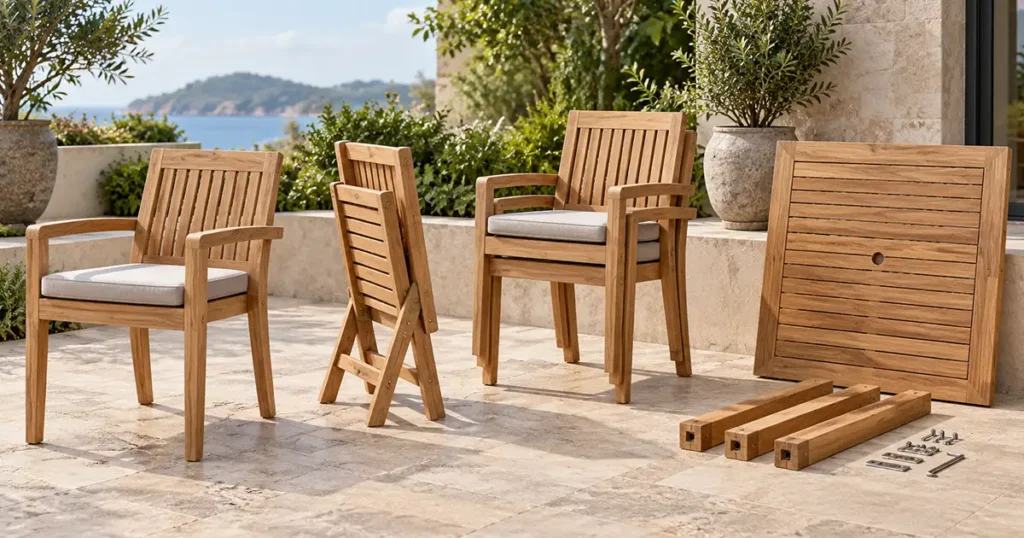
Absolutely. Teak's inherent weather resistance and dimensional stability make it incredibly versatile. Combined with controlled kiln drying that maintains moisture content below 12%, teak supports reliable cross-selling across both interior dining and outdoor patio collections.
4. What is the minimum order quantity (MOQ) for direct factory sourcing?
The standard minimum order is one 20ft container with flexible SKU allocation. For first-time orders or market testing, smaller volumes can be discussed based on production planning and efficiency.
Ready to Build Your Custom Dining Chair Collection?
Partner with MPP Furniture to develop high-margin, premium teak dining chairs. We help B2B buyers compare materials, adjust specifications, and ensure consistent quality across every order.

I am a Web Designer, Technical SEO Specialist, and writer with 6+ years of experience in website optimization and search visibility. For more than a year, I have supported MPP Furniture’s growth, and I am currently expanding my role as an author to help B2B furniture buyers make more informed business decisions through informative, practical, and impactful articles.
0 Comments