When defining procurement specifications for retail or hospitality projects, sourcing managers face the dual challenge of finding products that look beautiful while withstanding a heavy commercial product life cycle. Woven outdoor furniture is highly popular, yet it hides a specific technical challenge: while a strong frame is vital, the true secret to its longevity lies in the furniture rope tension.
Improper tension compromises the furniture's lifespan, which can lead to higher return rates and impact customer trust. This article explains the exact mechanics of rope weaving, detailing why the tension can neither be too tight nor too loose. We will also show you how to identify premium craftsmanship for your next high-volume import order.
The Mechanics of Rope Furniture Weaving
Woven outdoor furniture relies on physics as much as art, primarily functioning through tensile strength and load-bearing capacity. When a person sits, their body weight pushes down on the woven surface, requiring the rope to distribute this load evenly across the metal or wooden frame.
Accurate tension calculations are essential to preserve the structural integrity of the piece. As highlighted by textile machinery experts at Crealet, maintaining precise warp tension during the weaving process dictates the material's final structural integrity, enabling the surface to absorb heavy commercial loads safely. For commercial-grade seating, this means engineering the weave to support a continuous safe working load of 100+ kg (220+ lbs) without permanent deformation. At the same time, the surface must offer a specific amount of flexibility and yield, which is what makes a rope chair comfortable without needing thick cushions.
In a factory setting, calculating this tension is notoriously difficult. The frame design dictates how much load the rope must carry. For example, a wide sofa requires vastly different tension than a narrow dining chair, meaning manufacturers calculate the exact force needed for every unique shape.
The Perils of Too Tight: Breakage, Snapping, and Rigidity
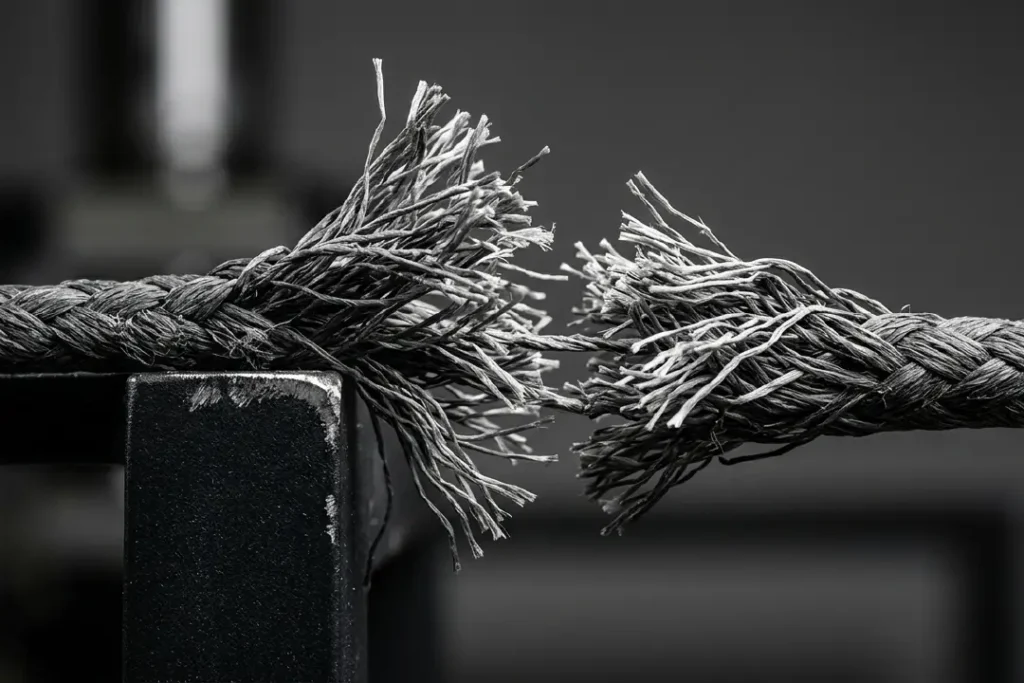
A common manufacturing defect in rope patio furniture is over-tightening. Factory workers sometimes pull the rope with excessive force to make the item look perfectly straight on the showroom floor, creating an overly rigid chair that, while visually neat, is uncomfortable for the user.
Over time, this extreme tension significantly increases the risk of structural damage in several specific ways:
- Friction Shearing: When the tension is too high, the rope is pulled taut against the hard edges of the metal or wooden frame. Every time a user sits, their weight causes micro-movements. Because the rope lacks flexibility, it rubs harshly against the frame, causing the fibers to fray and shear at the friction points long before the rest of the material degrades.
- Frame Misalignment: Extreme inward tension pulls the entire frame out of square. This structural distortion often results in misaligned chair legs. The end-user will experience a "wobbly" chair that does not sit flat on the ground, immediately signaling poor manufacturing quality to a hospitality guest.
- Fiber Snapping: When someone sits down, the rigid rope cannot stretch or flex, transferring the pressure directly to the frame. The fiber itself often snaps under the sudden weight—a mechanical failure that is quickly escalated because the tightly pulled material has zero capacity to absorb the impact.
For procurement teams managing high-volume imports, these structural failures mean an immediate inventory write-off. You cannot easily patch or tie a broken outdoor rope; it requires stripping the frame and starting from scratch. Ultimately, this drives up warranty claims and creates a negative experience for the end-user.
The Problem with Too Loose: Sagging and Loss of Form
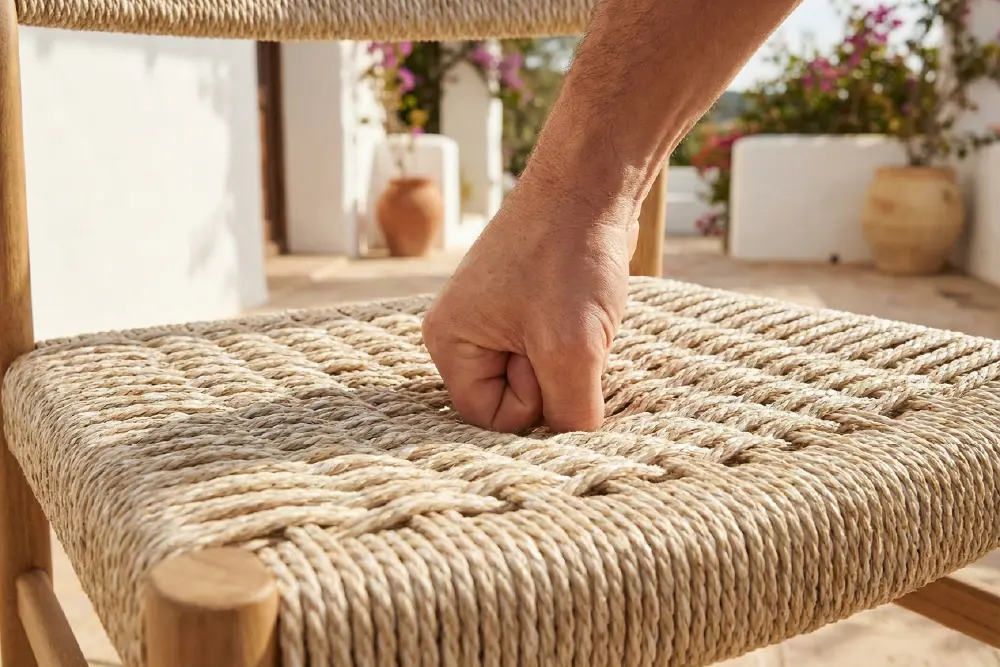
Conversely, loose weaving presents an equal set of commercial risks, causing visible sagging and a complete loss of form. This problem typically arises when a factory lacks strict quality assurance protocols or rushes the weaving process to meet high-volume quotas, resulting in uneven tension across the furniture piece.
When a user sits on a loosely woven chair, they sink deeply into the frame. This creates poor tactile feedback and makes the furniture feel cheap. Beyond a subpar user experience, inadequate tension causes several progressive failures:
- Reduced Load-Bearing Capacity: Because the weight concentrates directly in the middle rather than spreading evenly across the frame, the chair cannot safely support standard commercial weight limits.
- Ergonomic Misalignment: When tension is too loose, the user's seating height drops significantly under their own weight. In a commercial dining setting, this completely throws off the ergonomic ratio between the chair and the table. Guests end up sitting awkwardly low while eating, leading to immediate complaints about comfort before any structural failure occurs.
- Anchor Knot Slippage: Tension is the physical force that locks the finishing knots in place against the frame. When the main weave goes slack, these critical anchor points lose their grip. A single slipping knot can cause the entire seating surface to unravel in a matter of days, turning a minor sag into a total structural failure.
- Inter-Fiber Abrasion: Loosely woven chairs experience high levels of friction between the ropes themselves. Because the strands have room to shift horizontally, they constantly rub against one another every time a user sits or adjusts their posture. This sliding acts like sandpaper, prematurely fraying the synthetic polymers from the outside in.
Learning how to prevent sagging in outdoor rope chairs starts at the factory level, where the manufacturer applies consistent, measured force to every strand. In practice, a loose weave only gets worse over time; daily use and outdoor heat will stretch the material further, significantly reducing the furniture's expected lifespan.

Finding the “Sweet Spot”: Why Proper Tension Requires Precise Craftsmanship
Finding the exact middle ground is a major manufacturing challenge that requires expertly handcrafted techniques and rigorous Quality Assurance (QA) protocols. A reliable manufacturer tests this tension by applying heavy physical weights before the product leaves the factory, confirming that the weave will hold its shape throughout its expected commercial usage yield.
This sweet spot provides enough ergonomic give for comfort alongside enough firmness to maintain structural integrity, resulting in outdoor woven seating that lasts for years. Sourcing managers benefit from asking their vendors about their testing methods, as a factory that understands tension will gladly explain its quality control process.
The Human Element: Hand-Woven vs. Automated Production
Buyers often ask about the difference between hand-woven and machine-woven patio furniture tension. While machine-woven items look identical on a fast production line, machines apply the exact same mechanical force regardless of small material variations. If a spool of rope is slightly stiffer, the machine pulls with the same force regardless, creating an undesirable rigid spot.
Machines cannot feel tension the way humans do. Master weavers use their hands to judge the exact pull required for every single pass of the rope. Hand-weaving adjusts to the specific behavior of the yarn in real-time. Human weavers notice if a certain batch feels stiffer and adapt their pull naturally. They pull tighter on the corners and ease up slightly in the center, creating tight, consistent patterns that automated machines simply cannot replicate. This human touch makes a significant impact on the final quality, actively preventing future sagging and ensuring better durability for your wholesale investment.
How Material Quality Impacts Furniture Rope Tension (Olefin vs. Polyester)
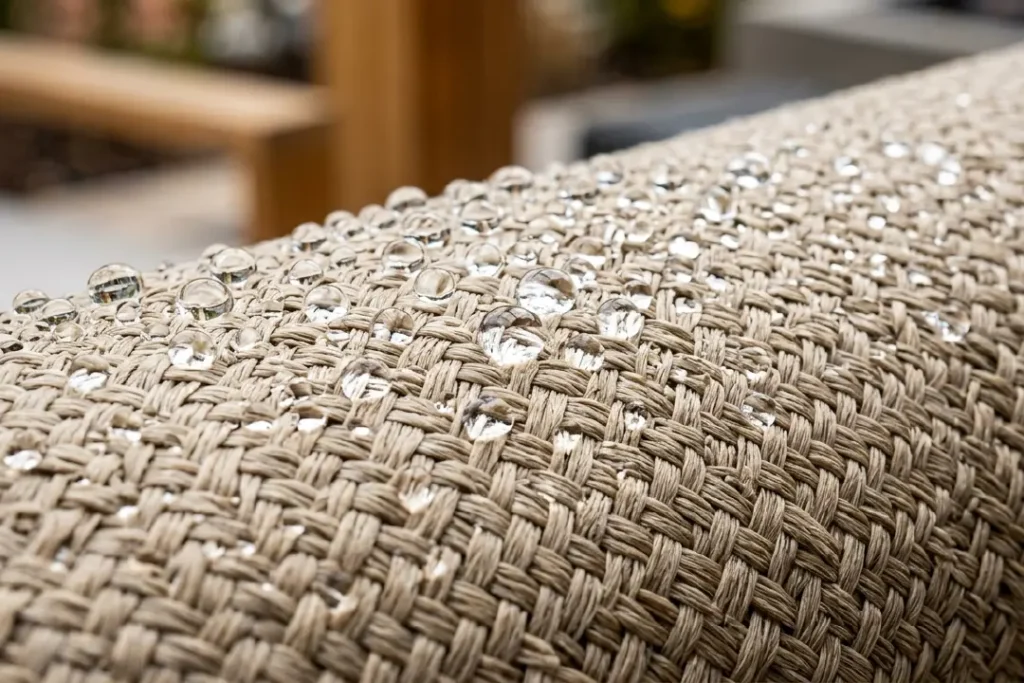
Proper tension is only half of the manufacturing equation; the material itself ultimately dictates how long that tension lasts outdoors. Materials well-suited for commercial rope furniture include Olefin fiber and high-grade outdoor polyester, as both perform exceptionally well in harsh weather conditions.
Premium outdoor polyester is highly durable and holds tight tension exceptionally well. Technical textile analyses from Vartest Laboratories confirm that the crystalline polymer structure of premium polyester provides immense tensile strength, allowing flat seating surfaces to hold tight tension without stretching.
An engineering breakdown provided by Textile Engineering confirms that Olefin fiber possesses inherent resistance to moisture, mildew, and UV fading, making it exceptionally well-suited for high-exposure outdoor environments. Furthermore, as detailed in polymer studies published by the National Center for Biotechnology Information (NCBI), the molecular structure of polyolefins inherently repels water, ensuring the fiber physically cannot absorb moisture or sag after heavy rain.
Research conducted by the National Research and Innovation Agency (BRIN) demonstrates that untreated polymers undergo rapid photo-oxidative degradation when exposed to UV light, which explains why standard materials like basic nylon become brittle and snap under normal tension in direct sunlight. However, nylon remains a viable and cost-effective option for covered outdoor spaces. Hospitality patios with solid roofs or heavily shaded verandas experience minimal weather fluctuations, allowing nylon to maintain its structural integrity and tension safely.
Ultimately, the intended placement of the furniture dictates the ideal material specification. For full-exposure outdoor environments subjected to direct sun and heavy rain, procurement teams often find the best results by specifying premium outdoor polyester or Olefin. Conversely, nylon offers excellent commercial value for semi-outdoor or fully covered areas where environmental conditions are strictly controlled.
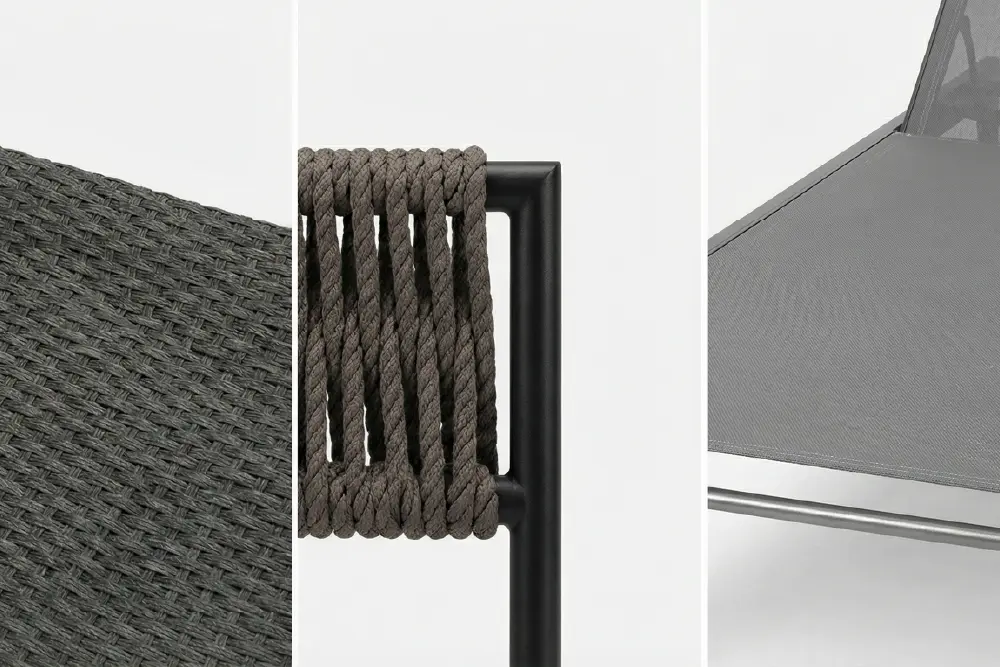
Tips for Maintaining Your Woven Furniture
Buyers should know how to check the quality of woven outdoor furniture upon delivery, and end-users benefit from understanding how proper maintenance preserves the tension.
- Test the Bounce-Back: Press firmly on the center of the seat with your hand. The rope should sink slightly and then bounce back immediately to a flat position.
- Implement Routine Cleaning: Dirt and dust can break down synthetic fibers over time. Wash the rope gently with mild soap and water.
- Avoid Harsh Chemicals: Design authorities at Homes & Gardens frequently cite the use of abrasive chemical cleaners as a critical maintenance mistake, as these harsh solutions strip away protective barriers and cause rapid polymer degradation, permanently damaging the elasticity of the rope. We highly recommend avoiding them entirely.
Buyer’s Quick Checklist: 3 Questions to Ask Your Supplier
Before finalizing a high-volume order, procurement teams might consider asking their manufacturer the following questions to verify tension control:
- What is your QA process for tension testing? Asking if they apply physical weights to test load-bearing capacity before shipping provides valuable insight into their durability standards.
- Do you use machine-weaving or master artisans? Hand-weaving is highly recommended to accommodate natural variations in material stiffness.
- What specific materials do you use for the rope? Consider premium outdoor polyester or Olefin fiber, which are well-suited to resist UV degradation and moisture stretching.
Sourcing from Master Weavers: Quality Indonesian Outdoor Furniture
Selecting a reliable manufacturing vendor is a complex task for global procurement teams. Importing woven outdoor furniture from Indonesia is a strategic choice because of the region's deep history of weaving craftsmanship. Indonesian furniture manufacturers combine this traditional skill with advanced machinery and strict quality control.
We operate as an experienced [Internal Link: Indonesian furniture manufacturer] with a 100% in-house production facility. This setup means we directly control the tension, the frame construction, and the final finishing, ensuring strict specification compliance across your entire supply chain. We provide one-stop shopping for our global clients, offering a wide range of [Internal Link: Rope furniture] variants.
Our clients enjoy a smooth process from the initial design to the final delivery. We offer free consultation and free new product development to meet your exact market demands. With custom furniture and OEM services, we adapt to your needs, maintaining a 99% client satisfaction rate and a minimal complaint ratio of 0.56%. For anyone looking for a dependable Indonesian furniture supplier, our team is ready to help you build a profitable, long-lasting collection.
Secure Flawlessly Tensioned Outdoor Rope Furniture for Your Next Project
Partner with an experienced Indonesian manufacturer that combines master weaving with rigorous quality control. Let's discuss your custom specifications and high-volume import needs today.
FAQs About Woven Rope Furniture Tension
1. How can you tell if rope furniture is woven too tight?
You can tell rope furniture is too tight if the seat feels completely rigid and offers zero ergonomic yield. When woven correctly, the rope will depress slightly under pressure and immediately return to its flat position. A complete lack of flexibility indicates over-tightening.
2. What is the best material to prevent outdoor rope from sagging?
Materials that effectively prevent sagging include Olefin fiber and high-grade outdoor polyester. These hydrophobic materials do not stretch when wet and resist UV damage far better than standard nylon.
3. Can a sagging rope chair be repaired?
A severely sagging rope chair usually cannot be spot-repaired. Because the material has lost its structural integrity, the entire frame often requires a complete re-weaving process.
4. Why should buyers source woven furniture from Indonesia?
Sourcing from an Indonesian furniture manufacturer offers access to master weavers who understand artisanal tension control. They provide high-quality, handcrafted furniture with low defect rates for B2B buyers.

Versatile Digital Marketing & Creative Specialist with a strong foundation in graphic design, product photography, and comprehensive brand strategy. Proven ability to bridge the gap between physical products and digital presence, translating complex concepts into high-converting marketing assets. Adept at leveraging SEO, web analytics, and engaging visual content to drive business growth and elevate brand identity in competitive markets.
0 Comments