The best wood for Indonesian patio furniture depends on how the product will be used. Teak is the safest choice for full outdoor exposure, Mahogany is more suitable for covered or protected patio areas, and Sungkai works better for controlled semi-outdoor spaces.
A patio chair may look good in a sample photo. But after months of sun, rain, humidity, and daily use, weak material selection can lead to cracking, warping, fading, or customer complaints. For retailers, that problem does not stop at the product. It affects margin, repeat orders, and brand trust.
This guide explains how to evaluate wood materials for Indonesian patio furniture based on the target market, outdoor exposure, price position, maintenance needs, and manufacturer capability.
What Retailers Should Understand Before Comparing Wood Materials
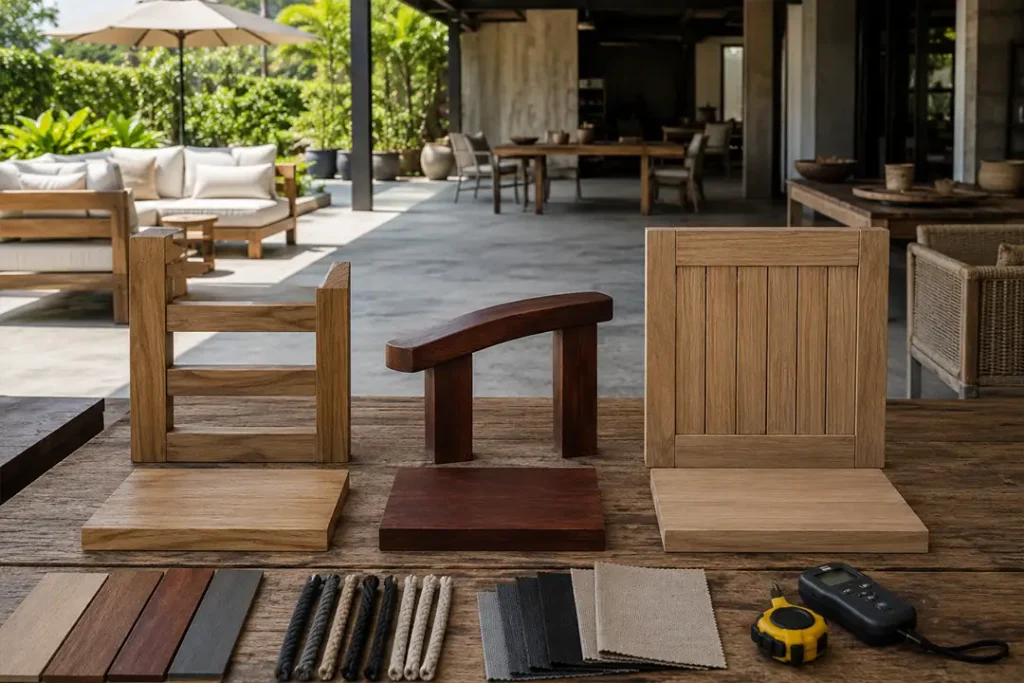
Before comparing Teak, Mahogany, or Sungkai, retailers should define the business use case first. The better question is not only “Which wood is best?” but “Which wood fits the customer, market, price point, and patio condition?”
From MPP’s production experience, buyers who serve coastal markets usually need stronger wood performance and a more protective finishing process. In these markets, durability often matters more than appearance because the furniture faces higher humidity, stronger sun exposure, and changing weather. In cooler or more protected areas, buyers may place more focus on appearance because the furniture receives less direct rain and sunlight.
This step helps retailers avoid choosing wood only because it sounds familiar or comes with a lower quote. It also helps the patio furniture manufacturer recommend the right material before sampling begins. For a broader buying checklist, you can also read our guide on how to choose a patio furniture manufacturer.
Factors to Evaluate in Wood Materials for Patio Furniture from Indonesia
Material selection should be based on real use, not only visual appeal. Patio furniture outdoors must handle weather, moisture, movement, and repeated daily use.
Outdoor Performance and Weather Resistance
Outdoor furniture has to face sunlight, rain, humidity, and temperature changes over time. For full outdoor use, Indonesian teak is often the safest choice because it has strong natural durability and can handle open-air placement better than many other wood options. This makes teak suitable for premium Indonesian teak patio furniture collections, especially for patios, poolside areas, resorts, and homes in humid or coastal markets. For a deeper explanation, you can read our guide on why Indonesian teak is the right wood for patio furniture.
But strong wood still needs the right production process. Drying, construction, joinery, sanding, and finishing all affect how well the furniture performs after months of outdoor use. From a retailer’s point of view, this matters because a product that looks good in a sample may still create complaints later if the material and finishing are not prepared for the real climate.
Mahogany and Sungkai can still work for patio collections, but they need more careful placement. They are better for covered patios, terraces, balconies, and semi-outdoor spaces where direct rain and harsh sun are limited. For these materials, the product promise should be clear from the start so customers understand where the furniture should be used.
Wood Density and Structural Stability
Patio furniture is not only displayed. It is sat on, moved, cleaned, stacked, and exposed to changing humidity. This means structural stability matters.
Wood density, drying control, joint construction, and frame design all affect long-term performance. If the moisture content is not controlled well, furniture can crack or warp. If the joinery is weak, frames may loosen after repeated use.
From a manufacturer’s view, material choice is only the first step. Drying, cutting, joinery, sanding, finishing, and inspection decide whether the same product can be repeated in bulk production.
Maintenance for the End Customer
Retailers should also think about the person who buys the product from their store. Some customers accept regular maintenance. Others expect outdoor furniture to need very little care.
Teak can age naturally into a grey tone if left untreated, which many outdoor buyers accept. But customers still need clear guidance about cleaning and care. Mahogany and sungkai may need more protection, so the sales promise must be clear from the start.
A good material decision matches both the retailer’s price point and the end customer’s maintenance habits.
Comparing Common Indonesian Wood Materials for Patio Furniture
Each wood has a role. The wrong choice happens when one material is used for the wrong setting.
| Wood Material | Best Use Case | Outdoor Exposure Fit | Price Position | Main Buyer Risk |
| Indonesian teak | Premium patio, poolside, resort, long-term outdoor collections | Best for full outdoor use | Premium | Higher upfront cost, but stronger long-term value |
| Mahogany | Covered patio, semi-outdoor, mid-range collections | Better under protection | Mid-range | Higher risk if exposed to direct rain and sun without proper finishing |
| Sungkai | Controlled semi-outdoor, protected spaces, style-driven furniture | Needs protection | Mid to accessible | Not ideal for open-sky patio use |
Indonesian Teak: Best for Premium and Long-Term Outdoor Performance
Teak is the strongest option for retailers who want premium patio furniture Indonesia collections. It is suitable for full outdoor exposure, poolside furniture, resort projects, and customers who expect long service life.
Teak also supports stronger product positioning. Retailers can sell it as a long-term outdoor investment, not just another garden furniture option.
At MPP Furniture, teak patio and lounge collections are built with outdoor-ready construction, controlled production, precise joinery, and quality checks across the production process. This makes teak a strong fit for retail programs that need repeatable quality.
Mahogany: Suitable for Protected Patio and Cost-Conscious Collections
Mahogany can work well for covered patio and semi-outdoor furniture when the buyer wants a warmer wood appearance at a more accessible price point. For retailers building an outdoor mahogany furniture collection, this material can be a good fit for covered terraces, shaded balconies, or indoor-outdoor living spaces. For more details, you can read our guide on whether mahogany furniture can go outside.
From MPP’s production experience, Mahogany performs better when the use case is clear from the start. It needs proper drying, careful construction, and suitable finishing, especially when the furniture may face humidity or occasional outdoor exposure.
But Mahogany should not be treated the same as Teak. If used in direct rain and harsh sun without protection, the risk of wood movement, finish failure, and customer complaints becomes higher.
Sungkai: Better for Controlled Semi-Outdoor or Style-Driven Furniture
Sungkai is often chosen for its clean appearance and design flexibility. For retailers planning a Sungkai outdoor furniture collection, this wood can support modern, light, and style-driven products when used in the right setting. For more details, you can read our guide on whether Sungkai furniture can be used outdoors.
For patio furniture, Sungkai is better for controlled semi-outdoor areas, covered patios, or protected spaces. It is not the safest choice for open-sky outdoor use.
Retailers can use Sungkai when the product story focuses on visual style, price fit, and protected placement. But the sales team should give clear usage guidance so customers understand where the furniture should be placed.
Common Mistakes Retailers Make When Choosing Wood Materials
Many wood material problems start when buyers choose the material before understanding the customer market, product use, and local climate. From our discussions with people who work in furniture production, one common issue is that some buyers still assume most wood materials can be used in the same way for indoor and outdoor furniture. In reality, outdoor furniture needs to handle sunlight, humidity, rain exposure, temperature changes, and repeated daily use.
Another common mistake is judging quality from the sample only. A sample may look clean and well finished, but bulk production depends on stronger control, especially on moisture content, frame joints, glue application, sanding quality, and finishing consistency. These details often decide whether the furniture stays stable and consistent after repeated use.
Retailers should also be careful when using Mahogany or Sungkai for outdoor collections. Mahogany may still be considered for covered or semi-outdoor use when drying, construction, and finishing are properly controlled, but it usually needs more careful placement and maintenance expectations than Teak. Sungkai is generally not recommended for full outdoor use, but it may work for semi-outdoor areas with limited rain, less direct sunlight, and a milder climate.
Why Working with the Right Indonesian Patio Furniture Manufacturer Matters
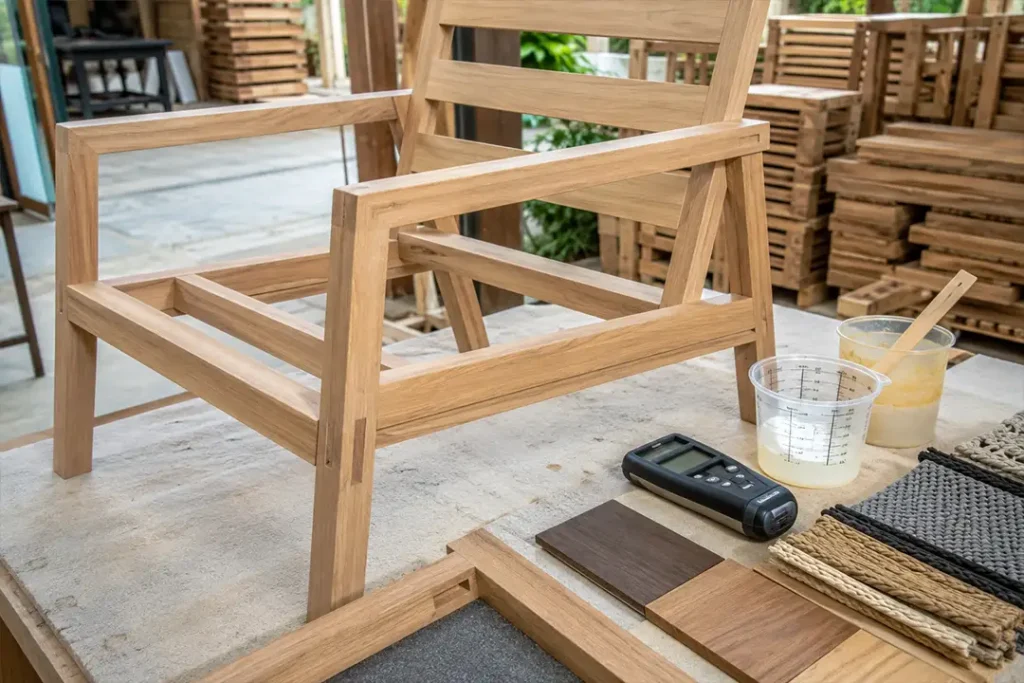
Material choice and manufacturer capability should be evaluated together. The same wood can perform differently depending on how it is dried, constructed, finished, packed, and inspected before shipment.
A reliable Indonesian furniture manufacturer helps buyers choose wood based on the target market, patio use, climate, and price position. This prevents material mismatch before sampling or bulk production starts.
MPP Furniture supports B2B buyers through free consultation, free product development, custom design, OEM, and private label services. Each product is handcrafted with precision, supported by advanced machinery and quality control at each production stage.
With a 99% client satisfaction rate and a minimal complaint ratio of 0.56%, MPP is built for buyers who need steady production, not one-time samples.
Final Thoughts: The Right Wood Material Protects Your Product, Margin, and Brand
Wood material should match the way your patio furniture will be used, not only the look or price of the wood. Teak is stronger for full outdoor collections, while Mahogany and Sungkai are better for protected or semi-outdoor spaces when the production process supports the material.
For retailers, the best decision comes from matching the wood with the target customer, climate, price point, maintenance expectation, and manufacturer capability. This helps reduce complaints, protect margin, and build stronger trust with your customers.
Need Help Choosing the Right Wood Material for Your Patio Collection?
Share your target market, price range, and patio use case with MPP Furniture. Our team can help you select the right wood material and develop an Indonesian patio furniture collection that fits your market.
FAQs :About Indonesian Patio Furniture Materials
1. What is the best wood for Indonesian patio furniture?
Teak is the best option for full outdoor patio furniture because it has strong natural outdoor performance. Mahogany and Sungkai can work better for protected or semi-outdoor use when processed and finished correctly.
2. Is Mahogany good for patio furniture?
Mahogany can be suitable for covered patio furniture or semi-outdoor collections. It is not the safest choice for direct rain and sun unless the design, drying, construction, and finishing are carefully controlled.
3. Can Sungkai be used for outdoor patio furniture?
Sungkai is better for controlled semi-outdoor or protected patio areas. For open-sky outdoor use, Teak is usually a safer material choice
4. How should retailers choose patio furniture wood?
Retailers should choose patio furniture wood based on exposure level, target customer, price position, maintenance expectations, and manufacturer capability.
5. Why does the manufacturer matter when choosing patio furniture material?
The manufacturer affects how the wood performs because drying, joinery, finishing, quality control, and packing all influence the final product. A good manufacturer helps prevent material mismatch before bulk production.

A versatile content creator with a strong foundation in product photography and videography, and a comprehensive brand strategy. Capable of creating engaging content to connect consumers and producers, web analytics, and engaging visual content to drive interest and growth for a product or brand.

0 Comments